Key Takeaways
Identifying the companies currently attracting significant venture capital reveals the trajectory of the automation industry in 2026. This selection focuses on firms building foundational embodied AI and specialized hardware for industrial and commercial environments.
- General-purpose robotics platforms are shifting from research demos to real-world deployment.
- Modular software-defined autonomy is becoming the standard for efficient fleet management.
- Capital efficiency and tangible supply-chain impact determine long-term institutional support.
- Humanoid architectures are being refined for specific utility in manufacturing and logistics.
- Embodied AI models now bridge the gap between complex sensory input and physical execution.
1. Figure AI
Figure AI represents a notable push toward developing general-purpose humanoid robots intended for workforce integration in environments like retail and manufacturing. The company has secured significant capital to accelerate the deployment of autonomous systems designed to handle tasks that are too hazardous or repetitive for human laborers. By emphasizing the creation of robots that function in existing human-centric spaces, Figure AI aims to address critical labor shortages without requiring massive retrofitting of physical facilities.
Technological progress here relies on integrating sophisticated sensory perception with high-degree-of-freedom motor control, ensuring that machines can navigate complex, semi-structured factory floors safely. Investors have frequently highlighted their focus on building commercially viable humanoid hardware as a key differentiator. This strategy moves beyond simple laboratory experimentation, prioritizing the refinement of actuators and joint mechanisms for long-term reliability in high-traffic work areas.
As the industry matures beyond the prototyping phase, firms like this are setting the pace for capital-intensive R&D. The focus remains on demonstrating that such systems can deliver a measurable return on investment for large-scale operations. For those keeping track of the most promising robotics startups to watch according to VCs, this company sits at the center of the debate over whether human-like morphology is the most effective approach for general-purpose labor autonomy.
2. Physical Intelligence
Physical Intelligence explores the application of foundation models to the physical world, aiming to create a universal layer of intelligence capable of controlling diverse robotic hardware. By decoupling motor control from specific machine designs, they are attempting to solve one of the most persistent hurdles in robotics: the need for unique, bespoke software for every new platform. This approach suggests a modular future where intelligent control software can be swapped into different mechanical chassis with minimal recalibration.
| Industry Application | Primary Capability | Deployment Horizon |
|---|---|---|
| Warehouse Logistics | Autonomous Navigation | Immediate |
| Precision Manufacturing | High-Speed Assembly | Near-term |
| Last-Mile Delivery | Dynamic Environ-Sense | Long-term |
The integration of vision-language-action models allows these systems to interpret instructions and adjust their physical movements in real-time. This capability serves to reduce the engineering overhead required for deploying automation in complex, non-static environments. As developers look toward scalable solutions, the ability to train a singular intelligence on varied input data is becoming a mandatory technical pillar for high-growth ventures.
Proponents of this model argue that software-defined autonomy will eventually commoditize the underlying hardware. By treating robots as platforms for intelligence rather than just mechanical units, the firm aims to capture the value of the 'brain' rather than focusing on the maintenance of the body. Such an architecture is essential for building embodied AI startups that need to remain agile as hardware iterate and evolve over time.
3. 1X
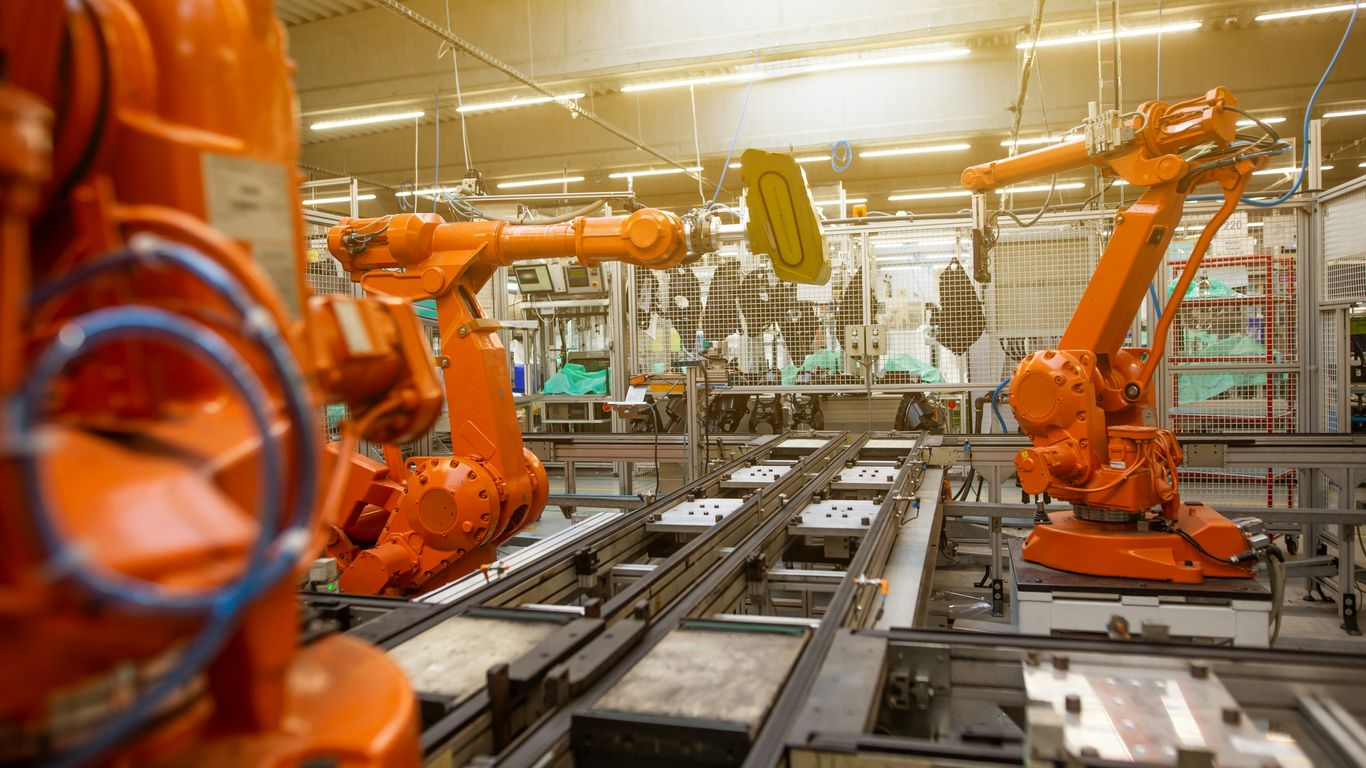
1X is carving out a specific niche by focusing on safety and human-robot collaboration in both domestic and industrial settings. Their approach relies on the development of compliant robots—machines designed to yield and adapt when they contact a human—which reduces the logistical friction of using robotics in crowded rooms. This philosophy is grounded in the belief that for robots to be truly useful, they must operate reliably alongside, rather than just in place of, human workers.
Research indicates that companies adopting this mindset are seeing higher engagement from enterprise clients who previously viewed heavy automation as a potential liability. Their recent work explores how collaborative, bipedal platforms can learn through observational learning and direct mimicry of human movements. This method of training significantly shortens the time required to teach machines new tasks, making them more adaptable to the shifting demands of modern production chains.
- Enhanced safety interfaces for dynamic human spaces.
- Modular joint design for rapid field repairs.
- Adaptive motor control for varied surface traction.
- Scalable inference models for rapid task adaptation.
These technical choices ensure the machinery can operate in environments that lack the rigid structure of a typical warehouse floor. By prioritizing the humanoid robot startups perspective, the firm captures value for partners needing versatile agents that can handle diverse, non-repetitive task lists in semi-unstructured environments.
4. Sanctuary AI
Sanctuary AI is developing cognitive architectures designed to underpin general-purpose, human-like robots. Instead of focusing solely on the mechanics of physical motion, the team prioritizes the creation of a 'mind' composed of foundational models capable of reasoning through novel tasks. This perspective allows their hardware to potentially perform work that requires high levels of dexterity and cognitive assessment without requiring manual retraining for every nuance.
This is particularly relevant for sectors struggling with specialized labor gaps, such as high-precision small-part assembly, where the logic of assembly changes frequently. By building a backend that simulates cognitive decision-making, the team hopes to create agents that can 'understand' the goal and adapt their sub-actions to achieve it. Investors tracking development here often cite the company's commitment to building a platform that can eventually handle a near-infinite range of task types.
The transition from hard-coded automation to autonomous decision-making represents the most significant shift in robotics in three decades. True scalability is only achieved when the software can generalize its understanding of the physical world across diverse contexts.
This long-term focus on task generalization is what distinguishes these innovators from legacy automation players. For companies looking to reduce overhead, the shift toward warehouse and industrial robotics startups that offer flexible, cognitive-ready systems is an essential step in modernizing the operation.
5. Agility Robotics
Agility Robotics has gained prominence through its mastery of bipedal locomotion, providing machines that effectively traverse terrain designed for humans. By focusing on the mobility aspect, they address the fundamental limitation of wheeled systems in buildings that include stairs, ledges, or uneven floor material. This hardware-first dedication to mobility is a core pillar for the Agility Robotics portfolio as it pushes for wider commercial adoption in logistics.
Engineers at the company focus on high-speed dynamic stability. This is not just about weight distribution; it requires advanced active sensors that constantly feed data into the balance controllers to prevent falls while navigating through narrow corridors or across messy facility floors. Such hardware is built to handle the rigors of an actual warehouse operation, not just a controlled show-floor demo, making it a critical player in current top-funded robotics startups rankings.
Their work remains a vital piece of the current push to move robotics out of pure theory. As factory owners seek to automate existing human workspaces without modifying the aisles or loading bays, the utility of a stable, mobile agent that can move vertically within the space becomes clear. Analysts continue to watch their deployment metrics as the definitive marker of success for legged motion.
6. Skild AI
Skild AI develops foundational intelligence for embodied hardware that is designed to traverse various platforms, from quadrupeds to humanoids. Their primary value proposition is that a robot's hardware should be irrelevant to its ability to interpret and learn from the environment. This vision aligns with the growing demand for software-agnostic intelligence, where companies can focus on their expertise in mechanical design while licensing a brain that works across many different types of robots.
By focusing on the 'general' in general-purpose intelligence, the team hopes to crack the scalability issue that plagues current deployments. Their training approach involves exposing the system to a massive corpus of physical interactions across numerous platforms in digital twins before ever setting the model loose in the real world. This process allows them to overcome the data starvation problems that usually limit traditional machine learning approaches in robotics.
Industry participants view this firm as a potential layer of abstraction for future robot fleets. As more companies enter the hardware space, they will require robust backend code that doesn't need to be entirely rewritten for each iteration. Providing this foundational software is increasingly valuable and plays into the 10 best companies building in robotics today, particularly for the software developers shaping the next generation of automation infrastructure.
7. Covariant
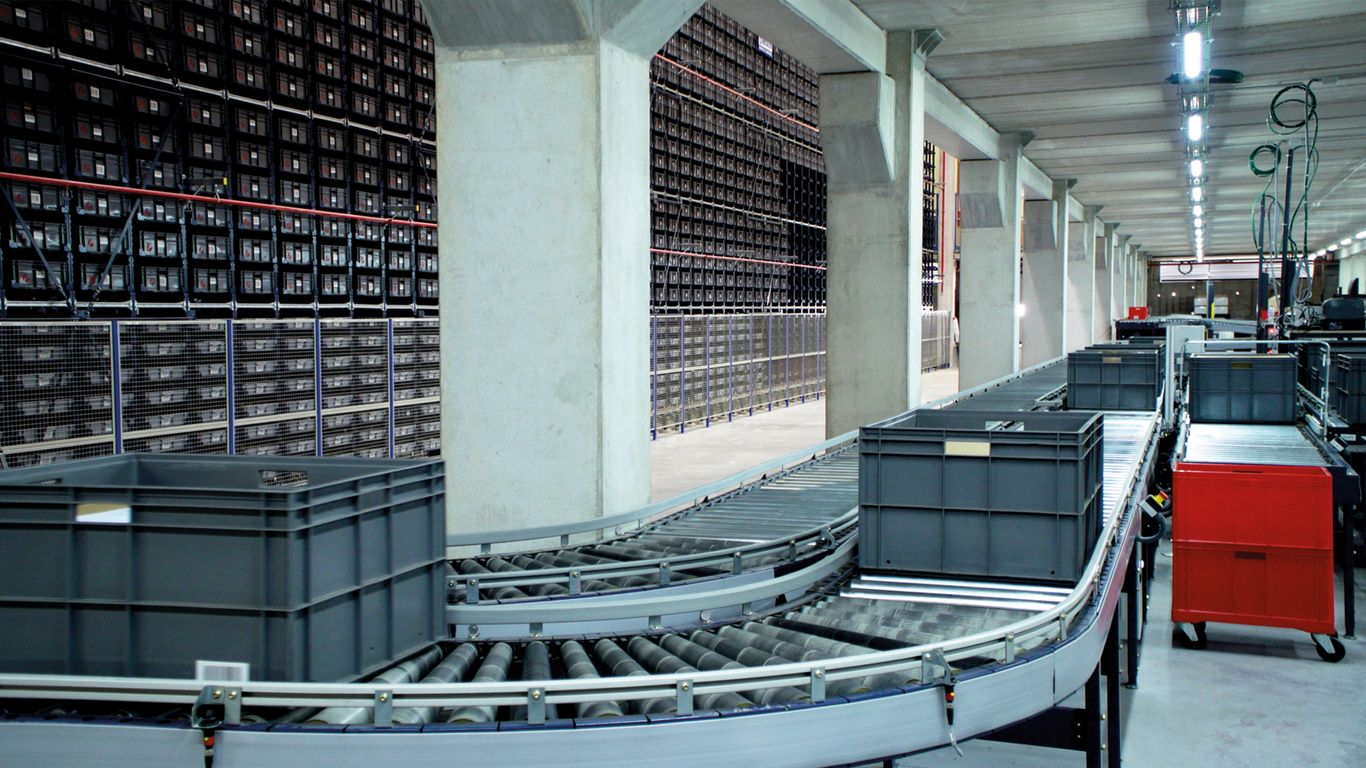
Covariant focuses on equipping warehouse machines with vision-language models that help them understand the objects they are picking. Traditional automation struggled with unstructured piles—bins containing mixed, disparate items—whereas this team's work allows for the rapid identification and grasp of items that were never seen before by the system. This adaptability is the core reason for its success in retail and fulfillment centers.
Their recent advancements focus on multi-modal models that allow the robot to see the bin, hear instructions in natural language, and grasp the item correctly in one fluid sequence. By integrating these systems into existing conveyor belts and standard warehouse hardware, the company minimizes the setup cost for its clients. This frictionless integration is key for enterprise reliability and has solidified its place as a top performer in recent financial assessments.
This approach demonstrates why Covariant stands out as an example of practical applied deep tech. By solving for the immediate bottleneck of inventory retrieval, they build defensible revenue streams that support their research into broader robot logic. This focus on the 'picking' problem keeps them tightly integrated in the workflows of some of the world's largest logistics providers.
8. Machina Labs
Machina Labs is rethinking metal manufacturing through the application of robotics and additive engineering. Instead of using traditional, rigid molds—which are expensive and slow to modify—they utilize robots to iteratively shape metal sheets. This allows for rapid prototyping and production of customized metal components. By making hardware engineering more software-centric, they enable a design speed that was previously impossible for aerospace and automotive sectors.
Their robotics cells can be adjusted remotely, allowing for different shapes to be fabricated within the same machine with only a code update. This change significantly reduces the time from schematic to physical part. For engineers, this acts as a massive shift in how they develop high-intensity infrastructure components, effectively bringing 3D printing's flexibility to industrial metalwork.
Founders of this firm have positioned it as a key resource in the effort to bring industrial-grade deep tech industry innovators to the forefront of the economy. By focusing on the hard-science problem of metallurgy and shape-forming, they build a lasting moat that relies on proprietary physics-based algorithms rather than just software hype. The impact of this approach is seen in the shortened lead times for high-value components.
9. Mujin
Mujin is a leader in intelligent orchestration, providing the software that allows diverse, multi-brand robot fleets to work together. Instead of having separate systems for picking, moving, and palletizing, their control layer manages the entire process from start to finish. This orchestration is vital for large-scale operations where mixed-vendor fleets have historically led to massive integration headaches and system crashes.
Their technology relies on a high-fidelity digital twin that predicts robot movement in real-time, allowing the software to optimize traffic patterns across the entire facility. This prevents the bottlenecks that occur when robots wait for each other in shared aisles. By treating the entire warehouse as a single, coordinated organism, they significantly improve the throughput of older facilities that have been retrofitted for automation.
As the industry grows, the need for this kind of fleet management software will only rise. Investors follow this firm because it bridges the gap between individual hardware units and a fully automated warehouse network. This focus on system-wide optimization provides a necessary buffer against the complexity inherent in humanoid robotics startups, where individual unit management can quickly become overwhelming at scale.
10. Serve Robotics
Serve Robotics focuses on developing autonomous systems for last-mile delivery. Their robots are designed to operate on city sidewalks and effectively navigate the complex, high-traffic pedestrian environment of modern urban areas. By building a platform specifically for this narrow context, they are able to optimize their sensing and navigation logic to excel where general-purpose humanoids might struggle with simple logistics tasks.
These robots rely on low-power sensory platforms to maintain wide-area awareness, ensuring safety while traveling in cities. The recent trend of deploying these systems to deliver goods from restaurants and retailers has provided them with a massive data set, which is used to refine the autonomy models further. This iterative real-world experience is a massive asset that differentiates their platform from purely theoretical models.
As urban congestion continues to affect delivery speed, localized autonomous delivery is becoming a critical infrastructure requirement. The company stays focused on the long-term goal of reducing the cost per delivery by automating the final leg of the network. This commitment to one well-defined problem allows them to maintain focus as they scale, highlighting a practical approach to building sustainable robotics startups today.
Conclusion
The landscape of robotics in 2026 is defined by a flight to quality, where capital is increasingly channeled toward companies that demonstrate not only technical brilliance but also clear paths to commercial utility. By moving from isolated laboratory demos to integrated, scalable systems in fields like logistics, manufacturing, and urban delivery, these companies are transforming foundational science into tangible economic infrastructure. Investors and builders alike are now prioritizing firms that tackle hard-science bottlenecks with modular, software-defined autonomy, ensuring that these machines can thrive in the messy, unstructured reality of global industry.
Frequently Asked Questions
What are the main limitations in current robotics hardware?
The primary hurdles include battery density, joint durability over extended operation, and the ability to maintain balance on varied, non-standard terrain, all of which remain critical constraints for long-term field deployment.
Why are artificial intelligence models so important for robots?
AI models allow robots to derive meaning from unstructured sensory input, enabling them to make autonomous decisions and adapt to unpredictable changes in their physical environment without human assistance.
How does fleet management impact industrial automation?
Effective fleet management platforms act as the nervous system of an automated warehouse, coordinating the movements of multiple specialized agents to eliminate congestion and increase overall throughput.
What makes a robotics startup attractive to investors today?
Investors currently target startups that show high capital efficiency, verifiable deployment metrics in real-world environments, and a clear architectural strategy for scaling their technology beyond initial demonstrators.
Can AI replace human workers in every manufacturing task?
Automation is best suited for repetitive, physically taxing, or dangerous tasks, whereas human workers remain superior in roles requiring high-level abstract logic, empathy, and complex multi-step reasoning in unpredictable scenarios.
How does the physical environment influence robot design?
Robots must be engineered specifically for their operational context; for example, sidewalk delivery units require different sensing arrays than stationary factory arms or bipedal walkers in office spaces.
Where is the robotics funding trend headed?
Funding is increasingly shifting away from single-product hype cycles toward foundational infrastructure companies that can build broadly applicable 'brains' that function across multiple hardware types and industries.