
Physical AI: The Embodied AI Startups to Watch in 2026

Key Takeaways
The landscape for physical AI and embodied AI startups to watch in 2026 shows a rapid transition toward commercial-ready hardware and software-defined intelligence. These companies are overcoming years of experimental development to deploy systems within warehouses, factories, and complex industrial environments.
- Foundation models are replacing hand-coded rules to enable robots to handle unseen items and unpredictable environments.
- Humanoid architectures are being refined for better stability, allowing robots to navigate spaces built for people.
- Industry-wide efforts are focusing on scaling production to drive down the unit costs of autonomous systems.
- Collaborative robotics are evolving to operate safely alongside human staff without the need for traditional fencing.
- The convergence of vision-language-action models is providing a unified brain that allows different hardware embodiments to learn from shared experience.
1. Sanctuary AI: General-purpose embodied robotics
Sanctuary AI is pioneering general-purpose humanoid robots designed to handle diverse industrial tasks through a focus on machine brains that operate across various hardware configurations. By separating the mind of the robot from the body, they aim to create flexible labor solutions that adapt to changing facility needs without requiring rigid reprogramming. This hardware-agnostic approach ensures that software improvements in cognition directly benefit a variety of physical envelopes.
Core advantages of their system include:
- Modular software stacks for different robotic sensors.
- Dexterous hand and arm control refined for industrial grip.
- Teleoperation-driven training to simulate complex human movements.
This platform flexibility is crucial for industries facing inconsistent demand and high manipulation complexity. Their ongoing development emphasizes the human-like dexterity needed to navigate the messy, unconstrained environments typical of modern logistics and manufacturing centers. These features cement their position as one of the essential physical AI and embodied AI startups to watch in 2026.
2. Figure AI: Bridging the gap in industrial labor
Figure AI addresses chronic labor shortages within the manufacturing sector through high-performance humanoid robotics. Their platform, Figure AI works to bridge the gap between human labor capacity and automated efficiency by utilizing systems that prioritize balance and physical movement. By focusing on a kinematic design that mimics human range of motion, the company attempts to simplify the transition of these machines into workplaces currently tailored specifically for human personnel.

Unlike traditional articulated arms constrained to fixed pedestals, these systems perform repetitive, physically demanding roles where companies frequently struggle to retain staff. The integration process focuses on the robot's ability to interpret, navigate, and act within spaces that change their layout throughout daily operations. Real-world deployments indicate that this adaptability is the core requirement for scaling robot crews in active fulfillment centers.
By prioritizing physical fluidness, the company is positioning itself to handle the dull, dirty, and dangerous tasks that define many modern industrial workflows. As they scale, the impact of these robots on throughput and employee ergonomics remains a primary indicator of their market viability. Their commitment to improving the dexterity of Figure AI systems shows a long-term goal of replacing static automation with agile agents.
3. Agility Robotics: Bipedal mobility for warehouse logistics
Agility Robotics focuses on advanced bipedal mobility, particularly for environments built around human transit. Their Digit platform operates effectively in cramped warehouse aisles, using a specialized leg design for stability and obstacle clearance. This focus on natural movement allows their machines to function in legacy spaces that lacked the clearance or floor quality required for more traditional automated platforms.
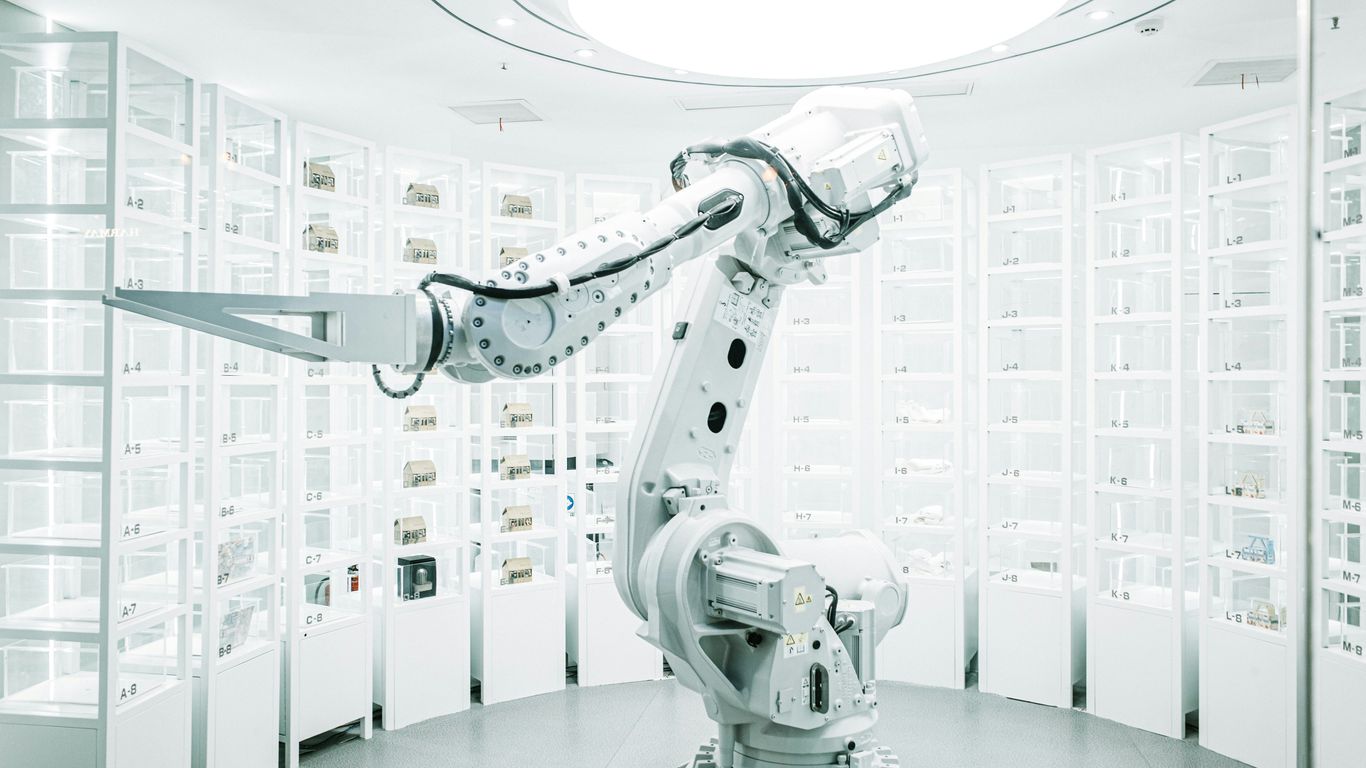
Movement remains the primary constraint in logistics, and these bipedal systems navigate the terrain that would typically stall wheeled counterparts. By focusing exclusively on locomotion that respects human-centric infrastructure, they provide a reliable path to automation for retail and fulfillment supply chains. Their hardware durability is tested specifically for the daily stresses of long-duration, warehouse-spanning operations.
Successful deployment requires more than just movement; it requires the software intelligence to handle unexpected spills, shifting boxes, and changing aisle traffic. The company is actively refining the software loop that allows for continuous, autonomous path-planning in dynamic settings. Their progress demonstrates a shift towards robots that function safely alongside human staff through sophisticated spatial awareness.
4. 1X Technologies: Collaborative AI for daily tasks
1X Technologies designs collaborative systems intended for safe, non-intrusive coexistence with humans. Their approach prioritizes designs that function in domestic or office settings without requiring external enclosures or safety fencing. Safety serves as the primary constraint in design, with a focus on internal collision-avoidance logic that responds to human proximity instantaneously.
Their systems utilize advanced motor control to ensure that sudden movements or hardware errors do not pose an existential threat to nearby human operators. This focus on safety is a massive hurdle in adoption for robots moving beyond restricted factory cells and into shared open-plan workspaces. By keeping the robot aware of its own physical footprint in relation to people, they lower the barrier for facility managers looking to integrate automation technology.
Integrating these machines into daily tasks requires a balance between speed and precision. The company aims for systems that can perform delicate household or office chores while maintaining high mechanical reliability. This research-heavy approach emphasizes long-term utility in unconstrained spaces, which is necessary for establishing public trust in autonomous physical assistants.
5. Boston Dynamics: Evolving Atlas for industry use
Boston Dynamics has successfully evolved from a research-driven robotics laboratory into a firm targeting heavy industrial application with Atlas. Their focus remains on high-fluidity motion and robust hardware for sectors like automotive manufacturing. By layering learnable policies onto their established control engineering, they make their machines more capable in environments where task parameters change on the fly.
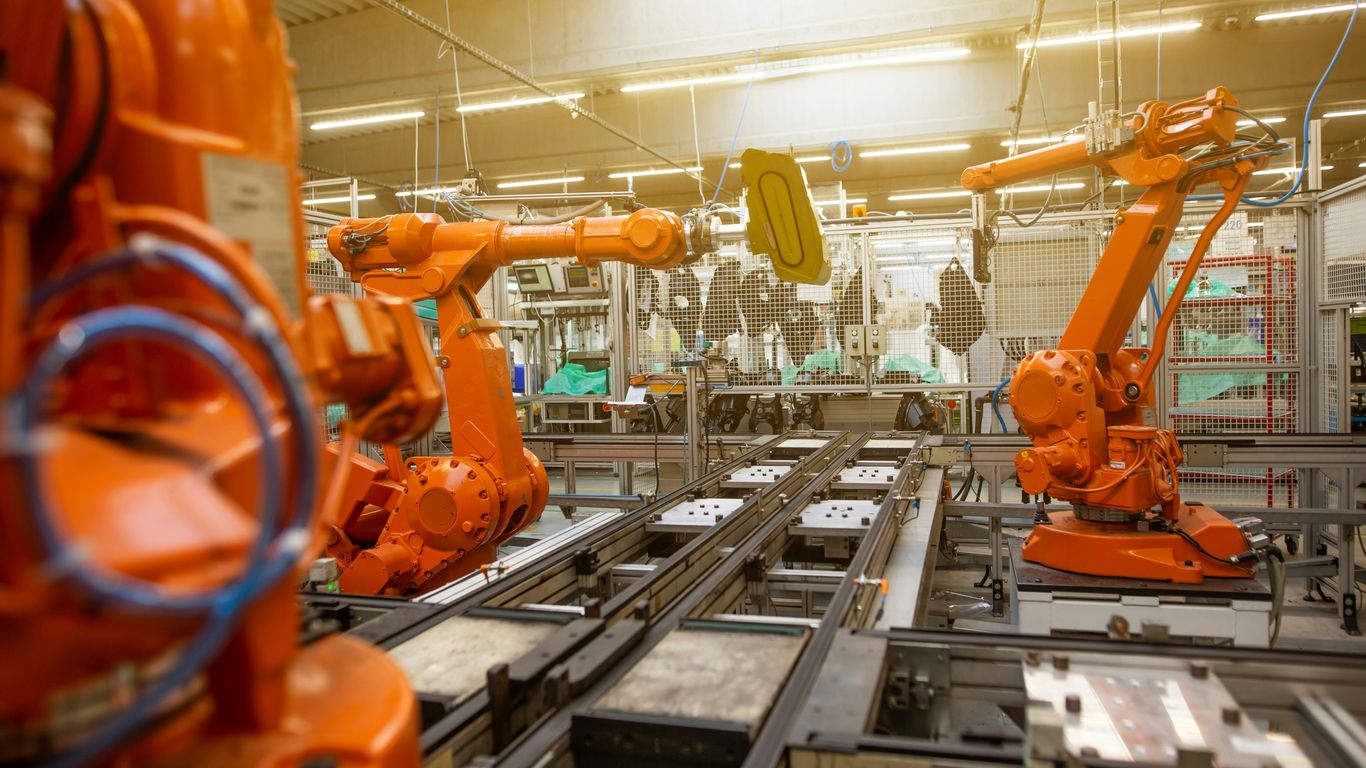
These robots are designed to handle erratic part intake or unstable surface conditions that often break down traditional automation systems. Their transition from laboratory agility to factory-floor utility is marked by an emphasis on long-term reliability in harsh, demanding scenarios. The company maintains that successful integration rests on the ability of the robot to adapt its mechanics to the actual state of the workstation.
Engineers at the firm work to optimize performance cycles for high-volume environments, aiming for consistency over pure experimental movement. This evolutionary strategy allows their existing hardware-software stack to remain relevant as new artificial intelligence models introduce better object detection and grasp planning. The focus today is on the durability required for an industrial lifespan measured in thousands of operating hours.
6. Covariant: Universal AI models for robotic manipulation
Covariant provides universal AI models aimed at robotic picking, specifically enabling systems to grasp items they have not encountered during training. This remains a significant hurdle in automated fulfillment, where thousands of unique SKUs pass through a single lane every hour. The company addresses this by grounding their model behavior in high-fidelity data that allows the robot to handle the variability of modern retail inventory.
| Feature | Traditional Automation | Covariant AI Model |
|---|---|---|
| Training Approach | Hardcoded rules | Generative vision-action models |
| Adaptation | Manual re-calibration | Self-corrects on unseen items |
| Integration Speed | Several weeks | Near-immediate API deployment |
The data above demonstrates the efficiency gain when legacy automation is replaced by generative adaptation. Fulfillment facilities currently suffer from the long tail of unfamiliar items, and these models allow for constant utility without constant engineering intervention. By keeping the software layer universal, the company allows operators to deploy diverse end effectors across their fleet.
These models operate at the edge, ensuring real-time response to visual data for complex pick-and-place tasks. The result is a system that learns from its failures and improves its picking accuracy over successive shifts. This intelligence represents the foundation of modern warehouse robotics, where responsiveness to changes determines successful business outcomes.
7. Physical Intelligence: Foundation models for physical agents
Physical Intelligence builds foundation models designed to control a wide array of physical agents. By focusing on a unified cognitive architecture, they remove the necessity for building individual training sets for every new piece of robotic hardware. This approach aims to reduce the fragmentation of the robotics software stack, which currently requires highly specialized code for every robot variant.

This unified model layer acts as a shared intelligence hub for different robotics startups and established manufacturers. Because the base cognitive model is adaptable, it ensures that advancements in understanding or control propagate across the entire ecosystem of connected devices. Their development priorities involve bridging the gap between digital foundation models and the messy reality of mechanical movement.
As the industry matures and relies more on professional innovation insights, having a singular software core for various embodiments becomes a strategic necessity. This allows developers to focus on the hardware design while the foundation model handles the reasoning required for complex physical actions. The goal is a highly modular future where any robot can tap into advanced, pre-trained logic.
8. Mentee Robotics: Adaptive intelligence for personal assistants
Mentee Robotics is focusing on adaptive intelligence specifically for personal assistants that operate in environments outside of industrial settings. Their technology prioritizes the ability to understand human speech and intent, which are critical for machines expected to assist in everyday human environments. This is a complex engineering challenge, requiring a blend of natural language processing and physical movement planning.
Efficiency in these roles is defined by how well the robot can learn from user-specific preferences and the layout of a home or office. Unlike industrial systems that repeat static paths, these robots must handle dynamic changes without constant supervision. They are currently testing the limits of how robots generalize behavior across diverse types of rooms and tasks.
Software updates for their systems leverage remote learning to improve performance as the robot encounters new scenarios. By ensuring that intelligent machine behavior can be updated seamlessly, they address one of the primary friction points of smart home or personal robotics. This focus on adaptive software ensures the platform stays useful as user demands evolve.
9. Apptronik: Modular architectures for human-centric robotics
Apptronik centers on modular hardware architectures that allow for human-centric robotics, specifically for applications in logistics and workplace assistance. Their systems are built with interchangeable parts, which allows for easier repairs and hardware upgrades over the lifecycle of the machine. This hardware strategy reduces the downtime that usually accompanies maintenance in active industrial facilities.
Designing robots for human spaces requires careful consideration of the physical scale and the presence of workers. Their goal is to build robots that can take over repetitive, strenuous motion while fitting into current facility layouts without infrastructure modifications. This modular approach extends to the internal AI architecture, which supports rapid updates to the motion-planning subroutines.
Strategic deployment involves phasing in these systems where they can prove the fastest return on investment in physical efficiency. By proving their value in specialized environments, they prepare to scale to broader industrial roles. Their modularity serves as a hedge against future technical requirements, allowing new sensor sets to be integrated as they arrive.
10. Tesla: Scaling manufacturing for autonomous humanoid platforms
Tesla is channeling its existing scaling manufacturing expertise into the production of its autonomous humanoid platform. This strategy leverages the massive cost-reduction techniques pioneered in the EV industry to bring robot production costs to a competitive baseline. Their focus remains on creating a software-hardware loop where fleet data from cars and humanoid robots feed into a unified intelligence infrastructure.
By scaling the production of humanoids to thousands of units, they aim to solve the economic barrier that currently limits robotics to R&D labs and specialized warehouses. This focus on volume means the company can apply rapid iterative feedback loops, essentially bringing the pace of software development to hardware manufacturing. Success depends on the ability of their systems to generalize across heterogeneous work tasks in manufacturing plants.
Integration into their own facilities provides a uniquely large testbed for these units, allowing for high-intensity training data acquisition. As they refine the cognitive policy for manipulation and navigation, they create a blueprint for mass-produced labor that operates entirely outside of data servers. The ultimate goal is to standardize the unit economics for physical agents in the workplace.
Conclusion
The technological movement towards embodied and physical AI marks a significant shift in how intelligence interacts with our material reality. By moving from theoretical demos to practical industrial deployment, these companies are essentially turning the logic found in advanced neural networks into a dynamic workforce that can navigate, grasp, and act within the constraints of our world, eventually becoming the backbone of the next generation of productive infrastructure.
Frequently Asked Questions
What are the main limitations for the current generation of physical AI?
The primary constraints involve energy density, the adaptability of hardware to cluttered environments, and the safety protocols required for long-term human contact. While foundational AI models are solving reasoning, hardware must still overcome complex frictions like power consumption versus performance and the long-term wear of complex robotic joints in 24/7 environments.
How does physical AI differ from traditional industrial automation?
Traditional automation relies on hard-coded rules and rigid routines designed for high-repetition, environment-fixed tasks. In contrast, physical AI uses generative foundation models that allow systems to interpret sensory input in real-time, enabling them to self-correct and handle variations in objects or settings without the need for constant, manual re-programming.
What role do vision-language-action models play in robotics?
VLA models enable a robot to process a visual image, understand the natural language instruction associated with it, and execute the physical action required to satisfy the goal. This effectively bridges the gap between semantic human intent and the specific mathematical parameters needed for motor controllers to move robotic limbs.
Can humanoid robots fully replace human workers in the next five years?
It is unlikely that humanoid robots will undergo a wholesale replacement of the workforce in that timeframe, as they are being deployed for specific, repetitive, or hazardous manual labor tasks. The current trajectory suggests a transition to a hybrid workforce where human workers oversee the robot fleets, focusing on decision-making and quality assurance while the robots handle labor-draining, physically stressful tasks.
Why is bipedal mobility preferred over wheeled platforms for logistics?
Bipedal and legged mobility allows robots to operate in environments that were originally designed for human movement, such as narrow aisles, staircases, and buildings with uneven ground. Wheeled systems often require significant warehouse floor modification, whereas bipedal systems adapt to existing facilities and reach shelves that are not suited for autonomous vehicles.
How do robots learn to handle items they have never seen before?
Through massive datasets collected during training, robots learn to map visual patterns and spatial features to grasping behaviors regardless of the specific item's identity. This process of generalization stems from foundation models observing millions of variations of shape, texture, and size, allowing the machine to predict the best point of contact for an unseen object.
Is the security of robotic systems a major concern for developers?
Cybersecurity in robotics is a significant concern as machines become more integrated into critical infrastructure and shared workspaces. Developers are increasingly applying encryption and localized edge processing to minimize the risk of external meddling and to ensure that sensitive data processing is kept physically separate from insecure networks.