Key Takeaways
This analysis examines the leading organizations currently shaping the robotics sector through advancement in mobility, precision, and automation software. Understanding these firms provides essential signal on where industrial and human-centered robotics are heading over the next decade.
- Advanced industrial robotics are now moving beyond manufacturing into healthcare and logistics.
- Software-defined autonomy is becoming the primary differentiator for long-term operational success.
- Key performance metrics are shifting from simple throughput to reliability across unstructured environments.
- Deployment of legged locomotion is expanding the effective operational envelope on job sites.
- Integration of machine learning models is accelerating the transition from predefined tasks to adaptive operations.
1. Boston Dynamics
Boston Dynamics has maintained a rigorous focus on the physical intelligence of legged robots, effectively shifting the boundary of what mobile machines can achieve in structured and unstructured environments. Their ongoing work involves refinement of gait dynamics and balancing algorithms that allow units to navigate complex spatial constraints where traditional wheeled solutions fail. By prioritizing mobility over fixed-base automation, they have solidified their status as a reference point for research-led commercial robotics development.
While their earlier work often served as proof-of-concept prototypes, the recent push toward warehouse and inspection applications signals a transition into practical infrastructure. This shift necessitates deep reliability standards and a refined approach to autonomous environment navigation that reduces the need for constant human oversight. Their engineering trajectory underscores the reality that high-performance hardware requires equally robust control logic to succeed outside the laboratory.
Ultimately, the company illustrates the long-term commitment required to bring advanced kinematics to the mass market. Their contribution to the current ecosystem is not merely the delivery of a fleet of units, but the maturation of the control architectures that enable machines to handle the unpredictability of a real-world facility. They remain one of the most significant entities when considering the future of mobile robotics at scale.
2. ABB
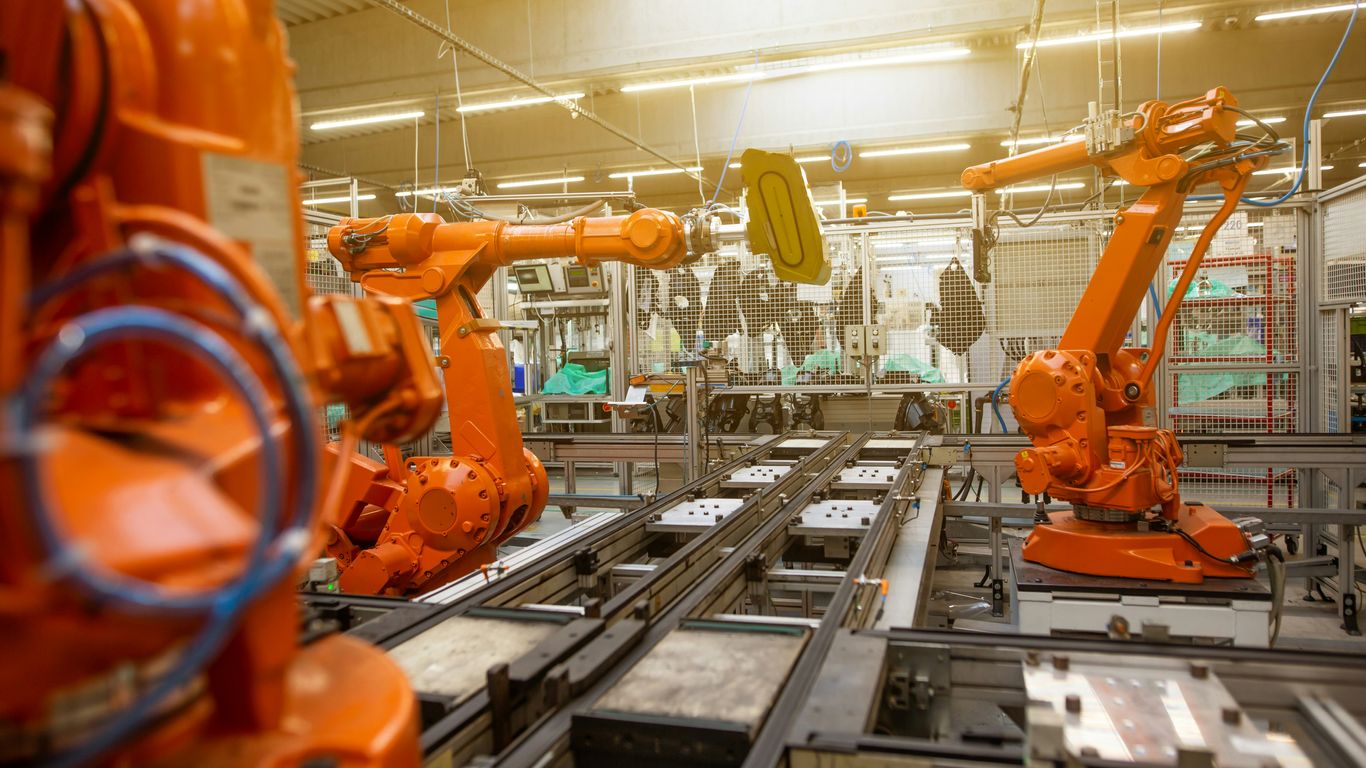
ABB Robotics functions as a fundamental pillar in global industrial automation, leveraging its OmniCore controller platform to drive motion control in a wide variety of production sectors. Their systems enable sophisticated synchronization between multiple robotic cells, ensuring that high-speed assembly processes maintain strict tolerance levels over millions of cycles. The focus here remains on the precision required by sectors like automotive and pharmaceutical manufacturing, where zero-deviation outputs are a requirement rather than a goal.
| Industry | Primary Capability | Deployment Focus |
|---|---|---|
| Automotive | High-speed welding | Chassis assembly |
| Pharmaceutical | Cleanroom packaging | Sterile handling |
| Electronics | Precision sorting | Small component assembly |
- Enhanced motion control for coordinated arm movement.
- Modular software suites for rapid cell reconfiguration.
- Integrated safety protocols for mixed human-machine zones.
These capabilities provide a technical baseline for manufacturers looking to increase output without sacrificing reliability. By standardizing the interface between hardware and logic, they enable firms to deploy complex automation solutions that remain consistent across varying international production sites. The focus on modularity allows for a quicker integration timeline in facilities that frequently cycle through new product iterations.
3. Fanuc
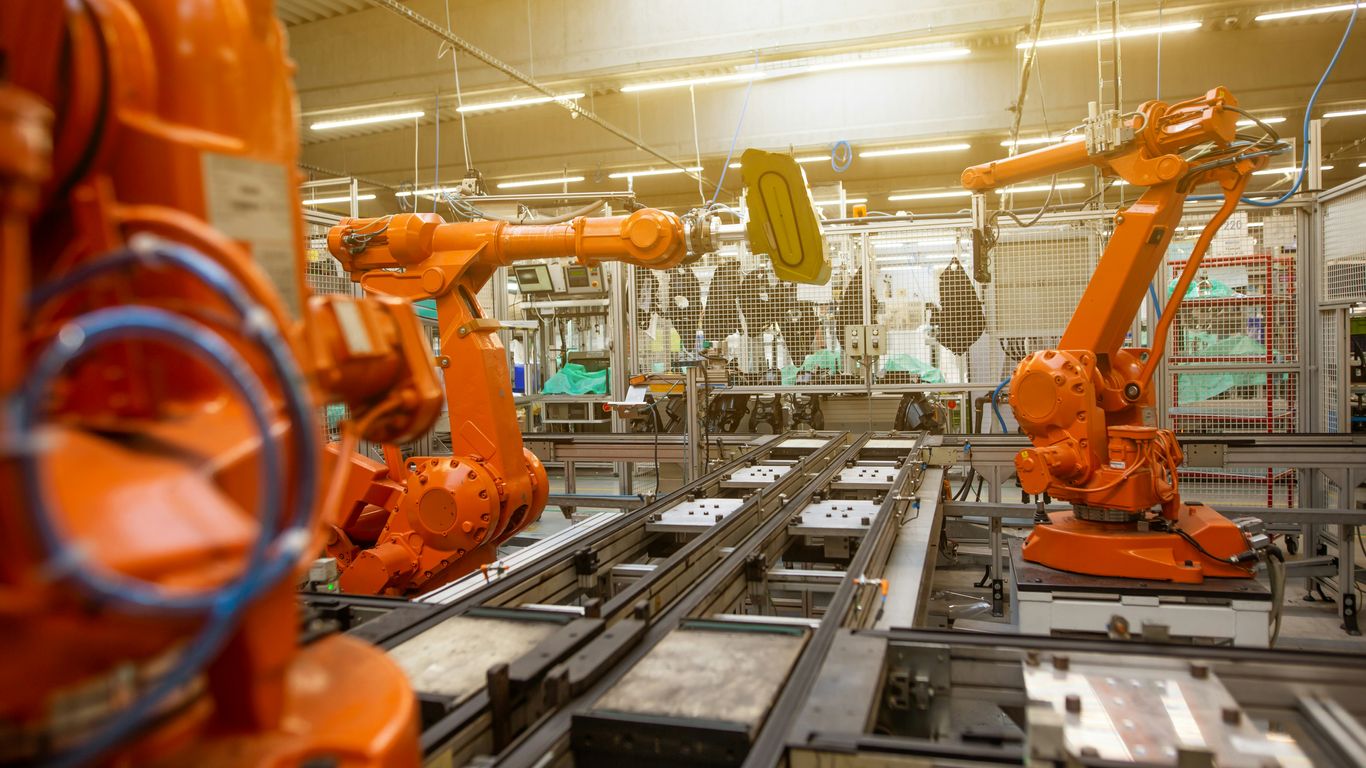
Fanuc stands as the largest manufacturer of industrial robots and CNC systems, utilizing a design philosophy that prioritizes hardware reliability above nearly all other factors. Their yellow robotic arms are integrated into the backbone of global manufacturing because they are engineered to run for years with minimal maintenance interventions. This focus on long-term durability has made them the default selection for heavy-duty environments where machine downtime would result in massive financial inefficiencies.
Beyond simple mechanical robustness, the firm has invested heavily in their intelligent controller interfaces to ensure that their hardware remains compatible with modern factory software stacks. This approach ensures that legacy manufacturing investments can be updated with newer sensor suites and AI-driven path planning without replacing the primary mechanical foundation. Their systems prove that the lifespan of the machine is often the most critical variable in determining the ROI of an automated facility.
For operators, the advantage lies in the widespread familiarity with their ecosystem. Maintenance teams across the globe are trained on these architectures, which lowers the barrier to operation and troubleshooting in complex industrial environments. They exemplify how scaling a proprietary, reliable hardware platform can dominate the global market while creating a standardized path for industrial upgrades.
4. Intuitive Surgical
Intuitive Surgical represents the vanguard of robotic-assisted medical procedures, focusing on the high-stakes environment of the operating room. Their systems are designed to provide surgeons with a level of precision and scaling that would be impossible through conventional manual access. By facilitating minimally invasive procedures, they demonstrate how robotic platforms can improve patient outcomes while simultaneously reducing recovery times.
This application of Best Companies Building in Robotics extends into the digital processing of medical imagery, where the system provides enhanced feedback to the operator. The focus here is strictly on latency-free transmission and tactile fidelity, ensuring that the surgeon’s intent is perfectly translated through the robotic appendages. It serves as a prime example of high-maturity Physical AI integrated into life-critical workflows.
Despite the extreme technical constraints of the clinical environment, the company has successfully scaled its technology globally by proving the economic long-term viability of robotic assistance within hospital operations. The focus remains on educational support for surgeons and the constant refinement of the instrumentation suite. They showcase how a closed-loop system can refine its performance over decades of iterative software and hardware updates.
5. Teradyne
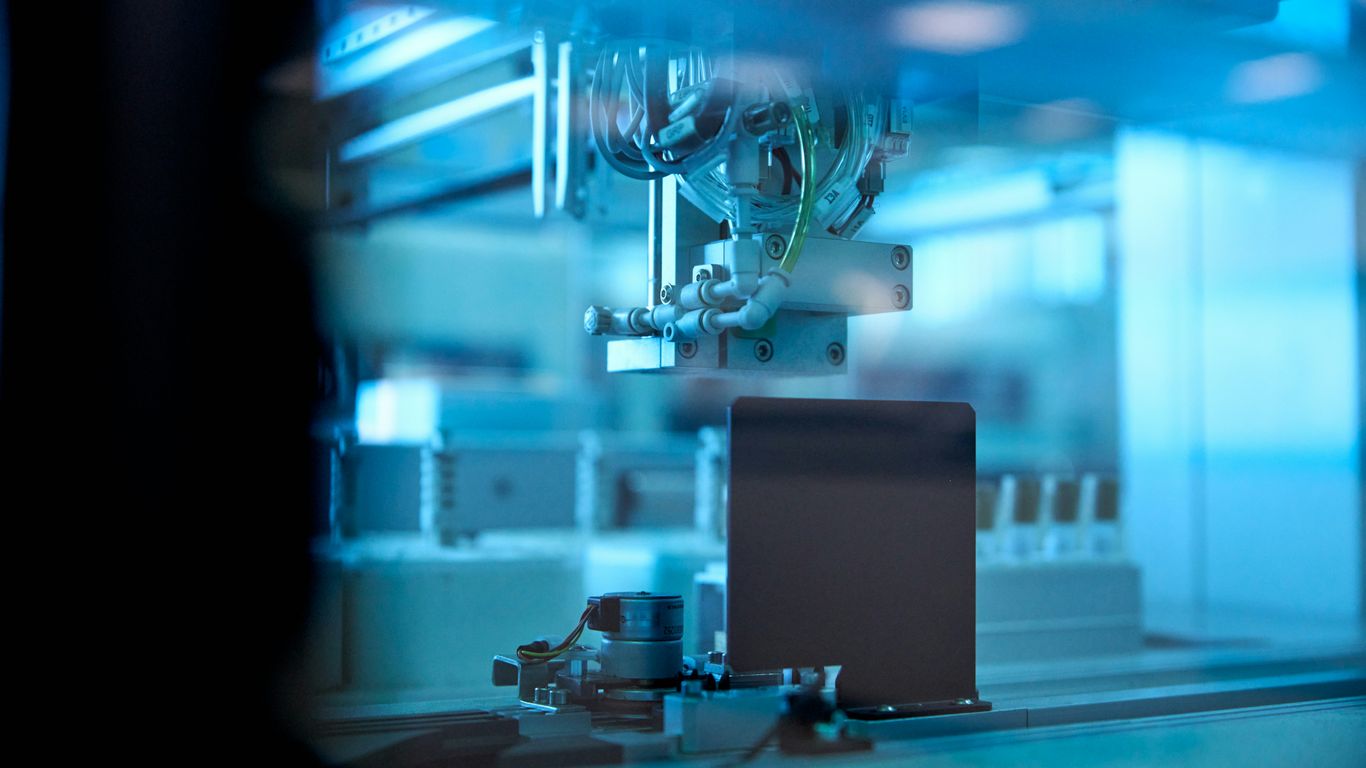
Teradyne has carved out a unique position in the market by diversifying into collaborative robotics, recognizing that modern manufacturing requires machines to work safely alongside human operators. By prioritizing ease of programming and adaptability, their systems lower the complexity barrier for mid-sized production facilities that might otherwise rely on manual assembly. Their contribution to the sector is defined by simplifying the path to automating repetitive and ergonomically challenging tasks.
This approach aligns with the growing demand for flexibility, where manufacturing lines often need to be reconfigured to handle different products without the cost of extensive re-tooling. By providing interfaces that are intuitive enough for floor staff to manage day-to-day changes, the organization demonstrates the value of accessible, software-led automation. It is a clear move toward Physical AI as a standard operational tool.
Looking at their long-term strategy, the focus remains on enhancing the capability of their arm sensors to better identify and interact with surroundings. By bridging the gap between high-end industrial performance and user-friendly operation, the company demonstrates why accessibility is as vital as pure mechanical power. Their success is a strong indicator of how automated collaboration will continue to redefine the modern factory floor.
6. KUKA
KUKA is recognized for its advanced development in large-scale mobile platforms and heavy-duty industrial robotics that serve the automotive and aerospace industries. Their architecture excels in environments where massive loads must be handled with sub-millimeter precision, making them the preferred choice for tasks that are traditionally too dangerous or too strenuous for manual labor. The focus is on the integration of power and control systems that allow for high density in robotic cells.
Beyond the physical capacity of their units, the organization emphasizes the importance of data-driven insights through their digital twin simulations. Before an arm ever executes a motion on a physical site, the firm’s software validates the movement for collision risks and lifecycle degradation. This digital-first strategy represents a critical shift in how industrial automation is planned and maintained in high-speed manufacturing environments.
Their commitment to open, modular software standards also allows for easier integration with third-party automation tools, which is vital for modern factories seeking to unify their operational data. By enabling seamless communication between different layers of the factory stack, they help firms reduce operational bottlenecks. They provide the foundational capability for large-scale infrastructure that requires both brute force and extreme algorithmic precision.
7. Yaskawa Electric
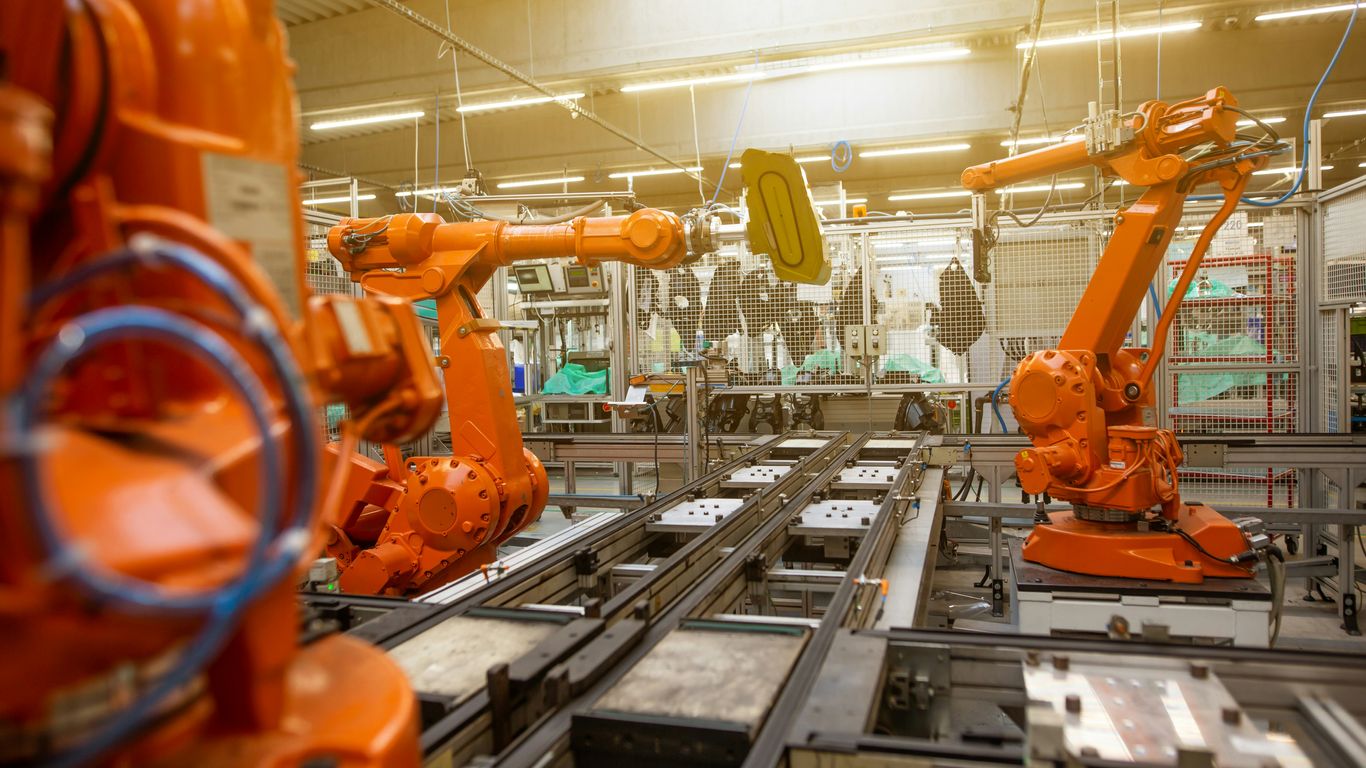
Their systems are built to withstand the rigors of continuous operation, making them a staple in plants where thermal resistance and structural integrity are non-negotiable. The engineering approach emphasizes autonomous welding, which reduces the safety risks to human workers while significantly accelerating production throughput. It is a practical application of robotics that solves a direct, measurable pain point for industrial operators.
When considering total cost of ownership, the organization succeeds by providing a package that scales well across international markets. Their global support infrastructure ensures that even in remote manufacturing hubs, the hardware receives the professional service required for long-term viability. This commitment to both the engineering of the arm and the longevity of the deployment creates a resilient model for the core of the industrial robotics space.
8. Starship Technologies
Starship Technologies addresses the massive gap in autonomous delivery, moving from theoretical robotics to mass deployment in urban environments. By building a fleet of small, ground-based delivery robots, they have generated the data necessary to handle the daily chaos of city traffic, weather-related variables, and human interaction. Their approach demonstrates that the key to success in delivery robotics is not just hardware, but the underlying coordination software that manages thousands of simultaneous routes.
Their success has been built on a series of small, iterative deployments that prioritizes safety and local compliance above rapid expansion. By operating in carefully mapped environments, they have refined the perception systems of their robots to be effective at navigating crosswalks and obstacles found on standard sidewalks. This focus on high-fidelity, real-world data collection has allowed them to solve problems that many other autonomous systems still struggle with in simulation.
For the industry, the company provides a case study in how to navigate the regulatory and logistical challenges of deploying robots into public spaces. They prioritize durability and simplicity, ensuring that their current fleet can operate reliably throughout the year with minimal maintenance requirements. Their growth trajectory points to a future where localized last-mile delivery is entirely supported by distributed, autonomous fleets.
9. UiPath
UiPath has fundamentally redefined modern productivity through its leadership in Robotic Process Automation, translating the principles of robotics into the digital workspace. By creating tools that allow existing business applications to be treated as modular components, they have enabled firms to automate entire workflows that previously required manual data entry. The result is a significant reduction in human error and a massive increase in organizational throughput across finance, HR, and logistics tasks.
Their architectural design emphasizes the ability to observe and interpret existing human-computer interactions, then replicating them with high accuracy at scale. This invisible hand of automation functions as the software equivalent of a factory robot, handling repetitive sequences in a digital environment. By focusing on the integration of these processes, they show that automation is most effective when it bridges the gap between disconnected software systems.
Their commitment to research-led development ensures that the automation suite is constantly updated with new machine learning capabilities. By enabling firms to deploy bots that handle complex decision-making, they reduce the operational drag that typically slows down large organizations. They provide the backbone for automated fulfillment and data management that allows modern businesses to remain competitive in a landscape driven by speed and information accuracy.
10. Agility Robotics
Agility Robotics has differentiated itself by focusing on the form factor of bipedal locomotion tailored for industrial logistics environments. Their primary commercial offering addresses the reality that traditional warehouses and manufacturing sites are built for human dimensions, making humanoid robots a logical step forward. By prioritizing durability and a practical, payload-carrying capability, they are effectively bridging the gap between stationary automation and the need for human-like mobility.
Their focus is not on perfect humanoid aesthetics but on task completion in environments that were previously inaccessible to wheeled robots. This pragmatism is a hallmark of their development strategy, which favors simple walking algorithms and robust physical assembly over overly complex sensing suites. It represents a mature look at Agility Robotics and how their approach to real-world integration aims to solve specific labor shortages.
By focusing on standard shelf and box manipulation, the organization provides a solution that can be dropped into existing facility layouts with minimal modifications. This efficiency in transition represents a key advancement for firms struggling to find workers for repetitive tasks. They illustrate that the next phase of industrial robotics will be defined by machines that navigate the world as humans do, while performing the repetitive heavy lifting that keeps the supply chain moving.
Conclusion
Building the future of robotics requires a convergence of high-durability hardware and adaptive control software across every industry from medical diagnostics to urban logistics. The companies highlighted here demonstrate that success is found by solving concrete operational pain points through rigorous testing and iterative deployment, rather than racing towards speculative breakthroughs. As we move closer to a fully integrated, automated environment, the ability of these machines to navigate, manipulate, and coordinate within existing infrastructure will act as the defining metric for both commercial and technical success.
Frequently Asked Questions
What are the main indicators of robotic maturity?
Robotic maturity is measured by the ability of a platform to maintain consistent performance outside of controlled testing environments, the presence of effective long-term maintenance protocols, and the capacity to integrate with existing legacy infrastructure without requiring full building re-designs.
How does AI integration impact physical robot performance?
AI integration allows robots to move beyond pre-programmed paths to adapt to environmental changes in real-time. This provides the robot with the ability to identify obstacles, adjust travel paths, and modify interactions based on visual or sensory data, which significantly increases the autonomy of the system.
Can industrial robots be used in non-manufacturing settings?
Yes, there is a clear trend toward moving industrial-grade robotics into healthcare, logistics, and retail spaces. Medical surgery and last-mile delivery are two primary areas where industrial concepts like precision movement and repetitive task handling are successfully applied to help with operations.
Why is software-defined autonomy becoming more important?
Software-defined autonomy ensures that as sensor suites and machine learning models improve, the robot can be upgraded without requiring a full hardware replacement. This allows organizations to keep their initial hardware investment relevant for a longer period while incrementally improving performance through software updates.
How do robots handle high-density human workspaces?
Robots in human workspaces rely on sophisticated obstacle detection and rapid-path-planning protocols. These systems use sensors like LiDAR and depth-sensing cameras to create a safe buffer, allowing the machines to pause or circumvent humans instantly to avoid collisions and maintain workspace safety.
What is the advantage of bipedal robotic locomotion?
The primary advantage of bipedal or legged platforms is the ability to navigate through spaces designed exclusively for humans. This includes stairs, narrow doorways, and cluttered industrial paths that would present major obstacles for traditional wheeled or tracked robots.
How is ROI calculated for robotic deployments?
ROI for robotics is typically calculated by evaluating the reduction in labor costs, the increase in operational consistency, the total reduction of downtime during high-peak seasons, and the speed at which the robot completes standard fulfillment or assembly tasks compared to manual methods.