Key Takeaways
Humanoid robotics is transitioning from specialized research to broad industrial utility, driven by advancements in foundation models and hardware manufacturing. The competitive landscape balances established giants against agile startups, each pursuing distinct paths toward scalability and commercial viability.
- Boston Dynamics focuses on physical mastery and movement efficiency for high-end industrial tasks.
- Tesla targets mass-market affordability by utilizing existing automotive production infrastructure and massive neural network training sets.
- Robotics startups prioritize narrow domain-specific automation to achieve rapid commercial integration and deliver immediate value.
- Hardware architecture and power management remain the primary constraints for consistent, long-duration operational performance across the industry.
- Success in this sector will be measured by deployment security, ROI, and standardized integration protocols rather than theoretical peak performance.
The current state of humanoid robotics
The field of humanoid robotics has moved far beyond the laboratory curiosities that defined the early 2000s. While once limited to academic exercises in bipedal locomotion, the sector now faces pressure to deliver tangible, replicable value. As Inside Deep Tech has observed, the race is no longer about balancing on one foot, but about performing work that justifies the massive capital investment required to build these machines. This shift marks the transition from pure robotics research toward general-purpose utility capable of influencing global supply chains.
Historical dominance of academic and specialized research
Early humanoid development was dominated by institutions and government-backed research groups focusing on structural stability. These teams prioritized solving the fundamental mechanics of walking and balance, laying the groundwork for modern robotics. However, these prototypes were often fragile, power-intensive, and designed for controlled environments rather than the chaotic reality of a modern warehouse or manufacturing plant.
The shift toward general-purpose utility
Modern developers are moving away from building robots for specific, narrow movements to prioritizing general-purpose architectures learned through massive datasets. By focusing on cross-industry applications, companies aim to build machines that can adapt to different roles, from sorting boxes to manipulating tools. This versatility is essential for achieving the scale needed for widespread commercial adoption.
Mechanical agility versus software scalability
| Feature | Hardware Focus | Software Priority |
|---|---|---|
| Boston Dynamics | High-fidelity dynamics | Control stability |
| Tesla Optimus | Batch manufacturing | Neural navigation |
| Growth Startups | Task-specific hardware | Adaptive learning |
Mechanical hardware remains the anchor of robotics performance, but software scalability dictates the speed of deployment. While a robot must possess the physical agility to navigate unstructured environments, its utility hinges on its ability to learn and generalize tasks. The true bottleneck currently lies in harmonizing these two pillars to ensure that hardware capability is not outpaced by software requirements.
Analyzing the Boston Dynamics approach
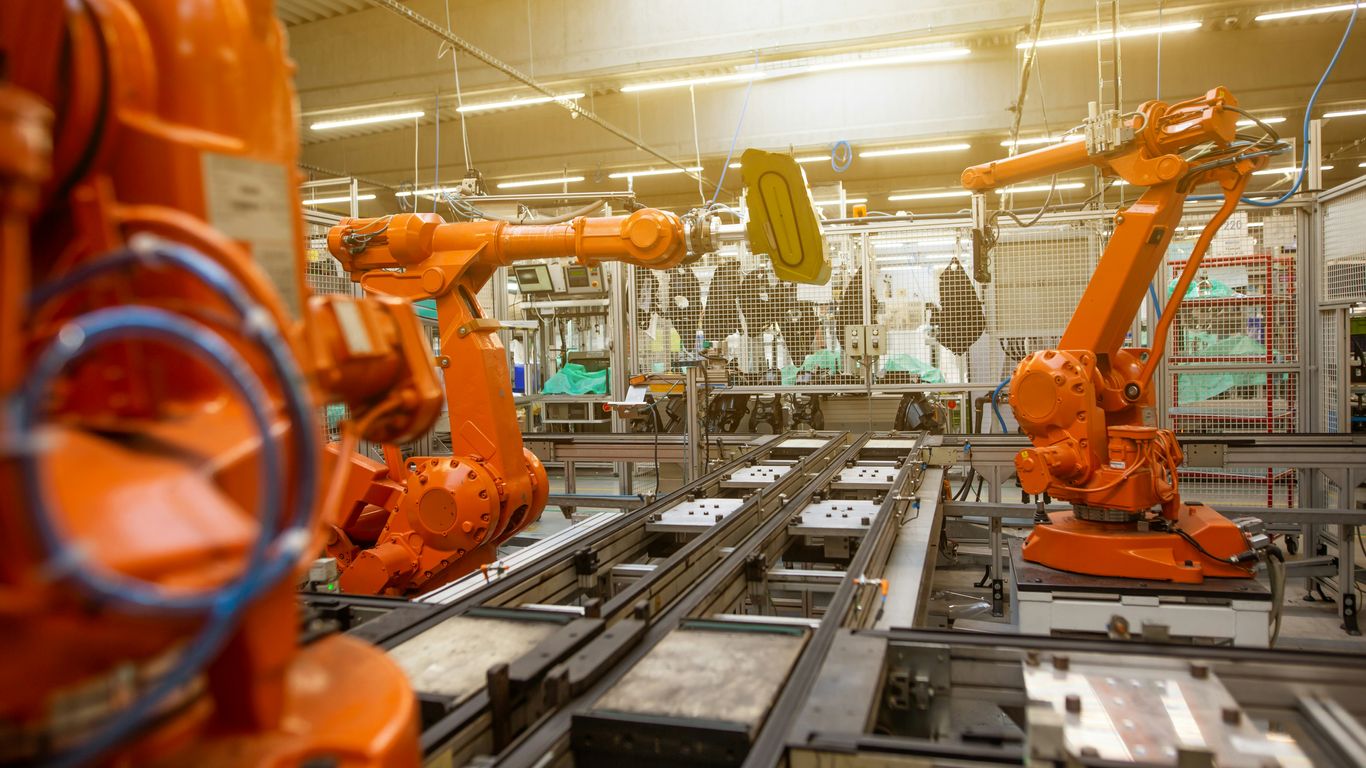
Boston Dynamics represents the pinnacle of high-performance robotic engineering. Their design philosophy centers on achieving nearly biological movement through advanced actuation and sophisticated control loops. By concentrating on what the machine can physically accomplish in the field, they have created a benchmark for hardware reliability that others strive to meet. Their emphasis on integration with heavy industrial partners ensures that their hardware is stress-tested in the most demanding environments imaginable.
Prioritizing physical mastery and athletic capability
By leveraging their deep expertise in legged locomotion, Boston Dynamics has built Boston Dynamics machines that demonstrate unparalleled range in motion and environmental navigation. Their engineers do not just optimize for efficiency; they optimize for reach, stability, and speed in complex settings that would stymie lesser designs. This physical proficiency allows their units to perform tasks that require more than just simple linear movement.
Challenges in scaling production and affordability
Despite their technical dominance, scaling the production of complex, high-degree-of-freedom machines remains an immense hurdle. The precision components and specialized materials required for their platforms currently drive costs significantly above the price sensitivity of the average enterprise customer. This focus on premium quality means their market entry is necessarily slower than those targeting lower-cost segments.
Strategic transition from research prototypes to commercial products
To bridge the gap between engineering marvels and reliable industrial assets, the company is actively refining its designs for facility-grade durability. By forming alliances with manufacturing giants, they are shifting focus toward creating repeatable, maintenance-friendly systems that can support 24/7 operations. This move is a clear indication that the business model is evolving alongside their technology to maximize ROI.
The Tesla Optimus scaling strategy

Tesla’s entry into the humanoid market is predicated on a different foundational logic: the ability to manufacture at scale. Rather than building from the ground up as a bespoke research entity, the organization treats the robot as another product line within an existing automotive infrastructure. The strategy minimizes the cost-per-unit by utilizing standardized manufacturing techniques and shared logistical pipelines already tuned for precision automotive assembly.
Leveraging automotive manufacturing infrastructure
Tesla's advantage stems from their existing vertical integration, where component sourcing, assembly lines, and supply chains are already optimized for volume. This approach allows them to achieve economies of scale that pure-play robotics companies often take years to reach. By applying these lessons to a humanoid frame, they aim to drive the unit cost down to consumer or medium-enterprise levels.
Data-driven learning through neural networks
The intelligence behind their platform relies heavily on Tesla Optimus neural networks that process vast amounts of vision and interaction data. This architecture allows the machine to learn by mirroring behavior rather than relying on intensive, manually coded instructions. The goal is to create a robot that learns like a human apprentice, quickly internalizing tasks through continuous observation.
The goal of low-cost, mass-market deployment
Ultimately, the vision is to provide a low-cost, generalized laborer that can be deployed across a wide range of entry-level tasks. While the hardware might lack the extreme agility of specialized platforms, its strength is its accessibility and ease of fleet-wide deployment. This trade-off is central to their plan of reaching tens of thousands of robots in operation within industrial and logistics workspaces.
The hidden power of robotics startups

Robotics startups are currently navigating the space between the high-end industrial capabilities of established players and the mass-market ambitions of the automotive scale. Companies like Figure AI and 1X Technologies are focusing on distinct, high-impact niches where their specific hardware/software stack offers immediate improvements in operational efficiency. These teams often benefit from higher agility compared to larger incumbents, enabling them to pivot their designs rapidly based on real-world testing feedback.
Targeted focus on domain-specific automation
Instead of aiming for a universal robot from day one, several startups are perfecting specific manipulation tasks in hazardous or high-volume environments. By solving for one or two critical bottlenecks, they establish a durable business case while collecting the data necessary to expand into broader functional domains later. This approach ensures they provide tangible value to logistics giants, which helps with future scalability.
Rapid iteration cycles and agile development
Smaller team structures allowed for the rapid hardware and software cycles that define the current Agility Robotics approach to development. By running frequent field trials and iterating on CAD designs and software updates simultaneously, they drastically reduce the time between prototype and performance validation. This iterative speed creates a significant advantage when operating in sectors where technological requirements change rapidly.
Strategic partnerships with established logistics giants
Successful startups are securing early buy-in from massive e-commerce and logistics partners that act as both early adopters and testing grounds. These engagements serve two purposes: they provide a steady revenue stream and they offer access to real-world edge cases that are difficult to simulate. Such deep industry ties are essential for anyone attempting to move from lab results to facility-grade reliability.
Comparison of key technological pillars
The fundamental challenge of humanoid robotics lies in satisfying mutually exclusive design goals: high performance versus low power consumption, and great dexterity versus high durability. Developers must make calculated trades across their system architectures, deciding where they can afford to compromise to meet the operational demands of their target environment. Achieving these balances requires a combination of high-density energy storage, low-latency communication, and efficient actuation networks.
Actuator design and power efficiency
To operate successfully, robots need precise control over every joint. Contemporary setups use either electric motor systems or hydraulic actuators. Modern advances are pushing the former toward greater reliability and lower weight. For any operator, operating humanoid robots safely depends on the battery life and energy management systems that dictate how often the unit must stop for maintenance or recharging.
Sensor suites and spatial awareness systems
Navigation requires a high-fidelity understanding of the robot's immediate surroundings. This generally involves a combination of depth cameras, LiDAR modules, and inertial measurement units. These sensors enable the machine to build a digital twin of its workspace, allowing it to avoid human workers and navigate around dynamic obstacles with minimal latency. High-quality data prevents the costly downtime associated with collisions.
Inference capabilities and edge computing requirements
Processing intelligence locally on the edge—rather than relying solely on cloud-based computation—is critical for speed and reliability. As autonomous tasks become more complex, the on-board compute requirements grow exponentially. Startups must balance the weight of these processing units against the power budget, often selecting custom silicon to handle inference without sacrificing the robot's mobility or operational lifespan.
Future market trajectories and benchmarks
The long-term success of the humanoid sector will depend on establishing standard metrics for safety and integration, rather than just raw performance capacity. We are rapidly approaching a moment where these systems move out of pilot programs and into full-shift industrial work, making standardized validation a prerequisite for the industry. As companies finalize their roadmaps, they must be transparent about how these machines integrate with existing safety protocols, labor workflows, and maintenance regimes to win the trust of global firms.
Determining the ROI for universal robots
- Analyzing human-equivalent task completion rates.
- Calculating total cost of ownership including maintenance.
- Comparing hourly productivity against traditional fixed automation.
- Projecting the required workforce upskilling and integration timelines.
Measuring return on investment requires viewing the robot as a shiftable asset. When businesses can calculate the direct replacement value of dangerous or dull labor, they can make data-backed decisions on deployment. If the maintenance schedule and total power cost represent a fraction of the wages saved, the model for widespread adoption solidifies.
The role of industry standards in safety and integration
Without comprehensive regulations regarding collaborative safety and data interoperability, adoption will remain localized to experimental zones. Industry players must move toward common standards for how robots interact with human spatial zones and how they communicate with existing warehouse systems. Developing these norms will lower the barrier for traditional businesses to begin integrating humanoid assets.
Predictions for the next five years of humanoid deployment
Over the next five years, we expect to see a consolidation of companies that can successfully bridge the gap between proof-of-concept and scalable revenue. The winners will likely not be those with the thinnest waist or the fastest gait, but those that can consistently deliver 99%+ uptime in messy, real-world conditions. Those following Stoic Futurism principles will likely succeed by prioritizing these boring, yet essential, operational benchmarks over the flash of marketing demos.
Conclusion
The trajectory of humanoid robotics is settling into a pattern where engineering depth meets industrial demand. As the hype cycles calm, the focus remains locked on creating reliable systems that solve human-centric problems in warehouses and manufacturing. The field represents a definitive shift in how physical work is structured, moving beyond rigid automation to machines that possess the fluidity and learning capacity to adapt to the complexity of the modern world.
Frequently Asked Questions
Why are humanoid robots preferred over other automated systems?
Humanoid shapes are optimized to operate in environments already built for humans, allowing them to utilize stairs, hand tools, and narrow aisles without requiring facility-wide renovation.
What is the biggest hurdle for humanoid robot adoption?
Hardware durability combined with battery efficiency remains the primary bottleneck for machines that must operate for twelve-hour shifts without continuous maintenance or recharging stops.
How is machine learning integrated into modern robots?
Neural networks allow robots to learn through imitation and reinforcement, enabling them to adapt to new tasks by observing human movements rather than requiring manual programming for every specific action.
Will robots replace human workers in the next five years?
They are anticipated to fill critical gaps in dull, dirty, and dangerous roles where labor shortages persist, acting as collaborators alongside humans rather than wholesale replacements in the near future.
What impact do foundation models have on robotics?
These models allow robots to generalize knowledge across different physical tasks, dramatically speeding up the training time required for them to handle new environments or object shapes.
How do manufacturers ensure worker safety around robots?
Sophisticated sensor suites, combined with collision-avoidance algorithms and strict regulatory standards, allow these machines to detect the proximity of humans and stop operations instantaneously if a safety threshold is breached.
Are there standard metrics for comparing humanoid performance?
Benchmarks are emerging that focus on uptime, task accuracy with specific end-effectors, and the ability to maintain speed under variable load conditions in realistic, unstructured environments.