
The Best Warehouse and Industrial Robotics Startups of 2026

Key Takeaways
The warehouse and industrial landscape is undergoing a significant shift as specialized robotics companies bridge the gap between lab-tested prototypes and industrial-scale production. This evolution relies on integrating advanced artificial intelligence, unified fleet management, and robust hardware to solve persistent labor and efficiency shortages in global supply chain operations.
- Advanced AI is enabling robots to perform unstructured tasks such as piece-picking and complex grasping.
- Digital twin platforms are providing the orchestration layer necessary for managing heterogeneous robot fleets.
- Sustainability and autonomous power management are emerging as critical components for continuous industrial operation.
- New ASRS configurations are optimizing vertical space and inventory density in crowded urban fulfillment centers.
- Real-time inventory tracking is undergoing a transformation through automated drone and vision-based systems.
1. Autonomous mobile robots for dynamic warehouse environments
The adoption of autonomous mobile robots has moved beyond rigid programmed paths to systems that navigate unpredictable industrial floors with high fluidity. These units are essential for moving goods between storage and manual or robotic workstations without forcing a complete restructuring of existing facilities. Manufacturers focus on sensor fusion, using LiDAR and depth cameras to maintain safety and throughput while avoiding stationary or human obstacles.
Deployment strategies now prioritize modularity, allowing companies to add or remove robots as peak seasons dictate throughput requirements. Instead of large capital investments in fixed conveyor belts, warehouse managers are shifting toward robots that treat the floor as an accessible, open grid. This transition has proven critical for businesses struggling with the high costs of manual labor in standard fulfillment settings, as noted in the top-funded robotics startups industry reports.
Successful integration often relies on seamless handoffs with existing Warehouse Management Systems (WMS). These robots act as the connective tissue, linking different zones of a facility that were previously disconnected silos. By focusing on adaptive pathing and obstacle avoidance, these systems ensure that industrial operations remain consistent even when human workers or other machines move across their intended trajectories.
2. AI-driven piece-picking and grasping startups
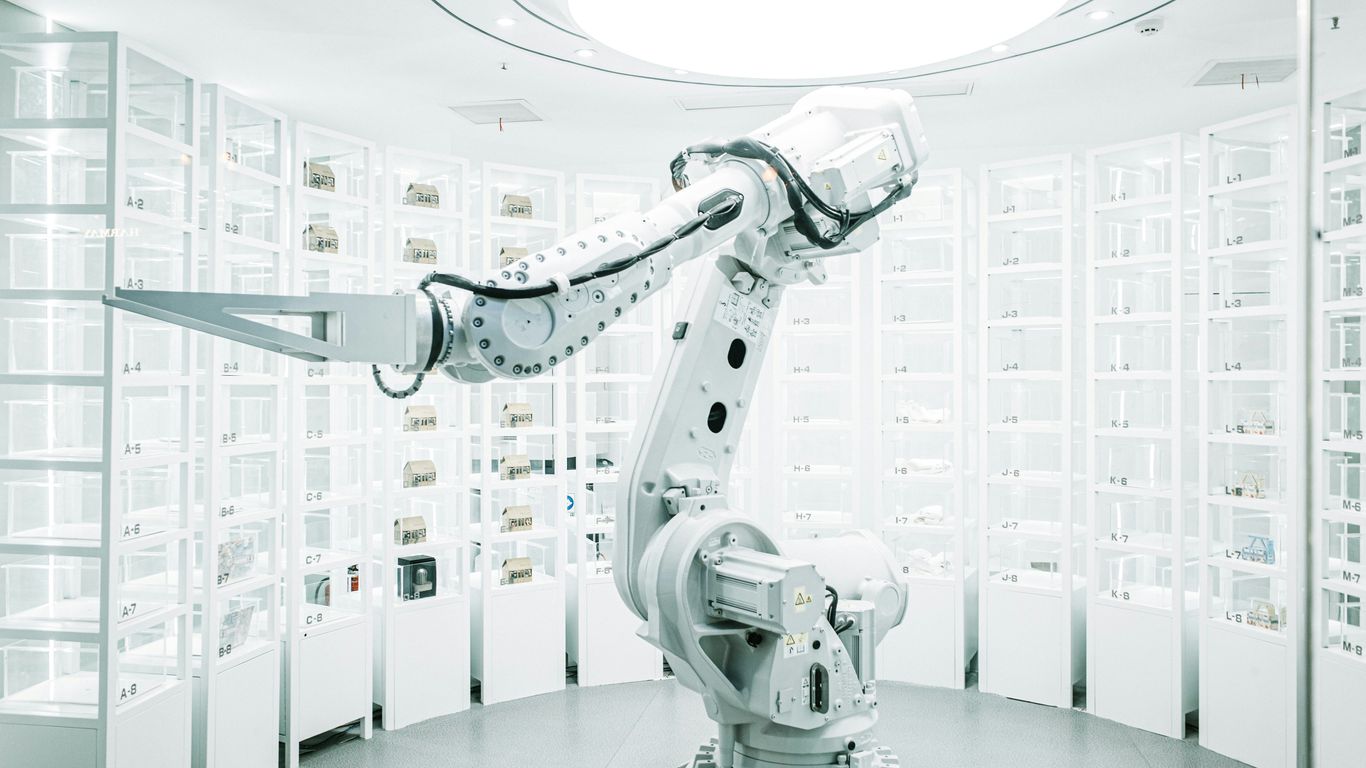
Piece-picking was long considered the most difficult task to automate because it required handling items with irregular shapes, textures, and fragile packaging. Recent startups are addressing this by integrating vision-language models into robotic end-effectors, allowing them to "understand" the object before the physical grasp occurs. This intelligence goes beyond a simple coordinate match, enabling the machine to plan the orientation of its grip to ensure product safety.
Many of these firms focus on deep learning frameworks that are trained with massive datasets of simulated object manipulations. By bridging this knowledge from the virtual to the physical domain, these startups have enabled robots to handle thousands of unique stock-keeping units without requiring manual reprograming. Consequently, companies like Nimble Robotics have demonstrated how superhumanoid capability can be effectively applied to high-volume e-commerce fulfillment.
When we evaluate the ROI of these systems, we look specifically at pick-accuracy rates and the reduction in damaged goods during the induction phase. High-performance systems today achieve error rates comparable to humans while operating in multi-shift configurations. This allows the facility to maintain uptime during periods when human recruitment is particularly challenging, provided the grasping hardware remains resilient and responsive.
3. Novel automated storage and retrieval systems
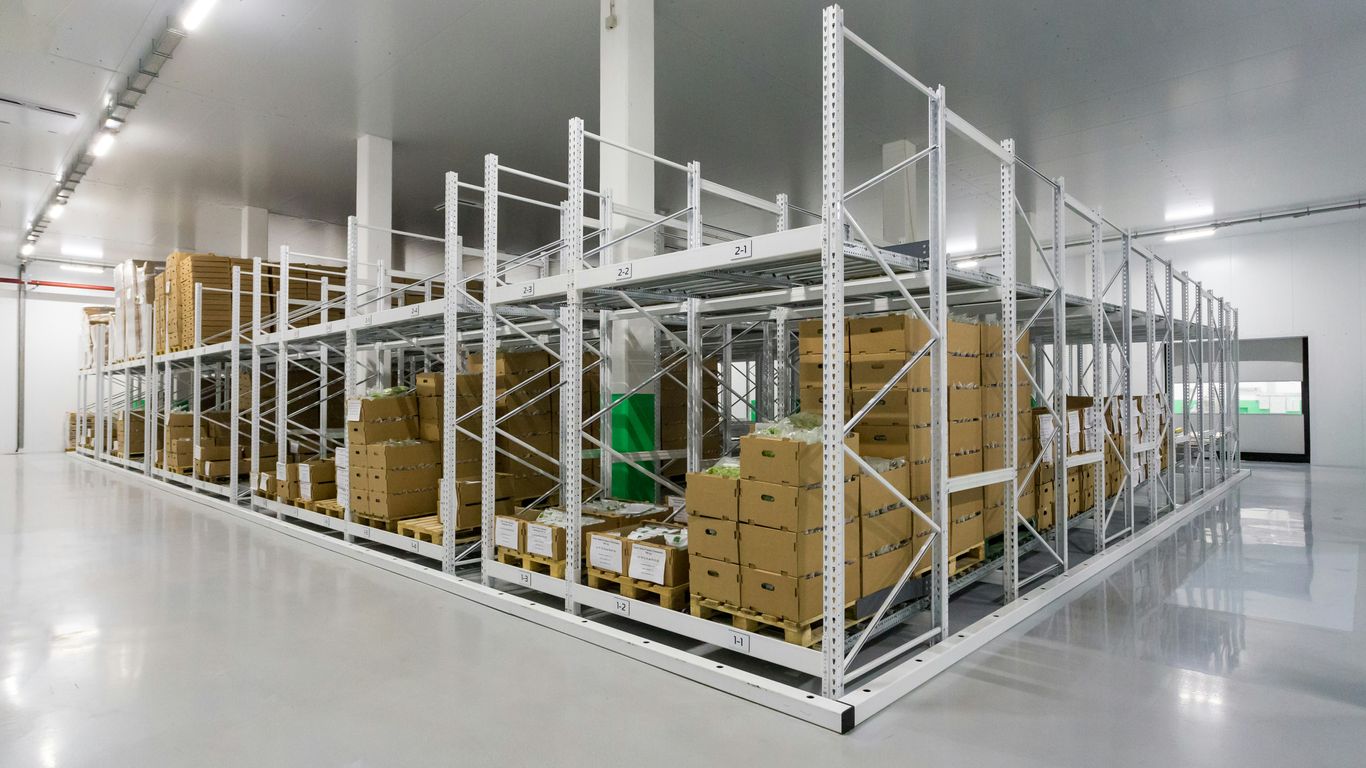
Modern automated storage and retrieval systems now challenge the traditional reliance on simple crane-based systems. These newer designs emphasize bin-to-person workflows, where dense grids hold thousands of units that are retrieved rapidly by specialized bots. As demand for footprint efficiency increases, these systems allow companies to maximize vertical capacity in facilities that are otherwise too small for traditional heavy equipment.
These automated configurations allow for rapid slotting and re-slotting of inventory based on real-time order velocity. By keeping the most frequently ordered items available at the top levels of the grid, these systems significantly reduce the retrieval cycle times. As discussed in recent robotics startups 2026 analysis, companies that master high-density bin management often see substantial gains in floor-space utilization once implemented.
Consider the operational impact of these systems in the table below:
| Feature | Traditional Racking | Modern ASRS |
|---|---|---|
| Density | Low/Medium | Very High |
| Retrieval Speed | Slow | Near Real-time |
| Scalability | Manual Expansion | Modular Addition |
This table highlights why companies are transitioning toward automated grids. The operational agility afforded by modular infrastructure for storage density is rapidly becoming the standard for any facility managing high SKU counts.
4. Collaborative robotics firms for assembly and sorting
Collaborative robots, or cobots, fill a niche where industrial arms must operate reliably while sharing space with human workers. These systems include sensitive internal torque sensors that stop movement upon detecting contact, allowing for safe interactions during sorting or light assembly tasks. They are particularly effective when the goal is to augment human speed rather than replace the worker entirey.
These startups are now focusing on portability, allowing teams to move the robot between different stations on a factory floor depending on the immediate bottleneck. By utilizing intuitive teach-to-learn software, operators who lack deep coding expertise can command the robots to perform new sequences. This democratization of the programming interface is a primary driver for the widespread adoption observed in modern industrial automation reports.
- Quick-switch end effectors for changing tools.
- Force-sensitive safety monitoring systems.
- Tablet-based intuitive control interfaces.
- Lightweight chassis for rapid workspace redeployment.
These systems allow for a flexible workforce configuration, enabling workers to focus on quality control while the robot handles the repetitive motion. Investing in this type of human-robot collaborative workflow is a strategic move for businesses that maintain a strong commitment to local manufacturing while optimizing for cost-effective throughput.
5. Intelligent warehouse orchestration and digital twin platforms

Warehouse orchestration layers serve as the centralized brain for heterogeneous robot fleets, ensuring that machines from different manufacturers work together without conflict. These platforms leverage digital twin technology to create a live, virtual mirror of the physical facility. Managers can then simulate potential changes, such as re-routing lanes or adding new charging spots, before making permanent adjustments to the physical infrastructure.
Visibility is the main benefit here; managers can track the performance of every bot in real-time, identifying bottlenecks before they impact order fulfillment. Platforms like Inside Deep Tech have highlighted how essential this level of transparency is for sites operating with high levels of complexity. Without a unified dashboard, fleet managers often find that their individual robot islands act as localized bottlenecks rather than holistic assets.
Orchestration is the defining challenge of the next phase in warehouse automation, transitioning the facility from a collection of discrete parts into a cohesive, software-defined machine.
This logic applies particularly when scaling across multiple geographical regions, where real-time coordination prevents downtime during network fluctuations. By relying on digital twin accuracy, companies can refine their operational strategy without interrupting the active flow of goods.
6. Robotic palletizing and depalletizing specialists
Palletizing remains a labor-intensive chore that involves heavy lifting and repetitive strain, making it a prime candidate for specialized robotics. New startups are rolling out systems that combine 3D vision and heavy-payload arms to build stable, dense pallets with minimal instruction. The software governing these arms must calculate center-of-gravity shifts in real-time to ensure the pallet does not collapse during transport.
These systems are increasingly moving toward end-effector designs that handle multiple box sizes simultaneously. This is a technical hurdle, as the robot must effectively balance different weights while keeping the pallet structure square and compliant with shipping regulations. Success in this field requires advanced sensory feedback for load balancing, ensuring that every pallet leaves the line in perfect condition regardless of the disparate items included.
Many of these specialized specialists now offer their systems through flexible service contracts. This allow mid-sized logistics providers to offload the burden of pallet construction without taking on the massive upfront costs of industrial hardware. These companies are effectively standardizing a task that was, until recently, viewed as too unpredictable for anything other than manual labor.
7. Drone tech for real-time inventory and site inspection
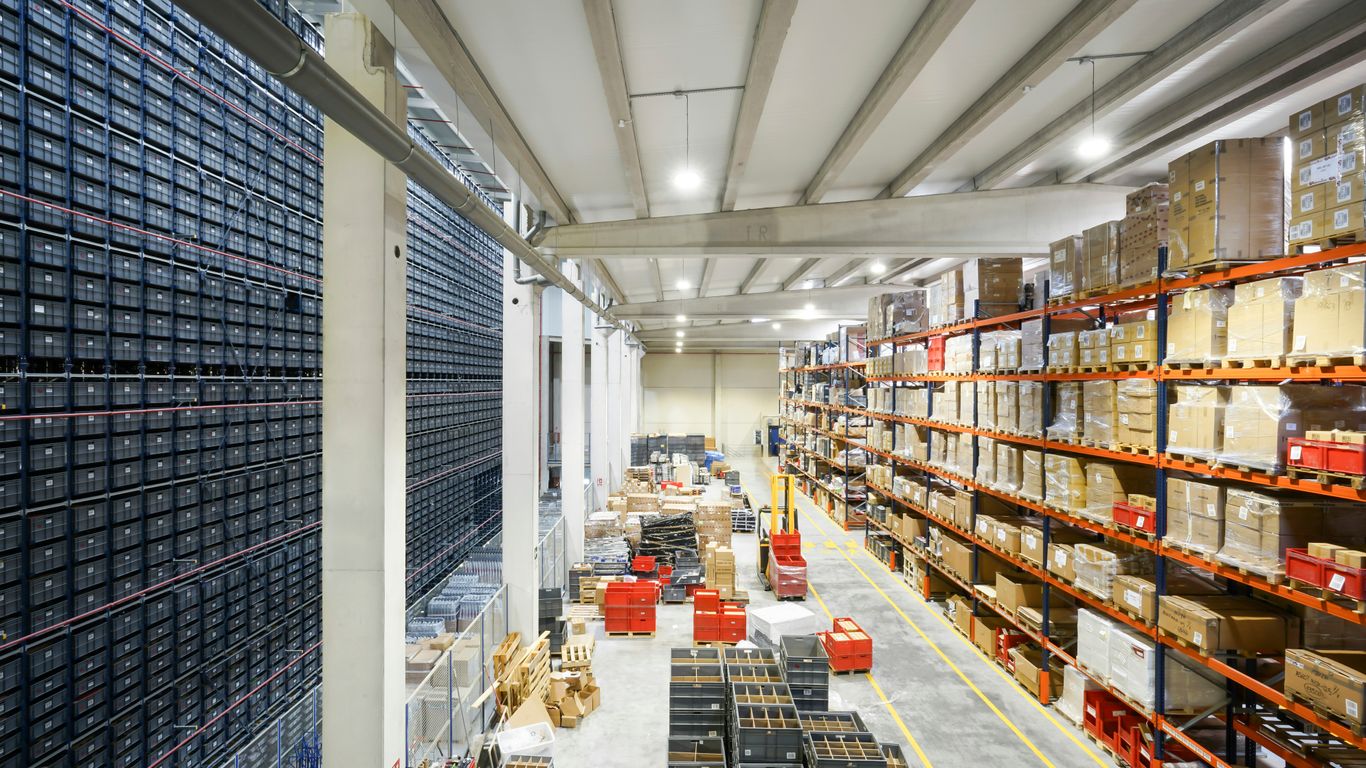
Inventory counting was historically a periodic, disruptive manual task that often grounded operations for days at a time. Today, autonomous drone fleets and vision-equipped robot crawlers scan barcodes and RFID tags with unprecedented speed. These systems fly or move through aisles during off-hours, providing an accurate, digital snapshot of stock levels that can be verified against the WMS system by the start of the next morning.
Beyond basic inventory, these systems are equipped with high-resolution sensors to detect safety hazards or structural anomalies on high-up racks. This proactive observation allows teams to fix minor issues before they lead to full system failures. Firms in the robotics space tech ecosystem have shown how leveraging aerial intelligence reduces the overhead required to maintain accurate digital ledger logs in vast warehouses.
Maintaining these systems requires robust indoor positioning, as traditional GPS does not penetrate warehouse roofs. Startups have addressed this using integrated beacons or SLAM (Simultaneous Localization and Mapping) to navigate precisely within the four walls. The result is a total reduction in inventory variance and a permanent increase in warehouse audit transparency.
8. Micro-fulfillment and last-mile warehouse automation startups
Micro-fulfillment centers (MFCs) are popping up inside retail stores and urban depots, bringing inventory closer to the end consumer. These centers require a much smaller robotic footprint, pushing startups to develop systems that are compact and highly efficient in constrained spaces. The goal is to shrink the distance between the stock and the customer to facilitate rapid, often same-day delivery timelines.
These startups are optimizing for low power consumption and small physical dimensions to comply with zoning and building safety constraints in metropolitan areas. By reducing the reliance on massive, remote regional hubs, firms are successfully lowering last-mile costs. Many of these projects are supported by innovations in warehouse operations that translate well into smaller settings.
The shift toward micro-fulfillment is essentially a response to the e-commerce expectation for instantaneous transactions. By creating mini-automated hubs, retailers turn their existing storefronts into logistics nodes. This transition is essential for retailers competing against firms that have already built highly sophisticated delivery networks, ensuring they do not lose market share to logistics-focused incumbents.
9. Multi-vendor fleet management software innovators
As most facilities end up using a mix of robot types from various OEMs, the demand for vendor-agnostic fleet management software has surged. These platforms focus on protocol translation, allowing a robot from one manufacturer to communicate effectively with a charger, door, or elevator from another. Without this interoperability, a warehouse is forced to rely on a single vendor for its entire robotics stack, limiting future flexibility.
Innovators in this space are building standardized communication backbones that allow for seamless plug-and-play integrations. By decoupling the hardware from the management layer, these firms provide a buffer against supply chain issues and vendor lock-in. Their tools are becoming the gold standard for companies that want to maintain long-term fleet infrastructure agility through vendor competition.
These systems are also essential for managing complex software updates. When a new firmware version is released for a category of robots, the management platform schedules and verifies these deployments across the fleet, ensuring that one faulty patch does not cripple the entire operation. This oversight is vital for maintaining the operational maturity that large-scale global retailers demand.
10. Next-generation power and charging solutions for industrial robotics
Continuous operation for industrial robotics hinges on efficient energy management, moving away from simple docks toward sophisticated autonomous energy solutions. Startups are exploring inductive charging, which allows robots to top up energy while stopped at pick-up points, and high-density fast-charging batteries that minimize the time spent away from the floor. This minimizes the density of docked robots that are idle for hours at a time.
Managing a swarm of robots requires a global view of battery levels, preventing entire cells in the warehouse from reaching the red zone simultaneously. Sophisticated software now triggers charging commands based on predicted order load, ensuring batteries are primed before surges occur. These power-management startups are effectively extending the duty cycle of every robot, a critical factor for facilities running 24/7 schedules.
Sustainability is also a driver, as fleets grow larger and energy consumption becomes a significant operating expense. By maximizing the life of individual battery cycles and optimizing grid usage, companies are finding new ways to reduce their environmental impact. This focus on sustainable energy management for robotics is currently one of the most overlooked, yet vital, performance markers for scaling warehouse automation startups.
Conclusion
The landscape of industrial automation has matured from speculative lab experiments to a robust ecosystem of specialized startups that fundamentally reorder the economics of the warehouse. By focusing on software orchestration, AI-driven manipulation, and resilient hardware, these companies are effectively solving the deep-seated productivity bottlenecks that have hindered supply chains for decades. As these technologies integrate into standard operational workflows, the next few years will see a rapid transition toward facilities defined by their ability to scale and adapt in real-time, marking the permanent arrival of the autonomous warehouse era.
Frequently Asked Questions
What are the primary benefits of investing in warehouse robotics?
The benefits include significant improvements in order throughput, accuracy, and the ability to operate in labor-constrained markets. Robotic systems handle repetitive or physically demanding tasks consistently, leading to reduced injury rates and lower long-term operational costs.
How do modern warehouse robots navigate unstructured environments?
Most modern units use a combination of LiDAR, depth cameras, and IMU sensors combined with SLAM algorithms to create and update building maps in real-time. This allows them to detect and safely navigate around obstacles, including humans, without the need for pre-installed physical guides.
Can different robotic systems from multiple vendors work together?
Yes, through the use of vendor-agnostic warehouse orchestration software. These platforms provide a unified communication layer that translates protocols, allowing diverse robots to share the same operational map and workspace efficiently.
What is a digital twin in the context of an industrial warehouse?
A digital twin is a virtual model that mirrors the live state of a physical warehouse. It is used to simulate operational changes, test new robotic workflows, and forecast the impact of hardware adjustments before implementing them in the actual facility.
Why is piece-picking more difficult for robots to automate than palletizing?
Piece-picking involves handling items of varying sizes, weights, and fragile materials, often from bins of unsorted products. Palletizing is generally more predictable as it involves stacking standard-sized boxes or containers, making it easier to program the motion and weight-distribution logic.
How do robots handle battery management in a 24-hour facility?
Robots typically utilize smart scheduling software that monitors battery levels across the fleet in real-time. Charging occurs automatically based on workflow needs, and some designs include fast-charging or inductive platforms that keep robots ready for service with minimal downtime.
How does warehouse automation affect human employment roles?
Automation typically shifts human roles toward higher-level tasks, such as system monitoring, error troubleshooting, and robot maintenance. It often reduces the necessity for repetitive, injury-prone physical labor while increasing the demand for skilled workers who can engage with the robotic stack.