The Most Funded Robotics Startups of 2026, Ranked by Valuation

Key Takeaways
The robotics landscape is shifting rapidly in 2026, with billions in capital flowing toward teams capable of delivering commercial-ready humanoid hardware. Investors are moving away from speculative prototypes, prioritizing startups that are successfully deploying robots into real-world factory and logistics environments.
- Capital efficiency is becoming the primary metric for evaluating long-term viability in robotics.
- Scaling production capacity from dozens to thousands remains the industry's largest technical hurdle.
- Software-defined autonomy is proving more defensive than proprietary hardware designs in current market conditions.
- Strategic partnerships with manufacturing firms are essential for early-stage commercial proof points.
- Autonomous navigation and task-agnostic manipulation capabilities are the most valued technical assets this year.
1. Figure AI: scaling humanoid production
Figure AI has emerged as a central figure in the race to scale general-purpose humanoids for workforce integration. The company has moved aggressively beyond laboratory settings, focusing on the mechanical and neural challenges of large-scale manufacturing to meet the growing demand for automated labor solutions. By refining its assembly processes, the firm aims to transition from pilot programs to full-scale enterprise operations.
Funding for the firm has reached new heights, making it a leader among the most funded robotics startups 2026 valuations. The company's strategy involves heavy investment in hardware robustness to ensure long-term operational consistency. This approach contrasts with earlier industry efforts that relied on iterative redesigns, instead favoring a path that mimics automotive production cycles to achieve consistent output.
Investors observe that Figure AI is leveraging strategic infrastructure investment to reduce the unit cost of its primary robot platform. By aligning its development with existing workforce workflows, the startup has secured a unique position in the commercial market. The focus now rests on maintaining the delicate balance between increasing production volumes and preserving the high-fidelity sensing capabilities required for dexterous manipulation.
2. Agility Robotics: industrial deployment milestones
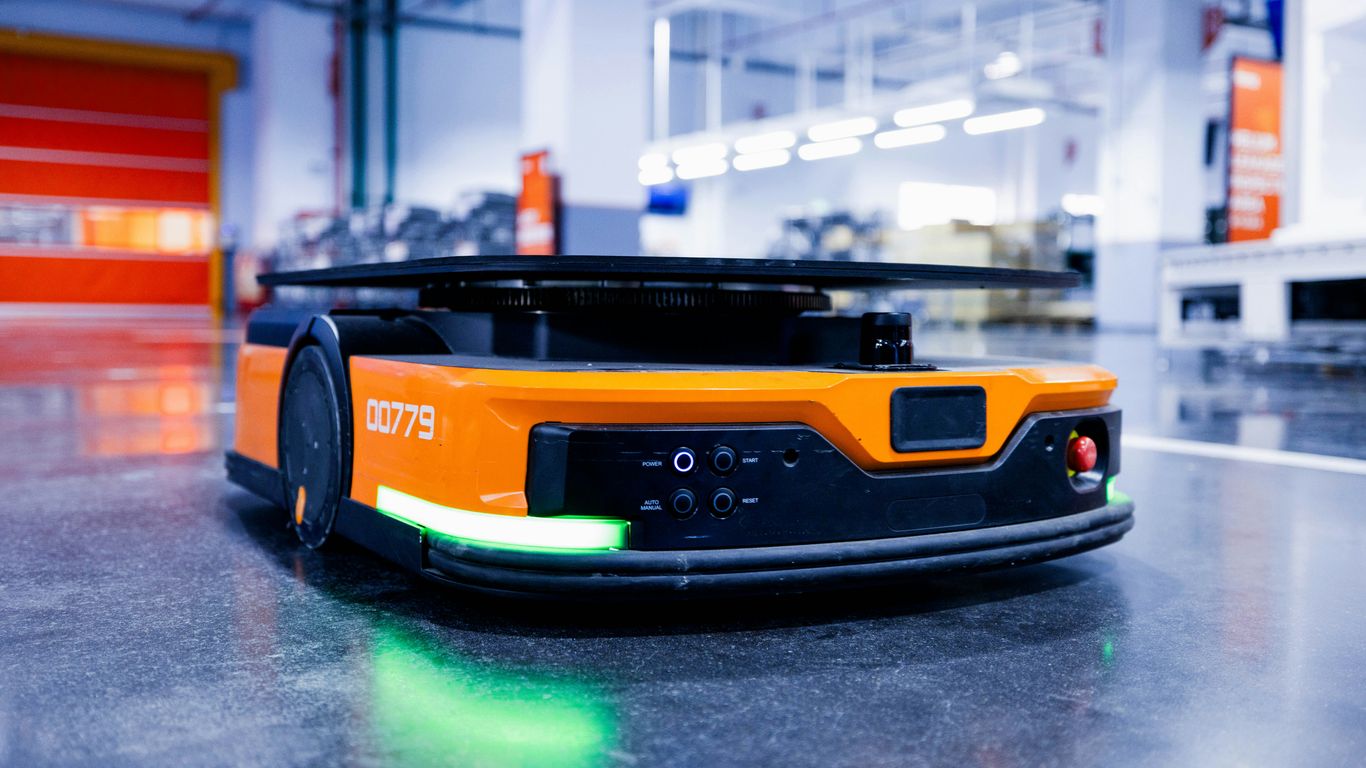
Agility Robotics has focused its resources on proving the reliability of bipedal systems within the demanding environments of warehouse logistics. By deploying fleets specifically configured for repetitive material handling tasks, the organization has demonstrated a repeatable path for enterprise adoption. The company prioritizes Agility Robotics system robustness, ensuring that its machines perform consistently during extended service cycles.
Their engineering team has invested years in perfecting the gait and balance algorithms necessary for safe operation in shared human-robot workspaces. This reliability is built upon a hardware architecture that inherently balances high-speed movement with collision avoidance. Such features are critical for companies looking to mitigate the high insurance and maintenance overhead typically associated with human-intensive logistics.
| Feature | Performance Metric | Primary Use Case |
|---|---|---|
| Battery Life | 8 Hours | Warehouse Sorting |
| Lift Capacity | 15 KG | Last Mile Delivery |
| Spatial Awareness | 360 Lidar Scan | Obstacle Navigation |
This table illustrates the current performance benchmarks that define the operational value proposition of high-deployment robotic hardware. While competitors often shift configurations, this standardized approach allows for tighter integration into existing logistics software systems. Future deployments will likely focus on interoperability between different robot types within the same facility.
3. Boston Dynamics: evolution of hydraulic and electric systems

Boston Dynamics has navigated a significant transition as the industry shifts toward electric actuation for higher efficiency and lower maintenance costs. The engineering challenge involves replicating the power density of legacy hydraulic systems while adopting cleaner, quieter electric alternatives. This move is necessary to satisfy the commercial requirement for equipment that can operate inside sensitive office or service environments without excessive noise or fluid leak risks.
The organization maintains a unique technical footprint by combining its experience in complex kinematics with modern AI-driven motion planning. As the sector evolves into highly scalable robot fleets, the focus shifts to reducing the complexity of mechanical service requirements. By simplifying their actuation paths, the firm is preparing for a new generation of hardware capable of higher duty cycles in commercial usage.
- Enhanced motor reliability through redundant sensor integration.
- Improved power-to-weight ratios using advanced composite materials.
- Simplified maintenance schedules designed for non-technical facility staff.
- Integrated AI controllers for adapting to dynamic floor materials.
This list highlights the fundamental design shifts that now dominate internal product roadmaps. These improvements ensure that the transition to electric propulsion does not come at the expense of the mobility speed or payload capacity for which the platforms are renowned. The outcome is a more resilient product that meets the reliability requirements of large enterprise customers.
4. Sanctuary AI: advancements in general-purpose intelligence
Sanctuary AI is pursuing a development loop centered on the cognitive software required to power human-like dexterity and reasoning. By treating the robot body as an interface for high-level AI models, the team is working toward a platform capable of learning new tasks through observation. This approach differs from hard-coded automation by emphasizing the transfer of skillsets across varied environments.
Their recent work emphasizes the convergence of spatial intelligence and tactile feedback to solve problems traditionally reserved for human hands. This requires a sophisticated integration of sensor data, allowing the platform to perceive potential friction or weight distribution changes in real time. The goal is to provide a versatile hardware solution that adaptively performs various manufacturing or maintenance tasks without requiring extensive per-site reprogramming.
For investors, the long-term potential of Sanctuary AI lies in its ability to abstract the hardware layer away from the software stack. This provides a software-agnostic foundation where the AI agent serves as the primary asset. By scaling the intelligence independently of the frame, the company aims to address complex labor gaps in sectors that currently lack the infrastructure for traditional robotics.
5. Unitree Robotics: expanding market share in bipedal hardware

Unitree Robotics currently captures volume through its aggressive hardware pricing strategy, allowing for widespread penetration into both research and industrial markets. By leveraging existing mass-manufacturing workflows, they provide accessible robotic platforms that shorten the timeline between deployment and operational feedback. The speed of their iteration cycle is often a result of their high-output production capacity.
The hardware architecture emphasizes lightweight materials and high-torque motors, providing a cost-effective option for organizations testing humanoid deployment at scale. This strategy invites a large community of developers to create applications for their platforms, creating an ecosystem that drives further optimization. The resulting influx of usage data informs their next-generation designs.
Scaling their market share requires overcoming the perception of longevity in the face of continuous operation. The engineering team is now building more rigorous heat dissipation systems into the robot frames to account for extended use cases. By delivering affordable hardware, they allow industrial partners to experiment with autonomy without the heavy upfront valuation pressure typical of top-tier US startups.
6. Tesla: scaling optimus unit economics
Tesla is applying its automotive production expertise to transform the financial structure of humanoid hardware. By optimizing the supply chain and component standardization, the team aims to push the cost of a unit down to levels that make mass adoption viable. This focus on economics creates an environment where robots can be treated as capital equipment rather than experimental R&D assets.
The key to this strategy is the integration of proprietary silicon and vision-based AI that processes sensory data locally on the robot. By handling edge computing directly within the chassis, the startup avoids the latency bottlenecks that often plague remote-operated industrial solutions. This approach ensures that the platform remains functional even if network connectivity is interrupted during sensitive operations.
Success in this space requires deep vertical integration that rivals established manufacturing leaders. As the development progresses, the focus shifts to ensuring that the machines can handle the variability of non-structured environments. By reducing the reliance on external components, the company maintains control over the full cost structure, ultimately targeting a price point accessible for high-volume corporate fleets.
7. 1X Technologies: embodiment and safety standard setting
1X Technologies has built its mission around the safety-first deployment of bipedal systems in direct human-collaborative environments. By emphasizing inherently safe mechanical design and lightweight construction, the platform minimizes the risks associated with close-quarters work. This safety-focused architecture is designed to meet strict regulatory standards early in the development lifecycle.
The adoption of 1X Technologies systems is accelerated by their focus on tactile-sensitive operation, which enables finer control during complex interactions. This capability allows the robots to work alongside personnel without the need for partitioned industrial zones, expanding the reach of automation into retail and office spaces. Their commitment to embodiment ensures that software breakthroughs are immediately tested against real physical constraints.
Safety is not just a regulatory hurdle for the firm but a competitive differentiator that appeals to risk-averse commercial clients. By building transparency into the robot's logic and motion planning, they aim to foster trust among new users who are unfamiliar with autonomous systems. This foundational approach to safe embodiment distinguishes their market strategy from platforms pursuing pure speed or payload capacity.
8. Physical Intelligence: revolutionizing the robotic software stack
Physical Intelligence is changing the trajectory of robotics by decoupling the development of foundational AI models from specific robot hardware configurations. By focusing on the software layer, they aim to create a universal controller capable of managing diverse robots regardless of motor type or sensor suite. This model aims to accelerate the adoption of robotics by providing a plug-and-play solution for current industrial hardware.
The team works with the belief that creating a foundation model for physical action is the essential step for achieving general-purpose robotics. Instead of training a specific agent for a specific robot, they train a generalized brain that interprets sensory inputs into movement instructions. This method reduces the need for extensive manual calibration, effectively turning disparate industrial equipment into intelligent, coordinated agents.
As the industry grows, the demand for this software-first approach is expected to surge, particularly among manufacturers seeking to modernize aging fleets. By bringing modern AI logic to legacy hardware, they bridge the gap between manually controlled machinery and fully autonomous production lines. This strategy position the software to be the core infrastructure layer of the future industrial ecosystem.
9. Astromech Dynamics: leading automated logistics solutions
Astromech Dynamics specializes in high-throughput logistics automation, emphasizing the integration of autonomous systems into existing facility infrastructure. Their platforms are designed to address the challenges of picking, packing, and sorting in massive distribution networks. By focusing on this narrow but critical segment, they have achieved high utilization rates and demonstrated clear ROI for their large-scale industrial customers.
Their operational success comes from a focus on seamless movement through crowded, unoptimized spaces. The navigation software is built to handle the dynamic variability of warehouse floors, where obstacles are constantly shifting during a standard work day. By reducing the downtime associated with navigation errors, the platform improves the overall speed of the supply chain.
The company is now expanding its capabilities to offer complete factory-floor coordination. By linking their systems to broader enterprise resource planning tools, they enable managers to track inventory flow with higher precision. This integration allows the robots to function as autonomous logistics agents that act on demand, ensuring that materials are always available where they are needed most.
10. Neural Robotics: innovation in edge computing and sensing
Neural Robotics is pioneering advancements in how robots process sensory data locally, a necessity for operating in environments lacking robust cloud connectivity. Their focus on custom edge-processing chips allows for faster response times to environmental triggers, enhancing the fluidity and safety of robotic movement. By minimizing the compute overhead required for perception, they help achieve more energy-efficient and lightweight designs.
Their sensing technology integrates multiple modalities, such as thermal, depth, and tactile sensors, into a single unified input stream for their local AI engines. This ensures that the robot can adapt to changing light, temperature, or surface conditions without losing its spatial context. This level of environmental resilience is mandatory for machines moving out of controlled environments like factories and into unpredictable urban or service settings.
Innovation at the edge means the organization can tackle specific use cases where latency is the primary barrier to reliability. By hardware-accelerating the intelligence bottleneck, they allow developers to iterate on algorithms that were previously too compute-intensive for mobile systems. This technological core is becoming a vital component for firms that want to build robots capable of true edge autonomy without compromising on performance.
Conclusion
The most funded robotics startups 2026 valuations reflect a significant transition: the sector is moving toward mature, capable, and financially viable hardware solutions. As companies scale their production capacity and prove their utility in real-world environments, the focus is shifting from simple laboratory research to the creation of resilient, scalable infrastructure that addresses the global demand for autonomous labor.
Frequently Asked Questions
How does the current funding environment compare to previous years?
The current funding environment is defined by a shift from speculative, high-growth-only metrics to a demand for tangible commercial deployment and unit-cost efficiency in hardware.
Why is software-defined autonomy considered more defensive than hardware?
Software-defined autonomy allows a company to remain hardware-agnostic, meaning the intelligent models can be deployed across varied physical platforms, which provides a broader market reach and protects against hardware-specific design constraints.
What are the main challenges for scaling humanoid robots?
The primary challenges for scaling include managing high mechanical complexity, sourcing standardized components for production, and ensuring that systems maintain high reliability during rigorous continuous operation.
Is the humanoid robotics market saturated?
While investment is high, the market for large-scale industrial humanoids remains largely untapped, with only a small fraction of potential tasks currently being automated compared to the total global labor capacity.
How is edge computing influencing robotic performance?
Edge computing reduces latency between sensor input and action, allowing robots to behave more fluidly and responsibly in dynamic environments without relying on unstable external server connections.
What role do strategic partnerships play in this market?
Strategic partnerships with established manufacturing and logistics firms provide the real-world environments necessary to test pilot programs, ensuring that prototypes are validated against practical economic and functional requirements.
Are current robots capable of full autonomy in non-structured environments?
While significant progress has been made in navigation and dexterous handling, robots still struggle with unstructured environments where unpredictable events occur, requiring a blend of autonomous navigation and occasional remote supervision.