Key Takeaways
The best humanoid robots 2026 are not defined by appearance alone. Their relative strength depends on evidence, intended operating environment, physical design, and the distance between a demonstration and a dependable deployment.
- Commercial readiness matters as much as technical ambition.
- Industrial and domestic robots face different engineering constraints.
- Dexterity, mobility, safety, and autonomy must be judged together.
- Deployment evidence is more useful than promotional specifications.
- The field remains dynamic, with rankings likely to change quickly.
1. Figure 03
Figure 03 belongs near the top of any serious 2026 discussion because it represents the field’s effort to combine general-purpose hardware with embodied AI. The useful question is not whether a humanoid can complete a polished demonstration, but whether its perception and motor control can transfer across ordinary work. That distinction separates a promising platform from a reliable operational system.
The strongest case for this class of machine is its potential fit with human-centered workplaces. Existing facilities already contain aisles, tools, shelves, and workstations designed around human reach and movement. A humanoid that can interpret those environments without extensive redesign could reduce the infrastructure burden of automation, although that outcome remains a deployment question rather than an established result.
Investors and operators should therefore examine task repeatability, intervention rates, safety procedures, and maintenance requirements. The humanoid robotics startup analysis offers a useful frame for assessing those issues across the sector. Figure 03 is best viewed as a contender whose ranking depends on how convincingly the gap between adaptable intelligence and sustained work is closed.
2. Tesla Optimus
Tesla Optimus is often discussed through the lens of manufacturing scale, which is a more meaningful lens than celebrity or prototype visibility. The central strategic idea is to apply large-scale production discipline to a general-purpose humanoid platform. Whether that approach can produce dependable machines at an attractive cost is still the core test.
A factory-oriented humanoid does not need to perform every human task to create value. It needs to execute a defined set of repetitive activities safely, consistently, and with limited supervision. The Optimus comparison is useful because it places production strategy alongside hardware maturity, battery life, motor efficiency, and the realities of continuous operation.
The ranking remains provisional because manufacturing scale can amplify both strengths and weaknesses. A platform that is inexpensive but difficult to maintain will not necessarily outperform a slower-to-scale system with better operational reliability. The relevant measure is the complete cost of useful work, not the number of units announced or displayed.
3. Agility Robotics Digit
Agility Robotics Digit is most naturally evaluated in logistics and manufacturing, where walking mobility and material movement intersect. Its importance comes from the possibility of placing a bipedal machine in workflows already organized for people. That makes warehouse compatibility, handoff behavior, and safe movement around workers more important than theatrical agility.
Commercial readiness is a particularly important filter for this section of the ranking. A pilot can establish that a task is technically possible, but a repeatable deployment must also account for uptime, supervision, fleet operations, and exceptions. The Digit review discusses the practical industrial angle, including biomechanics-inspired design and the Arc cloud platform described in its coverage.
The 2026 humanoid robot list places this kind of deployment in the broader market transition from laboratory systems to operational platforms. Digit’s position consequently reflects a pragmatic question: can useful mobility be delivered with enough consistency to fit an existing logistics process? That question is more revealing than a single record-setting demonstration.
4. Apptronik Apollo
Apptronik Apollo represents the industrial side of the humanoid market, where the value proposition depends on fitting automation into environments built for human labor. The platform is therefore best considered through workflow compatibility rather than novelty. A robot may have an appealing form factor, but the operator still needs clear evidence of what it can do, under which conditions, and with what level of support.
The manufacturing case also exposes a recurring tension in humanoid robotics. Broad task flexibility is attractive, yet early deployments may succeed by concentrating on a narrower group of repeatable jobs. That is not a weakness by itself; it is a question of whether the selected jobs justify integration, training, monitoring, and upkeep.
The developer comparison is a helpful way to separate physical utility, AI integration, and market strategy. Apollo’s rank should rise with demonstrated workflow fit and fall when broad claims are not matched by transparent operating evidence. For technically literate buyers, that evidence is the product.
5. Boston Dynamics Atlas
Boston Dynamics Atlas is a useful benchmark for the relationship between dynamic movement and industrial utility. Its presence in the conversation reflects the field’s long effort to make humanoid machines physically capable in demanding environments. Yet movement quality alone does not establish a business case; material handling, safety, reliability, and integration must carry equal weight.
Industrial robots operate within systems, not isolated videos. They need sensing, control software, maintenance procedures, and clear boundaries around human interaction. The Atlas coverage describes the platform in the context of autonomous material handling, field testing, and operational use, which is the right frame for judging its significance.
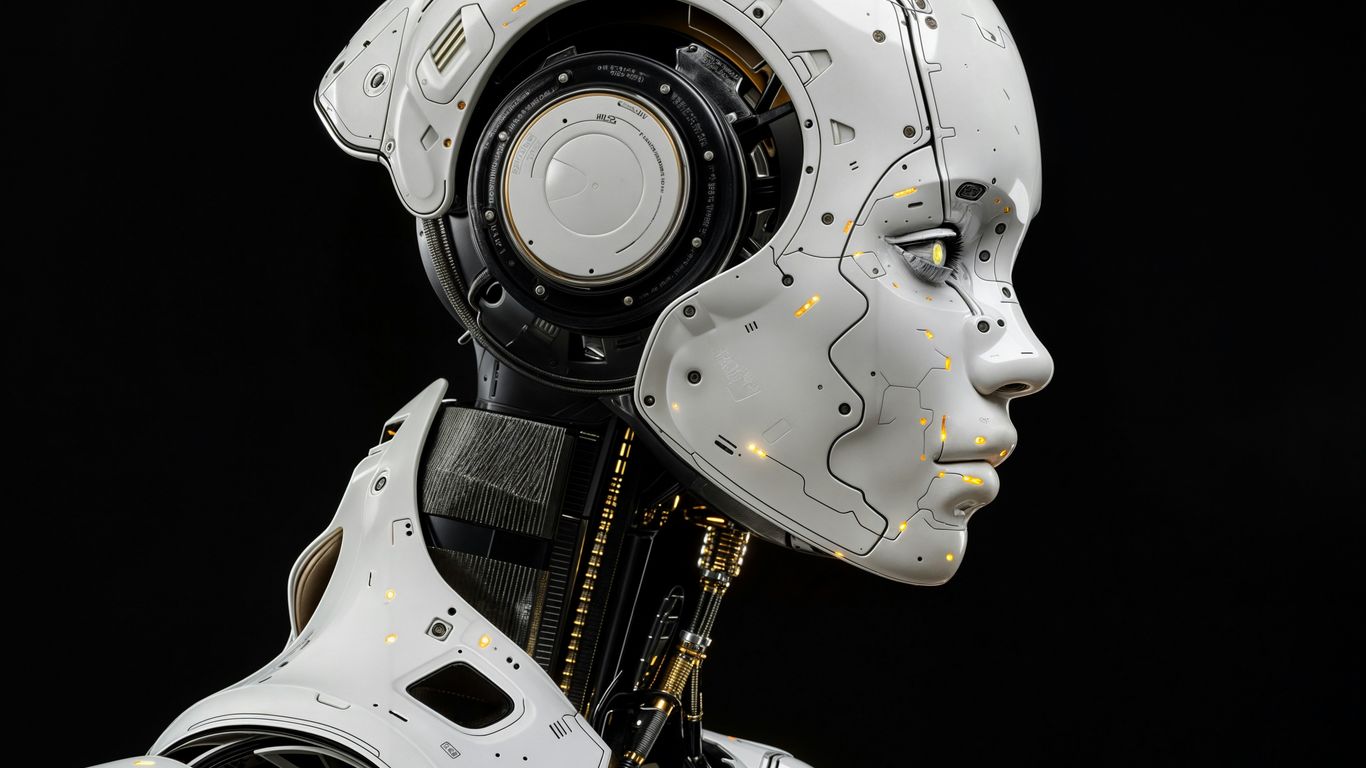
The broader ranking of advanced robots also places emphasis on physical dexterity and real-world deployment rather than visual sophistication alone. Atlas is consequently a strong reference point for hardware capability, while its long-term position will depend on sustained operational performance. Hardware capability is only half of the industrial equation.
6. 1X NEO
1X NEO occupies a different part of the market because its stated direction centers on safe, natural operation in human environments, with a primary focus on the home. Domestic settings are less structured than factories and warehouses. Objects move, instructions are ambiguous, and the robot must share space with people who are not trained operators.
That setting raises the importance of quiet operation, lightweight construction, learning through human guidance, and the transition from teleoperation toward greater autonomy. These are not interchangeable features: guidance can help gather task information, while autonomy determines how independently the system can act later. The NEO and humanoid overview provides useful context on that domestic orientation and the delivery timeline described in its coverage.
A home robot should be assessed with unusually conservative expectations. Safety around children, pets, stairs, clutter, and personal belongings matters more than a clean laboratory demonstration. NEO’s rank therefore reflects a compelling use case, but household reliability will need to be established through real experience rather than assumed from the form factor.
7. Sanctuary AI Phoenix
Sanctuary AI Phoenix is best examined through the idea of embodied intelligence: software that must perceive a physical setting, choose an action, and control a machine through uncertainty. That challenge is broader than image recognition because the system must connect interpretation to movement. Small errors can become physical failures when the robot handles objects or navigates around people.
A hardware-agnostic software direction, as described in the available market coverage, changes the strategic question. It suggests that the intelligence layer may be evaluated partly by how well it transfers across robotic bodies, rather than only by the performance of one machine. Such transferability would matter to operators seeking a common control and learning stack, though the practical limits still require evidence.
The physical AI startup guide places Phoenix within a wider group working on foundation models, vision-language-action systems, and human-centric environments. Phoenix is therefore significant as a software-and-embodiment case, but its position should be read with care. The field has not yet settled how much autonomy can be generalized without extensive task-specific tuning.
8. Unitree H1
Unitree H1 illustrates why accessible humanoid hardware can matter even when a platform is not judged primarily by commercial deployment. Researchers, developers, and smaller teams need machines on which they can test locomotion, manipulation, control policies, and perception. Lower barriers to experimentation can expand the practical knowledge base of the field.
That role differs from the requirements of a production robot. An experimental platform can be valuable because it makes research possible, while a factory platform must also provide predictable uptime, safety documentation, support, and process integration. Treating those categories as identical produces rankings that confuse availability with readiness.
A useful comparison should examine the whole development path rather than a single purchase price. The evidence-ranked robot guide uses deployment, autonomy, and commercial readiness as distinct criteria, an approach that suits H1’s place in the market. Its significance may be greatest as an enabler of experimentation, provided readers do not mistake that role for proof of industrial maturity.
9. Fourier Intelligence GR-1
Fourier Intelligence GR-1 belongs to the expanding group of humanoid platforms aimed at testing how general-purpose bodies can operate across care, research, and industrial contexts. Its ranking should not be based on the promise of a universal machine alone. The decisive evidence would be clear task definitions, repeatable results, and a credible route from demonstration to sustained use.
Humanoid design creates a shared physical vocabulary with people, but it also inherits human constraints. Balance, power consumption, joint durability, thermal management, and safe contact all become linked engineering problems. A strong platform must manage those tradeoffs without presenting one attractive capability as evidence that the entire system is ready.
The market’s range can be summarized by the following practical criteria:
- The target environment and its degree of structure.
- The level of autonomy demonstrated in that environment.
- The amount of human supervision required.
- The evidence of repeatability beyond a staged trial.
These criteria help place GR-1 without overstating what public descriptions establish. They also make the ranking more durable as specifications and deployment claims change.
10. UBTECH Walker S
UBTECH Walker S closes this ranking as an example of the manufacturing-oriented direction taken by humanoid robotics. The central issue is not whether a human-shaped machine looks familiar, but whether that shape allows it to work around existing stations, tools, and procedures. For industrial buyers, compatibility can be more valuable than novelty.
The platform should be judged against the same discipline applied to every other entry: defined tasks, operating limits, intervention frequency, safety controls, and maintenance. The industrial robotics outlook provides broader context on how robotic systems are moving from prototypes toward production-scale integration. That context matters because a humanoid is only one component in a larger automation architecture.
The robotics developments review also reflects how quickly the surrounding ecosystem is changing, from physical AI tools to manufacturing milestones. Walker S is therefore best understood as part of a competitive systems race rather than as a standalone machine. Its final standing will depend on evidence accumulated in real workflows, not on the label “general purpose.”
Conclusion
The best humanoid robots 2026 are best ranked by the quality of evidence behind their intended use, not by spectacle or a single specification. Industrial, domestic, research, and software-led platforms solve different problems, so a fair comparison must keep those contexts visible. For builders and investors, the durable signal is the same across the list: repeatable work, safe interaction, maintainable hardware, and a credible path to scale.
Frequently Asked Questions
What makes a humanoid robot commercially ready?
Commercial readiness usually requires more than a successful demonstration. It includes repeatable task performance, safety procedures, serviceability, integration with existing workflows, and a business case that survives ordinary operating costs.
Are humanoid robots mainly designed for factories?
Factories and warehouses are important early environments because they offer repeatable tasks and controlled access. Domestic, healthcare, research, and public settings may become important as systems improve, but they generally introduce more uncertainty.
Why does deployment evidence matter so much?
Deployment evidence shows how a system behaves outside a carefully prepared demonstration. It can reveal intervention rates, maintenance needs, environmental limits, and the difference between theoretical capability and useful work.
How should investors compare humanoid robotics companies?
Investors can compare target markets, technical differentiation, manufacturing plans, capital requirements, safety progress, customer validation, and the economics of completed tasks. Announced partnerships should not be treated as guaranteed outcomes.
Does a human-like shape guarantee flexibility?
No. A human-like form can help a robot access spaces designed for people, but flexibility also depends on perception, manipulation, balance, control software, power management, and the ability to handle exceptions.
What is the hardest technical problem in humanoid robotics?
There is no single hardest problem. Reliable humanoids must solve several coupled problems at once, including safe physical interaction, dexterous manipulation, energy use, balance, perception, autonomy, and durable hardware.
Will rankings of humanoid robots remain stable?
Probably not. The field is changing quickly, and new deployment results, production milestones, safety findings, and software improvements can alter the relative position of a platform. A ranking should be treated as a dated assessment, not a permanent verdict.