Key Takeaways
- The current landscape of humanoid robotics in 2026 demonstrates a clear divergence between verified commercial pilots and long-term manufacturing aspirations.
- Figure AI has established a repeatable deployment footprint through strategic partnerships with logistics organizations like BMW.
- Tesla’s approach focuses on vertical integration and massive economies of scale, though public documentation of their latest generation remains sparse.
- Hardware maturity, specifically regarding battery life and actuator efficiency, continues to be the primary throttle for continuous shift-length operational capability.
- The comparative data indicates that while architectural philosophies vary, the industry is gravitating toward end-to-end neural network models for motor control.
Design and mechanical architecture
Selecting a design philosophy for a humanoid robot involves balancing raw power against the delicate dexterity required for factory tasks. Modern platforms must address the constraints of operating within spaces designed for biological laborers, necessitating careful consideration of kinematic chains. Engineers are focusing on minimizing mass while maximizing the torque density of limb actuators to ensure robots can work safely alongside human teams in dynamic, unstructured settings.
Hardware specifications and actuator technology
Recent advancements have favored high-power-density linear and rotary actuators that replace heavier, traditional hydraulic or brushed motor configurations. For those tracking the field, checking the performance in controlled warehouse environments is vital to understanding how these mechanical systems translate to utility. The shift toward brushless DC motors with integrated planetary gearing allows for more compact limb design, reduced cogging, and precise force feedback during complex manipulation cycles.
Degrees of freedom and motor efficiency
Maximizing fluid motion requires a high count of active joints, yet every additional degree of freedom introduces risks of energy loss and mechanical complexity. The most successful current designs utilize lightweight harmonic drives that maintain high efficiency under significant load. This efficiency is crucial for maintaining operational speed during long cycles where every watt saved extends the total battery life.
Battery life and power management systems
Energy density remains the primary bottleneck for humanoid robots attempting to match human shift durations. Current industry standard targets hover around four to six hours of continuous, full-output performance, which requires advanced thermal management for the high-voltage battery packs. Engineers utilize intelligent power management software to regulate heat dissipation while keeping the robot's center of gravity stable during rapid movement.
Comparison of anthropomorphic form factors
| Feature | Figure 03 | Tesla Optimus Gen 3 |
|---|---|---|
| Deployment Stage | Piloted | Announced |
| Primary Focus | Logistics | Manufacturing Scaling |
| Verification | Published Data | Internal Milestones |
Standardizing form factors allows for easier integration into pre-existing environmental infrastructure, though manufacturers often favor proprietary dimensions to optimize internal component placement. The debate between a strictly humanoid silhouette and functional utility designs—like those found in Agility Robotics—highlights a fundamental disagreement on whether the robot must perfectly mimic humans or simply inhabit our tools.
AI brain and motor learning capabilities

Transitioning from scripted, static code to fluid, adaptive behaviors is the primary challenge for developers working on the next frontier of robotics. The industry is moving toward embodied intelligence where visual sensory input directly dictates motor planning without intermediate rule bases. This convergence toward neural-driven motion allows robots to react to unexpected disturbances, such as a falling object or a human stepping into their workspace unexpectedly.
End-to-end neural network models
Developing a model that can process high-dimensional video inputs and output joint sequences in real-time requires significant computational overhead. These architectures often rely on foundation models that synthesize large datasets to predict the most effective physical response to a given stimulus. By treating physical movement much like language processing, researchers have succeeded in reducing latency in reactive behaviors.
Visual perception and sensor fusion
Reliable performance hinges on the robot's ability to create a consistent spatial map of its surroundings. Sensor fusion systems integrate LiDAR, depth-sensing cameras, and inertial measurement units to provide the robot with a precise understanding of its environment. This capability ensures that physical AI systems can navigate without needing the environment to be modified specifically for their presence.
Approaches to motor planning and task execution
The most robust systems today leverage imitation learning, where robots observe human motion to derive generalized motor policies rather than attempting to compute every path manually.
Motor planning must account for both the target task and the physical limitations of the robot's frame. Planners compare prospective paths against a set of constraints to ensure that tasks—ranging from simple picking to delicate assembly—are executed with human-like fluidity.
Data training pipelines and simulation environments
Training these models requires massive quantities of high-fidelity interaction data, which is currently generated inside photorealistic simulations before being transferred to the physical world. This sim-to-real transfer is a critical step in verifying that the, as noted in the research on NVIDIA Isaac GR00T, robot can generalize its learned behaviors to novel environments. Simulators allow developers to subject the AI brain to millions of failure scenarios that would be prohibitively expensive or dangerous to perform in a physical factory.
Manufacturing scale and deployment strategy
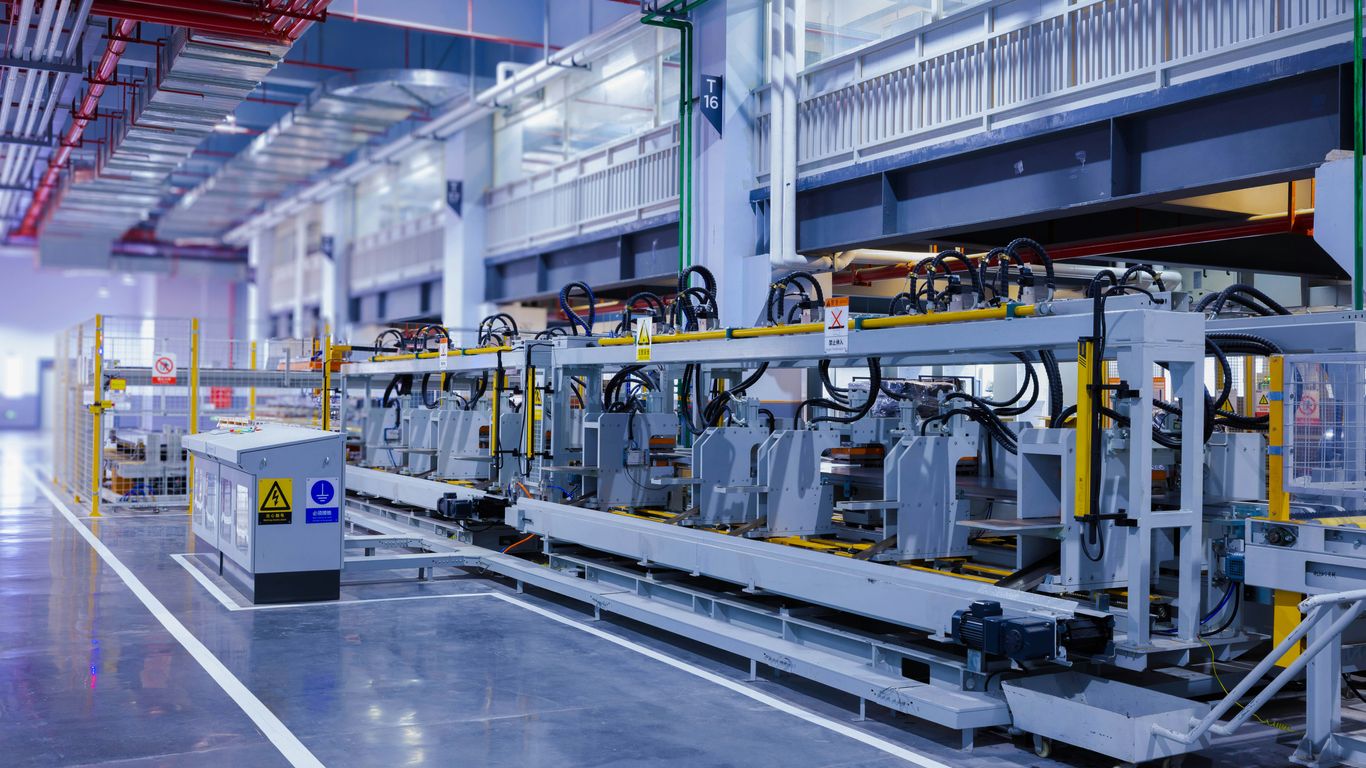
Scaling humanoid production requires marrying advanced robotics with proven automotive assembly techniques. Manufacturers are shifting away from traditional high-cost, low-volume builds toward modular production lines that can support thousands of units annually. This transition is not merely an engineering challenge but a logistical one, requiring tight supply chain coordination for bespoke electronic components and specialized high-torque actuators.
Tesla’s automotive factory production model
Tesla’s strategy centers on utilizing its existing high-volume internal demand to refine the manufacturing process for its robotic platform. By internalizing production tasks, the company aims to reduce unit costs through vertical integration and massive economies of scale that are unique to its operational model.
Figure AI’s partnership with tier-one suppliers
Figure AI has pursued a strategy of forming alliances with established giants to accelerate the deployment of its platforms in live environments. These partnerships provide it with access to refined logistics workflows and feedback from actual industrial users. It is a method of proving that its technology can handle real-world operational stressors compared to prototypes in lab settings.
Supply chain readiness for 2026 targets
- Securing consistent supplies of rare-earth magnets for motors.
- Establishing dedicated cleanroom assembly for complex sensor housings.
- Building localized rapid-repair facilities to reduce downtime.
- Scaling software deployment pipelines for fleet-wide updates.
Predicting manufacturing volume is inherently volatile, as supply issues for critical semiconductor components can halt an entire production line. Developers must account for long lead times on specialized parts like low-latency actuators and high-density battery cells to meet their stated 2026 objectives.
Industrial versus home use deployment paths
Industrial environments provide a controlled, predictable setting where the risks of unpredictable interaction are minimized. Deploying humanoid technology into the home requires solving for drastically higher variance in tasks and safety requirements. As explored in surveys of 1x Technologies, the industry remains focused on structured industrial tasks today, with the complex home environment representing a secondary, longer-term roadmap.
Real-world operational testing

Testing in controlled environments provides the necessary data to validate safety and reliability before a robot is introduced to a human workforce. These facilities act as early proving grounds where engineers monitor battery drain, communication latency, and mechanical fatigue under realistic load. The most successful testing programs utilize these sites to iterate on hardware durability before attempting the far more difficult task of scaling to unstructured human environments.
Performance in controlled warehouse environments
Operational benchmarks in these sites often target throughput metrics, such as how many items a robot can pick and place per hour. Sustaining high levels of output without technical intervention is the goal, as warehouse floors rely on flow and precision. Continuous, multi-shift testing is essential to confirm that the thermal management systems and software algorithms prevent systemic errors during high-demand operation.
Safety protocols and emergency stop mechanisms
Safety is non-negotiable; robots must include multiple, redundant emergency stops that operate independently of the primary AI brain. These systems must be triggered by physical contact or unexpected distance changes with humans. The legal complexities surrounding injuries in automated workspaces remain a point of discussion for firms looking to integrate these machines into their existing fleets.
Speed and reliability benchmarks in repetitive tasks
Reliability is measured by the mean time between interventions, a metric that captures how often the unit requires human assistance during a shift. High-frequency repetitive motions are the ideal starting point for robot integration, yet they demand hardware that can withstand cyclic stress over hundreds of thousands of repetitions without losing precision.
Adaptation to unstructured human environments
Operating outside of a grid-marked factory floor introduces variables that simple AI models struggle to process, such as unpredictable clutter or non-standard paths. This is where the maturity of sensory systems—like those investigated in 1x Technologies—demonstrates its real value by allowing the robot to navigate and work safely near unpredictable human coworkers.
Pricing models and commercial availability
Estimated unit costs for enterprise buyers
While raw unit prices are rarely transparent at this development stage, experts estimate that early industrial adopters may face significant upfront costs. These figures reflect both the capital expenditure for the robot itself and the integration services required to make it functional in a specific environment.
Licensing and software subscription models
Rather than selling hardware outright, many manufacturers are gravitating toward a Robotics-as-a-Service model to ensure regular updates and long-term support. Clients effectively pay for the performance and reliability of the unit, similar to how GAIN Tax provides managed software access through a license-based structure.
Timeline for mass-market availability
Mass-market retail availability is likely a multi-year effort that begins with large industrial pilot programs. The path to consumer accessibility depends on achieving a massive reduction in the cost of actuators and the reliability of the vision-based AI systems governing daily interaction.
Long-term maintenance and service costs
Service contracts will form a major part of the post-purchase landscape, covering everything from component wear-and-tear to periodic software enhancements. Reliability is the key variable; a machine that requires frequent, professional manual resets will quickly become a liability, regardless of its initial cost efficiency.
Comparative market positioning and future outlook
Distinctions in primary target sectors
Targeting logistics-heavy industries provides a faster path to commercialization compared to trying to solve for generalized domestic service. Manufacturers must decide early if they are building a generalist platform or a machine specialized for a single high-value vertical.
Potential integration with existing fleet automation
Integration involves syncing the humanoid’s data stream with the warehouse's wider management systems. If the robot cannot communicate efficiently with the existing infrastructure, it will struggle to do more than operate as an isolated unit in the facility.
Regulatory hurdles and labor market impact
As the industry matures to human-robot interaction, regulators will likely scrutinize safety protocols with the same rigor applied to industrial vehicles. The impact on the labor market will depend on how successfully these robots fill the gaps left by a shrinking workforce, rather than simply displacing active employees.
Long-term viability of proprietary software stacks
Proprietary platforms offer complete control but run the risk of becoming isolated if the industry adopts standardized AI architectures. The future likely favors systems that allow for modular software plugin capability, ensuring that hardware remains useful even as the AI brain models continue their rapid pace of evolution.
Conclusion
The 2026 humanoid landscape reveals that while the technical fundamentals are converging, the journey from laboratory milestone to ubiquitous commercial infrastructure remains a distinct challenge of scale and reliability. Both Figure AI and Tesla demonstrate that the real metric for success is no longer theoretical performance, but the ability to deliver consistent, safe, and productive outcomes in the messy, unstructured reality of the modern workplace.
Frequently Asked Questions
What are the main limitations of current humanoid robots?
Primary limitations include battery energy density, actuator reliability under heavy work cycles, and the difficulty of processing visual sensor data to navigate unstructured environments.
How does current AI research affect robot performance?
Advances in end-to-end neural models and imitation learning are enabling robots to learn complex tasks from video observation, significantly reducing the need for hand-coding every possible physical scenario.
What is the typical deployment focus for industrial humanoids?
Most current focus is on repetitive logistics and manipulation tasks in controlled settings like warehouses, where the operational environment and object types remain relatively stable.
Are humanoid robots presently replacing human workers?
They are currently being deployed to augment human teams or fill roles where labor shortages make consistent task execution difficult, rather than outright replacing broad segments of the workforce.
Why is simulation data so important for robotics?
Simulations allow developers to test millions of operational hours and safety scenarios in a safe environment, speeding up the training process for AI models before they interact with physical equipment.
What are the main safety challenges for these machines?
Safety relies on multi-layered emergency stops and sensor-driven awareness that ensures robots detect humans and adjust speed or stop immediately to prevent any physical harm.
How do manufacturers determine the cost of robot deployment?
Costs are calculated based on hardware build complexity, the necessity of custom integration for specific sites, and the long-term support required for software and maintenance.