Key Takeaways
The Tesla Optimus vs Figure AI debate is less a contest between finished products than a test of evidence, engineering strategy, and production execution.
- Humanoid robots are being designed to work within spaces already built for people.
- Public demonstrations show progress, but they do not establish dependable autonomy.
- Hardware specifications and deployment evidence matter as much as impressive videos.
- Manufacturing scale could become as decisive as machine-learning performance.
- The leader today may differ by task, environment, and tolerance for operational risk.
How Tesla Optimus and Figure AI approach the humanoid market
Humanoid robotics has reached a stage where demonstrations are easy to find but difficult to compare. The central question is no longer whether a robot can walk or move an arm; it is whether a system can perform useful work repeatedly, safely, and at an acceptable cost. Tesla Optimus vs Figure AI therefore becomes a comparison of development paths as much as robot designs. The available public evidence remains uneven, so claims about future leadership should be treated as analysis rather than settled fact.
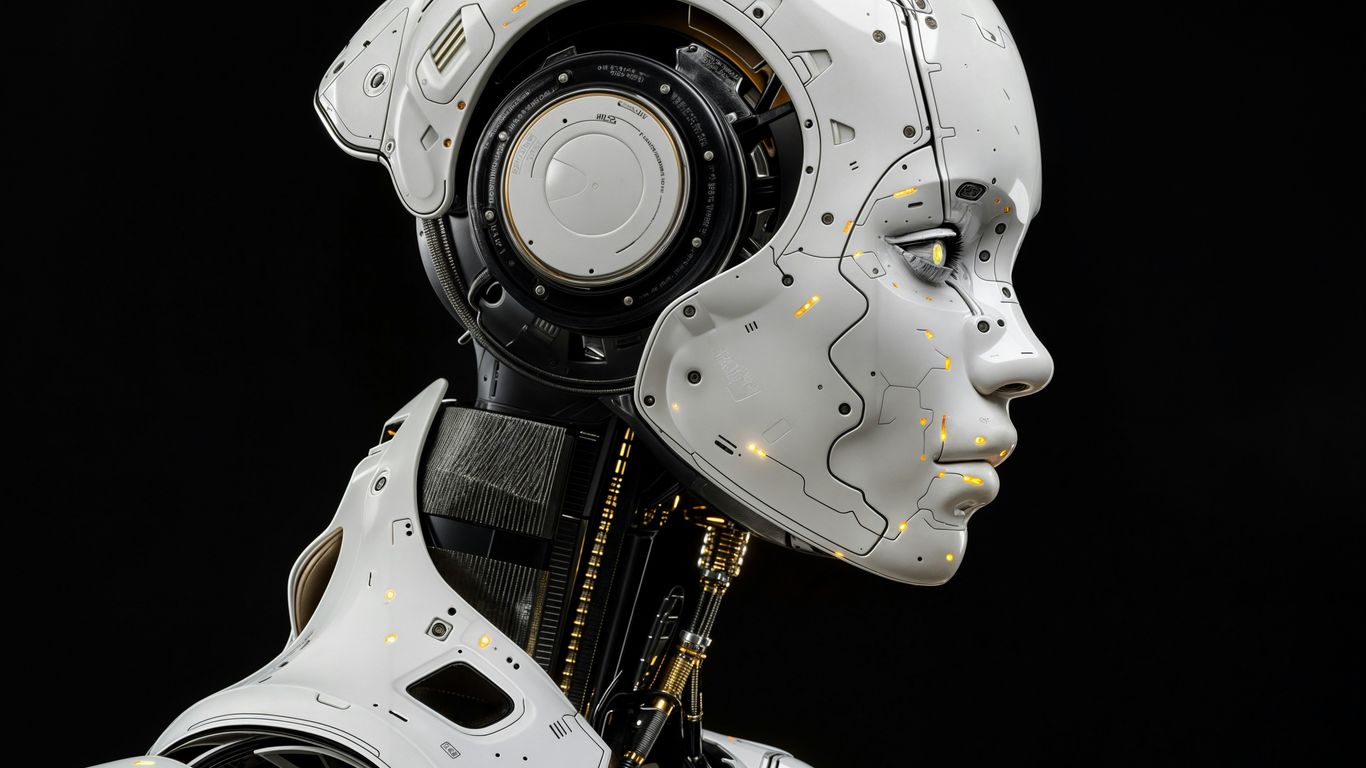
Tesla’s vision for Optimus
Optimus was presented as a general-purpose humanoid robot intended to perform tasks people do not want to do. Public prototypes have demonstrated progression in walking, arm movement, block sorting, and maintaining yoga poses. That record establishes an active development program, not a completed commercial platform. The larger ambition is significant because a general-purpose machine would need to combine mobility, manipulation, perception, and safe behavior in one system.
The industrial logic is straightforward: a human-shaped robot can potentially use workspaces, tools, and processes designed around human bodies. Whether that logic survives the demands of uptime, maintenance, and certification is still unresolved. A useful humanoid robotics comparison is valuable here because it separates deployment stage from long-term manufacturing ambition.
Figure AI’s strategy and product focus
Figure AI is pursuing general-purpose physical work through humanoid platforms and public demonstrations of increasingly capable behavior. Its strategy places substantial weight on embodied intelligence: the robot must connect perception, language, planning, and movement rather than simply repeat a fixed mechanical sequence. The company’s public trajectory has moved from early prototypes toward a revealed third-generation platform, although the existence of a revealed machine should not be confused with broad commercial reliability.
The company’s approach is best understood as a startup bet on a tightly integrated robot and software stack. That makes learning speed and customer feedback important, but it also leaves production scale, serviceability, and long-term operating economics to be proven. The broader Figure AI analysis captures why the gap between a compelling prototype and dependable infrastructure is the key commercial problem.
Why humanoid form factors matter for workplace automation
A humanoid form is not automatically the most efficient robot design. It is attractive because factories, warehouses, and offices already contain stairs, shelves, handles, bins, and tools sized for people. A machine that can enter those environments without a complete redesign may reduce integration work, at least in principle.
That convenience comes with costs. Two-legged locomotion is demanding, batteries are limited, and hands must be both strong and precise. The engineering trade-off is therefore not simply human shape versus another shape; it is adaptation cost versus mechanical complexity.
The industries each company is targeting
The strongest near-term case for humanoids is work with predictable layouts and repeatable material flows. Manufacturing and logistics provide measurable tasks, controlled access, and existing automation infrastructure. Domestic settings are harder because homes contain more variation, less structure, and more demanding safety conditions.
A market map such as the humanoid robot landscape helps put those choices in context. It shows why companies can appear to compete directly while actually optimizing for different combinations of physical utility, software adaptability, and deployment environment.
Comparing robot hardware and physical capabilities
Hardware determines the boundaries within which autonomy can operate. A robot may have an impressive model, but it still needs actuators that tolerate repeated loads, sensors that remain useful in changing light, and a battery that supports a meaningful shift. Public comparisons are complicated because specifications can refer to different generations, prototypes, or targets. The prudent approach is to distinguish disclosed facts from estimates and future claims.
Body design, mobility, and dexterity
Both platforms are built around the humanoid premise: bipedal movement, articulated arms, and hands capable of interacting with objects. That common form does not make their physical performance equivalent. Balance, walking speed, joint durability, hand control, and recovery from disturbances all require separate validation.
A staged demonstration can show that a robot completed one movement sequence. It cannot, by itself, show how the machine performs after thousands of cycles or when an object is misplaced. For engineers evaluating these systems, repeatability is often more informative than a single display of agility.
Sensors, cameras, and environmental perception
Perception is the bridge between a robot’s physical body and its assigned task. Cameras and other sensors must identify objects, estimate their position, track people, and detect changes in the workspace quickly enough for motion control. The useful question is not how many sensors a platform carries, but how reliably the complete system turns observations into safe actions.
Public material does not provide a perfectly matched, current sensor comparison for both platforms. That absence matters. A fair assessment should avoid treating older specifications as current and should record when a company has not published a complete specification sheet.
Payload, battery life, and operating range
Payload and runtime shape the economics of deployment. A robot that can lift a useful object but must stop frequently for charging may require more units, more supervision, or a carefully designed workflow. Operating range also includes communication, floor conditions, temperature, and the ability to return to a charging point.
The following framework is more useful than a single headline number because it keeps physical capability tied to operations:
| Measure | Why it matters | Evidence to seek | Business implication |
|---|---|---|---|
| Payload | Defines which objects can be handled | Rated load and repeat-cycle tests | Determines task eligibility |
| Runtime | Sets the length of an operating period | Runtime under representative loads | Affects fleet size and scheduling |
| Speed | Influences throughput | Speed while carrying and navigating | Matters only alongside reliability |
| Service interval | Indicates maintenance burden | Published inspection and replacement data | Shapes total cost of ownership |
These measures should be tested together. A high payload with short runtime, or high speed with frequent intervention, may produce less value than a slower system with predictable uptime.
Safety features for working around people
Workplace safety involves more than collision avoidance. A deployable robot needs controlled motion, fault handling, emergency stops, predictable behavior, and procedures for recovery when perception or communication fails. It also needs an operating envelope that workers and site managers can understand.
The public record is not yet a complete safety case for either platform. Companies can demonstrate careful behavior without publishing the test coverage, failure rates, or certification pathway needed for high-confidence deployment. That distinction should remain visible in any investor or procurement analysis.
AI, autonomy, and learning capabilities
The software challenge is to convert a broad instruction into coordinated physical action. A robot must perceive a scene, infer what matters, plan a sequence, control its body, and revise the plan when the environment changes. This is closer to embodied AI than to ordinary screen-based automation because mistakes have physical consequences. As discussed in broader Physical AI coverage, the field is moving toward systems that connect foundation models with real-world control, but the reliability gap remains substantial.
Tesla’s AI and vision-based approach
Public descriptions of Optimus emphasize a general-purpose robot whose capabilities have expanded through successive prototypes and demonstrations. The available record supports discussion of walking, arm movement, block sorting, and balance-oriented tasks. It does not support a complete claim about the autonomy of a current production-generation system.
That makes the evaluation criteria unusually important. Evidence quality matters most when a platform’s public narrative is broader than its published technical specification. Video can establish that a behavior occurred; it cannot fully establish the level of human supervision, the number of failed attempts, or the conditions under which the behavior generalizes.
Figure AI’s use of machine learning and demonstrations
Figure AI presents its robots as systems for general-purpose physical work, with machine learning and demonstrations playing a central role in development. The relevant promise is not that a robot memorizes one route or one object, but that experience can improve performance across related tasks. Even so, a demonstration remains a bounded observation unless the company also provides repeatability, intervention, and operating data.
The distinction is familiar in machine learning: a model can perform well on a narrow distribution and still fail when the environment shifts. Humanoid robotics adds hardware wear, contact uncertainty, and safety constraints to that generalization problem.
How each robot handles unfamiliar tasks
Unfamiliar tasks expose the difference between scripted automation and adaptive autonomy. A robust system needs to recognize when an object differs from its training examples, when a path is blocked, or when an instruction is underspecified. It must then either recover safely or request assistance rather than continue with unjustified confidence.
Neither public record provides enough matched testing to declare a decisive winner on unfamiliar work. The most defensible conclusion is narrower: both development programs are aimed at broader task coverage, while the extent of real-world generalization remains a central question.
The role of simulation, data, and human feedback
Simulation can provide scale and repeatability, while real-world data exposes the friction that simulated environments often miss. Human demonstrations may help teach behaviors, but collecting them is only the beginning; the system must filter, label, evaluate, and safely deploy what it learns.
For a buyer, the practical questions include:
- How much human intervention is required during ordinary operation?
- How are edge cases recorded and fed back into training?
- Can a learned behavior transfer between robots and sites?
- What happens when the model is uncertain?
Those questions shift attention from model branding to the training and operations loop. That loop is likely to determine whether a promising platform becomes a dependable fleet.
Real-world deployments and development progress
Deployment is where humanoid robotics leaves the demonstration stage and meets production constraints. A factory or warehouse introduces shift schedules, variable materials, safety reviews, maintenance windows, and workers who reasonably expect predictable behavior. Progress should therefore be measured in operating evidence, not only in launch events or polished footage.
Tesla’s factory testing and production ambitions
The public record describes Optimus prototypes and ambitions connected to factory use and eventual production. Those ambitions are strategically important because manufacturing scale could lower unit cost and support a large installed base. They remain ambitions unless accompanied by disclosed output, sustained internal operation, and independently verifiable deployment evidence.
The distinction is especially important when comparing a future capacity target with a currently operating fleet. A target indicates direction and confidence; it does not establish present manufacturing performance.
Figure AI’s commercial partnerships and pilot programs
Figure AI has pursued commercial validation through partnerships and pilot-style work, including public attention around industrial settings. Such activity is stronger evidence than a laboratory demonstration because it places the robot near real workflows. It still does not prove that the system can operate across sites, shifts, and task variations without substantial support.
The humanoid robots for 2026 guide uses a useful lens for this stage of the market: applicability depends on repeatability, safety, maintenance, and integration, not merely on the sophistication of a single demo.
What current demonstrations reveal—and what they do not
Demonstrations reveal that a team has achieved a particular behavior under particular conditions. They can show mechanical progress, coordination, latency, and the quality of a human-machine interface. They rarely reveal the full distribution of failures, the cost of supervision, or how much preparation preceded the recording.
A careful reader should ask whether the robot was teleoperated, whether the task was rehearsed, and whether the result has been repeated. These are not hostile questions. They are the minimum needed to distinguish a research result from an operating claim.
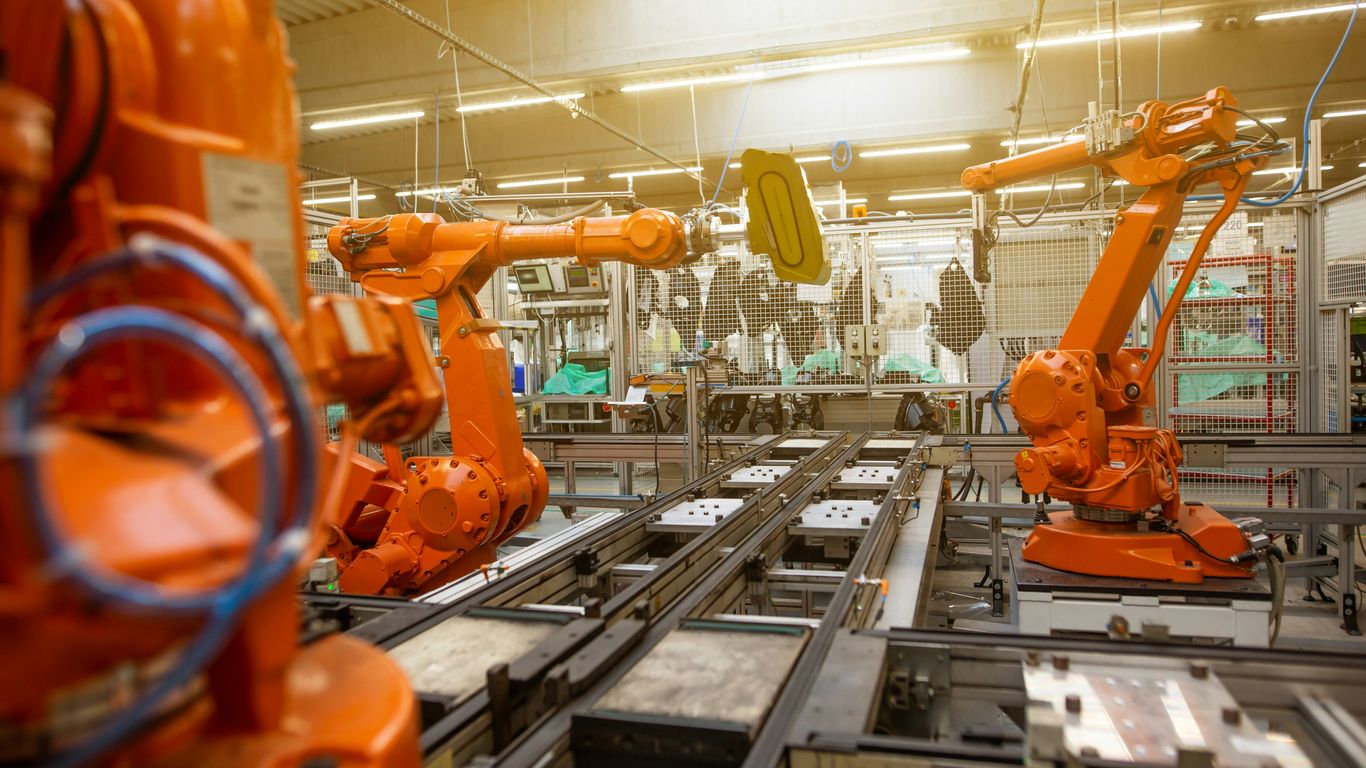
The difference between prototypes and reliable workplace systems
A prototype answers, “Can the system do this?” A workplace system must answer a longer list: can it do this every shift, recover from errors, avoid people, report faults, and justify its cost? That is why commercial readiness often advances more slowly than public capability videos suggest.
A useful industrial humanoid robotics analysis frames the transition as a systems problem involving power, sensors, physical durability, and deployment design. The robot is only one component of the operational stack.
Manufacturing scale, cost, and business potential
Humanoid robotics will not become an important industry through capability alone. The machines must be manufactured, serviced, insured, integrated, and paid for by a customer whose alternative may be human labor or a specialized automation cell. Unit economics are still difficult to assess because neither company has supplied a universally accepted public price for a mature, broadly deployed platform.
Tesla’s advantages in manufacturing and supply chains
Tesla’s industrial strategy is associated with automotive-scale manufacturing and an ambition to produce Optimus in volume. If those capabilities transfer effectively to humanoid production, they could reduce component costs and shorten the path from prototype to fleet. That is a plausible strategic advantage, not proof that robot manufacturing has already reached automotive scale.
The hard parts may also differ from those in vehicles. Humanoid robots require compact actuators, dexterous hands, reliable power electronics, and extensive validation of physical behavior. Existing supply-chain expertise helps, but it does not remove those engineering constraints.
Figure AI’s startup model and strategic partnerships
A startup can move quickly, concentrate resources, and use partnerships to access manufacturing, data, or deployment environments. That model may support faster iteration than a large industrial organization in some phases. It can also create dependence on financing, suppliers, and partners before recurring revenue is established.
The financing story is less important than what capital enables: completed hardware revisions, production tooling, field support, and measured customer outcomes. Investors should distinguish capital raised from commercial traction and announced pilots from paid, repeatable deployments.
Expected pricing and the economics of deployment
The right price comparison is not robot versus worker in isolation. It includes supervision, integration, charging, maintenance, downtime, insurance, floor modifications, and the value of the task completed. A robot with a lower purchase price may still be uneconomic if it needs frequent intervention.
The workplace humanoid robotics outlook is useful because it places return on investment alongside safety certification, energy efficiency, and social considerations. Those factors will influence adoption even if the hardware becomes cheaper.
Which company can scale production more quickly
The evidence does not justify a confident production ranking based solely on future targets. One company may have greater manufacturing infrastructure, while the other may have more visible evidence from a current platform or partner environment. The winner in volume will be the one that can combine supply, quality control, software updates, and field service at acceptable cost.
That is a much higher bar than assembling a small number of impressive units. Production scale is an operational capability, and it will be demonstrated through deliveries, uptime, repair cycles, and customer retention.
Tesla Optimus vs Figure AI: Which robot leads today?
The honest answer depends on what “leads” means. A comparison based on ambition favors the company promising broad manufacturing scale; a comparison based on public evidence favors the platform with more current specifications and observable operating data. Neither framing is sufficient on its own. The most useful ranking separates technical maturity, commercial readiness, and long-term manufacturing potential.
Comparing technical maturity and autonomy
Technical maturity includes mechanical reliability, perception, control, battery performance, and recovery from failure. Autonomy adds the ability to perform tasks without continuous human direction. Public demonstrations from both programs show meaningful progress, but they do not provide a matched benchmark that settles the autonomy question.
The current evidence comparison makes the methodological point clearly: public specifications, company demonstrations, production figures, and future targets should not be placed in one undifferentiated category. On that basis, the field remains open, with Figure AI appearing easier to assess publicly in some dimensions and Optimus retaining a larger manufacturing thesis.
Evaluating commercial readiness and customer traction
Commercial readiness is visible in sustained customer operation, not simply in a partnership announcement. A credible evaluation should examine how many systems are operating, which tasks they perform, how often people intervene, and whether customers expand usage after the pilot.
That standard prevents a common analytical error: treating a single successful deployment as proof of general capability. It also explains why a less flashy system can be commercially ahead if it delivers predictable value in a narrow workflow.
Key milestones that could change the ranking
The ranking could change quickly if either company publishes comparable data from sustained deployments. The most consequential milestones are likely to be a complete current specification, independently credible production evidence, and measured task performance under ordinary workplace conditions.
A second set of signals concerns economics. Falling service costs, higher uptime, safer interaction, and faster task onboarding would matter more than another isolated display of balance or dexterity. The sector’s robotics startup analysis points toward operating metrics and customer deployments as the evidence that increasingly separates serious progress from spectacle.
Why the winner may depend on the use case
A logistics operator may prioritize navigation, grasp reliability, and shift endurance. A manufacturer may value integration with existing tooling, predictable cycle times, and maintenance access. A home user would face a far wider range of objects and safety scenarios, making the technical threshold higher still.
For that reason, Tesla Optimus vs Figure AI should be treated as a moving comparison rather than a permanent league table. The leading platform will be the one that solves a valuable workflow with the least supervision and the clearest path to reliable scale.
Conclusion
Humanoid robotics is progressing, but the decisive proof will come from repeatable work rather than polished demonstrations. The comparison between Optimus and Figure AI is therefore best read as a contest between evidence, autonomy, deployment discipline, and manufacturing execution. The leader will emerge when one platform can turn those pieces into dependable economic output.
Frequently Asked Questions
What makes humanoid robots useful in workplaces?
Their human-like form may allow them to operate in spaces, use tools, and handle processes designed for people without requiring a complete facility redesign.
Why are robot demonstrations difficult to compare?
Demonstrations can differ in supervision, preparation, task difficulty, environment, and whether the result was repeated, making simple video-to-video comparisons unreliable.
What does robot autonomy mean in practice?
Practical autonomy means completing a task with limited human direction while recognizing uncertainty, recovering safely from errors, and requesting help when necessary.
Which industries are most suitable for early humanoid deployment?
Structured manufacturing and logistics environments are often more suitable because their layouts, objects, and workflows can be defined and measured.
Why does battery life affect business value?
Short runtime can require more units, additional charging infrastructure, or more complex scheduling, reducing the value of an otherwise capable machine.
What should buyers measure during a pilot?
Buyers should track uptime, intervention frequency, task completion, safety incidents, maintenance, energy use, integration effort, and the cost of each completed task.
When will humanoid robots become mainstream?
Mainstream adoption will depend less on a single launch date than on reliable performance, falling total cost, clear safety practices, and evidence that customers receive durable operational value.