Key Takeaways
Figure AI is developing humanoid robots intended to operate in environments built for people. The central question is no longer whether a robot can walk, but whether it can perform useful work safely, repeatedly, and economically.
- Figure AI’s approach combines human-shaped hardware with AI systems intended to support general-purpose physical work.
- The company was founded in 2022 by Brett Adcock and has developed the Figure 01, Figure 02, and Figure 03 platforms.
- BMW became an important industrial partner as the company moved from demonstrations toward manufacturing applications.
- Vision, language, and action models are central to the effort, but real-world data and reliable autonomy remain difficult engineering problems.
- Commercial success will depend on uptime, integration, safety, maintenance, and return on investment—not demonstrations alone.
Figure AI robot explained: What the company is building
The phrase “Figure AI robot explained” points to a broader engineering project than a single machine. Figure is developing humanoid robots intended to perform physical tasks in spaces designed around human movement, tools, and workflows. That makes the company part of the emerging physical AI field, where software must perceive and act in the physical world rather than produce only digital outputs.
The appeal is straightforward: a robot with a human-like form may be able to use existing workstations without requiring every facility to be rebuilt. The harder question is whether a general-purpose system can achieve the consistency that factories and warehouses require. That distinction—between a compelling prototype and dependable infrastructure—should frame any assessment of the company.
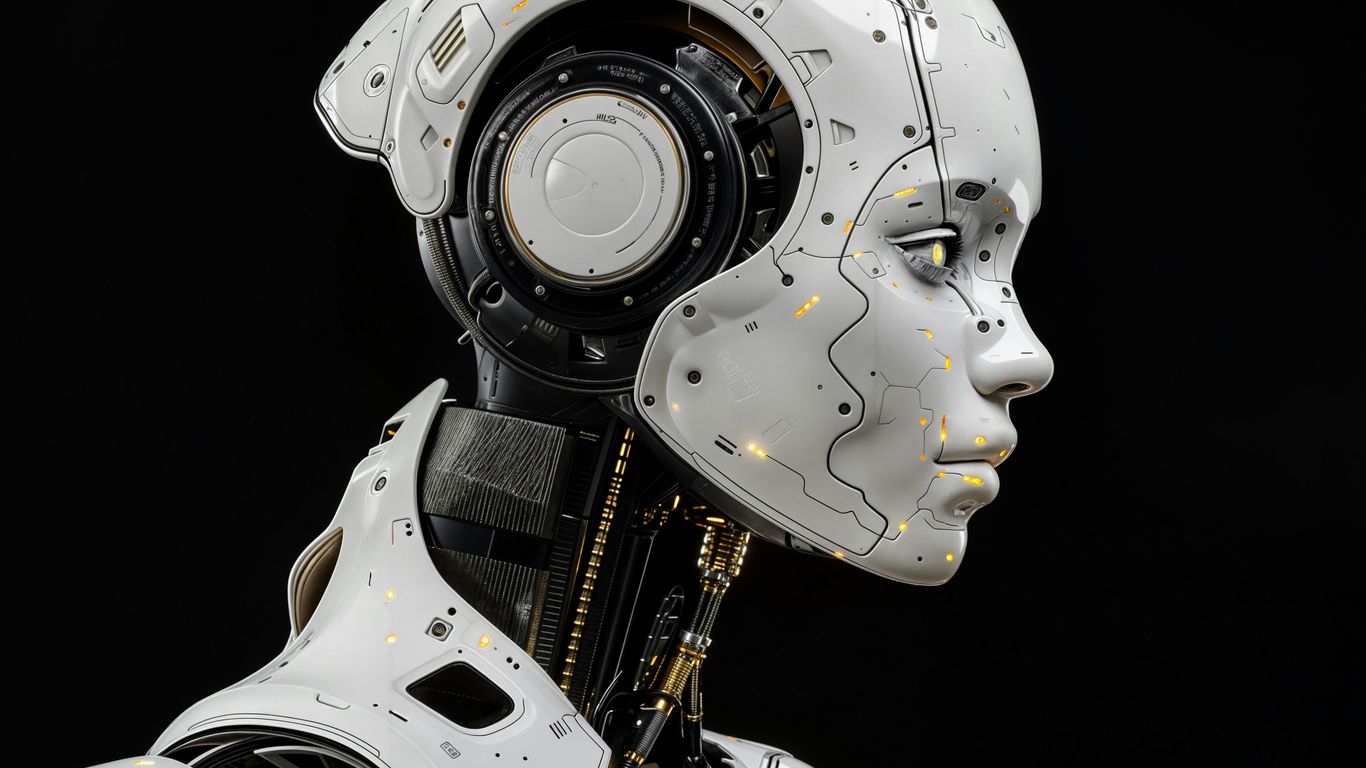
Figure AI’s mission and approach to general-purpose robotics
The company’s stated direction is to create commercially viable autonomous bipedal robots capable of human-level reasoning and adaptability for physical work. In practical terms, that means building a platform that can be taught or instructed to handle more than one narrowly defined operation. The ambition is wider than conventional automation, but it also creates a larger set of failure modes.
A general-purpose robot has to connect perception, planning, balance, manipulation, and decision-making. It must identify an object, understand what a task requires, move through a changing environment, and recover when conditions differ from training examples. The company’s own public materials describe a progression from workforce applications toward more complex environments, but each expansion should be treated as a development milestone rather than proof of universal autonomy.
This is where the distinction between automation and judgment matters. A useful framework for thinking about AI’s role in decision-making appears in AI as a thinking partner, which argues that systems should expose assumptions rather than replace human responsibility. Robotics introduces the same principle in physical form: an instruction can be automated, but accountability for the result still belongs to people and organizations.
How humanoid robots differ from traditional industrial robots
Traditional industrial robots are often designed around a fixed workspace, a limited set of motions, and carefully controlled inputs. Their specialization is a strength. Once the process is stable, a purpose-built arm or mobile platform can be faster and easier to validate than a humanoid machine.
Humanoids take the opposite bet. Their two legs, torso, arms, and human-scale reach are intended to make them adaptable to existing environments. That adaptability comes at a cost: walking introduces balance problems, arms and hands must coordinate under uncertainty, and a system operating near people must manage safety continuously. A humanoid is therefore not automatically better than a specialized robot; it is potentially more flexible where the surrounding environment is difficult or expensive to redesign.
The market is beginning to separate impressive movement from useful work. A humanoid robotics market comparison is valuable for that reason: it places bipedal systems alongside different approaches to hardware, safety, data collection, and industrial deployment. The relevant comparison is not which robot looks most human, but which system can complete a defined task with acceptable cost and risk.
The role of human-shaped hardware in existing workspaces
Factories, warehouses, and homes contain stairs, narrow aisles, shelves, handles, carts, and tools built around human bodies. A human-shaped robot can, in principle, use those affordances without forcing an operator to rebuild an entire site. The hardware may also fit into workflows where people and machines already share space.
That argument should not be overstated. Human-shaped hardware does not eliminate integration work, and it can inherit human-scale limitations such as restricted battery capacity or limited payload. It also must be designed to fail safely around workers. The form factor is best understood as an attempt to reduce environmental change, not as a guarantee of plug-and-play deployment.
Where Figure AI fits within the humanoid robotics market
The company occupies the industrial and general-purpose end of a market that includes research platforms, warehouse machines, and systems aimed at human-centered spaces. Its public trajectory has moved from early prototypes toward workforce demonstrations and industrial partnerships. The key signal is not simply the number of robot generations, but whether each generation improves repeatability, maintainability, and operational evidence.
For investors and engineers, deployment stage is a more useful lens than publicity. A robot that completes a demonstration has shown a capability under particular conditions. A robot that works across shifts, handles exceptions, and can be serviced at predictable cost is beginning to function as a product. That difference also explains why rankings of real-world humanoid deployments increasingly emphasize integration and operating evidence.
The company’s history, leadership, and funding
The company’s history is short, but its development has followed the familiar pattern of frontier hardware: a founding thesis, rapid prototyping, large capital requirements, and a push toward industrial validation. Funding matters because humanoid robotics requires simultaneous investment in mechanical design, actuators, batteries, simulation, data, and manufacturing. Capital can accelerate iteration, but it cannot remove the physics of the problem.
The timeline also shows a shift in emphasis. Early attention centered on what a bipedal robot could do; later attention turned toward partnerships, model development, and deployment. That shift is significant because the economics of robotics are determined in the field, where uptime and support matter more than a polished video.
Figure AI’s founding and development timeline
Figure AI was founded in 2022 by Brett Adcock. Its first publicly discussed platform, Figure 01, was presented as a general-purpose humanoid robot for physical work, with early interest in logistics and warehousing. The company subsequently introduced Figure 02 and Figure 03 as later stages in its hardware development.
In 2023, the company announced a $70 million funding round that included investment from Adcock and Parkway Venture Capital. In early 2024, it announced a partnership with BMW and separately reported a $675 million financing round involving major technology and venture investors. Public reporting around that financing placed the company’s valuation at $2.6 billion at the time.
Those events mark financing and development milestones, not a completed commercial rollout. The relevant question is how effectively the company converts capital into reliable machines, production capacity, and customer deployments.
Brett Adcock’s role and the company’s leadership team
Brett Adcock founded the company and has been its most visible executive advocate. His background includes founding other technology businesses, including Archer Aviation and Vettery. The company has also highlighted co-founder Jerry Pratt’s robotics background, particularly in connection with the early Figure 01 platform.
Leadership in humanoid robotics has to bridge several disciplines at once. Mechanical engineers work on actuators and structural loads; controls engineers manage movement; machine-learning teams build perception and action systems; operations teams handle manufacturing and customer deployment. The public profile of a founder can attract capital, but the less visible organizational capability often determines whether a prototype becomes a dependable product.
Major investors, partnerships, and funding milestones
The reported 2024 financing included Jeff Bezos, Microsoft, Nvidia, Intel, Amazon’s startup investment arm, and OpenAI among the participating investors or strategic backers. The company also announced an OpenAI collaboration focused on specialized AI models for its humanoid robots. Such relationships can provide capital, compute, technical expertise, and access to industrial networks.
They also raise expectations. A well-funded robotics company is expected to move quickly from laboratory demonstrations to evidence that customers can use. Partnerships should therefore be evaluated by what they enable: data collection, validation, production learning, or a real operating deployment. A funding announcement by itself does not establish any of those outcomes.
How Figure AI’s strategy compares with Tesla, Agility Robotics, and Apptronik
The comparison is explicitly about strategy rather than a simple ranking. Tesla can draw on automotive manufacturing experience, Agility Robotics has emphasized logistics and industrial deployment, and Apptronik has pursued humanoid systems for commercial applications. Figure’s public positioning has combined a general-purpose humanoid form with AI development and industrial partnerships.
These approaches share several constraints. Each company must solve actuation, power management, safety, data collection, fleet support, and manufacturing scale. The most meaningful differences may emerge in customer selection and production discipline rather than in headline specifications. A broader physical AI startup overview places those choices in the context of a field moving from research demonstrations toward commercial hardware.
Figure’s humanoid robot hardware
Humanoid robot hardware is a stack of compromises. Height and reach affect workspace compatibility; mass affects safety and energy use; batteries constrain operating time; hands determine what tasks are possible; and onboard computing determines how much perception and control can happen locally. A specification sheet can describe the design, but only repeated operation reveals whether the trade-offs work.
The Figure platforms are best understood as successive development stages rather than finished consumer products. Each generation offers the company an opportunity to improve the mechanical package, reduce external dependencies, and collect more evidence about real operating conditions.
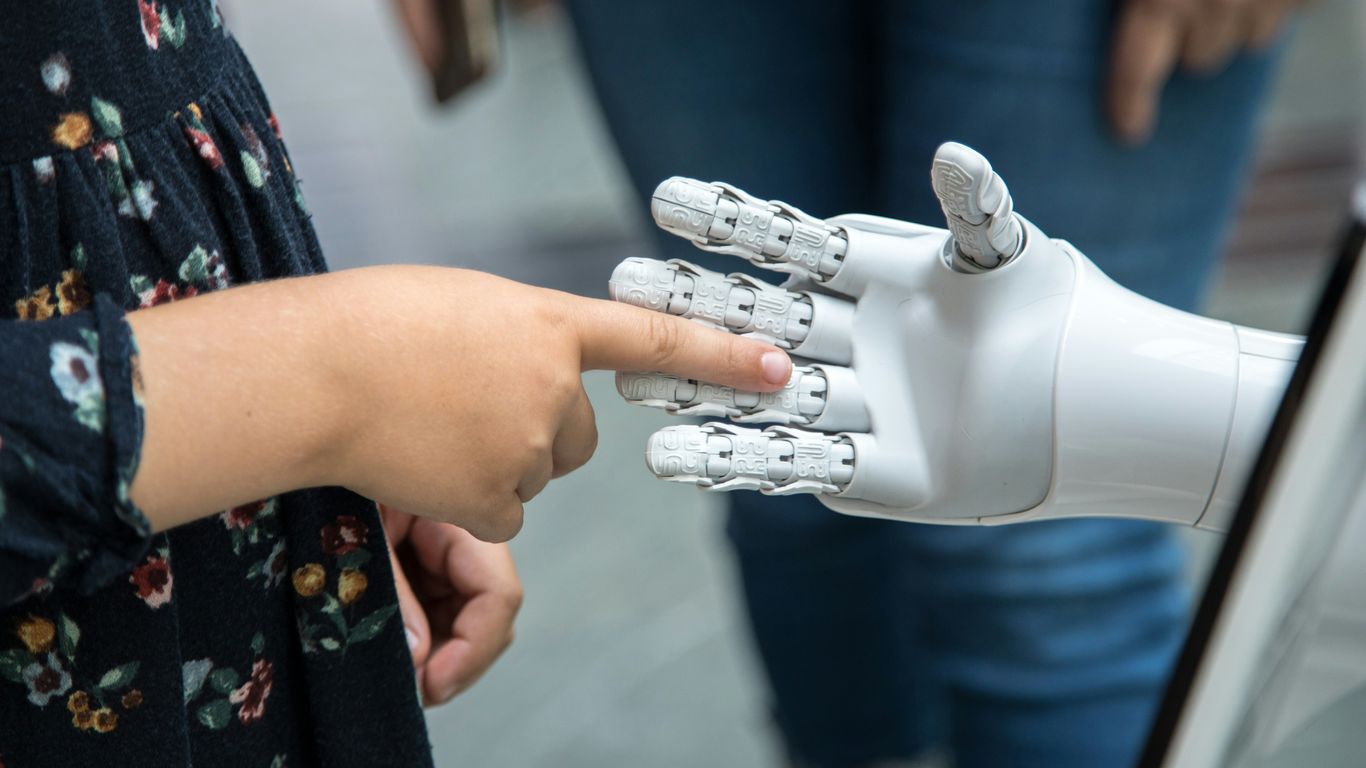
Figure 01, Figure 02, and Figure 03: Key development stages
Figure 01 was the early general-purpose humanoid platform associated with demonstrations of walking, manipulation, coffee making, and factory-floor activity. Figure 02 followed as a newer generation aimed at advancing the hardware and its usefulness in industrial settings. Figure 03 represents a further stage in the company’s development and has been described in public materials as extending the platform toward home environments as well as workplace learning.
The progression matters because robotics companies learn through hardware iteration. A cable route that is acceptable on a prototype may be redesigned for serviceability. A hand that works in a controlled demonstration may need better sensing and durability for production. The development sequence should therefore be read as evidence of an engineering process, not as three unrelated products.
Mobility, balance, dexterity, and payload capabilities
A bipedal robot must maintain balance while its center of mass changes, often as it reaches, carries, or places an object. Mobility is not just walking speed; it includes starting, stopping, turning, negotiating uneven surfaces, and recovering from disturbances. Dexterity adds another layer because the robot must control fingers and wrists while its whole body remains stable.
Public material for Figure 03 lists a height of 5 feet 8 inches, a weight of 61 kilograms, a payload of 20 kilograms, a runtime of five hours, and a speed of 1.2 meters per second. Those figures describe the published system and should not be treated as universal performance across every task or environment. Payload, runtime, and speed can change with the object, route, temperature, safety limits, and operating policy.
Cameras, sensors, batteries, and onboard computing
A humanoid needs multiple streams of information to operate: cameras for visual perception, sensors for joint position and force, and internal state estimates for balance and motion. Batteries supply the energy for actuators and computing, while onboard processors support the low-latency decisions needed for movement. The engineering challenge is to fit those components into a machine that remains light enough to move and strong enough to work.
The system also has to decide what happens locally and what can be processed remotely. A delayed command may be acceptable for a high-level instruction but dangerous for a balance correction. This is why hardware and AI cannot be evaluated separately. Better models do not compensate for inadequate sensing, and better sensors do not automatically produce reliable autonomy.
Designing a robot for warehouses, factories, and other workplaces
Workplaces reward predictable behavior. A robot must fit through the right spaces, interact with existing equipment, tolerate dust and ordinary variation, and be safe around people. It also needs a maintenance plan: batteries, hands, actuators, sensors, and protective components will eventually require inspection or replacement.
The most promising initial tasks are usually bounded ones that have clear inputs and outputs. They may still be physically demanding, repetitive, or difficult to staff, but they should not require a robot to solve every possible workplace problem at once. That design discipline is more credible than describing a humanoid as universally capable before the operational evidence exists.
The AI stack behind Figure’s robots
A robot’s AI stack has to connect three layers that are often developed separately in software: perception, language, and action. Perception identifies objects and surroundings. Language provides a way to express goals or instructions. Action converts those goals into coordinated movement while respecting physical constraints.
The appeal of a unified stack is adaptability. Instead of coding every variation by hand, developers can train systems to associate visual situations and instructions with useful behavior. Yet the physical world is unforgiving. A small error in object position, friction, timing, or balance can turn a plausible plan into a failed action.
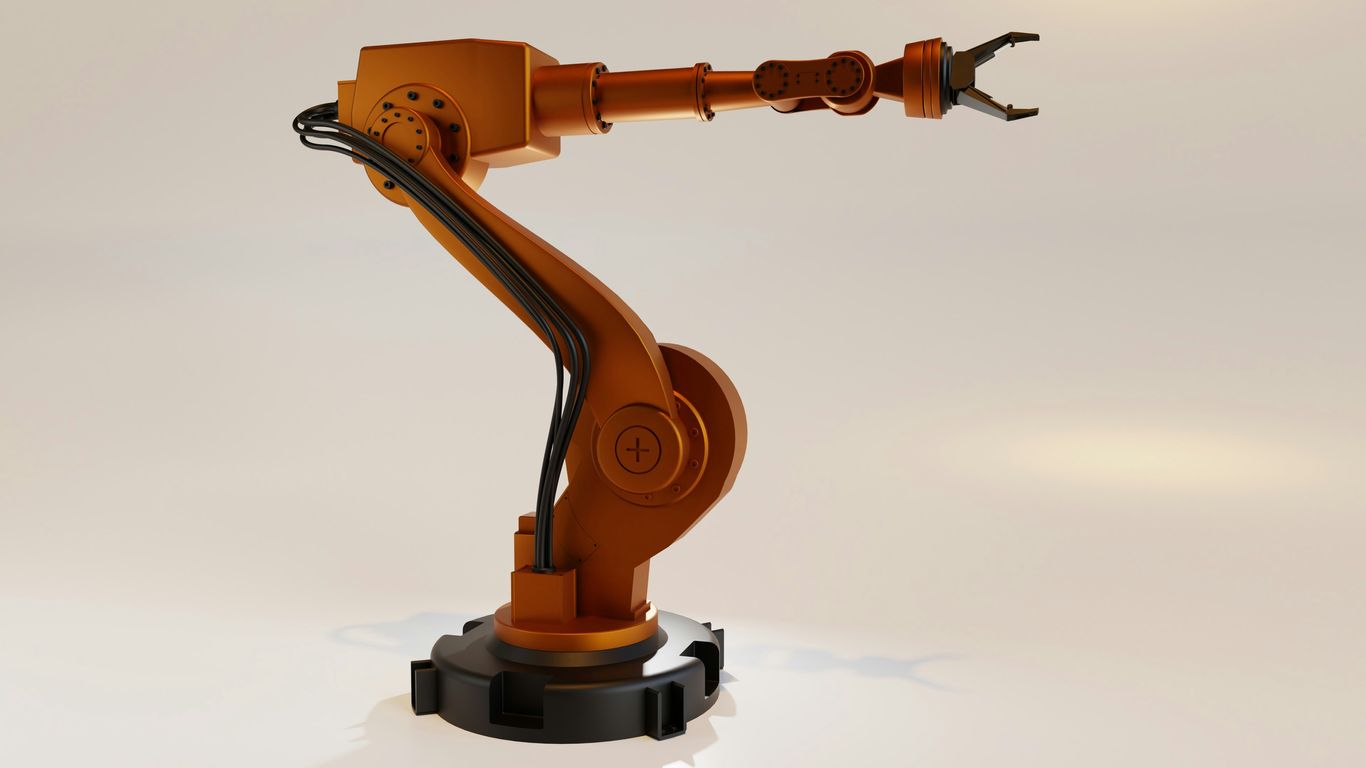
How Figure combines perception, language, and action models
The company has described vision-language-action systems, including Helix, as part of the effort to connect what a robot sees with what it is told to do and how it moves. A vision-language-action model is designed to map visual observations and language instructions toward physical actions. It is not merely a chatbot placed inside a robot; it must produce behavior that works under timing and safety constraints.
This architecture can support more natural interaction. An operator may describe a goal rather than specify every joint trajectory. The system still needs task boundaries, monitoring, and recovery procedures. Natural language can make a robot easier to instruct, but it does not remove the need to verify what the machine understood.
Training robots to learn tasks from human demonstrations
Human demonstrations can provide examples of how a task unfolds, including grasping, sequencing, and responding to ordinary variation. The robot can use those examples as training data rather than relying entirely on manually written rules. Demonstrations are especially valuable when the desired behavior is difficult to describe symbolically.
The method has limits. A demonstration may not show what to do when an object is missing, a worker enters the area, or the robot’s grip slips. Training systems must therefore combine demonstrations with simulation, supervised correction, safety constraints, and data from real operations. The objective is not to copy one performance, but to generalize the underlying task without making unsafe assumptions.
The role of vision-language-action systems in robot control
Vision-language-action systems offer a possible interface between high-level intent and low-level movement. The language component can represent goals, the vision component can track the scene, and the action component can select or generate motor behavior. Their usefulness depends on how tightly those components are connected to feedback from the physical world.
A practical controller must continuously check whether the intended action is working. If an object does not move, the robot may need to alter its grip or ask for help. If a person approaches, the system may need to pause. This feedback loop is where embodied AI differs from systems evaluated only on text or images.
The topic also connects to the broader distinction between AI assistance and human judgment. A human judgment framework argues that technology should strengthen responsibility and agency rather than quietly outsourcing them. In a factory, that principle means giving supervisors clear control over task boundaries, intervention, and accountability.
Why real-world data and autonomy are difficult to scale
Real-world data is expensive because it requires physical machines, trained operators, safe facilities, and careful annotation. A robot can encounter rare combinations of lighting, object shape, worker movement, and mechanical wear that are difficult to reproduce in simulation. Every failure may teach the engineering team something, but collecting that lesson safely can be slow.
Autonomy also has a long tail of exceptions. A system may complete a task hundreds of times and still fail when a box is damaged or a tool is placed slightly out of position. Reliability is the product in this setting: a high-level model is valuable only when the complete machine behaves predictably over long periods.
That is why demonstrations should be paired with operating metrics. The field needs evidence about intervention rates, recovery behavior, uptime, and task completion under ordinary conditions—not only carefully selected clips.
How Figure AI robots are being used
The strongest near-term case for humanoids is likely to be industrial work with repetitive physical motions and relatively structured environments. Manufacturing and warehousing provide measurable tasks, established safety procedures, and a clear economic baseline. They also expose weaknesses quickly, because a robot that stops repeatedly can disrupt a production line.
Public demonstrations and partnerships indicate a movement toward those settings. Still, a demonstration is not the same as a production deployment, and a partnership announcement is not the same as a verified customer outcome. The useful analytical question is what work the robot performs, under what supervision, and for how long.
Manufacturing and warehouse applications
Manufacturing and warehouse environments contain many tasks that are repetitive but not perfectly uniform. Parts must be moved, items must be placed, and materials must flow between stations. A humanoid may be attractive where existing fixtures and shelves assume a human reach and posture, particularly if redesigning the site would be costly.
The first applications are likely to be narrow within those broader environments. A robot might handle a defined material-transfer loop or a repeatable loading activity rather than manage an entire facility. Narrow scope is not a weakness if it produces measurable value and creates data for later expansion.
Figure’s work with BMW and other industrial partners
In January 2024, the company announced a partnership with BMW to deploy humanoid robots in automotive manufacturing facilities. The announcement was significant because automotive plants offer demanding, structured settings in which cycle time, safety, quality, and uptime can be examined closely.
The partnership should be interpreted as an industrial validation effort, not proof that humanoids have already transformed automotive production. Its importance lies in the opportunity to test the technology against real processes and constraints. The broader Figure AI company profile provides a useful reference for the founding, robot generations, partnerships, and stated applications discussed in this article.
Tasks humanoid robots may perform first
Early tasks are most likely to share a few characteristics: they are repetitive, physically awkward, easy to observe, and bounded by clear safety rules. They may also occur in places where labor availability or ergonomic concerns make automation attractive. The following categories illustrate the likely logic without claiming that every one is already deployed:
- Moving bins, totes, or components between defined locations.
- Loading or unloading repeatable stations and fixtures.
- Handling simple pick-and-place sequences in a controlled area.
- Performing basic inspection or material-presentation steps under supervision.
These tasks are not trivial. They require navigation, grasping, timing, and exception handling. But their boundaries make them easier to validate than open-ended household or service work.
Measuring productivity, safety, reliability, and return on investment
A serious deployment review needs more than a unit price. Operators should examine completed cycles per hour, intervention frequency, uptime, recovery time, maintenance burden, energy use, and the effect on nearby workers. Safety should include both incident rates and near misses, as well as the clarity of the system’s stop and handoff procedures.
A simple comparison can help separate engineering performance from business value:
| Measure | What it reveals | Why it matters |
|---|---|---|
| Task completion rate | Whether the robot finishes assigned work | Low completion creates hidden labor costs |
| Intervention rate | How often a person must assist | High intervention limits effective autonomy |
| Uptime | How consistently the system operates | Production planning depends on availability |
| Maintenance burden | Labor and parts required to keep it running | Service costs shape the business case |
| Safety performance | Risk around workers and equipment | No productivity gain offsets unacceptable risk |
The table’s central lesson is that robot capability is multidimensional. A system can move quickly yet deliver poor economics if it needs frequent resets or specialist support. Customers will ultimately judge the complete operating system, not an isolated speed or payload number.
Figure AI’s business model and commercialization strategy
Humanoid robotics requires a business model that accounts for both hardware and ongoing operations. Selling a robot may create an upfront revenue event, but customers also need installation, software updates, training, spare parts, and support. A robotics-as-a-service model can reduce adoption friction, though it shifts more capital and execution risk to the provider.
The right structure will depend on task maturity and customer preference. Early industrial buyers may want a tightly supported deployment with clear performance targets. Later customers may prefer ownership and internal fleet management. Either way, commercialization is inseparable from manufacturing quality and service capacity.
Selling robots versus offering robotics as a service
A direct sale gives the customer ownership of the asset and gives the vendor earlier cash revenue. It may also place more responsibility on the customer before the technology is easy to operate. A service model can align payment with usage or output, but it requires the provider to finance and maintain a fleet.
Neither model solves the underlying productivity question. The customer still needs evidence that the robot performs a valuable task at an acceptable cost. The most credible commercial plans will define the task, service level, intervention policy, and replacement responsibility before discussing scale.
Manufacturing, deployment, and maintenance requirements
Scaling from prototypes to fleets requires repeatable manufacturing. Components must be sourced consistently, calibration must be controlled, and each robot must pass functional and safety checks. The company also needs field technicians, diagnostic tools, replacement parts, and a process for incorporating lessons from deployed machines into the next revision.
Maintenance is especially important for systems with many moving joints and delicate end effectors. A robot that is technically autonomous but frequently unavailable is not autonomous from the customer’s perspective. The service organization becomes part of the product.
Integrating humanoid robots into existing operations
Integration begins before the robot arrives. A facility must identify the task, map the work area, define interaction rules, connect the system to scheduling or inventory processes where necessary, and determine who can intervene. Workers need training that covers both normal operation and what to do when the robot behaves unexpectedly.
Implementation is also a management problem. The best automation projects clarify which work is removed, which work changes, and which new supervisory responsibilities appear. A useful discussion of reducing owner dependence makes a parallel point for businesses: automation creates value only when responsibility and operating knowledge are distributed rather than concentrated in one person or one opaque system.
The workforce and economic impact of automation
Humanoid robots may reduce demand for some repetitive physical tasks while increasing demand for technicians, fleet supervisors, safety specialists, and process engineers. The transition will not be uniform across industries or regions. It will depend on labor availability, wage levels, regulation, task complexity, and the cost of deploying alternatives.
A responsible analysis should distinguish augmentation from displacement. In some settings, a robot may take over strenuous work and allow people to move into oversight or higher-value roles. In others, it may reduce the number of workers required. Those outcomes should be assessed through evidence, consultation, and transparent workforce planning rather than assumed from the robot’s appearance.
Figure AI’s challenges and future outlook
The future of humanoid robotics will be determined by ordinary operational details. Can the machine work through a shift? Can it recover from an error? Can a technician service it quickly? Can a customer justify the total cost? These questions are less visually dramatic than walking demonstrations, but they are closer to the conditions for a sustainable business.
The company has meaningful technical and financial momentum, yet the distance between a capable prototype and large-scale deployment remains substantial. The field is still working through questions of safety, data, power, manufacturing, and accountability. A measured view can recognize progress without treating ambition as proof.
Safety, reliability, and human-robot collaboration risks
Humanoids operate near people, which makes safety a system property rather than a single sensor or software feature. Mechanical limits, collision detection, speed controls, emergency stops, supervisory interfaces, and facility procedures all contribute to risk management. The robot must also communicate enough of its state that workers can predict what it may do next.
Reliability has a similar breadth. A failure may originate in perception, planning, grasping, battery management, networking, or a worn mechanical component. Operators need clear fallback behavior and a way to escalate failures without improvising around the machine.
Technical limits in dexterity, battery life, and autonomy
Dexterity remains difficult because hands must handle objects with different shapes, textures, weights, and friction. Battery life is constrained by the energy required for locomotion, manipulation, and onboard computing. Autonomy is limited by uncertainty and by the need to recognize when the system does not know enough to proceed.
Improvements in one area can expose weaknesses in another. More capable actuators may increase energy consumption; heavier batteries may reduce agility; richer models may require more computing. The engineering task is therefore an optimization across the whole robot, not a race to maximize one specification.
Regulatory, ethical, and labor considerations
Regulators and employers will need to address machine safety, workplace monitoring, liability, data governance, and labor transitions. A robot that observes workers may collect sensitive information even when its immediate purpose is navigation or task execution. Organizations should define retention, access, and use policies before deployment rather than after a dispute.
Ethically, the central issue is control. Workers should know when a robot is operating, what data it collects, how decisions are reviewed, and how incidents are investigated. The broader AI search optimization guide is not about robotics, but its emphasis on accessibility, authority, and how systems retrieve information offers a useful adjacent lesson: complex technical systems become trustworthy when their behavior and evidence can be inspected.
What to watch as Figure moves toward large-scale deployment
The next meaningful signals will be operational. Observers should look for disclosed deployment duration, task-level completion rates, intervention data, manufacturing progress, service procedures, and evidence that customers are expanding use after a pilot. It will also matter whether the company can improve performance without making each deployment a bespoke engineering project.
The field’s most useful rankings are beginning to prioritize commercial readiness, repeatability, safety, and integration over theatrical demonstrations. That is the right direction. Humanoid robotics may become important, but its importance will be earned through years of dependable work in places where failure has a cost.
Conclusion
Figure AI represents one of the clearest attempts to turn humanoid robotics and embodied AI into an industrial product category. Its progress—from Figure 01 through later platforms, major financing, and the BMW partnership—shows serious momentum, while the remaining challenges show why the category is still experimental. The decisive test will be whether these machines can deliver safe, repeatable, economically defensible work at scale.
Frequently Asked Questions
What is a humanoid robot?
A humanoid robot is a machine designed with a broadly human-like body plan, often including a torso, two arms, and two legs. The purpose is usually to operate in environments, use tools, or interact with equipment designed for people.
Why are companies developing humanoid robots?
Companies are pursuing humanoids because many workplaces already use human-scale layouts, tools, shelves, and procedures. A suitable robot could automate selected physical tasks without requiring a facility to be completely redesigned.
Are humanoid robots general-purpose today?
Most current systems remain limited by task scope, supervision requirements, reliability, and operating conditions. “General-purpose” generally describes the intended platform direction, not proof that a robot can perform any physical task autonomously.
What makes robot autonomy difficult?
The physical world contains uncertainty that is hard to capture in training data. Objects move, lighting changes, people intervene, components wear, and small errors can affect balance or grasping. Reliable autonomy requires perception, planning, control, feedback, and safe recovery.
How should a company evaluate a humanoid robot?
It should measure task completion, intervention frequency, uptime, maintenance, safety, energy use, and total cost. These metrics should be gathered over representative operating periods rather than inferred from demonstrations.
Will humanoid robots replace workers?
The effect will vary by task and industry. Some systems may reduce strenuous or repetitive work, while others may reduce labor demand or create new technical roles. The outcome depends on deployment choices, economics, regulation, and workforce planning.
When will humanoid robots become common?
There is no reliable single timetable. Wider adoption depends on hardware durability, battery performance, autonomy, manufacturing scale, safety evidence, service networks, and a convincing return on investment for customers.