Key Takeaways
The best robotics stocks 2026 list spans compute, medical systems, factory automation, logistics, and emerging physical AI. The right comparison is less about headline novelty than deployment evidence, business quality, and the time required for adoption.
- Robotics exposure ranges from semiconductor infrastructure to complete automated systems.
- Recurring service, software, and consumables revenue can matter as much as hardware sales.
- Industrial automation often develops through measured upgrades rather than sudden replacement cycles.
- Humanoid and warehouse robotics remain higher-uncertainty areas with demanding capital needs.
- Investors should assess valuation, execution, customer concentration, and deployment evidence together.
1. Nvidia (NVDA)
Robotics increasingly depends on the computing stack beneath the machine. Training, simulation, perception, and real-time inference all require specialized hardware and software, giving infrastructure providers an important position in the value chain. That position can be attractive, but it also exposes investors to the pace of customer adoption and to the cyclicality of semiconductor spending.
The most useful distinction is between a platform that enables many developers and a robot maker that sells a defined system. Platform economics can scale broadly, yet the connection to robotics revenue may be indirect. Readers evaluating Nvidia should therefore separate documented products from longer-term possibilities around physical AI, and should avoid treating every AI infrastructure dollar as a robotics dollar.
A simple comparison framework keeps the analysis grounded:
| Factor | Why it matters | Investor question |
|---|---|---|
| Compute demand | Training and inference shape system costs | Is demand broad or tied to a few programs? |
| Software adoption | Tools can deepen platform dependence | Are developers using the stack repeatedly? |
| Customer mix | Large buyers can affect results materially | How concentrated is demand? |
| Capital intensity | New capacity requires substantial investment | Can spending track durable demand? |
This framework is more useful than a single estimate of the robotics market. The company remains a way to study infrastructure versus application risk, especially when a promising robotic system may take years to reach volume production.
2. Intuitive Surgical (ISRG)
Medical robotics offers a different investment profile from factory automation. Hospitals adopt systems through clinical workflows, training, procurement, and regulatory processes, so the commercial cycle is deliberate. That slower pace can create barriers to entry, but it also means investors must examine utilization and procedure growth rather than simply count installed machines.
The central question is whether a platform becomes embedded in routine care. A system that supports minimally invasive procedures may generate an economic pattern involving initial equipment, recurring instruments, accessories, and service. The result is not a guarantee of performance; each customer outcome remains specific to its clinical setting and operating model.
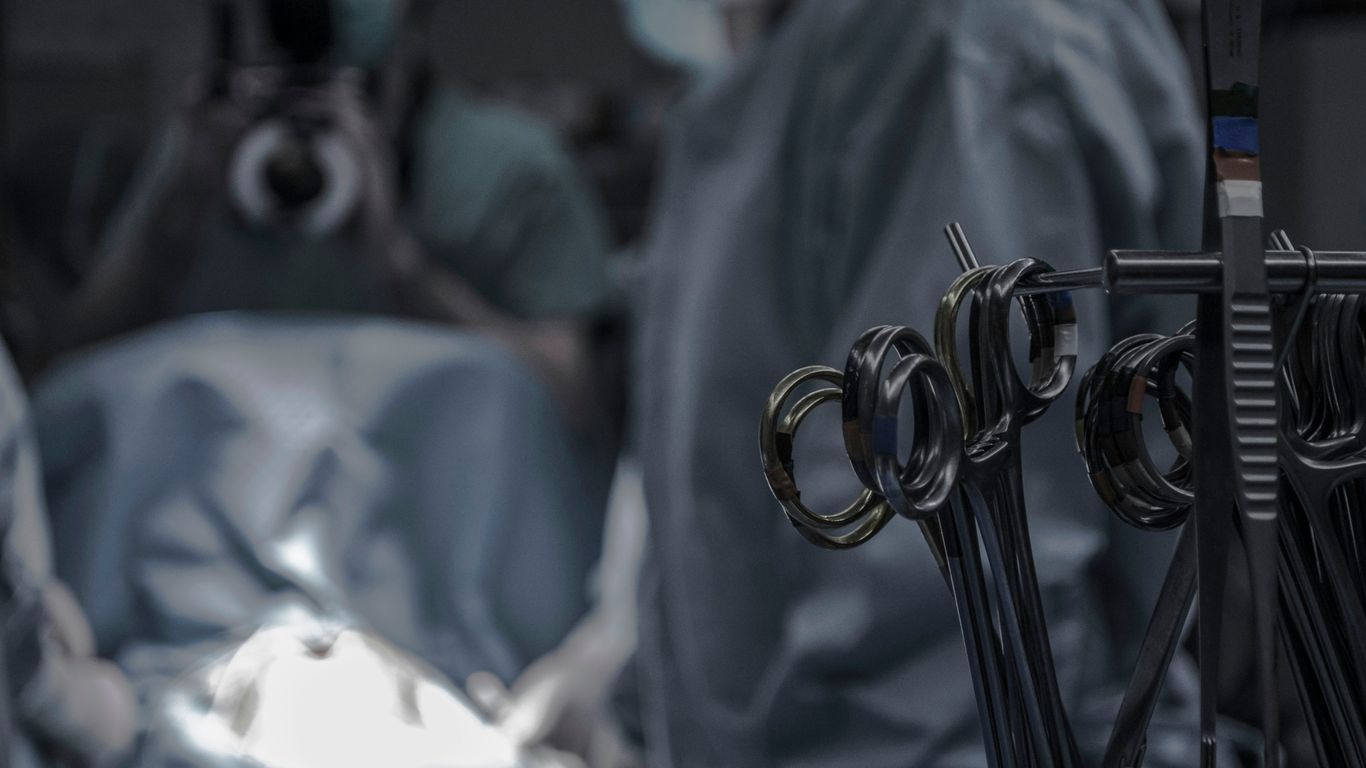
For investors, Intuitive Surgical belongs in the medical robotics discussion because surgical systems are evaluated through clinical viability and workflow integration. A careful review should distinguish approved products from experimental autonomy claims, and should treat improved patient outcomes as a question for clinical evidence rather than a stock-market assumption.
3. ABB (ABBNY)
Industrial robotics is usually purchased to solve a defined production problem. The buyer may care about throughput, repeatability, safety, changeover time, or the ability to connect a cell to existing equipment. This makes integration quality and support capacity just as relevant as the arm itself.
A useful investor lens is the complete workcell. The robot is only one component alongside tooling, sensors, controls, safety systems, programming, and maintenance. The ABB GoFa 12 example illustrates why payload, reach, precision, and the surrounding cell should be assessed together rather than treating a cobot specification as a universal measure of value.
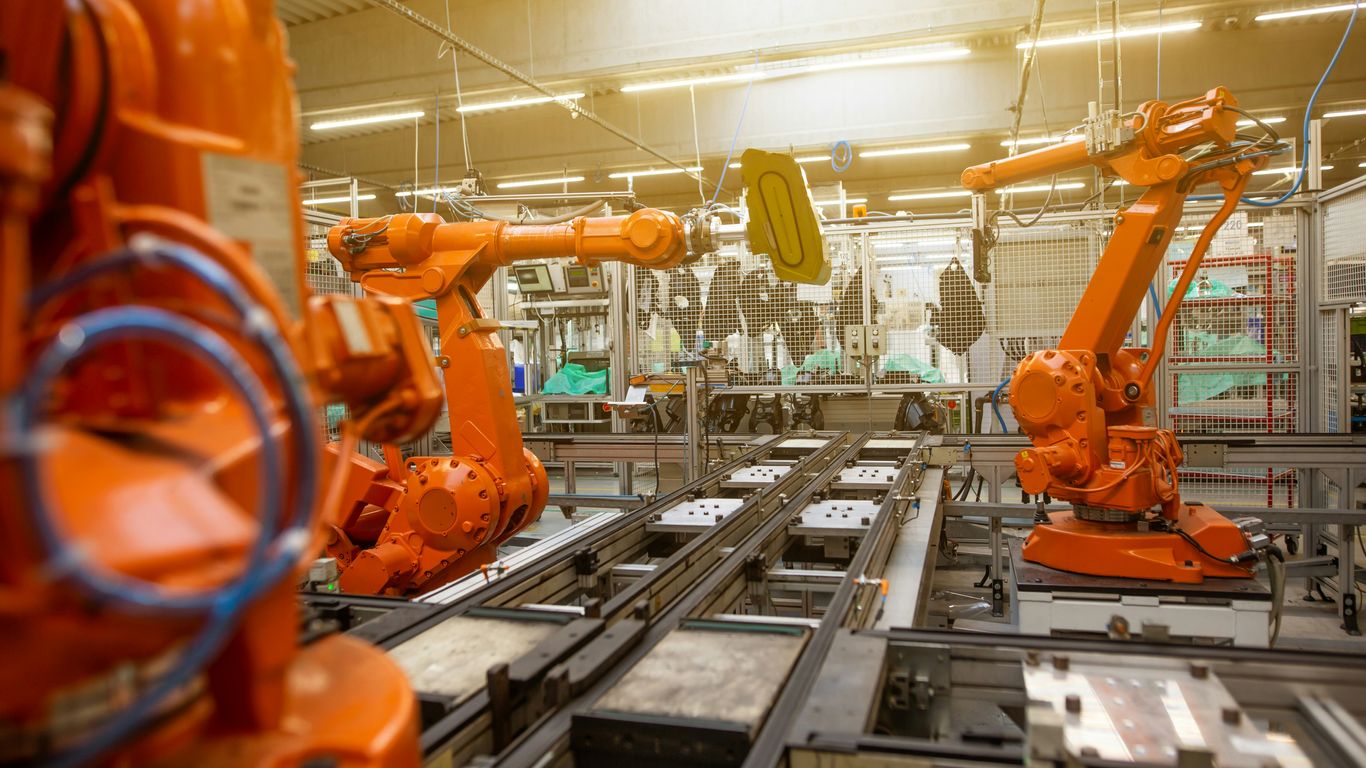
Industrial demand can also be affected by factory construction, labor availability, energy prices, and customer confidence. Investors should resist extrapolating a single installation into a sector-wide trend. The strongest evidence is repeatable deployment across applications, supported by service economics and integration that does not overwhelm the customer's expected return.
4. Fanuc (FANUY)
Factory automation is a long-cycle business. Once a production line is qualified, changing equipment can require redesign, downtime, software validation, and employee retraining. That creates potential durability for established suppliers, while also making growth dependent on capital expenditure and manufacturing conditions.
The analytical challenge is separating replacement demand from expansion demand. A mature plant may buy new equipment to replace aging assets, while a new facility may require a broader automation buildout. Those two sources of demand carry different implications for revenue visibility and future growth.
Investors should also examine geographic exposure and the mix between hardware, controls, service, and related automation. The broader industrial dehumidifier market is a useful adjacent reminder: factory uptime depends on environmental and facility systems as well as robots. It does not, however, mean every industrial technology market follows the same cycle.
5. Teradyne (TER)
Robotics exposure can sit beside a semiconductor testing business, creating a more complicated investment case than a pure-play automation company. The investor must understand which segment supplies the growth, which segment carries cyclicality, and how management allocates capital between them. Segment reporting is therefore more important than a broad robotics label.
The robotics portion of the business is best assessed through actual applications. Collaborative arms and mobile systems can address factory and warehouse tasks, but deployment depends on safety, navigation, programming, workflow design, and the customer's existing software. The Teradyne robotics discussion provides a useful market-level comparison, although market classifications should not be mistaken for a company forecast.
A practical diligence list might include:
- Evidence that deployments move beyond pilot projects.
- The time and cost required to integrate each system.
- The balance between hardware sales and recurring support.
- Exposure to a small number of end markets or customers.
These questions help distinguish a credible automation business from a compelling demonstration. They also make room for uneven adoption: one application may scale quickly while another remains technically feasible but commercially premature.
6. Rockwell Automation (ROK)
Automation spending is often decided at the plant level, where reliability and compatibility can outweigh novelty. Production managers generally need systems that work with installed controls, preserve safety procedures, and provide maintainable operations. This favors suppliers that can fit into existing industrial processes.
For public-market analysis, the important variables include order timing, backlog quality, software contribution, and exposure to discrete and process industries. A period of weak factory investment can delay projects even when the long-term case for automation remains intact. Conversely, a strong order cycle does not prove that every customer is achieving attractive returns.
Investors should be precise about what is being measured. Revenue growth, recurring software, installed-base expansion, and margin performance answer different questions. Comparing them without separating the underlying mechanisms can make a stable industrial franchise look like a speculative robotics bet, or make a speculative bet look mature.
7. Siemens (SIEGY)
Large automation providers are often evaluated as ecosystems rather than as robot vendors alone. Their relevance may come from industrial software, controls, digital engineering, and the ability to connect production data across a facility. That breadth can support cross-selling, though it can also make robotics exposure difficult to isolate.
The investment case should therefore begin with the customer workflow. Engineers want a system that can be designed, simulated, commissioned, monitored, and maintained without creating unnecessary handoffs. The publication's coverage of industrial robotics startups makes a related point: deployment evidence, safety, integration, and economic viability matter more than a prototype's visual appeal.
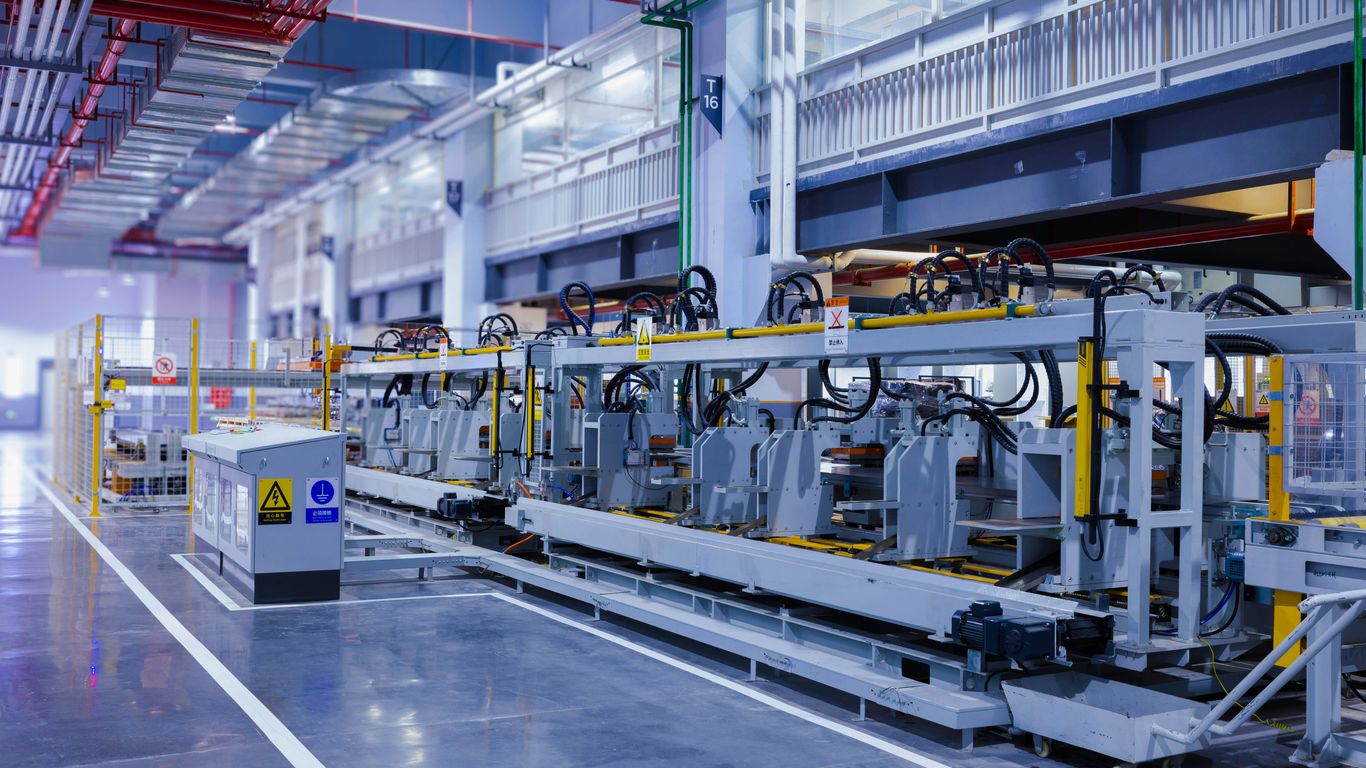
This is where the long arc of industrial automation becomes visible. Adoption may arrive as a sequence of software upgrades, sensors, controls, and targeted machines rather than a single transformation project. Investors who track that sequence can better judge whether a company is benefiting from durable modernization or merely from a temporary capital-spending wave.
8. Amazon (AMZN)
Warehouse automation is a systems problem. Moving a package efficiently may require storage, routing, software orchestration, picking, sortation, safety, and labor coordination to work together. A robot that performs one task well can still fail to create value if it increases bottlenecks elsewhere.
That is why deployment scale deserves more attention than demonstration quality. Investors should ask whether systems operate in repeatable environments, how they interact with warehouse-management software, and whether the economics improve as volume rises. The warehouse robotics guide offers a useful vocabulary for comparing autonomous mobile robots, piece-picking systems, pallet movement, and fleet management.
The business case also depends on order profiles and facility design. A solution suited to a high-volume distribution center may not fit a smaller operation with different routes and inventory patterns. Even a technically successful installation can require ongoing maintenance, remote supervision, and process redesign before the expected return appears.
9. Tesla (TSLA)
Humanoid robotics attracts attention because a human-shaped machine appears adaptable to environments designed for people. The engineering problem is much harder than the image suggests: mobility, dexterity, perception, safety, power consumption, maintenance, and reliable task execution must converge in one system. Investors should be careful not to treat a prototype as proof of commercial readiness.
The relevant milestones are operational. They include repeatable task performance, supervised deployments, production quality, unit economics, and the ability to maintain fleets. The humanoid robots launching in 2026 coverage is a useful reference for separating intended environments and design claims from evidence of dependable deployment.
A plausible long-term market does not remove near-term uncertainty. Manufacturing scale, component availability, safety validation, and customer acceptance can each extend the timeline. For a public company, investors must also decide how much of the valuation already assumes success in a field that is still moving from demonstrations toward repeatable work.
10. Symbotic (SYM)
Warehouse automation companies sit at the intersection of robotics, software, and supply-chain capital spending. Their systems may be valuable because they coordinate several physical steps rather than because one machine performs a spectacular maneuver. That systems orientation can produce strong operating leverage if deployments repeat, but it can also create concentration and execution risk.
The first task for an investor is to understand the commercial model. Questions include whether revenue is recognized through equipment, software, service, or a combination; how projects are financed; and how long commissioning takes. Customer concentration deserves particular attention because a small number of large deployments can make reported growth look strong while increasing exposure to procurement delays.
A disciplined review also tests the boundary between a signed project and a scaled platform. Pipeline language, installation milestones, system uptime, and customer economics carry different evidentiary weight. In a sector where integration is central, the most durable companies are likely to be those that can turn complex deployments into a repeatable operating process.
Conclusion
The best robotics stocks 2026 are not one uniform category: they represent compute, medical procedures, industrial cells, warehouse systems, and ambitious new machine forms. A credible investment process weighs deployment evidence, recurring revenue, capital intensity, customer concentration, and valuation against the time required for adoption. That approach leaves room for major technological progress without confusing possibility with proof.
Frequently Asked Questions
What makes a robotics stock worth watching?
A company is worth watching when its technology addresses a meaningful workflow, has evidence of customer adoption, and shows a credible path to acceptable economics. Technical novelty alone is not enough.
Are robotics stocks suitable for long-term investors?
They can be, but the sector includes both mature industrial businesses and early-stage opportunities with substantial uncertainty. Investors should match position size and holding period to the company's development stage.
How should investors compare different robotics companies?
Comparisons should consider the value chain, revenue model, customer concentration, deployment cycle, margins, and valuation. A semiconductor infrastructure provider should not be judged by the same metrics as a surgical-system or warehouse-automation company.
What is the biggest risk in robotics investing?
The largest risk is often the gap between a technically impressive demonstration and a reliable, profitable deployment. Integration, safety, maintenance, regulation, and customer budgets can all slow adoption.
Do robotics companies earn recurring revenue?
Some generate recurring revenue through software, service, consumables, maintenance, or replacement components. The mix differs substantially, so investors should verify how much revenue repeats and how much depends on new equipment sales.
Are humanoid robots ready for widespread use?
Some systems are progressing toward commercial deployments, but widespread use requires dependable operation, safe interaction, maintainable hardware, and competitive unit economics. Those conditions are not established uniformly across the field.
Should investors buy a basket of robotics stocks?
A diversified approach can reduce the risk of relying on one technology or adoption timeline. It does not eliminate valuation risk, and each holding still requires analysis of its financial position and business fundamentals.