Key Takeaways
Atlas is best understood as a research platform moving toward industrial material handling, not as a general-purpose household machine. Its distinctive strength is the coordination of bipedal movement, perception, manipulation, and control in spaces built for people.
- Atlas has evolved from a hydraulic research robot into an all-electric humanoid platform.
- Its mobility demonstrations show advanced balance, recovery, and whole-body coordination.
- Industrial handling is a more meaningful measure of usefulness than acrobatic spectacle.
- Dexterity, battery endurance, uncertainty, and safety still limit dependable autonomy.
- Deployment decisions should begin with a tightly defined workflow and measurable operating requirements.
Boston Dynamics Atlas explained: What Atlas is and how it has evolved
The phrase Boston Dynamics Atlas explained points to a distinction that is often lost in short videos: Atlas is both a remarkable engineering system and a work in progress. It was created to explore dynamic humanoid mobility and mobile manipulation, then moved toward a form intended for industrial work. The central question is therefore not whether it can perform an impressive movement, but whether it can repeat a useful task in a changing workplace.
From the hydraulic research platform to the electric Atlas
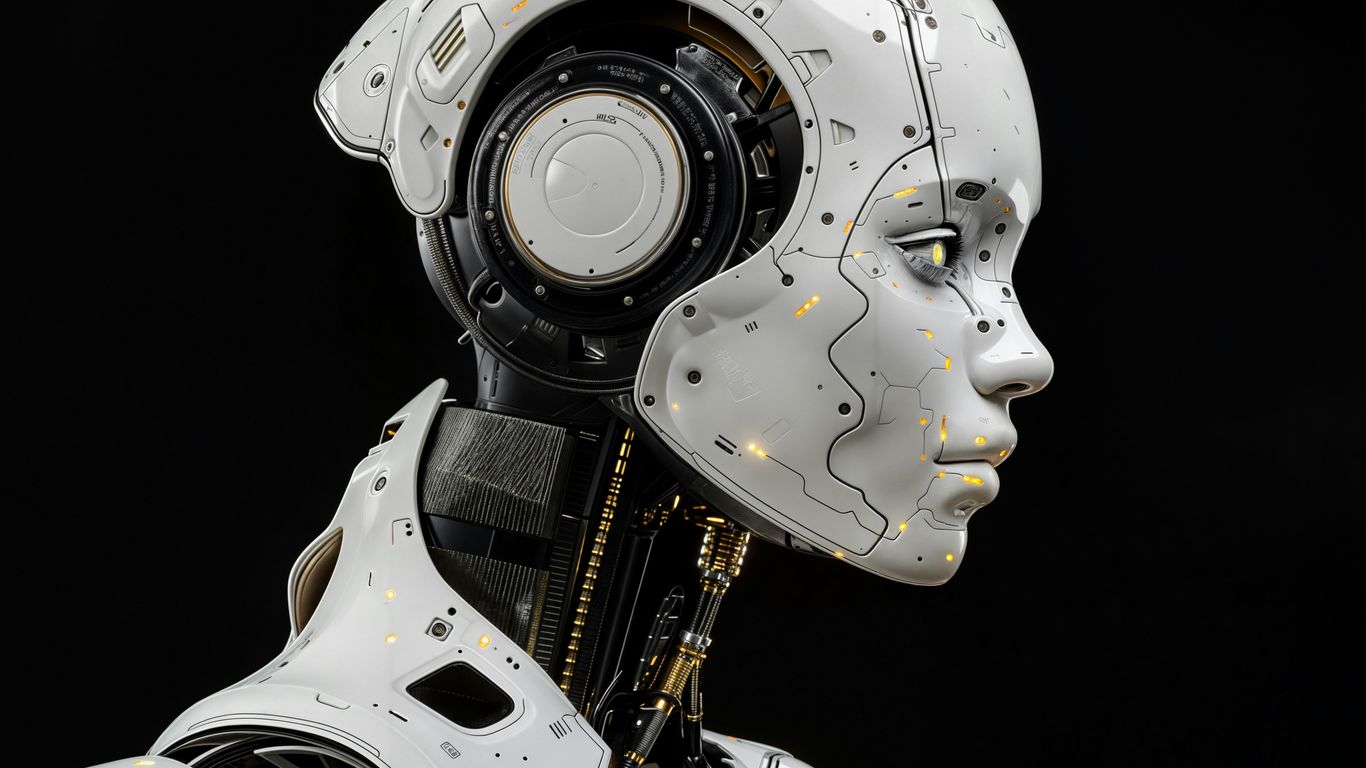
The original Atlas platform used hydraulic actuation and became known for dynamic movement, difficult terrain, and athletic demonstrations. The newer version is all-electric, marking a substantial hardware transition rather than a cosmetic redesign. Boston Dynamics describes the electric platform as a step toward material-handling applications, while the wider development record shows a continuing effort to combine mobility with manipulation.
The change matters because an industrial robot needs more than peak force. It must manage heat, power, maintenance, control complexity, and repeatability over an operating shift. The electric Atlas is consequently better framed as an industrial direction for the platform, rather than proof that every planned use case is already a finished product.
The hardware behind Atlas's movement
A humanoid robot has to control a tall, narrow body while its feet, hands, and torso interact with the environment. Atlas uses actuated joints, body-mounted sensing, and a control system that coordinates the robot with the physical forces around it. Sensors help it perceive terrain, objects, and obstacles; actuators then translate a planned movement into changes in posture and force.
That combination is difficult because balance is not a fixed pose. It is a continuous correction process involving gravity, friction, momentum, and contact with the floor. The result is a tightly coupled system in which mechanical design, sensing, planning, and behavior cannot be evaluated in isolation.
How Atlas differs from other humanoid robots
Atlas is distinguished less by its human-like outline than by the range of dynamic behaviors demonstrated in public. It has shown agile locomotion, recovery from disturbances, and mobile manipulation, meaning movement and object interaction are treated as connected problems. That emphasis gives the platform a useful test case for embodied intelligence: intelligence expressed through a body that must remain stable while doing work.
A useful comparison should focus on evidence rather than silhouette. Readers assessing the field can use this humanoid robotics landscape as broader context, but Atlas itself should be judged by the specificity of its demonstrations, the conditions under which they were recorded, and the distance between a controlled test and a production workcell.
Why demonstrations do not always represent production readiness
A demonstration establishes that a robot achieved a task under stated conditions. It does not automatically establish uptime, recovery from rare faults, safe behavior around workers, maintenance intervals, or economic value. That gap is familiar across deep tech: a successful prototype can validate a technical approach without validating a business process.
Atlas videos are most informative when treated as evidence about capabilities under development. The Atlas lab parkour video is a useful example of mobility research, but parkour should not be confused with a factory acceptance test. For operators, the more revealing questions concern task boundaries, exception handling, and how much human supervision is required.
How Atlas moves through complex environments
Mobility is the foundation of Atlas's proposed usefulness. A robot that can reach a workstation but cannot cross a cluttered floor, recover from a misstep, or reposition its body has limited value in a human-designed facility. Atlas's movement work is therefore not just spectacle; it is a way to investigate how a humanoid body can remain useful when the environment is not perfectly structured.
Walking, running, jumping, and recovering from a fall
Atlas has demonstrated walking, running, jumping, and other dynamic behaviors, including recovering from a fall in research demonstrations. These actions require the robot to manage momentum and place its feet while its center of mass is moving. Recovery is particularly important because real facilities contain slips, contacts, blocked paths, and imperfect landings.
A recovery behavior does not mean every fall is harmless or that the robot can resume any task without intervention. It does show why bipedal control is a meaningful engineering problem: the robot must decide how to move its body before it knows exactly how the next contact will resolve.
Balancing on uneven or changing surfaces
Balance on a flat laboratory floor is only one case. Uneven surfaces change the location and quality of foot contact, while moving objects can introduce unexpected forces through the arms and torso. Atlas's mobility research addresses these conditions by combining sensing with rapid control adjustments rather than relying on a single precomputed posture.
The practical test is not whether the robot can cross one unusual surface once. It is whether performance remains predictable across the variations that matter in a facility: floor transitions, ramps, debris, payload changes, and people moving nearby. Those conditions should be measured separately during an evaluation.
Climbing, crouching, and navigating tight spaces
Humanoid proportions can help a robot use stairs, reach into work areas, and crouch beneath obstructions without requiring a facility to be rebuilt around it. Climbing and crouching also expose the limits of the design. Each change in height or support requires new balance relationships, and a carried object can make the same route more difficult.
Tight-space navigation is consequently a whole-body task. The robot must account for its shoulders, hands, legs, and payload, not merely steer a point on a map. A route that appears open to a camera may still be unusable once clearance and collision risk are included.
Using whole-body control to coordinate movement
Whole-body control means that movement is planned across the robot rather than independently at one joint or limb at a time. A step can affect the reach of an arm; lifting a component can affect balance; turning the torso can change where the feet must land. Coordinating these effects is what allows mobility and manipulation to coexist.
The concept is also why Atlas is technically interesting even when a particular demonstration has no immediate commercial use. Its engineers are testing the coupling between perception, motion, and contact. For a deeper primer on the underlying mechanics and sensors, this humanoid robot technology overview provides useful background without treating athletic movement as a finished service.
What Atlas can do with objects and tools
Manipulation is where a mobile humanoid robot begins to resemble an industrial worker rather than a mobility experiment. The object may be heavy, awkwardly placed, partially occluded, or located at a workstation designed for human hands. Atlas demonstrations have explored these conditions, but the relevant measure remains controlled, repeatable handling rather than a single successful grasp.
Picking up, carrying, and placing heavy components
Atlas has been shown handling large components in industrial-style scenarios, including moving an object from one location to another. Picking up a component involves more than closing a hand around it. The robot must estimate the object's position, choose a stable grasp, shift its weight, maintain balance while walking, and place the object without damaging it or the surrounding equipment.
Payload also changes locomotion. A robot may be able to lift an object but lose speed, reach, or stability once it carries it over distance. That is why a credible evaluation records the complete sequence, including approach, grasp, transport, placement, and recovery from a failed attempt.
Retrieving objects from awkward positions
Retrieval tasks test whether perception and movement can work together when an object is not presented neatly. The robot may need to reach around a fixture, bend toward a low shelf, or use a different approach because the expected access path is blocked. These situations are common in factories and less forgiving than a centered object on an open table.
The task also reveals how much environmental preparation is required. If every object must be placed in a known orientation, the system may be useful for a narrow workflow but less adaptable than the word humanoid suggests. If it can tolerate meaningful variation, the engineering case becomes stronger.
Reorienting parts for assembly tasks
Assembly often depends on orientation. A component has to be turned, aligned, and presented to a fixture or fastening point with enough precision for the next operation. Reorientation requires the robot to maintain a secure grip while changing the relationship between its hands, arms, torso, and the work surface.
This is a natural area for mobile manipulation research because the robot cannot treat the hand as separate from the rest of the body. Its stance affects reach, and its reach affects stability. Still, repeatable alignment tolerances and cycle-time requirements must be demonstrated for each proposed part rather than inferred from a general-purpose video.
Using tools and interacting with workstations
A humanoid form can make existing workstations more accessible because the robot can approach controls, fixtures, bins, and tools arranged for human employees. Tool use, however, introduces new variables: grip force, tool geometry, resistance, cable routing, and the possibility that the tool does not behave as expected.
The strongest industrial case will come from tasks where the robot's mobility solves a real access problem and its manipulation is sufficiently reliable. A robot that can technically hold a tool but requires frequent resets may still be valuable in research, yet it should not be described as autonomous production labor.
How Atlas performs industrial tasks
Industrial work provides the clearest test of whether Atlas's capabilities matter outside a demonstration space. Material handling is attractive because it can involve heavy components, repetitive routes, and work areas already laid out for people. It is also demanding: production systems expose every weakness in timing, safety, reliability, and integration.
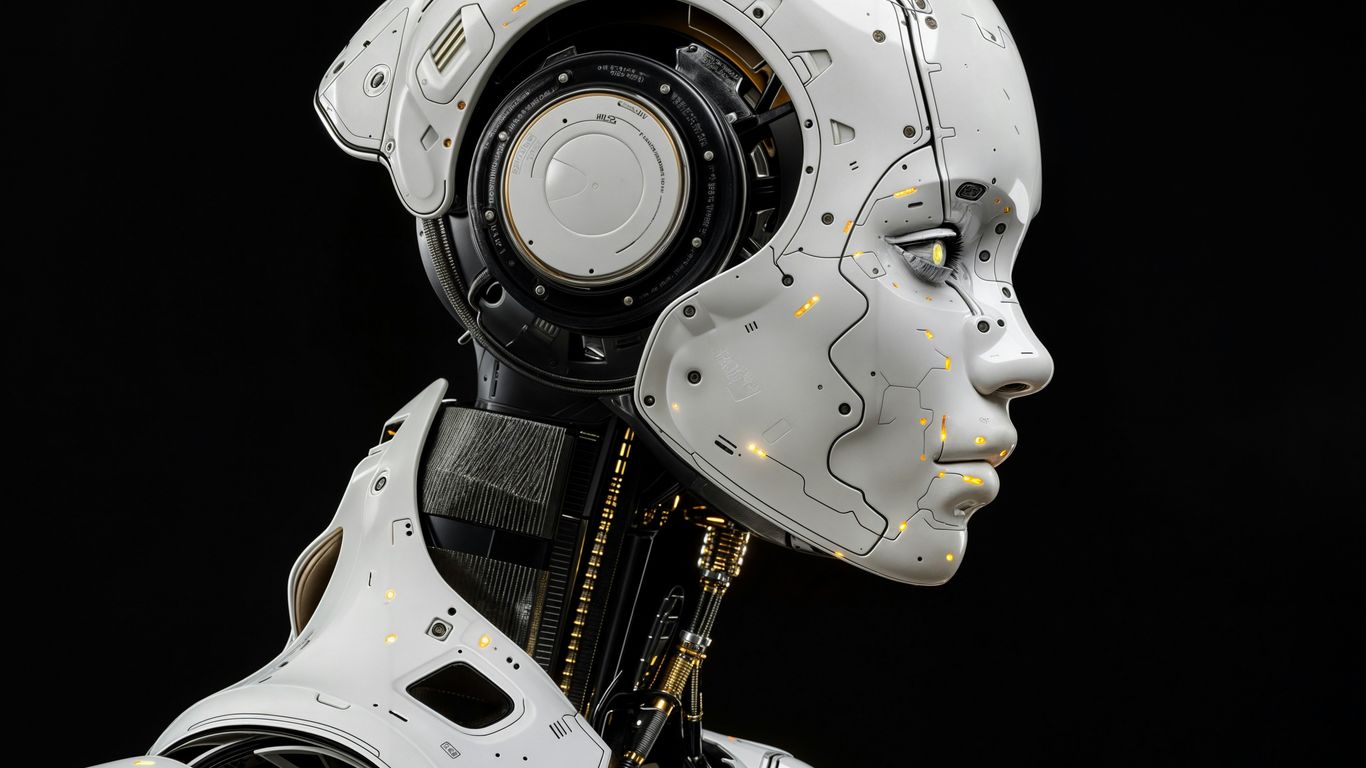
Moving materials in automotive manufacturing
Automotive manufacturing has become a prominent context for Atlas demonstrations because plants contain repetitive material flows alongside workstations built around human reach and movement. The robot's proposed role is to handle components and move them through defined steps, not to replace every machine or process in a factory.
A material-handling assignment can be valuable even when it is narrow. The business case depends on whether the robot can meet the required payload, route, cycle time, availability, and safety conditions. Those requirements are specific to the plant, the component, and the handoff points.
Supporting repetitive handling and assembly workflows
Repetitive work is not automatically simple. A component can arrive slightly rotated, a bin can be emptier than expected, or a downstream station can pause. A useful system must perform the standard cycle while recognizing when the standard assumptions no longer hold.
The following operating dimensions help separate an attractive demo from an actionable pilot:
- The exact object range, payload, and grasp conditions.
- The required cycle time and acceptable interruption rate.
- The recovery path when a placement or handoff fails.
- The amount of supervision, maintenance, and floor-space change required.
These dimensions turn a broad claim about industrial automation into a testable workcell specification. They also make it easier to compare a robot pilot with existing automation without assuming that a humanoid shape is inherently superior.
Adapting to changes in objects and surroundings
Adaptation can mean several different things. It may involve recognizing a changed object pose, choosing another reachable motion, avoiding a new obstacle, or stopping safely when the situation is outside the task model. A deployment proposal should state which form of adaptation is required rather than using the word as a general promise.
Atlas's value will rise as it handles more variation without losing predictability. Yet adaptation has a cost: broader variation requires more data, more testing, and more careful limits. In production, a controlled fallback can be more useful than an ambitious behavior that succeeds only most of the time.
Working in spaces designed for human employees
The humanoid configuration is relevant because factories, warehouses, and service areas already contain stairs, shelves, aisles, carts, fixtures, and tools designed around human bodies. Reusing that environment could reduce the need for a new dedicated cell. It does not remove the need for guarding, traffic planning, validation, or changes to the workflow.
Human-compatible geometry is only one part of integration. A business must also consider charging, communications, maintenance access, emergency stops, worker training, and how the robot behaves when a person enters its path. The physical fit may be straightforward while the operational fit is not.
How Atlas understands tasks and chooses actions
Physical intelligence depends on a loop: sense the environment, interpret what matters, select an action, execute it, and respond to the result. For Atlas, that loop has to operate while the body is moving and while contact with objects changes the situation. Language or a task description may specify the goal, but the robot still needs a grounded plan for the next physical action.
Perception systems for recognizing objects and surfaces
Perception systems help a robot estimate where objects, surfaces, obstacles, and open paths are located. Cameras and other sensors provide incomplete evidence, especially when an object is occluded, reflective, deformable, or visually similar to its surroundings. The control system must turn that evidence into a decision about reachability and contact.
Recognition alone is not enough. A robot can identify a component yet fail to grasp it because the useful surface is blocked or the object is heavier than expected. Perception becomes operationally meaningful only when it supports a safe and successful movement.
Motion planning for multi-step activities
A multi-step task cannot be reduced to a list of isolated poses. The robot has to preserve balance while reaching, maintain a grasp while walking, and choose placements that leave room for the next action. Motion planning therefore connects the intended outcome with the physical constraints along the route.
Long-horizon activities are especially difficult because small errors accumulate. A slight misalignment at the first handoff can make the final step impossible. Systems that plan and replan around intermediate results are more promising than systems that assume the whole environment will remain unchanged.
Learning from demonstrations and task data
Demonstrations and task data can show a robot how people approach objects, coordinate their bodies, and respond to common variations. They are useful because manually coding every possible movement would be slow and brittle. Data-driven learning does not eliminate engineering, however; the data still needs to represent the relevant objects, contacts, failures, and safety boundaries.
The Atlas behavior-model research describes work on language-conditioned policies and long-horizon manipulation. That direction is significant because it treats behavior as something learned from embodied experience, while still leaving evaluation, reliability, and deployment controls as practical requirements.
The role of artificial intelligence and behavior models
Artificial intelligence can help connect a task instruction with perception and action, but a behavior model is not a guarantee of physical competence. The model must operate within the robot's mechanical limits and under a control architecture capable of stopping or changing course. In other words, a high-level decision and a low-level movement controller solve different parts of the problem.
This is the broader promise of robot foundation models: linking language, perception, and action across tasks. The robot foundation models guide explains that promise and its open challenges. For Atlas, the hard question is whether a learned policy can generalize while remaining predictable enough for a safety case.
What Atlas cannot reliably do yet
The most useful Atlas assessment includes its boundaries. Public demonstrations establish that difficult behaviors are possible under particular conditions, but they do not disclose every failure mode or operating constraint. Industrial adoption will depend as much on what the robot refuses, interrupts, or asks a human to resolve as on what it completes.
Limits in dexterity and fine motor control
Human hands are extraordinarily adaptable. They adjust grip force, feel contact, manipulate small parts, and recover from slips with little conscious effort. A humanoid robot can perform impressive manipulation while still struggling with delicate components, flexible materials, tiny tolerances, or tools that provide weak visual cues.
Fine motor control is also tied to sensing. A camera may show that a part is present without revealing the exact contact force needed to insert or turn it. Until those uncertainties are handled consistently, many precision tasks remain better suited to dedicated equipment or close supervision.
Challenges with unexpected objects and environments
Unexpected conditions are normal in working environments. Packaging can deform, a component can be missing, lighting can change, and a person can temporarily block a route. A robot trained on standard examples may recognize that something is wrong without knowing the safest useful response.
The correct response may be to replan, pause, call for assistance, or return the object to a safe location. Those behaviors need to be designed and tested explicitly. General claims about adaptability should not obscure the difference between handling known variation and handling an entirely unfamiliar event.
Battery life, speed, and payload trade-offs
An electric humanoid must balance several competing requirements. Larger payloads can demand more power; faster movement can reduce endurance or increase risk; heavier batteries can affect agility; and a compact body can limit cooling or service access. The best configuration depends on the task rather than on a single headline specification.
A factory evaluation should therefore measure the full operating cycle, including idle time, charging, recovery, maintenance, and transitions between stations. A robot that completes a single heavy lift may not be the right system for hundreds of cycles per shift. Conversely, a slower system may be adequate if the workflow values flexibility over throughput.
Why a successful demo is not the same as autonomy
Autonomy means more than moving without a human holding a remote control. It includes setting up the task, recognizing conditions, making bounded decisions, recovering from ordinary failures, and operating safely over time. A demonstration may show only the final portion of that chain.
The distinction is central to Boston Dynamics Atlas explained: Atlas can demonstrate advanced behaviors without yet being a universal autonomous worker. The industrial humanoid robot rankings offer a useful framework for judging commercial readiness, demonstrated autonomy, and evidence of dependable deployment rather than relying on appearance or novelty.
Where Atlas could provide practical value
The strongest near-term case for a humanoid robot is likely to be a constrained set of physical tasks where existing automation is difficult to install or workers face repeated strain and exposure. Atlas may be relevant where mobility, reach, and manipulation must operate together. That possibility is more credible when the task has clear boundaries and the deployment team can measure performance honestly.
Tasks that are dangerous, dull, or physically demanding
Material handling in awkward postures, repeated lifting, and work near hazardous equipment are obvious categories for investigation. The purpose is not to assume that every difficult job should be automated. It is to identify tasks where reducing exposure or physical load has a measurable benefit and where the robot can operate inside a controlled safety envelope.
A good candidate usually has a stable objective, a defined workspace, and an escalation path for exceptions. It also has enough repetition to justify integration and testing. If the task changes constantly, the cost of teaching and validating the robot may outweigh the benefit of removing a small amount of manual work.
Potential benefits for factories and logistics operations
Factories could benefit from a mobile system that reaches existing workstations rather than requiring a fully redesigned cell. Logistics operations might value the ability to handle objects across locations, provided the robot can meet throughput and reliability requirements. These are possibilities, not guaranteed outcomes.
The commercial question is best expressed as a comparison among alternatives. A team should assess labor exposure, downtime, capital cost, integration effort, maintenance, and the value of flexibility. Atlas belongs in that analysis as a candidate platform, not as the conclusion.
Safety requirements for working near people
A robot operating around people needs predictable motion, reliable detection of obstacles and human presence, controlled force, emergency-stop behavior, and clear procedures for abnormal events. Formal validation must cover the actual workcell, including blind spots, shared aisles, dropped objects, and maintenance activities.
Safety is not a software feature that can be added at the end. It is a property of the robot, tooling, layout, procedures, supervision, and training taken together. Any pilot should define who can authorize operation, who can intervene, and how incidents and near misses will be recorded.
Questions businesses should ask before deployment
A prospective buyer should begin with the workflow rather than the robot. The following questions provide a practical screening step before a technical trial:
- What exact task, object, route, and handoff must be automated?
- What cycle time, payload, uptime, and error rate are required?
- Which variations can the system handle, and which require human intervention?
- How will safety, maintenance, charging, and worker interaction be validated?
- What evidence would justify scaling beyond the pilot?
Answers to these questions make the business case legible to operators, engineers, and investors. They also protect against treating a compelling research video as a substitute for production evidence.
Conclusion
Atlas represents a serious attempt to combine dynamic humanoid mobility with industrial manipulation, and its demonstrations show why embodied intelligence is an important engineering frontier. Its practical value will be determined less by acrobatics than by repeatable handling, bounded autonomy, safety, serviceability, and economics in real workcells. The responsible reading is neither dismissal nor hype: Atlas is a technically advanced platform whose path to dependable industrial deployment still requires evidence.
Frequently Asked Questions
What is a humanoid robot?
A humanoid robot is a machine designed with a body layout broadly resembling a person, often including two legs, a torso, and arms. The form can help it operate in spaces and use equipment designed for humans, though it also creates demanding balance and control problems.
Why are bipedal robots difficult to control?
A bipedal robot has a relatively small support area and must continuously manage gravity, momentum, friction, and foot contact. Carrying an object or encountering an uneven surface changes those relationships, so balance must be maintained dynamically.
What is mobile manipulation?
Mobile manipulation is the coordination of movement through an environment with interaction with objects. A robot may need to walk to a component, grasp it, carry it, and place it while keeping its body stable throughout the sequence.
How should a robotics demonstration be evaluated?
The viewer should ask what conditions were controlled, how many attempts succeeded, how exceptions were handled, and whether performance data covers uptime, safety, maintenance, and cycle time. A demonstration is evidence of a capability under particular conditions, not automatically evidence of production readiness.
What makes a physical task suitable for automation?
Suitable tasks usually have a clear objective, repeatable steps, measurable performance requirements, and a manageable range of variation. The economic case is stronger when automation reduces dangerous or strenuous work without requiring disproportionate changes to the facility.
Why does dexterity matter in industrial robotics?
Dexterity allows a robot to adjust grip, handle varied parts, use tools, and respond to imperfect contact. Without it, a system may work only when objects are presented in highly controlled positions and orientations.
What should a company measure in a pilot?
A company should measure successful task completion, cycle time, intervention frequency, uptime, energy and maintenance needs, safety events, and the cost of supporting the system. Those measures should be tied to a specific workflow rather than to general impressions of intelligence or agility.
A broader view of physical AI research places humanoid systems within a larger movement toward robots that perceive, plan, and act in the physical world. Related questions about endurance and human performance belong to a different domain, but readers can find that distinction in this electrolyte stamina guide, while custom home building costs offers an unrelated reminder that complex real-world projects are often decided by integration details rather than headline features. The same discipline applies when assessing advanced robots: define the system boundary, measure the complete workflow, and separate demonstrated possibility from dependable infrastructure.