Key Takeaways
The best cobots 2026 shortlist is less about a universal winner than about matching payload, reach, precision, sensing, and integration effort to the job.
- Payload and reach should be sized to the real task, not the marketing headline.
- Machine tending, welding, inspection, and assembly place different demands on a cobot.
- Vision and force sensing can matter as much as arm strength.
- Footprint, programming, safety assessment, and service support shape deployment risk.
- A sound evaluation separates documented capability from assumptions about future performance.
1. Universal Robots UR20 for versatile industrial automation
Versatility is the central reason to consider the Universal Robots UR20 when an operation expects one platform to support several industrial tasks. The relevant question is not whether a cobot can perform a demonstration, but whether it can be moved between repeatable workflows without creating a new integration project each time. That makes flexibility a practical procurement criterion rather than a slogan.
A useful comparison begins with the factors that change from one workcell to another. The following table is a starting framework for separating the arm itself from the surrounding deployment work.
| Evaluation factor | Why it matters | Evidence to request |
|---|---|---|
| Payload | Determines whether the arm can handle the tool and workpiece | Task-weight calculation |
| Reach | Defines the accessible workspace | Layout study |
| Integration | Affects commissioning time and maintenance | Interface documentation |
| Safety | Shapes how people and machines share space | Risk assessment |
The table also shows why a product ranking cannot replace an application study. A cobot that fits one cell may be poorly suited to another once tooling, access, cycle time, and guarding are included.
For readers who need a broader baseline, the cobot guide explains collaborative robot components, applications, safety requirements, and risk management. A separate cobot manufacturers comparison can help frame a procurement shortlist, but the final decision still belongs to the process team. The strongest case for this model, as framed by the section topic, is therefore breadth across industrial automation rather than a promise of universal performance.
2. FANUC CRX-10iA/L for reliable machine tending
Machine tending is a deceptively demanding application. The robot must repeatedly approach a machine, load or unload a part, avoid fixtures, and coordinate with the equipment's operating state. The FANUC CRX-10iA/L is consequently best considered through the lens of reliable machine tending, where repeatability and predictable handoffs matter more than a broad list of possible demos.
The workcell design usually determines the outcome. Door timing, part presentation, chuck or fixture access, tool clearance, and recovery from interruptions all deserve attention before a pilot begins. Reliability is not simply an arm specification; it is the combined behavior of the robot, machine interface, gripper, and operator procedures.
A sound evaluation should record normal cycles as well as stoppages and restarts. It should also test whether operators can understand the cell's state without specialist assistance. That evidence gives engineering and finance teams a more useful basis for judging the machine-tending fit than a headline comparison alone.

3. ABB GoFa 12 for high-payload collaborative work
High-payload collaborative work changes the design problem. The arm must handle a heavier tool or workpiece while the cell still accounts for human access, stopping behavior, and the forces created during motion. The ABB GoFa 12 belongs in this discussion because its stated focus is high-payload collaborative work, not because payload alone settles whether a process is suitable.
The surrounding equipment deserves equal scrutiny. A heavy gripper can consume a meaningful portion of the available capacity, while awkward center-of-mass placement can affect motion and safety behavior. Engineers should examine the full end-of-arm assembly, the intended speed, and the locations where people may enter the workspace.
The practical value of a higher-payload option appears when it removes a bottleneck without forcing a completely isolated workcell. That judgment requires a task-specific risk assessment and a clear description of the collaborative operating mode. It should not be inferred from the model name or from a generic claim that heavier work is automatically safe.
4. Doosan Robotics H2017 for heavy-duty applications
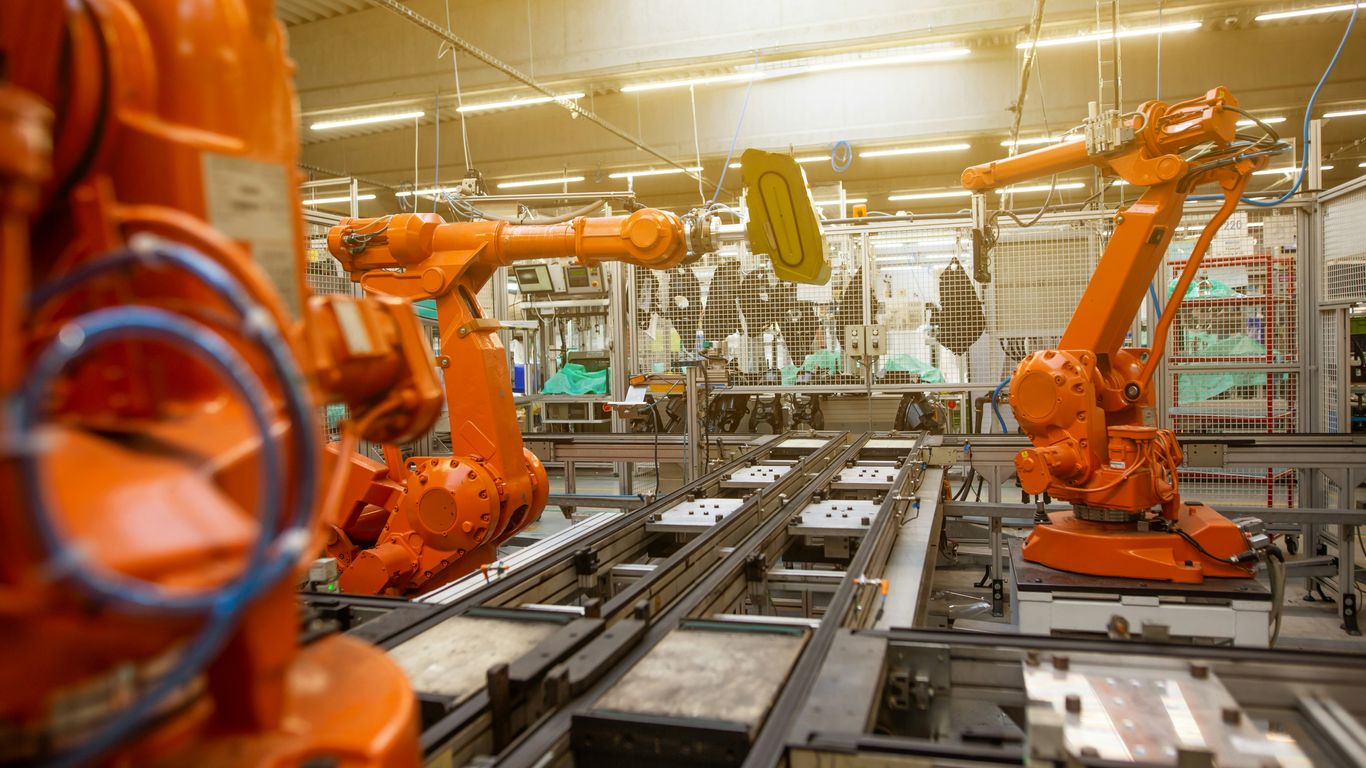
Heavy-duty applications place emphasis on sustained handling, tool mass, workspace access, and the consequences of interruption. The Doosan Robotics H2017 is presented here for that category, where the engineering team must understand the load path and the workpiece presentation as carefully as the robot's nominal reach.
A heavy-duty cell often includes fixtures, conveyors, clamps, and tooling that add complexity around the arm. Those elements determine whether the robot can approach the task cleanly and whether a person can safely clear a fault. The commissioning plan should therefore include access studies, recovery procedures, and maintenance tasks rather than focusing only on the production cycle.
The right comparison is between the complete cell concepts, not isolated payload figures. If a heavier platform reduces manual lifting or makes a repetitive operation feasible, it may have a clear operational role. That conclusion remains dependent on the actual process, the tooling, and the site's safety requirements.
5. KUKA LBR iiwa for precision assembly and research
Precision assembly and research demand a different balance from heavy handling. Small positional errors, delicate contact, changing experimental conditions, and the need to inspect or revise a sequence can dominate the evaluation. The KUKA LBR iiwa is included for this precision assembly and research role, where controllable interaction with the work can be more valuable than maximum throughput.
Research environments also reward repeatable experiments and accessible programming. A platform may be used to test a manipulation strategy one day and support a structured assembly study the next. That flexibility makes documentation, instrumentation, and the ability to reproduce a sequence important parts of the technical assessment.
For production assembly, precision should be defined against the actual tolerance stack. Fixtures, part variation, gripper compliance, and sensing can all matter. A careful buyer will validate the complete process with representative parts instead of treating a nominal robot specification as proof that every assembly will succeed.
6. Yaskawa Motoman HC20DTP for welding and material handling
Welding and material handling share a need for repeatable motion, but they are not the same application. Welding depends on torch presentation, joint access, process consistency, and suitable extraction or safety measures. Material handling depends more heavily on gripping, part orientation, transfer paths, and the rhythm of upstream and downstream equipment.
The Yaskawa Motoman HC20DTP is discussed under both welding and material handling because those are the stated application angles for this section. The best evaluation keeps them separate during testing. A cell optimized for a welding path may not be the right cell for transferring variable parts, even when the same arm is being considered.
A short video can clarify the difference between a smooth demonstration and a production-ready process, provided it is treated as illustrative rather than conclusive.
The useful evidence comes from representative tooling, real cycle interruptions, and operator interaction. Those tests reveal whether the proposed workflow is stable enough for the plant, rather than merely visually convincing.
7. Techman Robot TM25S for vision-guided automation
Vision-guided automation is valuable when the robot must respond to the location or presentation of objects rather than follow one fixed taught position. The Techman Robot TM25S is considered here for that vision-guided automation role. The central engineering issue is the relationship between image quality, object variation, calibration, and the robot's response.
A camera does not remove uncertainty; it measures it. Lighting changes, reflective surfaces, occlusion, and inconsistent part presentation can all reduce the usefulness of a vision system. Process teams should define acceptable detection errors and test the full range of conditions expected during a normal shift.
The most credible pilot begins with a narrow, measurable task. It records detection success, false picks, recovery behavior, and the time required to adjust the system. That approach keeps the vision claim grounded in a specific workflow instead of turning “vision-guided” into a blanket assurance.
8. Omron TM12S for integrated vision and inspection
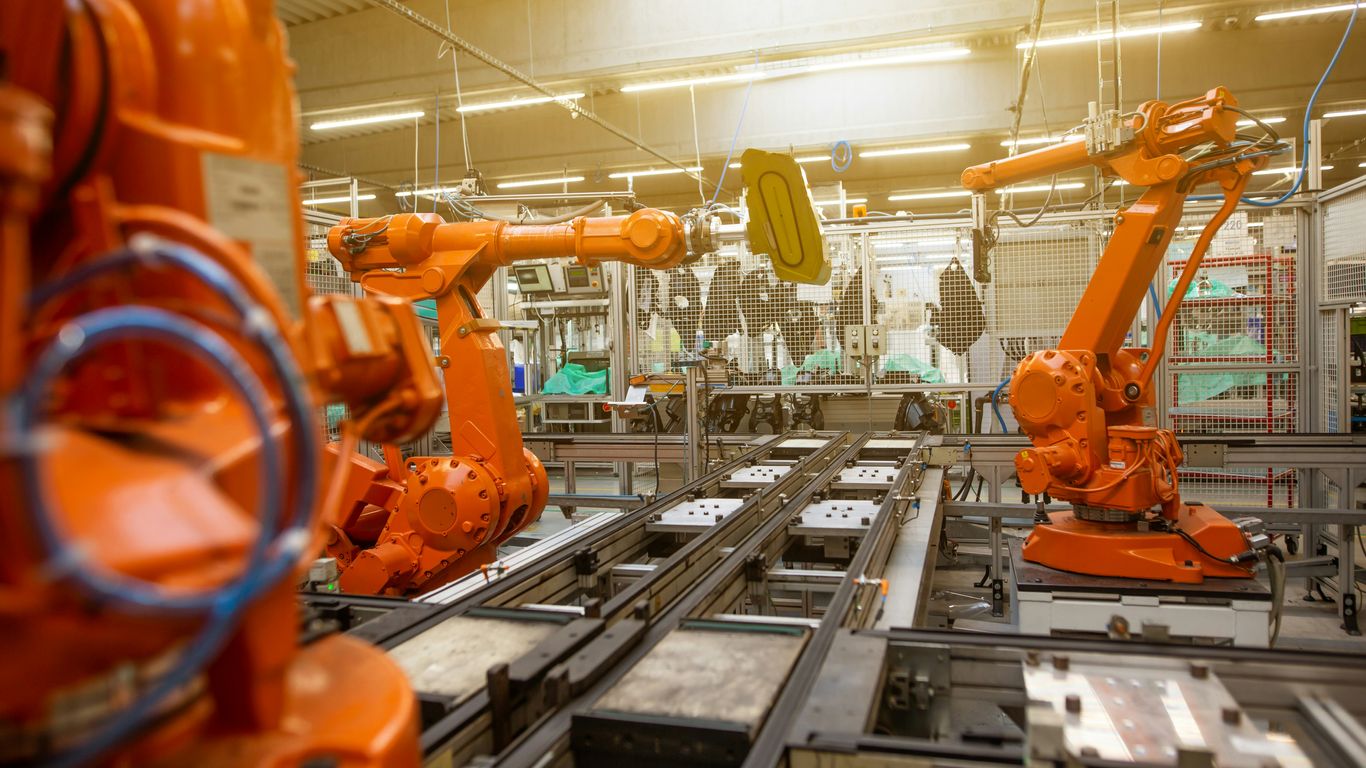
Inspection adds a different requirement to vision-guided work: the system must not only locate an object but also distinguish an acceptable result from a defect according to defined criteria. The Omron TM12S is positioned for integrated vision and inspection, making the boundary between robot motion, image capture, and quality decision especially important.
Inspection projects often fail when the defect definition is vague. Engineers should identify the feature being checked, the allowable variation, the lighting arrangement, and the disposition of uncertain images. The robot's movement is only one part of the quality loop.
A useful deployment plan also specifies how inspection data is retained and reviewed. That creates a path for troubleshooting without implying that every captured image is automatically a reliable quality record. The model's fit should be judged by the complete inspection process and its acceptance criteria.
9. AUBO-i10 for small and midsize manufacturers
Small and midsize manufacturers usually face a different constraint set from large automation programs. Engineering time is limited, floor space may be shared between several products, and the first deployment must earn confidence quickly. The AUBO-i10 is included for this audience, where practical scale and a manageable implementation can matter as much as theoretical range.
A shortlist becomes clearer when the buyer scores the operational basics explicitly:
- The task's true payload, reach, and cycle-time requirement.
- The available floor space and the need to move the cell later.
- Programming, training, and fault-recovery demands.
- Tooling, interfaces, safety work, and service responsibilities.
These questions prevent a small manufacturer from purchasing an arm that fits the brochure but not the production constraint. They also make the business case easier to explain because the investment is tied to a defined task rather than to automation in the abstract.
The small-business cobot guide offers a useful complementary perspective on programming, footprint, payload, safety, and integration. For any model, the first deployment should be deliberately narrow, with a baseline cycle and clear criteria for expanding to another task.
10. JAKA Zu 18 for flexible, space-efficient automation
Space-efficient automation is often a layout problem before it is a robot problem. A compact cell must still provide access for parts, tooling, operators, maintenance, and safe recovery. The JAKA Zu 18 is considered here for flexible, space-efficient automation, with the emphasis on how a proposed cell uses scarce floor area.
A good layout study maps reach envelopes and service zones rather than placing the robot wherever an empty corner appears. It accounts for conveyor approaches, fixture changes, cable routing, and the direction in which people naturally move. Flexibility is meaningful only if the cell can be adapted without creating new hazards or excessive downtime.
The final choice should compare the complete footprint and the work it supports. A smaller installation may be attractive, but a cramped cell can make every adjustment harder. The best cobots 2026 shortlist therefore ends with a practical question: which platform supports the required process while leaving enough room for people to operate and maintain it?
Conclusion
The strongest cobot choice in 2026 is application-specific. Payload, precision, sensing, reach, layout, safety assessment, and integration effort all shape the result, so a responsible shortlist should be tested against real parts and real interruptions before procurement. That evidence-first approach is more useful than treating any single model as the best fit for every factory.
Frequently Asked Questions
What is a collaborative robot?
A collaborative robot is an industrial robot designed for applications in which people and the robot may share a workspace under defined safety conditions. The exact operating arrangement still requires a task-specific risk assessment.
How should a cobot be selected?
Selection should begin with the task: payload, reach, cycle time, tooling, part variation, workspace, interfaces, and expected human interaction. The complete workcell matters more than the arm in isolation.
Are cobots suitable for every factory?
No. Cobots can suit many repetitive or structured processes, but some applications require different robot architectures, guarding, environmental controls, or throughput levels.
Do cobots eliminate the need for safety planning?
No. Collaborative operation does not remove the need to assess hazards, validate protective measures, define operating procedures, and review changes to the cell.
What role does machine vision play?
Vision can help a robot locate parts or evaluate defined features, especially when presentation varies. Its reliability depends on lighting, calibration, image quality, defect definitions, and recovery procedures.
Is payload the most important specification?
Payload is essential, but it is only one constraint. Tool weight, reach, acceleration, center of mass, cycle time, precision, and the surrounding equipment may be equally decisive.
How can a company justify a first cobot project?
A company should choose a narrow, repetitive task, establish a manual baseline, calculate the complete integration cost, and measure the pilot against agreed production and safety criteria. That creates evidence for expansion without assuming that one successful cell will solve every workflow.