Key Takeaways
- Quantum hardware remains a multi-track race where different architectures offer varying trade-offs between speed, error rates, and scalability.
- Superconducting circuits provide rapid gate speeds, though they face challenges with cryogenic complexity and physical footprint.
- Topological qubits offer the most theoretical appeal for built-in error protection but remain the most difficult to manifest physically.
- Neutral atom arrays and trapped-ion systems are closing the performance gap, showing high promise for connectivity and long-term coherence.
- Success is increasingly measured not just by raw qubit counts, but by the ability to achieve fault-tolerant logical operations using logical qubits.
Superconducting qubits
Superconducting circuits represent the current industry workhorse for quantum hardware due to their rapid gate operations and integration with standard nanofabrication methods. These systems encode information in the oscillation of electrical current within resonant circuits. While they are a leading option for today's quantum developers, they require massive, specialized cryogenic hardware to maintain superconductivity.
Operation mechanism and Josephson junctions
These qubits function through the controlled movement of electron pairs across a Josephson junction, a thin insulating barrier between two superconductors. By setting the junction to behave like a non-linear inductor, designers can isolate specific quantum energy levels to represent the 0 and 1 states. This engineered non-linearity allows for the rapid addressing of quantum states using microwave pulses.
Scaling challenges and coherence times
Maintaining long coherence times is difficult because these circuits are highly sensitive to microscopic materials defects and external electromagnetic noise. Every additional qubit adds new potential for noise interference, forcing a trade-off between processor size and overall fidelity. Engineering teams must invest heavily in shielding and advanced packaging techniques to minimize these environmental impacts.
Leading industry adopters
Major players like IBM Quantum have focused heavily on this architecture, consistently demonstrating scaling roadmaps for their transmon-based chips. These processors have moved past the initial experimental phases and are now being used for various commercial-grade simulations and algorithm testing. Their development speed has been bolstered by leveraging existing silicon foundry processes.
Pros and cons in modular applications
Superconducting hardware excels in specific metrics while struggling with others when compared in larger installations. The table below summarizes these characteristics.
| Metric | Characteristic | Impact |
|---|---|---|
| Gate Speed | High (nanoseconds) | Efficiency |
| Coherence | Moderate | Error Correction |
| Scalability | Challenging | Cryogenic footprint |
| Linkage | Fixed | Limited connectivity |
Following the architectural limitations noted, developers are increasingly looking toward hybrid interconnects to overcome the physical constraints of individual dilution refrigerators.
Trapped-ion qubits
Physics of electromagnetic field confinement
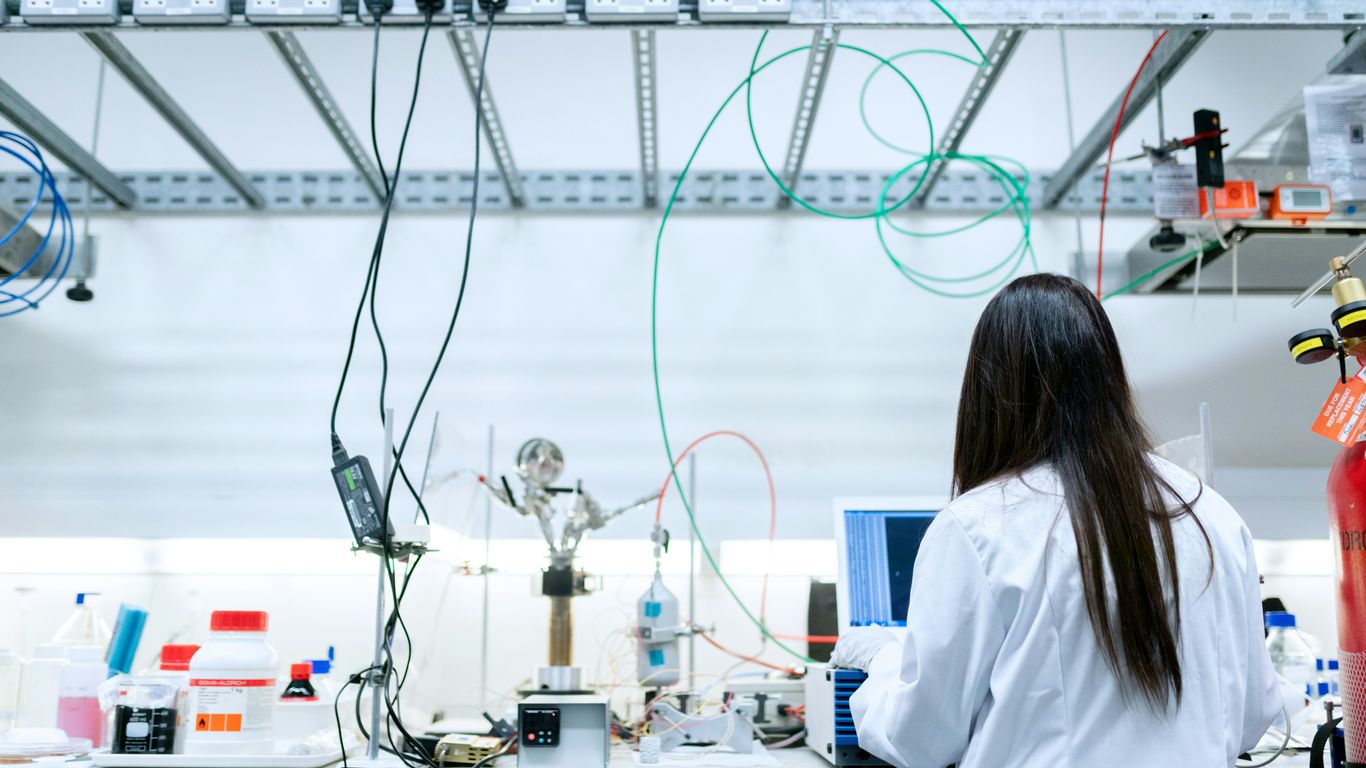
Ions are held in place using laser beams and complex electrode geometries, creating a stable, high-vacuum environment. This isolation ensures that the qubits are relatively immune to the environmental fluctuations that plague solid-state implementations. By applying precisely tuned transitions, scientists can manipulate the energy states of these atoms to perform logic functions.
High fidelity and long coherence times
Because trapped ions exist in a near-ideal vacuum, they naturally maintain their quantum state for significantly longer durations than superconducting counterparts. This increased stability simplifies the requirements for error correction, as fewer operations are wasted on correcting data degradation. The sustained accuracy of these qubits makes them a top choice for high-precision algorithms.
Throughput limits and system size
Despite their fidelity, these systems often struggle with scaling throughput because moving ions through a trap geometry takes considerable time. System size is limited by the complexity of the optical control hardware required to address each ion individually. This makes current ion processors slower in terms of raw gate cycle frequency compared to superconducting circuits.
Comparing laser versus microwave control
Control schemes involve either optical lasers for precise gate application or microwave signals that are easier to integrate at scale. A list of key considerations for these control methods includes:
- Laser control offers granular focus for high-fidelity gates.
- Microwave control is generally more energy-efficient and scalable.
- Hybrid approaches attempt to blend precision with throughput consistency.
This balance determines which specific hardware becomes viable for long-term commercial deployments.
Photonic qubits

Encoding information in light states
Information can be mapped onto the polarization, path, or temporal mode of a photon. Once encoded, these light states are robust against temperature fluctuations, allowing much of the hardware to operate at ambient or near-ambient levels. This is a radical departure from the deep-cryogenic requirements of other major architectures.
Advantages for quantum communication
Photons are the natural carriers for quantum communication because they already inhabit the infrastructure currently used for classical telecom. The ability to send quantum state information across long distances without losing the signal to heat or noise is their defining advantage. Integrating these systems requires specialized detectors that can resolve single-photon arrivals with extreme accuracy.
Challenges in deterministic gate operations
Deterministic interaction between individual photons remains a massive hurdle because light typically travels without interacting with other light. Developing non-linear gates that function on a single-photon level is currently the primary focus for researchers in this field. Without reliable gate operations, building a scalable photonic computer requires massive multiplexing of probabilistic components.
Integration with classical fiber infrastructure
By leveraging existing telecommunications equipment, photonic systems face lower barriers to adoption for networking components. However, integrating this into a computer processor requires high-density chip photonics that are just now transitioning from research to prototype manufacturing. Building a reliable photonic quantum computing platform remains a challenging but high-reward pursuit.
Neutral atom qubits
Neutral atom systems use optical tweezers—tightly focused laser beams—to move and arrange individual atoms in space. This provides a highly flexible platform where the number and arrangement of qubits can be reconfigured dynamically between software operations.
Optical tweezers and atom array architecture
Optical tweezers allow for the assembly of arbitrary patterns of qubits in two and three dimensions, providing a degree of geometric freedom unique among current architectures. The atoms are effectively trapped in light, shielded from most external perturbations. This architecture is increasingly recognized as a prominent candidate for future scalability in quantum research.
Scalability potential for massive gate counts
Because the arrays are assembled in vacuum chambers using off-the-shelf optical components, adding more qubits does not necessarily require a proportional increase in physical hardware volume in the same way it does for fixed-circuit processors. This allows for a path toward thousands of qubits within a single device. The challenge lies in coordinating the complex laser pulses to operate these grids simultaneously.
High connectivity between qubits
Neutral atoms can be moved to bring them into close proximity for entanglement interactions, meaning that a qubit can interact with any other qubit in the grid. This all-to-all connectivity greatly simplifies the mapping of complex quantum algorithms. Increased connectivity also leads to efficient error mitigation through localized grouping of physical qubits.
Current limitations in gate speed
While connectivity is high, the act of moving atoms and setting them up for operations takes significant time, limiting the gate-cycle speed. Researchers are actively working on faster laser-based state manipulation to narrow the cycle-time gap between these and superconducting designs.
Silicon spin qubits
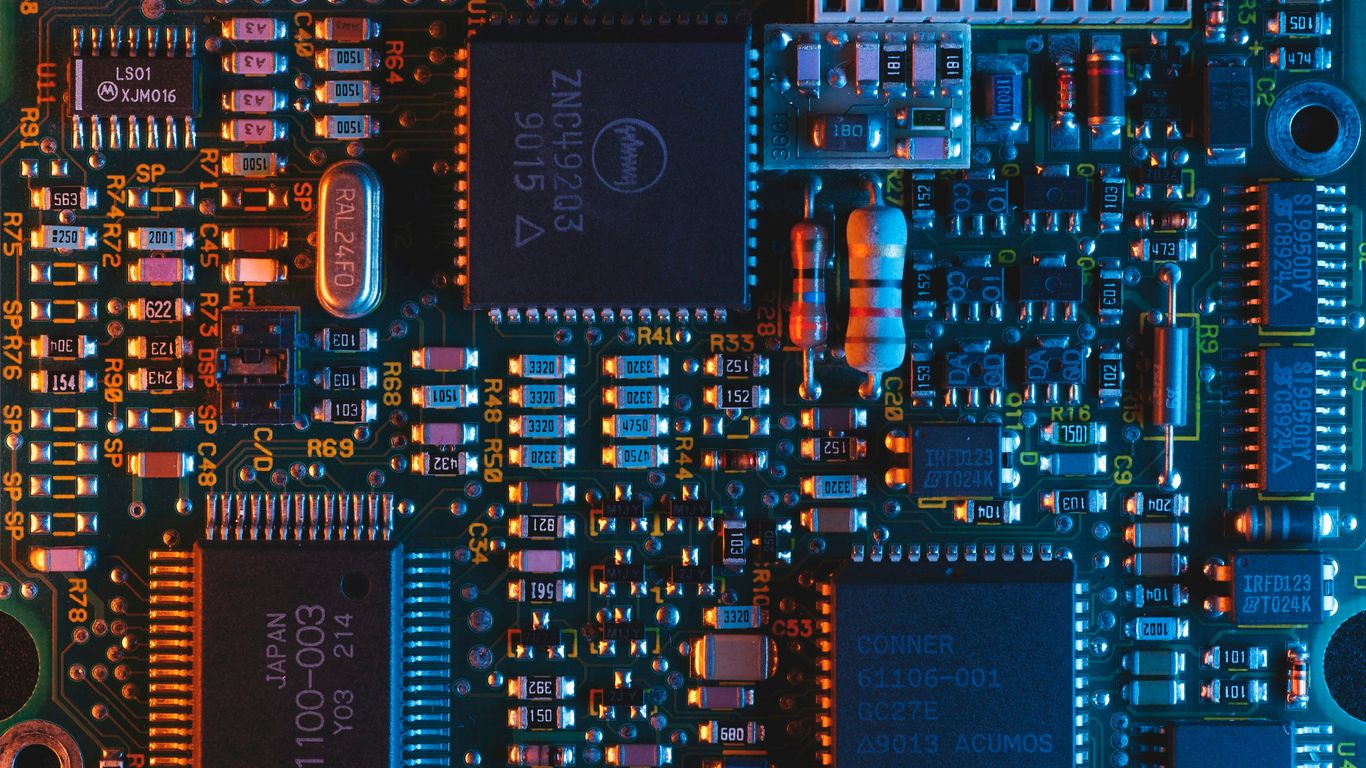
Silicon spin qubits leverage the spin of an individual electron trapped within a silicon lattice, an approach that directly maps onto existing fabrication standards. By using silicon, these experiments benefit from the multi-decade investment into semiconductor manufacturing.
Leveraging existing semiconductor manufacturing
Stability within solid-state environments
Despite the noise inherent in a solid-state environment, spins in isotopically purified silicon demonstrate remarkable stability. The main concern is ensuring that isotopic purity is high enough to insulate the electron from nuclear spin fluctuations in the surrounding material. Once purified, these spin qubits show excellent coherence times.
Controlling electron spins with microwave fields
Electron spins are manipulated using local magnetic and microwave fields generated by micro-scale conductors placed directly on the chip surface. This requires extremely precise lithography to ensure that exactly the right influence reaches each gate. The proximity of these lines to the qubits represents a difficult engineering trade-off regarding heat dissipation and signal interference.
Cryogenic requirements versus industry roadmaps
While better than many others, these systems still require cryogenic cooling to suppress thermal noise that would otherwise randomize the state of the electron. Engineering roadmaps are now focusing on raising this temperature, with long-term goals for operating near 1-4 Kelvin. Successfully achieving this would drastically reduce the cost and infrastructure requirements for commercial quantum systems.
Topological qubits
Topological qubits propose a method of computation where the information is stored in the global configuration of the system, making it inherently resistant to local environmental noise. This represents a long-shot bet on quantum stability being achievable through material physics rather than just active error correction.
The promise of intrinsic error protection
Traditional qubits are fragile, requiring constant active error correction to keep decoherence at bay. A topological qubit relies on its braiding, which is mathematically robust, so minor imperfections in the hardware do not instantly destroy the information. This theoretically allows for much larger, stable logical qubits built from fewer physical components.
Majorana fermion basis
This approach is based on the theoretical discovery of Majorana zero modes, particles that are their own antiparticles and exist at the boundaries of certain superconducting materials. By moving or braiding these modes, developers can define quantum gates. The challenge lies in the complex nanofabrication required to host these specific quasiparticles.
Experimental complexity and evidence
Finding conclusive experimental proof of these Majorana particles has been difficult, with teams globally working to verify their existence. The requirements for ultra-pure materials and highly specific crystal interfaces make this the most difficult architecture to manufacture. The scientific community is currently evaluating the validity of claims regarding these observations.
Theoretical implications for fault tolerance
If perfect braids can be mastered, the need for complex, resource-heavy error-correction cycles would drop significantly. This would move the focus from building massive arrays of noisy physical qubits to building a smaller number of highly reliable ones. It is arguably the most radical solution to the problem of finding a winner in the various types of qubits compared.
Evaluating success metrics in quantum architecture

Gate fidelity and error rates
Gate fidelity measures the accuracy of each logic operation and is the most widely discussed metric in current quantum research. Higher fidelity means the computer has to run shorter error-correction cycles, making it more efficient for running complex algorithms. The goal is to reach thresholds where a single logical qubit can be maintained reliably over time.
Coherence time and environmental decoherence
Decoherence remains the primary enemy of all quantum hardware, as it represents the inevitable loss of quantum information to the environment. Longer coherence times allow for more gates to be performed before the system must be reset or the data corrupted. Developers prioritize keeping qubits isolated, even as they attempt to connect them into larger, functional networks.
Gate speed and clock frequency
Gate speed dictates how many operations can occur within the coherence window of the qubits, directly impacting the complexity of the problems a system can solve. A slow system, even with perfect fidelity, may still fail on many real-world applications because the environment collapses the state before the task finishes. This is a critical factor for comparing the utility of different chips.
Scalability and qubit connectivity
Connectivity defines how easily information passes from one qubit to another within the fabric of the processor. Highly connected systems allow for faster execution of complicated algorithms, whereas lower connectivity requires additional gate overheads that introduce new errors. Finding the right balance of scaling versus high-quality linkage is the primary engineering focus for current device designers.
The path toward a winner in quantum computing
Determining a singular winner in quantum computing is likely a flawed objective, as different qubit types may eventually serve distinct functional roles in a heterogeneous computing environment. The long-term architecture will likely rely on modular components rather than one monolithic device.
Hybrid systems and inter-platform synergy
未来的计算架构可能包含超导电路用于本地的快速运算,同时以光子连接器作为信息网络,传输数据至其他节点。这种架构利用了每种技术的物理优势,并设法绕过其固有的缺点。通过这种方式,系统的功能性大大扩展,而无需单一种类硬件解决所有技术门槛。
The role of fault-tolerant hardware
Fault-tolerant systems that utilize error correction codes are the end goal for every architecture mentioned here. Success will be determined by which platforms can reach the logical qubit stage with the lowest overhead. The hardware that simplifies the mapping of complex algorithms onto physical qubits will likely dominate the market first.
Economic barriers to mass production
Infrastructure costs, specifically for dilution cooling and precision laser control, remain massive hurdles to mass, general-purpose commercialization. As production moves from lab-oriented buildouts to factory-based assembly, companies that optimize for manufacturing ease—rather than just peak performance—will capture more market share. This shift from pure research to mass efficiency is the next major phase of the industry.
Predictions for niche versus general-purpose hardware
In the near term, we expect to see hardware tailored for specific tasks, such as material simulation or cryptographic research, emerging long before a truly programmable, universal machine. Eventually, general-purpose devices might arrive, though the initial ROI will come from solving highly specialized problems that are intractable for today’s silicon-based classical clusters. The industry is currently moving toward more standardized benchmarking, ensuring that investments in these technologies are based on verifiable roadmaps rather than speculative hype.
Conclusion
Ultimately, no single qubit architecture has proven its superiority, as each offers unique trade-offs between speed, scalability, and physical robustness. As the field matures, the focus is shifting away from simple qubit counts toward the realization of useful, error-corrected logical operations. Success will depend on the engineering ability to overcome technical bottlenecks such as thermal dissipation and interconnect complexity, likely resulting in a blend of technologies rather than a singular winner. Investors and engineers should monitor advancements in error-correction efficiency and system manufacturing as the key indicators for long-term survival in this frontier technology.
Frequently Asked Questions
Why is coherence time so critical for quantum computers?
Coherence time measures how long a qubit can hold its quantum state. Because qubits are extremely sensitive to their environment, even minor internal inconsistencies or external radiation can cause them to collapse, leading to errors in the final computation.
How does active error correction differ from topological protection?
Active error correction involves using complex algorithms and redundant physical qubits to catch and correct errors in real-time. In contrast, topological protection is a physical design choice where the geometry of the qubit renders it naturally resistant to local interference.
Is it possible to use different types of qubits in one system?
Research into hybrid architectures is ongoing, as developers look for ways to combine the fast gate speeds of superconducting circuits with the long-distance connectivity and transmission capabilities of photonic systems.
What are the main cooling requirements for these systems?
Most hardware types rely on dilution refrigerators to reach millikelvin temperatures, as thermal noise must be kept below the energy levels of the superconducting or spin-based states to maintain stability.
Why aren't we seeing these systems in commercial laptops today?
Beyond the cooling and electromagnetic shielding necessities, quantum processors currently require specialized control and measurement hardware that takes up entire rooms, not to mention the lack of a standardized interface for quantum-classical workloads.
What determines whether a qubit is high fidelity or low fidelity?
Fidelity refers to the accuracy of a quantum gate or operation compared to the ideal theoretical outcome. Factors such as material defects, control signal jitters, and electromagnetic noise directly lower the fidelity of the system.
Will one qubit type eventually replace all the others?
Industry experts largely expect a tiered approach where different chips handle different functions, similar to how modern computers have dedicated processing units for graphics, signal processing, and main application execution.