Key Takeaways
Quantum computing is transitioning from pure laboratory exploration to the initial phases of industrial application, though significant engineering hurdles remain. Understanding the distinction between experimental noise and reliable compute power is essential for assessing true progress.
- Current quantum hardware remains in the Noisy Intermediate-Scale Quantum (NISQ) era where decoherence limits operations.
- Qubit fidelity often matters more than raw qubit counts when measuring actual computational power.
- Software stacks are evolving toward hybrid workflows that integrate classical and quantum resources efficiently.
- Commercial adoption faces friction from the need for specialized error-correction hardware at scale.
- Evaluating the quantum computing hype requires scrutiny of proprietary benchmarks and scientific reproducibility.
Defining the reality of modern quantum hardware
The field of quantum hardware is currently characterized by its transition from conceptual demonstration to experimental pilot systems. Understanding this transition requires acknowledging that these devices are not yet substitutes for classical supercomputers in general-purpose tasks. Instead, they serve as specialized instruments for specific calculations that mimic quantum mechanical processes.
The state of noisy intermediate-scale quantum devices
Today’s quantum hardware operates with significant noise, meaning that the qubits are highly susceptible to environmental interference and decoherence. This state limits the duration of any given circuit before information is lost to physical error. Research groups have shifted focus toward mitigating these effects rather than simply increasing system size, ensuring that each gate operation maintains high operational precision during a calculation.
Defining quantum advantage versus quantum supremacy
Quantum supremacy refers to the point where a quantum device performs a specific calculation that is practically impossible for any classical supercomputer to compute in a reasonable time. In contrast, quantum advantage is a more nuanced, industry-centric goal, describing the ability to perform a useful, valuable task significantly faster or more cost-effectively than any alternative. Many industry analysts now prioritize the latter, seeking applications where current systems provide actual utility in materials science or logistics. For context, Google's Willow provides a look at how companies track progress from theoretical proof to meaningful work on complex research problems.
Why qubit count is a misleading metric
Industry participants frequently cite qubit counts as a proxy for power, but this approach fails to account for the quality and coherence of those units. A small number of high-fidelity, error-corrected qubits can substantially outperform a larger system of noisy, unstable qubits. Effective performance relies on the reliability of logical operations, not just the physical raw count of qubits. Engineers must evaluate systems based on coherence time and gate fidelity to determine true compute potential.
Deciphering the quantum software stack

The software layer acts as a translator between complex algorithms and the underlying hardware behavior. Developers building for the current generation must navigate limited instruction sets that prioritize physical stability over abstraction. The industry is currently witnessing a push toward unified interfaces allowing for easier cross-platform movement.
Practical applications for NISQ-era algorithms
Algorithms capable of running on NISQ systems focus on shallow-depth circuits that minimize error accumulation. These include variational solvers and hybrid algorithms where computers work in tandem with classical nodes to optimize results. Applications are currently found in chemical simulation where small-scale models offer insights before full-scale deployment becomes feasible. Professionals often utilize tools such as quantum computing simulators to prototype these circuits before shifting to hardware.
The limitations of near-term circuit depth
Most current hardware suffers from decoherence that limits how deep a circuit can be before the output becomes unintelligible noise. The depth of a quantum circuit essentially dictates the complexity of calculations it can process before the quantum state collapses. This physical constraint forces software designers to prioritize efficiency over complexity:
- Minimize the number of sequential gate layers to reduce decoherence impact.
- Use hardware-aware compilers to optimize gate mapping for specific chip architectures.
- Employ error-mitigation techniques that can run at the end of a process.
- Offload pre-processing tasks to classical hardware to conserve quantum coherence time.
These constraints define the perimeter of what can realistically be achieved today, ensuring that developers build for the specific hardware backend at their disposal.
Establishing realistic software development roadmaps
Software roadmaps must align with the maturity of current physical hardware. Moving from lab-based code to production-grade applications requires reliable access to scalable backends and tools like quantum SDKs that support these hybrid needs. Industry leaders are increasingly adopting modular approaches that allow teams to iterate on algorithms without needing a complete overhaul of the code base as hardware performance metrics improve.
Evaluating vendor claims and commercial promises
Evaluating the commercial sector requires looking beyond flashy press releases and toward verifiable technical documentation. It is vital to maintain a critical perspective on technical performance when reading industry announcements about rapid breakthroughs.
Warning signs of overpromised computational speedups
When a vendor claims an exponential speedup, the burden of proof rests on the underlying architecture's fidelity and the relevance of the selected problem. Often, these speedups are achieved on highly artificial tasks that do not map to real-world industrial utility. It is prudent to treat claims of universal acceleration with healthy skepticism, as they rarely match the performance of specialized classical hardware for standard enterprise workloads.
The role of proprietary hardware benchmarks
The industry suffers from a lack of standardized metrics, leading many companies to develop their own proprietary benchmarks. These tests are often designed to flatter specific hardware strengths while downplaying architectural weaknesses. Without independent verification or third-party audit, these metrics serve as marketing signals rather than objective performance assessments.
| Vendor Metric | Focus Area | Verification Status |
|---|---|---|
| Circuit Fidelity | Gate precision | Low / Internal |
| Execution Speed | Throughput rate | Moderate / Third-party |
| Algorithmic Utility | Problem solving | Low / Experimental |
Standardization remains a primary goal for research groups attempting to bring objective clarity to the field's hardware capabilities.
Distinguishing between scientific breakthroughs and engineering milestones
Scientific breakthroughs concern new physical phenomena or novel qubit designs that shift theoretical boundaries. Engineering milestones represent the arduous process of scaling these discoveries into reliable, factory-manufactured systems. Distinguishing these stages helps observers understand that a lab-bench discovery is often a decade removed from a robust, persistent service offering. Recent efforts, such as assessments of IBM Quantum, highlight the long-term progress required to turn a lab curiosity into an industrial engine.
The economics of the quantum computing industry
Capital flows into the quantum sector reflect a mix of long-horizon research funding and speculative pressure for near-term returns. The financial landscape is shifting toward groups that can demonstrate verifiable milestones in hardware miniaturization and system integration. Understanding these economic incentives is crucial for identifying which participants are prepared for the decade-long cycles required for hardware maturity.
Analyzing the venture capital influx
Investors have poured significant capital into the ecosystem, looking for potential winners in a sector expected to redefine high-performance compute infrastructure. This influx provides necessary liquidity for expensive research and build-outs, but it also creates pressure to show regular, headline-grabbing results. Maintaining focus on fundamental performance metrics rather than funding valuation is the key for sophisticated stakeholders.
The role of government funding and national strategies
Governments recognize that mastering this domain is a matter of strategic and economic security. National strategies are now shifting from basic academic research to supporting physical infrastructure that facilitates domestic hardware supply chains. This funding is pivotal for long-term projects that carry significant technical risk but offer high potential for industrial self-reliance.
Setting realistic timelines for enterprise ROI
Enterprise return on investment in this field remains a long-term prospect rather than a current reality. Most early adopters utilize third-party services to explore how their specific industrial datasets might interact with quantum algorithms. Organizations expecting quick results often misinterpret the sector’s current phase of research and development for a stage of commercial deployment.
Navigating the path to fault-tolerant quantum computing
Fault tolerance represents the target state where the machine can detect and correct errors automatically, allowing for calculations to run indefinitely without loss of control. Reaching this state involves shifting from physical, error-prone units to stable logical qubits. This is an immense engineering challenge that sits at the center of current research.
The engineering challenge of quantum error correction
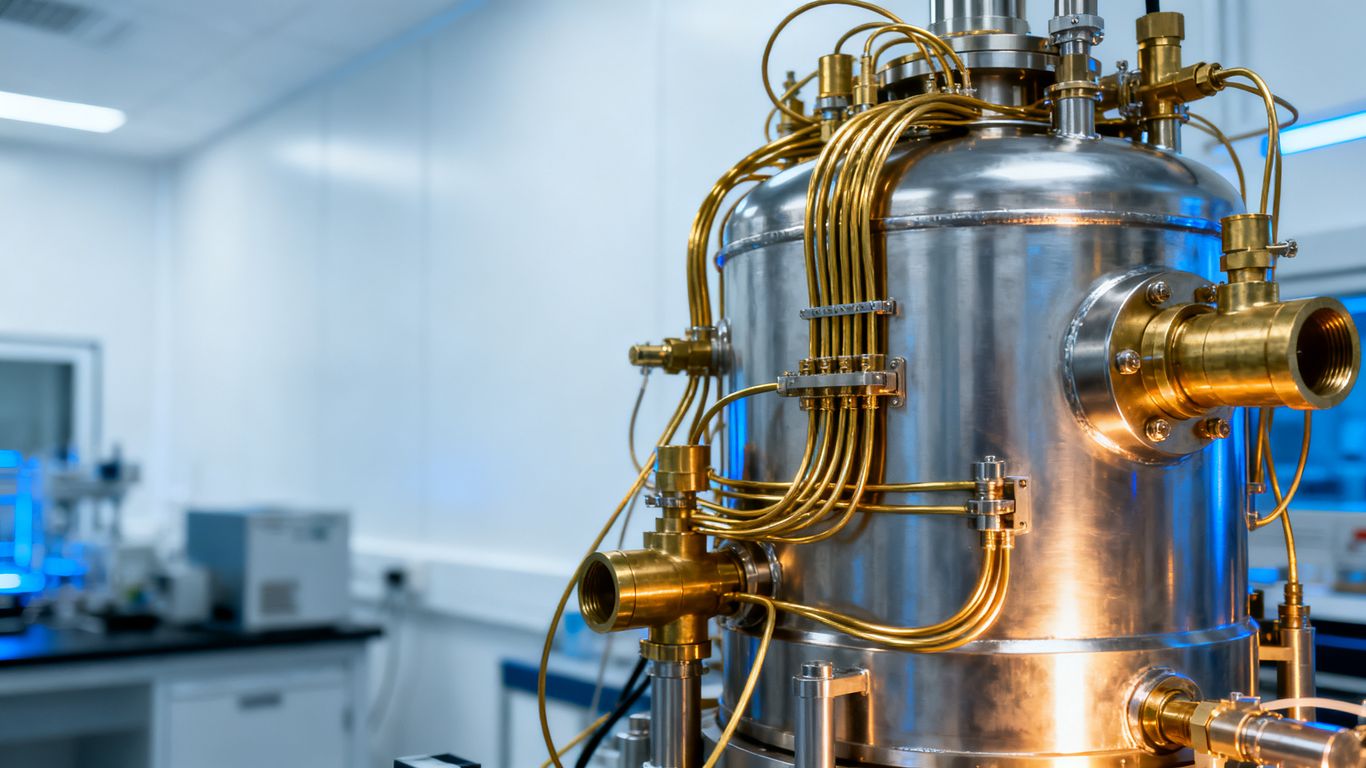
Error correction requires additional qubits to act as check-bits, effectively surrounding the calculation with a protective layer of validation. This overhead is substantial, meaning that a machine requiring a massive amount of physical capacity is needed just to maintain a small number of functional logical qubits. The physical cooling infrastructure and microwave control lines needed for this scale are unprecedented.
Scaling physical qubits into logical qubits
The transition to logical operation requires increasing qubit density without adding noise, an effort documented by various industry roadmaps for the next five years. Scaling physical units involves not only keeping them cold but ensuring they remain entangled and coherent across an entire array during complex gate sequences. Success in this field relies on advancements in interconnects and high-density semiconductor manufacturing.
Separating long-term research goals from near-term service offerings
Companies often balance forward-looking research on error correction with the immediate need to provide cloud-accessible hardware to researchers. This blend allows users to work on current, noisy systems while keeping an eye on the transition to higher-fidelity hardware. It is important for operators to recognize which parts of an offering are designed for testing purposes and which are for long-term integration.
Conclusion
Separating the current state of experimental progress from the promises of commercial utility is the most critical task for any observer of the quantum computing field today. While the sector displays clear momentum in hardware fidelity and algorithmic design, it is firmly anchored in the research phase where engineering, rather than market speed, dictates the pace of progress. By focusing on verifiable technical capabilities like logical coherence and circuit depth rather than raw marketing metrics, stakeholders can navigate the coming decade of development with clarity and intentionality.
Frequently Asked Questions
Will quantum computers eventually replace laptop computers?
No. Quantum computers require specialized, extreme cooling and isolation environments that make them suitable only for large processing centers where users perform specific, highly complex calculations remotely.
What are the main obstacles to widespread enterprise adoption right now?
Primary obstacles include high error rates, short decoherence times, and the lack of a standardized software stack that is broadly portable across different hardware architectures.
Is it possible to run current software on a quantum computer?
Standard classical software cannot be run on a quantum machine directly; it must be rewritten into quantum circuits, which requires significant algorithmic refactoring for specific hardware backends.
Why does the industry talk about qubit counts so much?
Qubit count is the most easily communicated metric for system scaling, despite the fact that it ignores critical technical nuances like gate fidelity and error rates which are equally important.
Are current quantum computers useful for encryption today?
While theoretical algorithms suggest future capabilities in cryptography, current devices lack the stability and logical qubit volume required to realistically challenge modern security standards.
How should an investor differentiate between progress and hype?
Observers should prioritize peer-reviewed outcomes, documented engineering milestones in qubit fidelity, and consistent evidence of research-based scaling over announcements of one-off breakthroughs.
What is a logical qubit versus a physical one?
A physical qubit is the hardware building-block susceptible to noise, while a logical qubit is a protected, error-corrected construct made from many physical qubits working in unison.