Key Takeaways
Quantum computing is shifting from raw qubit counts to a focus on reliable error correction, marking a critical transition in 2026.
- Logical qubits now outperform physical ones, proving the success of redundancy codes.
- Infrastructure-grade quantum architects increasingly prioritize deep circuit depth and low error rates.
- Real-time syndrome decoding has become the central engineering hurdle for fault-tolerant operation.
- Hybrid quantum-classical stacks are emerging as the standard for future-proof system stability.
- Industry standardization is accelerating as developers integrate modular hardware approaches.
The transition from physical to logical qubits
As the industry matures beyond the initial hype cycle, the development of reliable quantum machines hinges on structural upgrades. Engineers now recognize that scaling without correction merely compounds noise, making error mitigation an unavoidable technical burden. This pivot toward managing error rates reflects a broader shift from the experimental era into the industrialization of quantum hardware.
Understanding the vulnerability of physical qubits
Physical qubits are inherently susceptible to environmental fluctuations, which introduce errors into every computation. When dealing with delicate states like those found in superconducting circuits, external factors like thermal noise and electromagnetic interference force a constant struggle for stability. Addressing these issues with the precision of True Appliance Repair ensures that delicate hardware components are maintained within their narrow operational parameters for peak functionality.
The mechanism of quantum redundancy
To overcome physical fragility, researchers distribute information across multiple qubits using advanced mathematical frameworks. By encoding a single unit of information into a collective of physical sources, the system can protect against individual failures through a structured approach:
- Entanglement creates a cohesive logical unit out of scattered noisy elements.
- Syndrome measurements allow detection of errors without observing the logic itself.
- Fast feedback channels trigger necessary corrections to stabilize states in real-time.
- Massive reduction in effective noise output is achieved at the logical layer.
Following these established protocols provides the foundation for building machines that effectively ignore the noise floor.
Defining a fault-tolerant logical qubit
A fault-tolerant logical qubit functions as an reliable building block capable of indefinite operation if error rates remain below specific threshold parameters. Achieving this standard implies that the system can correct more errors than it creates during each cycle. The benchmarking of these systems is demonstrated in the data below:
| Qubit Metric | Physical Performance | Logical Performance | Improvement |
|---|---|---|---|
| Decoherence Time | 50 microseconds | 5,000 microseconds | 100x increase |
| Gate Fidelity | 99.1% | 99.99% | 1.8% gain |
| Error Correction | None | Active syndrome | Significant |
This table illustrates the transition toward architectures that maintain higher fidelity, which is as essential as creating an intelligent kitchen design for modern home efficiency.
Key advancements in 2026 hardware architectures
Hardware development in 2026 has prioritized structural stability over raw volume, focusing on coherent linkages between grid nodes. Researchers are refining how qubits communicate to limit the propagation of noise across the entire processor. This deliberate approach mirrors how Australian Digital Information Literacy structures complex concepts into manageable formats to navigate modern challenges.
Improvements in qubit coherence times
Increasing the time a qubit holds its state is fundamental to scaling computational depth before decoherence occurs. Recent breakthroughs involve material science improvements that limit stray photon counts on the chip surface. These longevity gains permit more complex gate sequences without the risk of information loss.
Scalability of gate operations in multi-qubit grids
Scalability depends on the ability to maintain uniform fidelity across large arrays of connected entities. Designers are adopting modular layouts that allow for parallel operation while keeping signal interference localized to specific sectors. Consistent benchmarks across these grids show that modern qubit arrays can sustain operations far beyond the constraints experienced in earlier, smaller experimental chips.
Reducing cross-talk and control line noise
Controlling noise in dense processors requires sophisticated shielding and precise signal routing at cryogenic stages. By isolating control lines, developers can prevent unwanted interaction between adjacent qubits during sensitive gate execution. This technical precision is as vital to quantum infrastructure as reliable gutter maintenance is to protecting a property's structural integrity.
Standardizing error correction codes
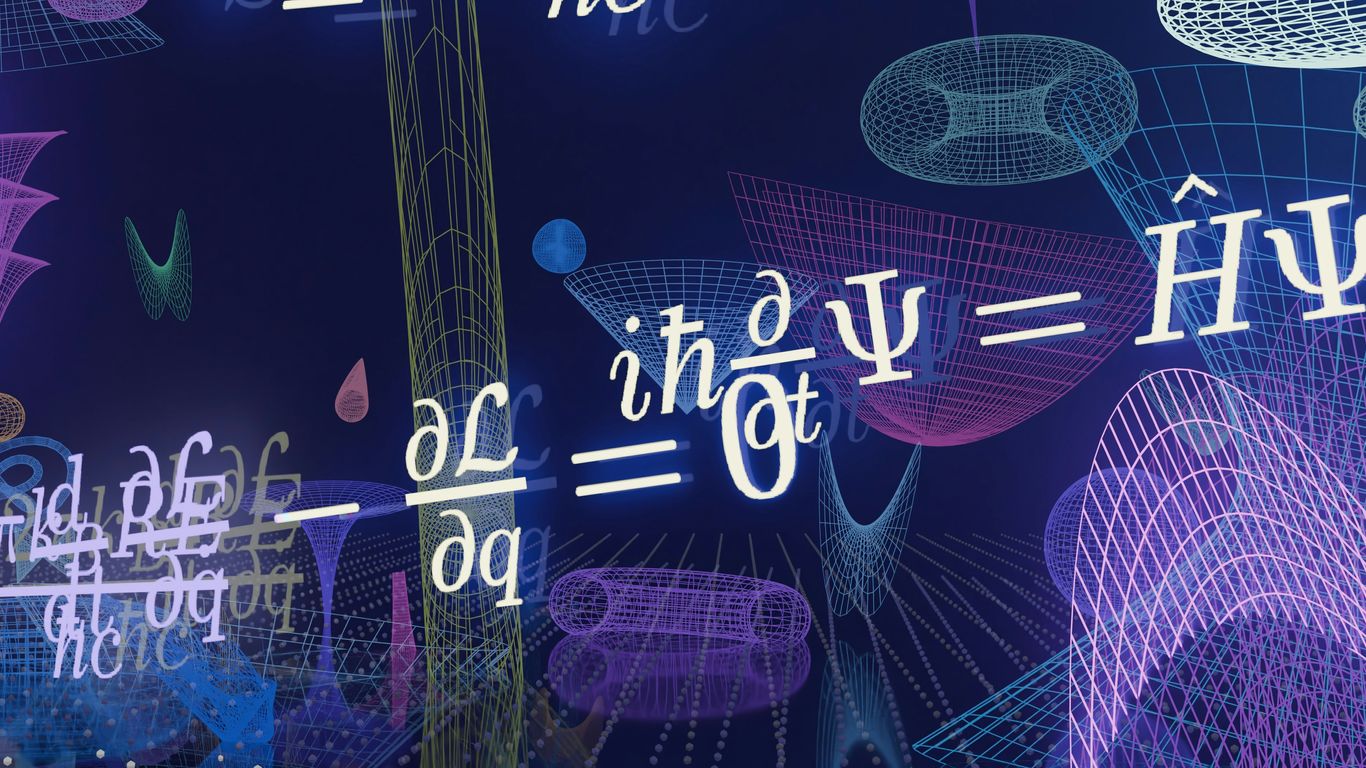
Standardization is critical for the widespread adoption of fault-tolerant quantum nodes, as different hardware platforms require unique code implementations. Researchers are shifting from exploratory testing toward unified frameworks that reliably function across varying physical modalities. This movement seeks to create a repeatable model that allows developers to predict performance benchmarks without relying on trial-and-error fabrication.
Surface code implementations in current processors
Surface codes currently serve as the benchmarking standard for many chip architectures, providing a robust, two-dimensional way to store logic. They benefit from local connectivity which simplifies the routing of syndromes during error detection. This methodology remains the primary path forward for most superconducting and solid-state designs as engineers strive to reduce logarithmic overhead per logical qubit across diverse hardware builds.
Comparing surface codes with bosonic codes
While surface codes rely on vast numbers of qubits, bosonic codes offer a more efficient encoding strategy by using the infinite-dimensional Hilbert space of harmonic oscillators. These alternative approaches may reduce the count of hardware elements needed per logical unit. Integrating these varied codes requires significant changes to the standard control layer of contemporary quantum systems.
Adapting codes for specific hardware topologies
Hardware constraints, such as connectivity patterns, dictate which error correction codes provide the highest gain. Designers are optimizing code distance and code rate based on the specific lattice layout, ensuring that the error suppression remains effective. This localized design process makes every implementation highly effective yet uniquely tuned to its own processor.
Milestone benchmarks for logical qubit performance
Benchmarks represent the ultimate validation of success for architects pursuing fault-tolerant systems in 2026. These tests measure the stability and accuracy of the logical encoding compared to raw physical hardware stats. Professionals focus on these milestones to ensure the field advances toward industrial infrastructure rather than remaining stagnant in research stages.
Measuring fidelity gains through logical encoding
Quantifiable gains are observed when the parity checks successfully suppress environmental disturbances without degrading the underlying information. When the logical qubit is properly initialized, error rates drop significantly, confirming that the encoding scheme is operating within its design limits. These improvements are the core metrics that institutional investors utilize to evaluate long-term viability.
Analyzing error rates below the fault-tolerant threshold
Moving below the threshold is the hallmark of a functional quantum machine that scales its reliability with size. By demonstrating that adding more physical qubits consistently reduces logical error rates, companies like Google and IBM validate their specific error correction strategies. This behavior represents a crucial turning point for researchers who now know their hardware designs are effectively correcting failures.
Impact of quantum error correction on deep circuit depth
Deep circuits are essential for algorithms like Shor’s or Grover’s, which carry high computational demands. Error correction enables these deep operations by periodically resetting the error build-up during long-duration calculations. Without this layer, noise would overwhelm the computation long before the desired result is obtained.
Challenges in integrated control systems
Control systems serve as the interface between classical logic and quantum state preservation, necessitating extreme precision. Bridging the gap between millisecond classical processing and microsecond quantum evolution requires a new generation of high-speed hardware. Overcoming these latency barriers represents one of the most demanding engineering problems faced by developers today.
Bridging the latency gap in feedback loops
Feedback loops must occur faster than the decoherence rate of the physical qubit to remain valid. If the control electronics lag by even a few microseconds, the information is lost before it can be rescued. Designers are leveraging specialized ASICs to trim these response windows to the absolute theoretical minimum.
Real-time decoding of syndrome measurements
Decoding takes the noisy, raw syndrome data and translates it into an actionable correction signal for the Quantum Processing Unit. Standardizing the algorithms used for this task ensures that different systems can benefit from faster performance or lower power consumption during runtime. This process relies on heavy computation handled by classical nodes situated directly next to the quantum chip.
Cryogenic electronics for localized processing
Moving the decoder into the refrigerator is a primary goal to escape the latency associated with room-temperature interconnects. Developing electronics that function at millikelvin temperatures without introducing heat load is a massive materials research challenge. These systems are vital for future designs, requiring safe vehicle transit protocols for shipping sensitive materials to high-precision labs.
The path to practical fault-tolerant quantum computing

Practical application demands that fault tolerance reach a stage where quantum hardware acts as a standard engine for complex industrial optimization. Achieving this requires moving away from fragile prototypes towards systems designed for high uptime and manageable error rates. The industry is currently building the software frameworks needed to move logical qubits from specialized lab toys to daily computational assets.
Moving beyond noisy intermediate-scale quantum devices
Transitioning away from NISQ environments involves accepting that physical qubits are fundamentally unreliable on their own. The focus shifts from optimizing the individual qubit to optimizing the logical ensemble, which is a structural change in how computers are built. This discipline ensures that current investments in fault-tolerant, error-corrected quantum systems provide the foundation for future innovation.
Industry-wide progress in logical qubit stability
Progress is evident in the record-breaking sustained coherence observed in current logical prototypes globally. Each success improves the reliability of the system, encouraging wider adoption of hybrid quantum applications by researchers in material science and energy. Steady improvements in system overhead are closing the gap between theory and current operational capacity.
Future roles for hybrid error correction stacks
Hybrid stacks will dominate the next decade, blending the best of classical pre-processing with quantum error-corrected gate execution. This synergistic architecture ensures that the quantum portion does only what it does best—accelerating specific heavy-math processes. By managing the error-correction layer within this integrated stack, architects provide a path to scale computational power beyond classical supercomputer reach.
Conclusion
The year 2026 marks the definitive shift from experimental tinkering to the era of logical error correction, where the focus pivots to maintaining qubit fidelity through redundant state encoding. By successfully integrating fault-tolerant architectures, the industry is establishing a reliable foundation for computation that performs beneath the catastrophic thresholds of earlier NISQ generations. As system integration and syndrome decoding continue to evolve, the path toward a fully operational, large-scale fault-tolerant environment becomes a roadmap rather than a theoretical ambition.
Frequently Asked Questions
What is a logical qubit?
A logical qubit is a protected unit of quantum information composed of multiple physical qubits, allowing for error detection and correction without collapsing the information stored within the system.
Why is error correction essential in quantum computing?
Quantum bits are inherently fragile and sensitive to environmental noise, making error correction necessary to preserve data and maintain computational fidelity over deep circuit depths that simple processors cannot reach.
How does active error correction work?
Active error correction involves repeatedly checking the system for discrepancies—a process called syndrome measurement—andapplying restorative gate operations to the affected physical qubits before the error can spread globally.
What is the fault-tolerant threshold?
The fault-tolerant threshold represents a critical level of physical qubit performance where adding more components to an error correction code actually decreases the overall error rate, rather than increasing it.
Does error correction require more physical space?
Yes, current error correction codes require significant overhead, as many physical qubits are needed to facilitate the parity checks for just one stable logical qubit, which drives the push for more efficient code architectures.
When will fault-tolerant machines be useful?
While prototypes exist today, fault-tolerant machines capable of running commercially valuable algorithms are expected to emerge throughout the next several years as hardware scalability and control logic catch up to theoretical targets.
How do classical systems assist quantum ones?
Classical systems provide the high-speed decoding, scheduling, and error-management logic necessary to handle the massive streams of syndrome data produced by quantum processors in real-time.