Key Takeaways
Topological qubits represent a shift toward intrinsically protected quantum information, aiming to bypass the extreme error-correction requirements of today's systems.
- Topological qubits encode information in geometric properties of non-local particle states.
- This architecture naturally resists local noise sources that plague traditional qubit designs.
- Majorana zero modes serve as the building blocks for this fault-tolerant approach.
- Engineering challenges remain significant, particularly in material purity and precise nanofabrication.
- Scaling topological systems remains a longer-term horizon compared to current gate-based machines.
The challenge of quantum decoherence
Quantum systems are notoriously sensitive to their environment, a phenomenon known as decoherence that destroys delicate superposition states. When qubits interact with stray electromagnetic fields or thermal fluctuations, the resulting errors cascade, forcing systems to dedicate enormous resources to identifying and fixing these anomalies.
Limitations of existing qubit modalities
Most current hardware, such as the transmon qubits used in IBM Quantum systems, relies on engineered energy levels in superconducting circuits. While these designs have reached impressive scales, they are inherently fragile, as the information is stored in states sensitive to the precise electromagnetic environment of the host substrate. This fragility necessitates massive redundant qubit counts just to maintain a single logical qubit, a requirement that places immense pressure on refrigerator cooling and wiring complexity.
The high cost of current error correction
Current approaches often depend on the surface code, which requires millions of physical qubits to represent a few reliable logical qubits. The overhead is not just in numbers; it is in time and connectivity, as error correction algorithms must run in real-time to prevent the quantum state from unravelling. This creates a computational bottleneck where the machine spends more energy fixing itself than performing useful processing tasks, illustrating the diminishing returns of conventional fault-tolerant methods.
Why environmental noise threatens scalability
As hardware developers push toward higher qubit counts, the ability to insulate each qubit from local noise without isolating it from necessary control signals becomes increasingly difficult. Microscopic fluctuations in a chip substrate can cause widespread decoherence, meaning that environmental noise acts as a fundamental ceiling on performance. Without a shift fundamentally inherent to the qubit’s own structure, system size remains limited by the technical impossibility of perfect environmental isolation.
The basics of topological qubit architecture
Architecting a system where information is stored globally rather than locally changes how we approach stability. By relying on topological states, developers seek to decouple the information from local defects, effectively rendering it invisible to typical environmental disturbances.
Geometric protection of quantum information
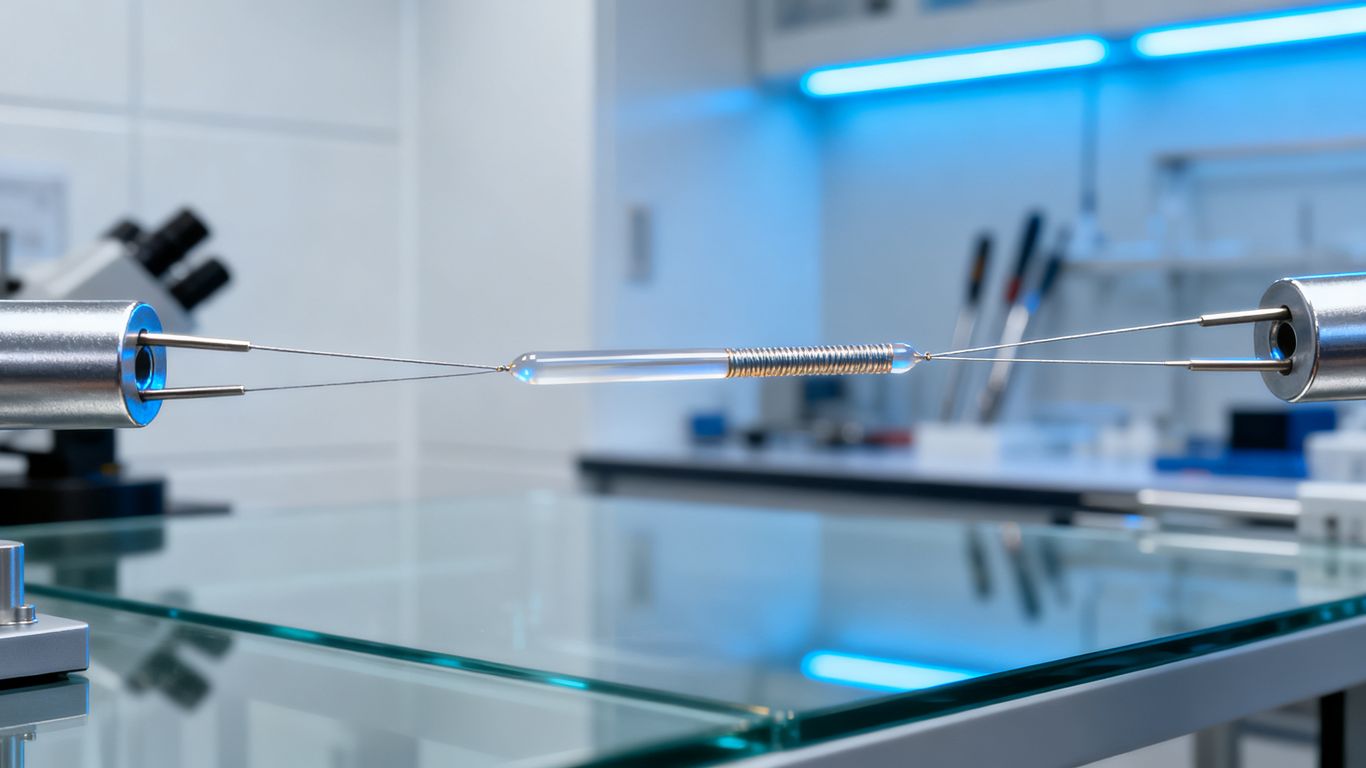
In this framework, quantum information is protected by the geometry of the physical system, similar to how a knot cannot be untied without cutting the string. Because the information resides in the collective non-local configuration, local perturbations simply cannot change the underlying topology, ensuring that global properties remain fixed regardless of minor noise impacts. Exploring topological quantum computers demonstrates how this reliance on spatial topology rather than singular state stability offers a pathway to reducing the massive burden of active error correction.
The mechanics of particle braiding
Operations in this architecture are performed by moving quasiparticles around one another, a process known as braiding. Since the final state of the braid depends only on the relative path taken by the particles—not their specific speed or exact coordinate—gate operations become inherently precise. The manipulation of these states through topological qubits provides a structural advantage for fault-tolerance that is impossible to achieve with typical gate sequences that rely on precise pulse-timing.
Mathematical framework of anyons
The theoretical underpinnings rest on anyons, quasiparticles appearing in two-dimensional systems that behave differently than standard fermions or bosons. These emergent particles are described by specific exchange statistics that topological qubits exploit, forming the basis for the logical logic gates mentioned in theory, specifically through non-Abelian anyon behaviors that keep the system in a degenerate ground space.
Key advantages over traditional qubit designs
Moving the burden of error protection from software to the hardware layer changes the overall architecture of the quantum stack. By grounding stability in the physics of the material itself, the system requires fewer ancillary components for the maintenance of quantum states compared to traditional architectures.
Built-in hardware-level error protection
Traditional qubits are like holding an egg at the end of a long stick; topological designs are more like a knot that is simply physically incapable of coming undone. This inherent resilience allows these systems to withstand higher rates of environmental noise before calculations are corrupted. Developers are testing if this level of passive protection can simplify the physical demands of high-density quantum arrays.
Significant reduction in computational overhead
The following table outlines the comparative requirements between architectures currently vying for dominance in the quantum computing space:
| Qubit Architecture | Error Correction Strategy | Primary Challenge | Stability Source |
|---|---|---|---|
| Superconducting | Active Surface Codes | High Noise Sensitivity | Cryogenic Isolation |
| Trapped Ion | Complex Pulse Sequences | State Manipulation Speed | Electromagnetic Traps |
| Topological | Braiding Operations | Nanofabrication Yield | Geometric Topology |
By minimizing the need for active syndrome measurement, these systems could potentially execute algorithms with significantly fewer hardware resources than current designs require.
Potential for denser and more stable quantum chips
Because the protection is encoded in the topology, these qubits can theoretically be packed more tightly without the same level of cross-talk noise that plagues current cryogenic chips.
- Enhanced qubit density leads to smaller form factors.
- Reduced cooling burden per unit of logical computation.
- Lower latency for complex entanglement operations.
- Scalability limited by manufacturing, not fundamental interference.
These design benefits suggest that once the material science hurdles are cleared, the transition to high-capacity topological computing may follow a steeper growth curve than the iterative scaling seen today.
The physics of Majorana zero modes
Majorana zero modes form the core of modern research into topological states, functioning as the quasiparticles that exist only at the boundaries of specialized physical environments. Finding clear, repeatable evidence of these elusive states is the primary focus for researchers working on topological qubits at Microsoft.
Identifying fractional states in nanowires
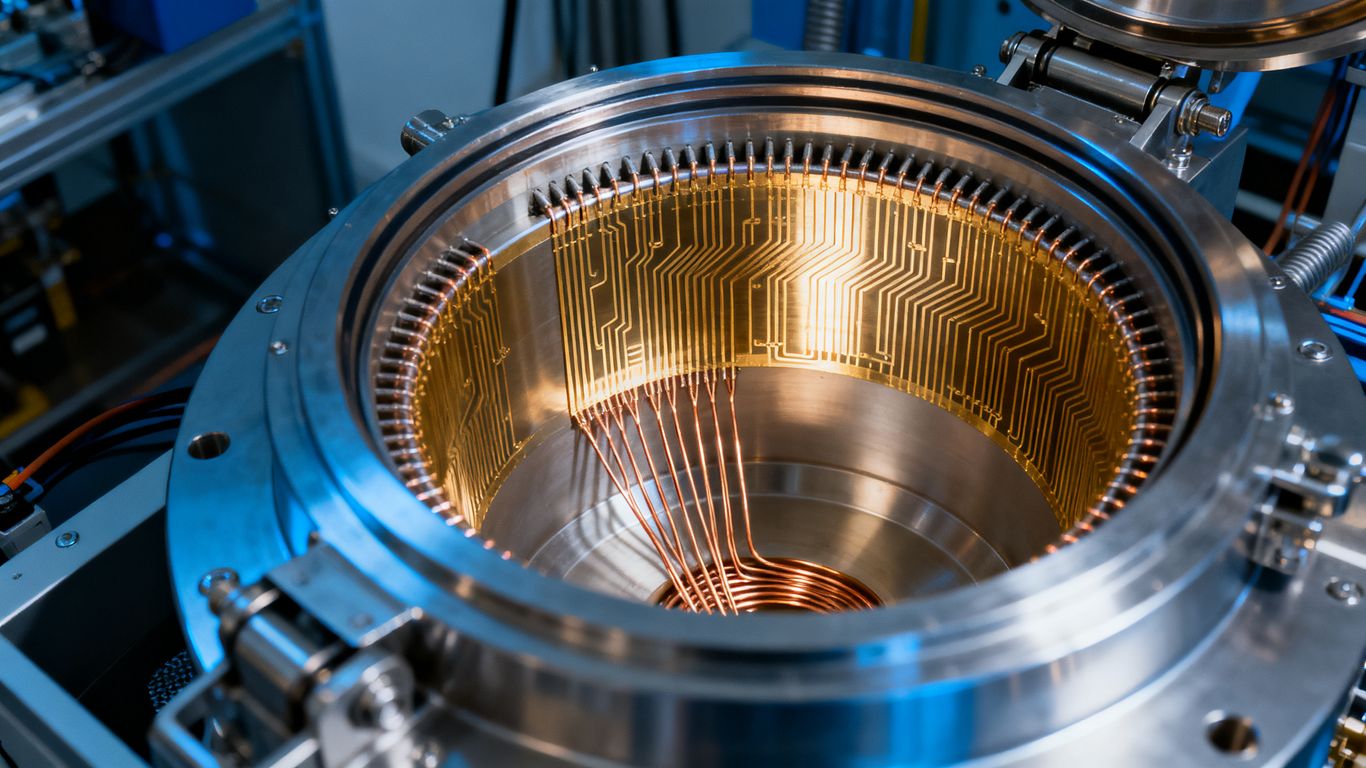
These states are predicted to emerge at the ends of superconducting nanowires when subjected to specific magnetic fields, creating a region where zero-energy quasiparticles can exist. Detecting these transitions requires measuring the tunneling spectroscopy of the wire, where a distinct zero-bias peak serves as a signature for the presence of the elusive Majorana state.
Distinguishing Majorana quasiparticles from background noise
Experimenters must differentiate these modes from other common artifacts, such as Kondo resonances or trivial localized states that mirror the electrical appearance of a Majorana. This remains a central challenge in topological quantum computing research, as small variations in material composition can create false positives that mimic the desired topological phase.
Engineering experimental setups for qubit detection
The experimental path often includes the following YouTube video guide illustrating typical measurement cycles:
Validating these setups requires atomic-scale precision in the placement of superconducting electrodes onto semiconductor wires, a process that is currently pushing the limits of modern cleanroom fabrication.
Major engineering hurdles to realization
Translating topological theory into a functional machine is arguably one of the most demanding tasks in contemporary semiconductor engineering. Fabricating the necessary hybrid materials requires a level of control over crystal structure and interface quality that currently exists only in the most advanced labs.
Difficulty of nanofabrication and material purity
Achieving the specific superconducting-semiconductor interface requires atomic-level interface engineering to ensure the topological phase can manifest consistently. Minute contaminations or structural dislocations along the wire can break the topological protection, reverting the system to a standard, error-prone state.
Sensitivity to local defects and chemical impurities
Every atom counts in a topological system, as chemical impurities can pin Majorana modes in unwanted locations. If a defect disrupts the wire’s transition, it ruins the braiding channel, causing the hardware to fail standard performance benchmarks during characterization.
Developing scalable readout and control interfaces
Beyond just creating a qubit, the system must interface with CMOS control electronics that operate at extreme cold. Orchestrating the braided movement of quasiparticles through non-local control lines requires massive improvements in cryogenic multiplexing and signal integrity to maintain the stability of the entire array.
Benchmarking against current hardware approaches
Topological designs are often contrasted with more mainstream tech, such as the Google Willow chip or neutral-atom architectures, each of which has carved out its own niche in the development of fault-tolerant machines.
Contrasting topological designs with superconducting circuits
While IBM Quantum continues to scale transmon-based chips by improving error mitigation, topological qubits offer a fundamentally different philosophy: solving error at the source. The former is a race to perfect active control, whereas the latter is a race to build a material base that resists quantum noise by definition.
Comparing stability against trapped ion architectures
Trapped ions offer exceptional coherence times compared to superconducting qubits, but they are limited by the speed at which ions can be shuttled across a vacuum chamber. Topological qubits combine high stability with the potential for solid-state integrability, aiming to bridge the gap between ion-like coherence and semiconductor-like manufacturing workflows.
Evaluating long-term viability versus photonic systems
Photonic systems, explored through photonic quantum computing research, provide another path by using light, which is naturally decoherence-resistant. Unlike topological qubits, which rely on Majorana states in wires, photonic designs attempt to encode information in the properties of light, often requiring complex integration with silicon photonics to reach enterprise-scale utility.
Conclusion
The development of topological qubits represents a bold departure from the dominant trajectories in the quantum landscape, trading immediate ease of access for the potential of ultimate hardware-level stability. While the engineering demands are immense and the fundamental physics remains in the validation phase, the promise of a system that inherently resists error remains a driving force for some of the longest-horizon bets in deep tech. If achieved, this architecture could theoretically bypass the massive hardware overhead currently hindering universal quantum computation, proving that the most difficult scientific problems often yield the most profound technological solutions.
Frequently Asked Questions
What defines a topological qubit?
A topological qubit encodes quantum information in the global geometry of quasiparticle worldlines, specifically using anyons to perform operations that are robust against local interference.
Why are Majorana zero modes important?
They serve as the fundamental quasiparticles that allow for topological protection because they can store quantum information in a non-local way that prevents environmental decay.
What is the advantage of braiding in quantum computing?
Braiding provides a method for logic gates where the outcome is purely determined by the topology of the path taken, making operations inherently immune to the exact timing or duration of the gate.
How does this approach compare to error correction in other systems?
Unlike surface codes used in cryogenic chips that rely on massive qubit redundancy and software correction, this architecture aims to provide protection through the physics of the material system itself.
What are the main materials used for topological realizations?
Researchers primarily investigate hybrid semiconductor-superconductor nanowires where the proximity effect allows for the emergence of topological phases under specific magnetic fields.
Will topological qubits replace superconducting ones?
They represent a long-term research path rather than a replacement; they face greater early-stage manufacturing challenges but may eventually offer a more sustainable path to error-resilient computing.
What does the term decoherence imply in this context?
Decoherence describes the process where environmental interactions force a quantum system out of its superposition state, leading to computation errors that must be corrected.