Key Takeaways
Quantum computing is transitioning from laboratory curiosity into a functional engine for industrial computation, driven by developments in hardware scale and software accessibility. This article assesses the current maturity of these systems and their potential for transformative impact.
- Improved qubit fidelity and gate operations now allow for more precise circuit execution compared to early experimental setups.
- The rise of cloud-native development environments has democratized access, enabling developers to prototype algorithms without owning specialized hardware.
- Hybrid computation models bridge the gap between classical speed and quantum-specific problem solving, addressing current system bottlenecks.
- Error mitigation techniques serve as the primary bridge to stable, fault-tolerant operations, reducing the noise sensitivity of current processors.
- Real-world application development is accelerating in materials science and logistics, though large-scale advantage is still a forward-looking goal.
IBM’s current technological milestones
The evolution of transmon qubit hardware
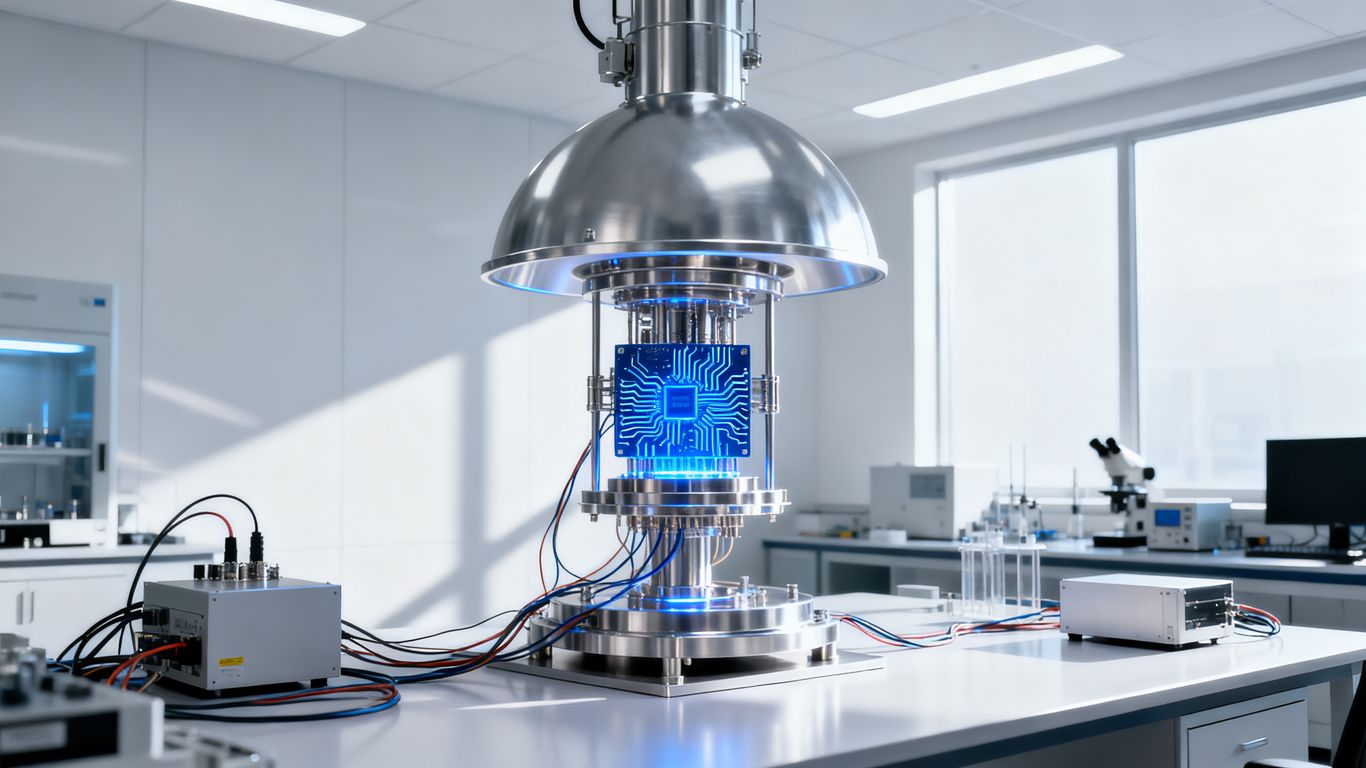
The fundamental building blocks of IBM Quantum processors are transmon qubits, which rely on superconducting circuits. Over the past decade, these designs have shifted from simple proof-of-concept chips to complex, high-performance processors. This evolution emphasizes material science improvements, specifically in coherence times, which allow qubits to remain stable long enough to perform meaningful calculations.
Progress toward utility-scale computing
Utility-scale computing requires processors capable of sustaining error-controlled execution on circuits large enough to perform work that classical systems find prohibitive. Engineering teams now focus on scaling the modular design of chips, allowing for larger total qubit counts without compromising individual gate fidelity. This focus on modularity is the primary vehicle for achieving consistent performance across broader system architectures.
Benchmarking processor performance metrics
Establishing standard metrics for hardware performance remains a priority for the research community. As systems scale, designers use gate error rates and circuit depth limits to measure maturity. The following table highlights the comparative improvements in recent processor generations as they move toward higher-fidelity gate operations for complex workloads.
| Processor Tier | Average Gate Fidelity | Operating Qubits | Target Application |
|---|---|---|---|
| Early Experimental | 98.5% | 5-20 | Theory Prototyping |
| Mid-Scale Utility | 99.8% | 127 | Algorithmic Testing |
| High-Fidelity Future | 99.9%+ | 400+ | Production Simulation |
These metrics demonstrate the steady march of technical precision that moves the field away from erratic calculations. Consistent progress in these areas is what distinguishes modern hardware from the early iterations that initially brought quantum systems to the web.
Software accessibility and the developer ecosystem
Qiskit as the industry standard for development
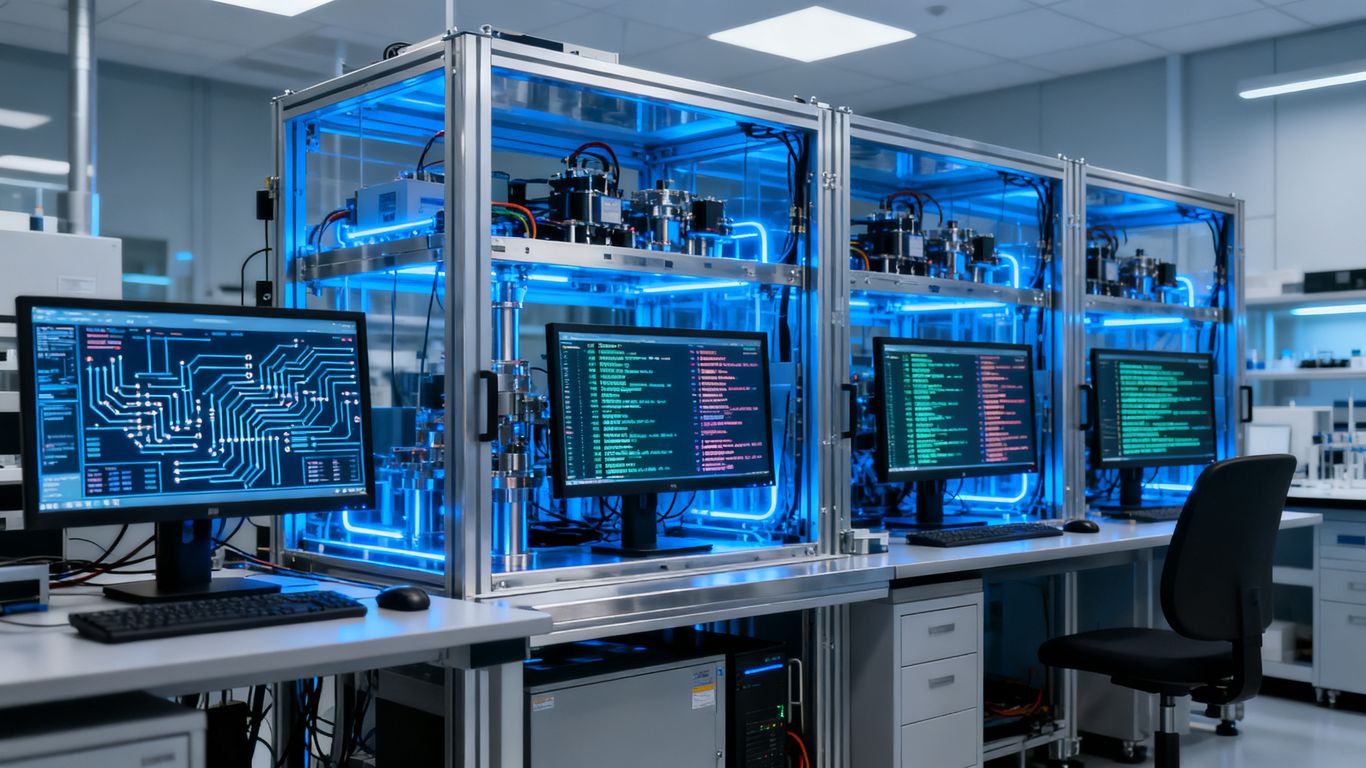
For developers exploring quantum circuits, Qiskit has established itself as the primary software stack. It provides a common language for mapping algorithms to physical hardware, preventing the need for custom, proprietary code for every architecture. By offering a unified interface, it ensures that researchers can focus on algorithm logic rather than hardware-level maintenance.
Cloud access via the IBM Quantum platform
Historically, physical access to quantum hardware was confined to small, gated laboratory settings. The IBM Quantum Platform changed this model, providing web-based entry to the largest fleet of systems currently in operation. This accessibility has fostered a wider community of contributors who identify and report potential hardware bottlenecks.
Integration with classical-quantum hybrid computation
Modern workloads rarely require purely quantum processing for every step of a calculation. Most researchers now use hybrid workflows where classical machines manage data input and post-processing, while the quantum processor performs specialized kernels. This integrated approach leverages existing research tools like those found in the 12 most important quantum computing companies outlook to optimize circuit execution.
One observable shift in the field is the move toward specialized modular functions for common tasks, such as:
- Executing optimized circuit transpilation routines automatically.
- Managing noise-aware mapping of logical circuits to physical qubits.
- Scaling workload distribution across both classical and quantum silicon.
- Providing real-time state analysis for debugging complex quantum states.
Error correction and mitigation strategies
Moving beyond the NISQ era
The industry is currently operating in the Noisy Intermediate-Scale Quantum (NISQ) era, where hardware performance is limited by environmental interference and decoherence. Moving beyond this phase requires reliable error correction, which effectively creates "logical" qubits from groups of physical ones. This capability represents the next major milestone for the field, aiming to sustain states long enough for complex algorithms.
Current methods for managing noise in circuits
Managing circuit noise currently relies on error mitigation techniques rather than full correction. These strategies utilize clever software-layer adjustments to estimate and filter out expected noise patterns during execution. By applying statistical filtering, researchers can extract valid signals from noisy data outputs, effectively increasing the usability of hardware that has not yet reached full fault-tolerance.
The timeline for fault-tolerant quantum systems
As explained in the roadmap for large-scale, error-corrected quantum systems, the transition to fault tolerance will likely occur by the end of the decade. This transition involves significant engineering at a systems level, incorporating cryogenic infrastructure to house larger arrays of interconnected processors. The timeline is ambitious, but it represents a maturation point where research gives way to robust, repeatable engineering.
Practical applications for industry and research
Modeling complex molecules in materials science
Simulation of molecular interaction is considered the first 'killer app' for quantum hardware. Because classical computers struggle with the exponential complexity of electron-electron interaction, quantum processors naturally excel at modeling ground-state energies. This capability could lead to better catalysts or more efficient battery chemistries, tasks where traditional simulation methods remain hit-or-miss.
Solving optimization problems in finance and logistics
Optimization tasks represent another natural application for these machines. Financial institutions and shipping firms are testing algorithms that find optimal trade-offs in multi-variable datasets, such as hedging complex portfolios or minimizing delivery route inefficiencies. While still in early pilots, these use cases demonstrate the potential for quantum logic to outscale classical heuristics in specific combinatorial spaces.
Demonstrating quantum advantage in specialized tasks
Quantum advantage is defined as a point where a quantum system solves a problem definitively faster or cheaper than any current classical alternative. Achieving this requires more than just raw speed; it requires a specialized workflow that perfectly utilizes quantum gates for non-linear logic. Demonstrating this result regularly is the ultimate goal of current research and industry collaboration.
Market challenges and competitive landscape
Comparisons with trapped-ion and neutral-atom technologies
While superconducting approaches remain prominent, other methods such as trapped-ion and neutral-atom architectures are gaining significant attention. Each technology has unique strengths; trapped-ion systems often boast higher individual gate fidelities, while superconducting chips like those in this ibm quantum review emphasize integration and modular scalability. Understanding these trade-offs is essential for operators building out long-term infrastructure.
Managing supply chain constraints for cryogenic infrastructure
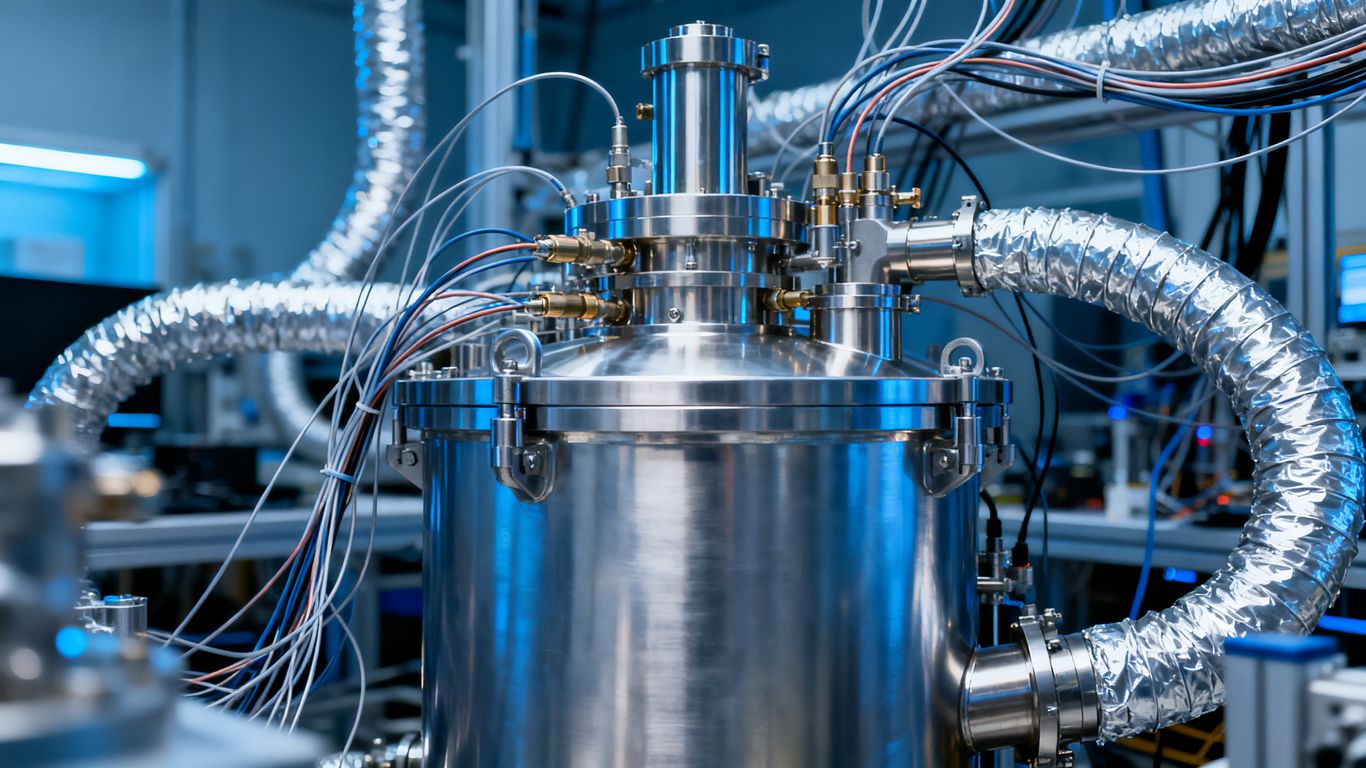
The hardware required to operate large-scale quantum systems relies on highly specialized components, specifically dilution refrigerators that operate near absolute zero. Scaling production creates a supply chain burden, as the demand for high-end cryogenic units grows faster than manufacturing throughput. This constraint currently acts as a limiting factor for the speed at which physical fleet sizes can grow.
Evaluating the long-term feasibility of the IBM hardware roadmap
Long-term feasibility rests on the industry's ability to maintain a consistent cadence for qubit improvement and system-wide integration. While critics point to the long horizons for achieving practical fault tolerance, the current focus on Inside Deep Tech highlights how cumulative incremental gains in fidelity and architecture eventually lead to breakthroughs in core infrastructure. Whether this roadmap stays on track will depend on the continued success of modular hardware scaling efforts.
Conclusion
Quantum hardware is arguably following a long, complex arc that mirrors early classical computing, moving steadily from foundational research into the realm of practical engineering. While fault-tolerant machines remain a mid-term destination, the progress in software accessibility, noise mitigation, and modular hardware design demonstrates that the sector is shifting from demonstration toward reliable, utility-driven work.
Frequently Asked Questions
How does quantum hardware differ from classical processors?
Quantum hardware utilizes qubits, which represent information in unique quantum states that permit superpositions, rather than the binary bits used in classical silicon. This architectural difference allows them to processes specific classes of probabilistic and exponential problems more efficiently than traditional transistor-based architectures.
Why is cryogenic cooling necessary for quantum systems?
Most quantum processors are highly sensitive to thermal noise, which causes decoherence and destroys the fragile quantum states needed for calculation. Operating at temperatures near absolute zero minimizes the movement of atoms, allowing qubits to maintain information for significantly longer periods.
What does decoherence mean in a quantum computing context?
Decoherence refers to the process where a quantum system interacts with its environment and loses its quantum state, rendering it useless for calculation. This is the primary physical challenge in building stable processors, as it limits the total time available to complete an algorithm before the result becomes random noise.
Can a standard PC run quantum algorithms?
A standard PC cannot perform the physics required for quantum computation, but it can run software simulators that model small quantum systems. These simulators are essential tools for developing and verifying algorithm logic before deploying it to physical hardware in the cloud.
What are logical qubits?
Logical qubits are formed by grouping multiple physical qubits together to act as a single, error-corrected unit. By utilizing redundancy and complex control protocols, these logical units can detect and fix errors that arise during operation, forming the basis for future fault-tolerant systems.
How do hybrid systems manage quantum circuits?
Hybrid systems use a classical computer to orchestrate the workflow, sending specific sub-tasks to the quantum coprocessor. The classical machine handles the complex control signals and the final result processing, while the quantum processor provides the specialized computational kernels where its core advantages are found.
What are the main limitations of current quantum systems?
Current systems are defined by high susceptibility to noise, high error rates in gate operations, and a limited number of stable qubits. These factors force researchers to use specialized mitigation software to handle data, preventing the use of large-scale algorithms that require perfect fault tolerance.