Key Takeaways
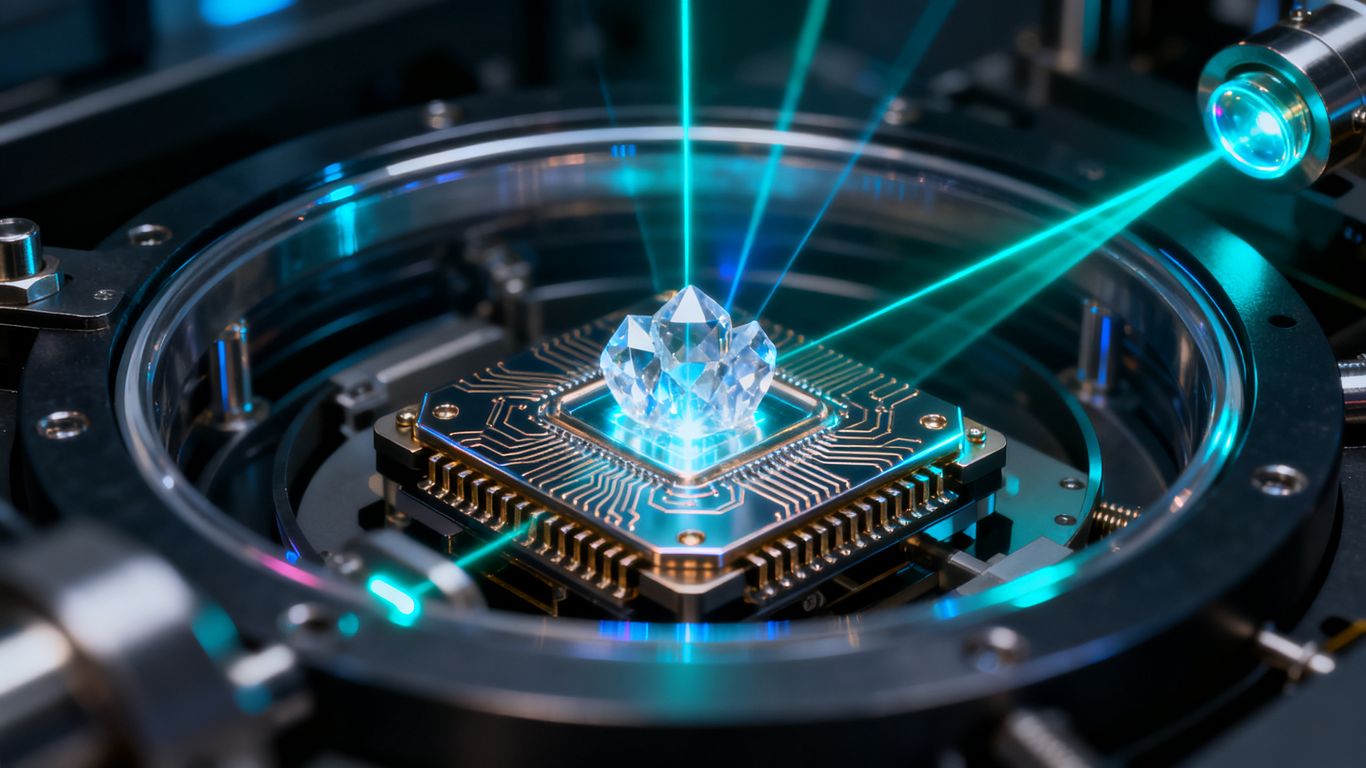
Photonic quantum computing stands out as a promising, modular pathway toward large-scale, fault-tolerant quantum information processing. This article breaks down the technical underpinnings, key industry participants, and looming hurdles in the transition from lab-scale experiments to commercial utility.
- Photons offer significant advantages in decoherence immunity and room-temperature operation compared to superconducting circuits.
- Integrating quantum hardware with classical semiconductor manufacturing is essential for scaling to millions of physical qubits.
- Challenges like probabilistic gate operations and photon loss remain critical bottlenecks for system efficiency.
- Strategic partnerships bridge the gap between academic physics and industrial-scale photonics fabrication requirements.
- Emerging error-correction codes provide a theoretical foundation for turning noisy photonic qubits into robust, fault-tolerant logic units.
Understanding photonic quantum computing
The role of photons as qubits
Photonic quantum computing utilizes the fundamental properties of light, such as polarization, timing, or path, to encode information in a way that remains coherent over long distances. Because photons do not interact strongly with their environment, they are inherently protected from the decoherence that constantly threatens static qubits like electrons or trapped ions. This resilience makes them ideal candidates for quantum communications and reliable information transmission, though their transient nature requires novel strategies for storage and synchronized interaction.
Mechanisms of linear optical quantum computing
Operations in this domain are primarily governed by the principles of Linear Optical Quantum Computing, which relies on passive optical components like beam splitters and phase shifters to manipulate quantum states without requiring continuous external control fields. By arranging these components in complex interferometric networks, researchers can perform logic gates that process quantum information encoded in spatial or modal properties.
Distinguishing photonics from superconducting circuits
While superconducting circuits operate at millikelvin temperatures to maintain stable quantum states, photonic systems are fundamentally different in their stability profile and operational environment. The research outlined in Photonic Quantum Computing details how discrete-variable and continuous-variable implementations leverage these unique physics.
The unique promise of photonic systems
Operating at room temperature
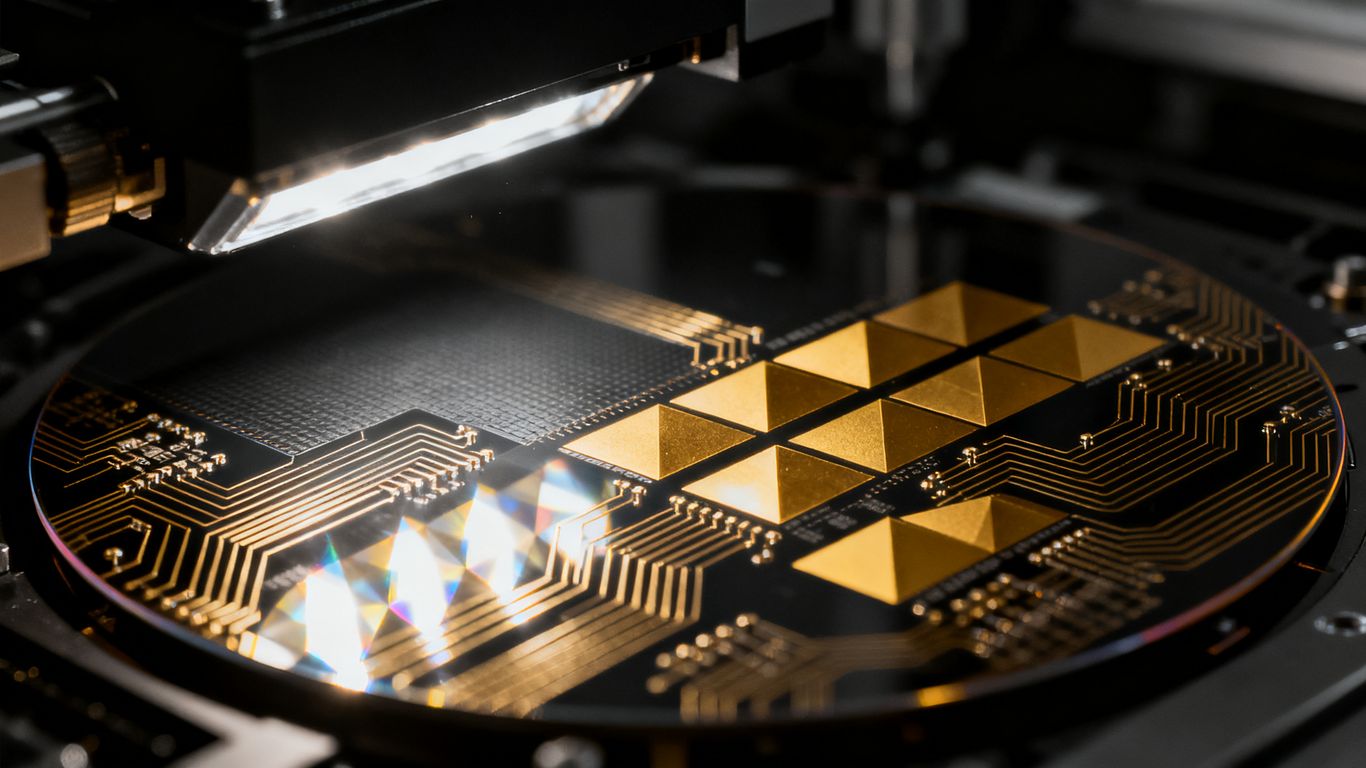
Unlike traditional platforms that demand complex, power-hungry dilution refrigerators, photonic systems can function at room temperature. This significantly reduces the overhead for deployment, allowing quantum processors to be integrated directly into existing data center infrastructure rather than requiring specialized laboratories to maintain extreme cooling.
Scalability and modularity potential
Scaling these systems depends on the ability to interconnect disparate units into a unified quantum fabric. The benefits of this approach include:
- Native compatibility with fiber-optic networks for long-range communication.
- High-speed movement of quantum information across different processor modules.
- Simplified thermal management in large-scale system deployments.
- Mass manufacturing leveraging mature CMOS fabrication techniques.
Native integration with existing telecommunications
Photonic architectures align naturally with established global telecommunications standards, facilitating the seamless distribution of entangled states across nodes. This synergy allows for the development of modular systems where processors remain physically separated but logically linked by optical fibers.
Advantages over trapped-ion and transmon qubits
By utilizing an Entanglement First™ architecture, systems can prioritize connectivity from the start, avoiding the bandwidth bottlenecks that plague monolithic hardware. This specific design focus allows for the synchronization of multiple processors without sacrificing the fidelity of individual quantum operations, providing a distinct scaling advantage over architectures that struggle to maintain broad connectivity.
Key players in the industry
PsiQuantum and the roadmap to utility
Developing PsiQuantum means leveraging a silicon photonics approach to build the first useful, fault-tolerant quantum computers that integrate directly into global manufacturing supply chains. Their focus on high-volume production demonstrates how photonic hardware can scale economically while addressing complex problems in materials science and finance.
Photonic Inc. and distributed quantum networking
The industry also looks to top 12 quantum computing companies to understand how firms like Photonic Inc. are pushing the boundaries of distributed quantum computing. By focusing on entanglement-based architectures, these players are proving that scaling is a direct result of effective networking rather than simply increasing the number of physical qubits on a single chip.
Academic research and early-stage startups
Early-stage innovation continues to thrive in academic circles, where researchers explore hybrid CV-DV protocols to push the limits of error correction. These teams are essential for identifying new materials and photonic crystal designs that reduce signal loss and improve detection efficiency.
Strategic partnerships within the semiconductor supply chain
Foundries and design firms are increasingly collaborating to optimize the production lifecycle of photonic integrated circuits. These partnerships ensure that specialized optical components meet the standard tolerances required for high-fidelity quantum logic operations.
Major technical challenges to adoption
The drawback of probabilistic gate operations
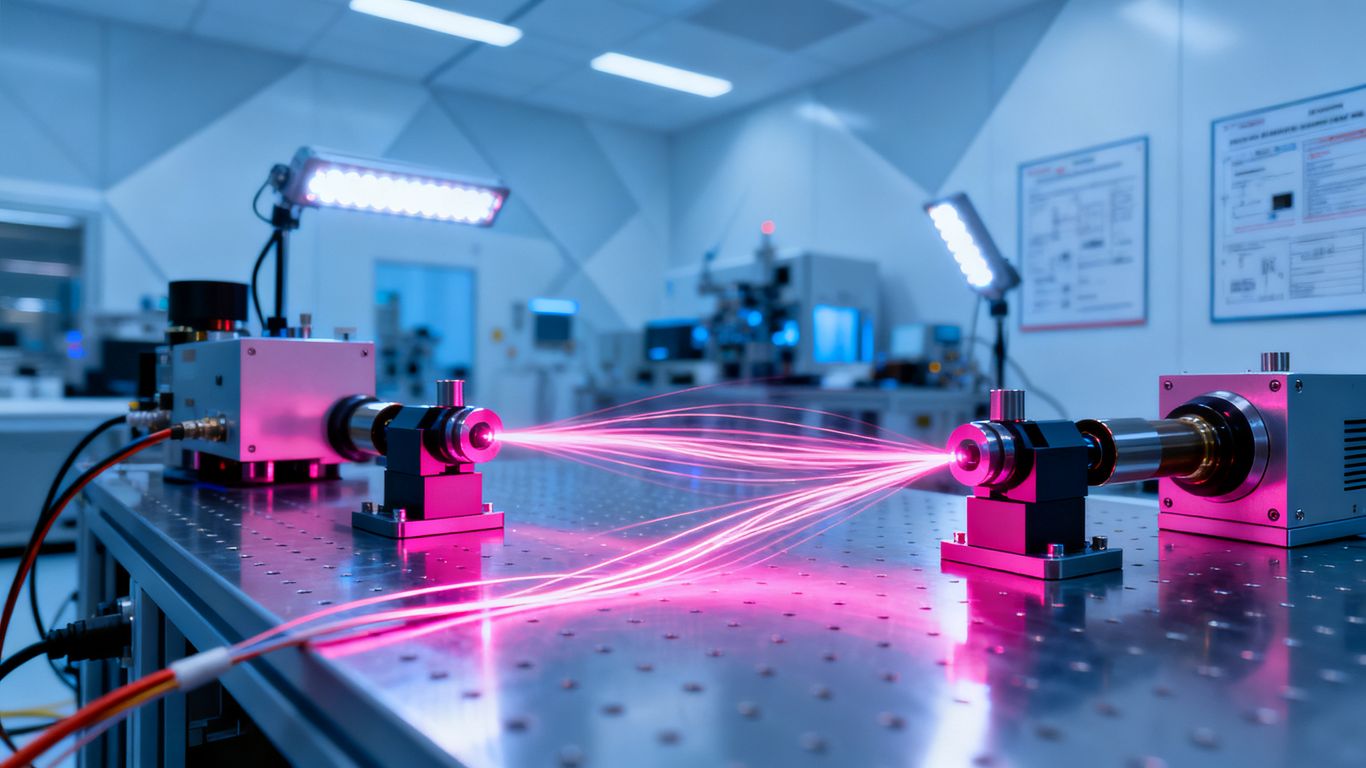
Most photonic gates occur probabilistically, meaning the success of a logic operation is not guaranteed in every event. This requires complex multiplexing and feed-forward protocols to ensure that failed operations do not destroy the state of the entire system.
Managing photon loss and detection efficiency
Photons are easily absorbed or scattered, and existing single-photon detectors have finite collection efficiencies that limit final system performance. The following table illustrates the impact of different variables on system-level performance:
| Metric Category | Primary Impact | Mitigation Strategy |
|---|---|---|
| Optical Loss | Signal degradation | Improved waveguide fabrication |
| Detector Noise | False positive rate | Cryogenic cooling of detectors |
| Gate Fidelity | Error propagation | Advanced QLDPC error correction |
Complexity of fabricating integrated photonic circuits
Manufacturing these circuits requires extreme precision in waveguide geometry. Even minor deviations in waveguide thickness can drastically alter the timing and phase of the travelling photons, resulting in gate errors that are difficult to isolate during testing.
Difficulties in deterministic state preparation
Creating and maintaining identical quantum states across hundreds of nodes is a formidable task. Deterministic preparation requires highly controlled emission sources that can fire on demand, creating a reliance on developments in quantum dot technology.
Advancements in hardware and infrastructure
Advances in silicon photonics manufacturing
Modern manufacturing is adopting high-index contrast materials that allow for denser circuits and lower attenuation. By refining lithography processes, researchers are successfully pushing the limits of what a monolithic chip can achieve in terms of photonic density.
Optimizing optical switching and fiber interconnects
Low-loss interconnects are the critical foundation for networking multiple quantum processors. Switches that can route photons between modules without introducing significant latency are essential for building distributed computing clusters that function beyond the limits of a single cryostat.
Balancing cryogenic needs versus room-temperature deployment
While the computation happens at room temperature, specific components like highly sensitive superconducting nanowire single-photon detectors often require cooling to function optimally. This creates a hybrid infrastructure where the system is mostly room-temperature but contains localized ultracold nodes.
Future outlook for the field
Paving the way for fault-tolerant computing
Future systems will rely on sophisticated error-correction codes that are engineered specifically for photonic architectures. Achieving fault tolerance will mark the shift from experimental demo to industrial-grade infrastructure.
Scaling toward global quantum network integration
As network capabilities improve, we expect to see the birth of the quantum internet, where distributed photonic processors communicate over secure channels. This integration will fundamentally change how computing power is distributed and accessed globally.
Milestone expectations for broad industry adoption
Industry observers anticipate significant hardware maturity by the late 2020s, potentially culminating in the first systems that provide practical, fault-tolerant solutions for chemistry and optimization problems previously deemed unsolvable.
Conclusion
Photonic quantum computing represents a unique intersection of classical semiconductor manufacturing and quantum physics that holds massive potential for long-term scalability. While significant hurdles in gate success rates and photon loss exist, the shift toward distributed, modular architectures provides a realistic pathway to a fault-tolerant future.
Frequently Asked Questions
What are the main advantages of using photons as qubits?
Photons are largely immune to environmental magnetic and electric field noise, enabling long-coherence times and the ability to operate effectively at room temperature.
Why is integrated photonic manufacturing so difficult?
Fabricating these circuits requires nanometer-scale precision in waveguide dimensions to ensure uniform transmission, and even small variations can introduce significant synchronization errors.
Can photonic quantum computers replace classical supercomputers?
Rather than replacing them, they are intended to function as specialized accelerators for complex tasks in chemistry, molecular simulation, and optimization that traditional binary systems cannot handle efficiently.
What does 'probabilistic gate operation' mean in this context?
It means that certain quantum gates do not succeed with 100% certainty every time they are attempted, necessitating complex error-correction techniques to maintain the integrity of the computation.
Are cryogenic systems needed for photonic computers?
While the computational units themselves may operate at room temperature, auxiliary components like detectors often utilize cryogenic cooling to provide the necessary sensitivity for reliable state detection.
What is a photonic integrated circuit?
It is a microscopic wafer that contains various optical components like lasers, splitters, and phase shifters, all designed to control the flow and transformation of light as a medium for computation.
How do we connect modular photonic processors?
These modules are linked using standard fiber-optic cabling that distributes entangled light states between separate processor nodes, allowing them to collaborate on a single computational task.