Key Takeaways
The robotics unicorns 2026 cohort reflects a broad shift from demonstrations toward deployable systems, though commercial maturity varies widely.
- Humanoid robots are being developed for factories, warehouses, homes, and other work environments.
- Foundation models are becoming a central software layer for adaptable robotic behavior.
- Defense, inspection, and delivery companies show that useful autonomy does not require a humanoid form.
- Deployment evidence matters as much as fundraising when judging technical progress.
- Safety, reliability, integration, and unit economics remain decisive constraints.
1. Figure AI — Humanoid robots for industrial work
Humanoid robotics has become one of the most closely watched parts of the private technology market. The attraction is straightforward: a machine shaped for human work could operate in spaces already designed around human tools, shelves, aisles, and workflows. The harder question is whether that form factor can deliver reliable labor outside controlled demonstrations.
Figure AI is associated with autonomous humanoid robots intended to perform manual labor in manufacturing, logistics, and retail. That scope places the company at the intersection of mechanical design and embodied AI, where perception, planning, balance, and manipulation must work together rather than in isolation. The meaningful benchmark is not a graceful motion, but repeatable performance over long operating periods.
For investors and operators, the relevant distinction is between a prototype and an operational platform. Manufacturing scale, safety certification, maintenance, battery life, and the ability to fit into existing processes will determine whether humanoids become productive assets. The field’s most useful analysis therefore focuses on commercial-ready humanoids, not on appearance alone.
2. Agility Robotics — Digit’s commercial warehouse deployments
Warehouses provide a demanding but legible environment for mobile robots. Tasks are repetitive, the physical layout is structured, and the value of reducing manual handling can be measured in throughput and labor hours. Even so, a warehouse deployment must cope with people, changing inventory, narrow tolerances, and the unglamorous demands of uptime.
Agility Robotics is presented as a company moving humanoid robotics toward real-world industrial deployment, with Digit associated with warehouse work. That framing matters because deployment evidence says more than a laboratory demonstration about integration, remote supervision, service requirements, and operational reliability. It also gives buyers a way to judge whether the robot complements an existing workflow rather than forcing a facility to redesign itself around the machine.
The commercial test is cumulative. A robot that completes a task occasionally may be technically impressive, while a fleet that performs it predictably becomes an operating system for a facility. Readers tracking warehouse robotics startups should therefore examine task boundaries, deployment duration, safety processes, and economics alongside locomotion and dexterity.
3. Apptronik — General-purpose humanoid robots for factories
Factories are attractive venues for humanoid robots because many processes already depend on standardized workstations and predictable material flows. Yet industrial environments are not static: parts arrive imperfectly, tools wear, and production schedules change. General-purpose capability is useful only when it survives those ordinary disruptions.
Apptronik is identified among the companies developing general-purpose humanoid robots for industrial settings, including factory work. The central engineering challenge is to combine mobility and manipulation with the controls, safety behavior, and repeatability expected in production. A system may be general-purpose in principle while still entering the market through a narrow, carefully selected task.
That staged path is not a weakness. It can let a developer collect operational data, refine hardware, and establish integration practices before attempting broader autonomy. The strongest factory case will ultimately be built from measurable cycle times, recovery behavior, and maintenance records rather than from a broad label alone.
4. 1X — Safe, learning-enabled robots for home and business use
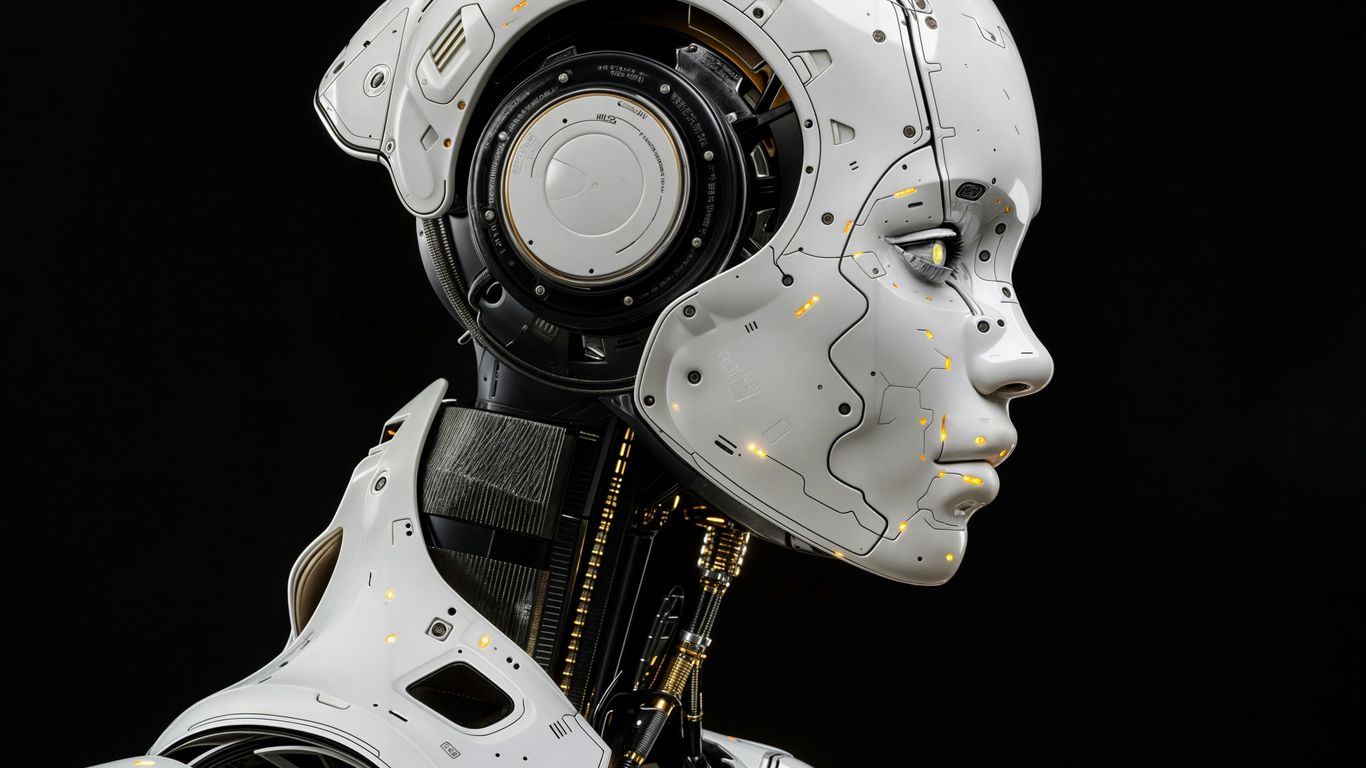
Robots operating around people face a different standard from machines kept behind a safety cage. A home or business environment contains unfamiliar objects, shifting obstacles, and social expectations that are difficult to encode as fixed rules. Safe behavior must remain dependable when the environment is only partly known.
The description of 1X centers on robots designed for home and business use, with an emphasis on safety and learning-enabled behavior. Those terms point to a system that must improve through experience while preserving conservative responses around people. The practical question is how learning is collected, validated, and bounded before a capability reaches a less structured setting.
Domestic deployment also changes the economics of robotics. Hardware has to be serviceable, quiet enough for shared spaces, and useful across more than one task, while the software must handle variation without requiring an expert operator. For businesses, the same questions appear in a more controlled form: what can be automated now, and what still needs human oversight?
5. Physical Intelligence — Foundation models for general-purpose robots
A foundation model in robotics is a general-purpose model that can support behavior across tasks rather than being trained for only one tightly defined motion. The idea is consequential because collecting physical-world data is expensive, slow, and difficult to standardize. Better reuse of learned representations could make each new deployment less of a blank-slate engineering project.
Physical Intelligence is described in the available industry coverage as a robotics company developing foundation-model technology for general-purpose robots. Its importance in the robotics unicorns 2026 discussion comes from the possibility that intelligence becomes a reusable layer across different machines and environments. That possibility remains distinct from a guarantee that one model can safely control every robot or perform every task.
The evaluation problem is therefore more technical than a model-size comparison. Engineers need to ask how systems transfer skills, respond to unseen objects, recover from mistakes, and communicate uncertainty. A useful foundation model should reduce integration work without hiding the residual burden of sensing, actuation, safety validation, and fleet operations.
6. Skild AI — Robotics intelligence for multiple hardware platforms
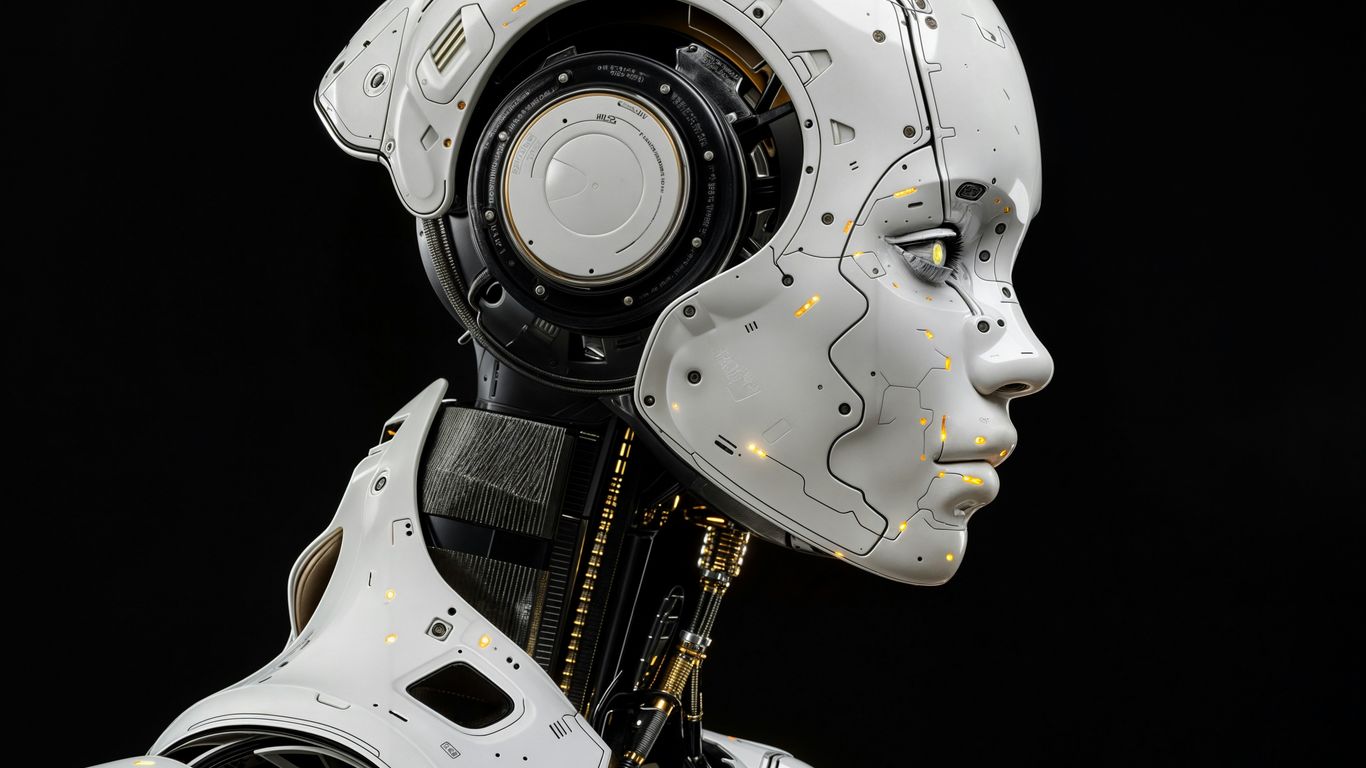
A hardware-independent intelligence layer could address one of robotics’ persistent bottlenecks: every new body often requires a substantial software effort. Different actuators, sensors, kinematics, and payloads make transfer difficult even when two machines appear to perform similar tasks. The commercial prize is a more portable form of robotic intelligence.
Skild AI is included in industry rankings of major robotics companies, and its positioning in this list concerns robotics intelligence intended for multiple hardware platforms. The relevant distinction is between a software claim and a demonstrated transfer capability. Portability has to be shown across bodies, environments, and task families, with clear evidence about what is learned once and what still needs platform-specific engineering.
This architecture could also alter how value accumulates in the sector. Hardware makers may differentiate through reliability and cost, while intelligence providers compete on data, training methods, and deployment tooling. In practice, the boundary will remain porous: software needs suitable sensors and controls, and hardware needs software that can exploit its physical design.
7. Anduril Industries — Autonomous defense and security systems
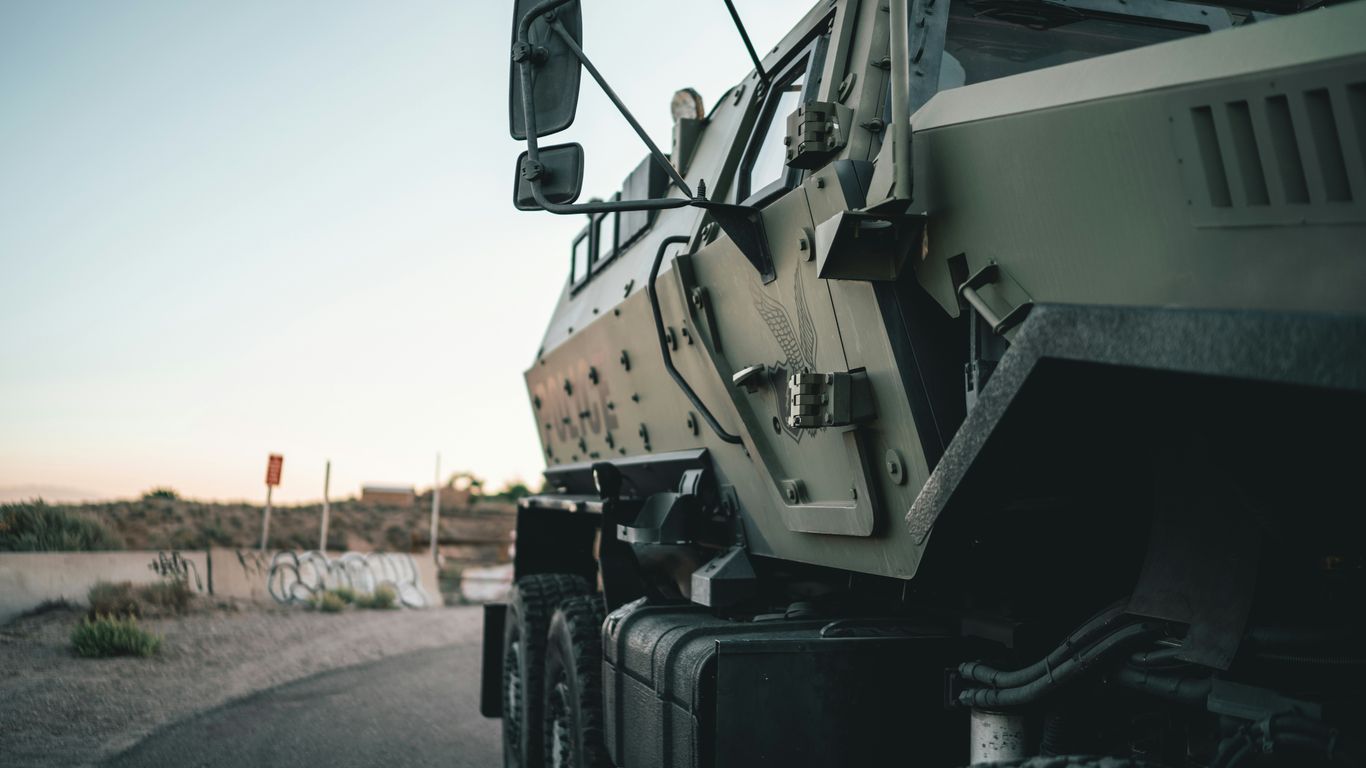
Defense autonomy is shaped by constraints that differ sharply from those in warehouses or factories. Systems may operate with limited communications, incomplete information, and adversarial interference, while the consequences of failure can be severe. Reliability, traceability, and rules for human control are therefore central engineering requirements.
Anduril Industries appears in the robotics and autonomy conversation through autonomous defense and security systems. The category covers a broader operational problem than a single robot: sensing, decision support, vehicles, communications, and command interfaces must function as a coordinated system. Any assessment should separate autonomy used for navigation or monitoring from decisions that require explicit human authorization.
The underlying technologies also illustrate why autonomy is not synonymous with full independence. A system can automate perception or route planning while retaining human supervision for consequential actions. That layered approach is likely to remain important wherever machines operate in contested, regulated, or safety-critical environments.
8. Shield AI — AI pilots and autonomous aircraft
Aircraft autonomy compresses the robotics problem into a fast-moving, high-consequence setting. An autonomous aircraft must interpret sensor data, maintain control, manage its mission, and respond to changing conditions in real time. Those functions leave little room for brittle assumptions or delayed intervention.
Shield AI is associated with AI pilots and autonomous aircraft, a focus that places software intelligence directly inside an aerospace control loop. The technical challenge is not merely recognizing objects or following a route; it is maintaining dependable behavior as conditions change and communications become unreliable. Testing, simulation, and carefully bounded operational roles are essential to establishing confidence.
The broader lesson is that physical AI can be valuable without taking a human shape. Aircraft, ground vehicles, and other platforms can become more capable when perception and control are integrated with a clear operating doctrine. Their progress should be judged by mission reliability and safety evidence, not by the novelty of the interface.
9. Zipline — Autonomous drone delivery at scale
Delivery drones offer one of the clearest examples of autonomy being judged in public, repeatable operations. Their routes, payloads, weather exposure, launch systems, and regulatory obligations all affect whether a service works beyond a pilot. Scale means building an operating network, not simply flying a successful demonstration.
Zipline is included here for autonomous drone delivery at scale. That description directs attention to fleet coordination, dispatch, maintenance, airspace management, and the handoff between automated flight and human oversight. The aircraft is only one component of a service that must meet delivery windows while maintaining safety and economic discipline.
The sector’s development can be followed through research on autonomous delivery startups, particularly the move from pilots toward integrated urban logistics. A serious comparison should ask where the service operates, what infrastructure it requires, and how much remote supervision remains in the loop. Those details often reveal more than a headline flight count.
The main operating variables can be grouped simply:
- Route density and delivery frequency.
- Weather and airspace constraints.
- Fleet maintenance and remote oversight.
- Payload, turnaround time, and unit economics.
That list is useful because drone delivery is a network business as much as an aircraft business. A technically capable vehicle still needs enough demand and infrastructure to make each route economical. The companies that solve those coordination problems will define whether autonomous delivery becomes routine or remains a collection of specialized services.
10. Gecko Robotics — Inspection robots for critical infrastructure
Inspection is an especially practical robotics application because the value often comes from better information rather than from replacing an entire workforce. Critical infrastructure contains surfaces and components that are difficult, dangerous, or expensive to examine manually. A robot can make inspection more repeatable while reducing exposure to hazardous conditions.
Gecko Robotics is positioned around inspection robots for critical infrastructure. In that setting, the important output is trustworthy condition data that engineers can use for maintenance and risk decisions. The system’s usefulness depends on sensing quality, surface access, repeatability, and the ability to connect observations with an asset’s history.
This category also shows why specialized robots can compete effectively with general-purpose machines. A purpose-built system may have a narrower operating envelope but a clearer return on investment and a simpler validation path. Across infrastructure, delivery, defense, and industrial work, the durable pattern is the same: autonomy earns adoption when it produces reliable results within a defined operational boundary.
A compact comparison helps clarify how different forms of robotics create value:
| Application | Primary operating challenge | Evidence that matters |
|---|---|---|
| Humanoid industrial work | Reliable manipulation in human spaces | Task consistency and uptime |
| Autonomous delivery | Safe operation across a network | Route performance and oversight |
| Infrastructure inspection | Repeatable access and sensing | Data quality and maintenance value |
The table also explains why a single ranking can mislead. A delivery network, an inspection platform, and a factory humanoid are solving different deployment problems, so their progress cannot be reduced to one measure of autonomy. The right comparison is always tied to the job, the environment, and the cost of failure.
Conclusion
The robotics unicorns 2026 list is best read as a map of competing paths into physical AI: humanoids for human workspaces, models that travel across machines, and specialized systems built around clear operational needs. Funding and valuation signal belief, but deployment evidence, safety, reliability, and economics determine whether that belief becomes infrastructure. Inside Deep Tech’s useful question is therefore not which company sounds most futuristic, but which technical system is becoming dependable enough to matter.
Frequently Asked Questions
What makes a robotics company a unicorn?
A robotics company is generally called a unicorn after reaching a private valuation of at least $1 billion. The label describes financing status, not technical maturity, revenue quality, or deployment scale.
Why are humanoid robots receiving so much attention?
Humanoids are designed to work in environments built for people, potentially allowing them to use existing tools and layouts. Their commercial value still depends on safe, reliable, and economical performance.
Are all autonomous robots humanoid?
No. Autonomous aircraft, drones, inspection machines, warehouse systems, and industrial vehicles can provide valuable autonomy without resembling a person. Form follows the environment and task.
What is a robotics foundation model?
It is a model intended to support behavior across multiple robotic tasks or settings rather than being trained for only one narrowly defined action. Transfer, safety, and real-world data requirements remain important evaluation questions.
How should investors assess robotics companies?
They should examine deployment evidence, customer integration, safety processes, unit economics, hardware reliability, and the amount of human oversight still required. Valuation alone is an incomplete measure.
Why is deployment harder than a laboratory demonstration?
Real environments contain variation in objects, people, weather, maintenance conditions, and network connectivity. A deployed system must recover from ordinary disruptions repeatedly, not just complete a carefully prepared trial.
What will determine the next phase of robotics adoption?
Adoption will depend on measurable productivity, lower operating costs, dependable safety behavior, regulatory acceptance, and integration with existing workflows. Companies that define a valuable task clearly may progress faster than those promising unlimited generality.