Key Takeaways
Robot foundation models are shifting robotics from task-specific programming toward systems that can interpret language, perception, and action together. Their promise is broad, but dependable physical intelligence still depends on data, control, hardware, and safety engineering.
- Robot foundation models connect pretrained AI with physical action.
- They combine visual, sensory, spatial, and language inputs.
- Training typically spans demonstrations, simulation, video, and reinforcement learning.
- Generalization across tasks and robot platforms remains an open engineering problem.
- Real-world evaluation must prioritize safety, reliability, latency, and repeatability.
What robot foundation models are and why they matter
Robot foundation models are large, pretrained models that can be adapted to a range of robotic tasks rather than built for one narrowly defined behavior. They sit at the intersection of machine learning, robotics, and control theory. The central idea is to move some intelligence upstream, so a robot can draw on broad learned representations instead of starting from a blank task-specific policy each time. That is the basic premise behind foundation models in robotics, although the practical results vary considerably by task and hardware.
Robot foundation models explained in simple terms
The simplest way to understand robot foundation models explained in practical terms is to compare them with a general-purpose language model. A language model maps text inputs to text outputs; a robot model maps observations and instructions to decisions or movements in the physical world. Its output might be a high-level plan, a sequence of actions, or control commands that another system converts into motion.
The model does not magically understand the world as a person does. It learns statistical relationships among images, language, sensor readings, actions, and outcomes. That learned prior can help it recognize an unfamiliar object or infer what a person means by “place the cup beside the plate,” but the robot still needs actuators, feedback loops, and safeguards to execute the task.
How they differ from traditional robot software
Traditional robot software often decomposes a task into carefully engineered modules: detect an object, estimate its pose, plan a trajectory, grasp it, and verify success. This approach can be highly reliable in controlled settings, but it usually requires substantial work when the object, lighting, workspace, or task changes. A foundation model attempts to reuse representations and behaviors across those changes.
That does not mean conventional software disappears. Low-level controllers, motion planners, calibration systems, and safety interlocks remain essential. The difference is that a learned model may handle ambiguous perception or task interpretation while deterministic systems constrain the resulting behavior.
The connection between foundation models and physical AI
Physical AI describes systems that perceive and act in the material world, where friction, timing, geometry, and unexpected contact matter. A robot foundation model can provide part of the intelligence required for that loop by grounding language and visual information in possible actions. The broader Physical AI framework also includes sensors, actuators, simulation, materials, and the mechanical design of the machine.
This distinction matters because digital competence is not enough. A model can describe how to pick up a fragile object and still fail to regulate force, account for a slippery surface, or notice that a human has entered the workspace. Physical intelligence emerges from the interaction between the model and the complete robot system.
Why general-purpose robot intelligence is difficult
The physical world is open-ended, partially observable, and unforgiving of small errors. A robot must deal with objects it has not seen, instructions that are incomplete, and consequences that cannot be reversed cheaply. It also has to act at the speed of a moving mechanism, not merely produce a plausible answer.
Generalization therefore has several dimensions: recognizing new objects, transferring a skill to a new setting, adapting to a different body, and recovering when an action fails. Progress in one dimension does not guarantee progress in the others. A system that performs well in a benchmark may still require close supervision on a factory floor or in a home.
How robot foundation models work
A robot foundation model usually sits within a layered architecture rather than operating as a lone all-purpose brain. Cameras and other sensors provide observations, a model interprets those observations alongside language or task context, and a planning or control layer turns decisions into motion. The result is a closed loop: observe, estimate, act, and observe again.
The architecture is often described as vision-language-action, or VLA, when visual and language inputs are connected directly to actions. NVIDIA Isaac GR00T is one documented example of this direction, with multimodal AI, VLA models, diffusion transformers, simulation-to-reality pipelines, and edge computing discussed as parts of a broader robotics stack.
Multimodal inputs from cameras, sensors, and language
Cameras supply appearance and spatial cues, while depth sensors, joint encoders, force sensors, and microphones can provide complementary information. Language adds an instruction or goal, but it is rarely sufficient on its own. The robot must connect the words to the current scene, its own geometry, and the actions available through its body.
This is why multimodal input is more than simply feeding several files into a model. The signals arrive at different rates, contain different uncertainties, and may conflict. A useful system must align them in time and decide which observations matter for the immediate task.
Perception, reasoning, and action generation
Perception converts raw sensor data into a working description of the scene: objects, surfaces, people, free space, and relevant changes. Reasoning then estimates what matters for the goal and chooses a course of action. Action generation produces a plan or movement, often with a lower-level controller responsible for smooth and safe execution.
The boundaries between these stages are becoming less rigid. End-to-end policies can learn a direct relationship between observations and behavior, while modular systems make intermediate decisions easier to inspect. In either case, feedback is crucial because a prediction made before contact may become wrong once the gripper touches the object.
Turning instructions into robot movements
An instruction such as “clear the table” is not a single movement. It implies identifying what belongs on the table, deciding where each item can go, sequencing the actions, and checking whether the result meets the goal. The model must translate a linguistic objective into constraints that a planner and controller can use.
The translation is usually hierarchical. A high-level policy selects subtasks, a motion planner accounts for reachability and collision avoidance, and servo control adjusts the robot’s joints in real time. This layered approach gives the learned model room to generalize without asking it to solve every timing and stability problem directly.
The role of world models and spatial understanding
A world model is an internal representation that helps an agent estimate how the environment may change after an action. It can encode the current state, predict possible future states, and support planning before the robot commits to a movement. The concept is explained in greater detail in this discussion of world models.
Spatial understanding is especially valuable when objects are occluded, movable, or arranged in unfamiliar ways. Yet prediction is not certainty. Real materials deform, people move unpredictably, and sensors fail, so a world model must be updated continuously with new observations rather than treated as a perfect simulation.
How these models are trained
Training a robot foundation model is a data and systems problem as much as a model-design problem. Internet-scale images and video can teach useful visual concepts, but physical action requires demonstrations, trajectories, sensor streams, and outcome signals. Researchers therefore combine several sources of supervision, each contributing a different kind of knowledge.
The objective also changes across stages. Early training may build broad representations, while later stages teach a model how a particular robot moves and how success is measured. The path from a pretrained model to a dependable deployed policy is consequently iterative, empirical, and hardware-dependent.

Collecting data from robots and human demonstrations
Robot data records what the machine saw, what it did, and what happened afterward. Human demonstrations can add useful examples of grasping, navigation, and tool use, especially when collected through teleoperation or kinesthetic teaching. However, demonstrations are expensive and often reflect the limits of the demonstrator, the interface, and the available hardware.
A valuable dataset also needs failures, recoveries, varied environments, and clear task boundaries. If every example shows a perfect trajectory in a clean workspace, the model may learn to imitate appearance without learning how to cope with uncertainty.
Combining simulation, video, and language data
Simulation can generate large numbers of trajectories while allowing researchers to vary object positions, lighting, friction, and obstacles. Video supplies broad visual knowledge, even when it does not include robot actions. Language connects behaviors to goals, descriptions, and human concepts.
These sources are complementary rather than interchangeable. Video may show that a drawer can open but not provide calibrated joint commands; simulation can provide actions but may simplify contact physics. Language can describe intent but often leaves crucial details unspecified. The training pipeline must align these modalities carefully.
Pretraining, fine-tuning, and reinforcement learning
Pretraining builds general representations from broad datasets. Fine-tuning then adapts those representations to a robot, task family, sensor arrangement, or operating environment. Reinforcement learning can further optimize behavior using rewards for task completion, efficiency, safety, or other objectives.
The practical sequence varies, but the trade-offs are consistent: broader pretraining can improve transfer, while focused fine-tuning can improve performance on a known distribution. The following comparison captures the role of each stage.
| Training stage | Primary purpose | Typical strength | Main limitation |
|---|---|---|---|
| Pretraining | Build broad representations | Transfer across tasks | Requires large, varied data |
| Fine-tuning | Adapt to a robot or domain | Better task performance | Can reduce generality |
| Reinforcement learning | Optimize outcomes through feedback | Improves recovery and efficiency | Reward design can be difficult |
| Evaluation | Measure behavior under conditions | Reveals deployment risks | Benchmarks may miss real-world edge cases |
The table is a reminder that no stage solves the whole problem. A model can be broadly knowledgeable yet physically inexperienced, or highly capable on one robot while failing to transfer to another body.
Handling differences between simulation and the real world
The gap between simulation and reality appears in contact dynamics, sensor noise, latency, lighting, wear, and the behavior of people. Techniques such as domain randomization, system identification, real-world fine-tuning, and careful calibration can reduce the gap, but they do not eliminate it.
NVIDIA Isaac GR00T is described in the coverage material alongside simulation-to-reality pipelines and hardware-software co-design, which reflects the larger engineering lesson: model quality and simulator quality are linked to the machine that will execute the policy. A policy trained without those constraints may look impressive in a virtual environment and remain unusable on hardware.
What robot foundation models can do
The most credible capabilities are not magic tricks but forms of transfer. A model can connect a new instruction to familiar visual concepts, reuse a behavior in a changed scene, and combine known subtasks into a longer sequence. Each capability still depends on the training distribution, the robot’s embodiment, and the quality of feedback.
The field is also moving toward systems that can operate across more than one task family. That ambition is why researchers study Physical AI startups and the software layers intended to support unpredictable objects and human-designed environments. Demonstrations should still be read as evidence of a capability under conditions, not as proof of universal autonomy.
Following natural-language instructions
Natural-language control gives people a more flexible interface than a fixed menu of commands. The model can interpret an instruction, identify relevant objects, and select actions that appear consistent with the stated goal. Ambiguity remains a central issue: “put it away” depends on context, object identity, and the available storage locations.
A reliable system should ask for clarification when the goal is underspecified or when several actions carry different risks. Language can make robots easier to use, but it can also conceal uncertainty if the system responds confidently without verifying what the user intended.
Learning new tasks with few examples
Few-shot adaptation means that a model can acquire a task from a small number of demonstrations rather than requiring a new policy built from scratch. This is valuable when every task cannot be anticipated during development. The model may reuse concepts such as grasping, pushing, sorting, and reaching while adapting their sequence to a new goal.
Few examples are not the same as no examples. The demonstrations must cover the relevant variation, and the robot needs a way to detect whether its behavior is succeeding. In practice, a small amount of targeted data can be powerful when the pretrained model already contains the right abstractions.
Adapting to unfamiliar objects and environments
A generalist policy should separate the task objective from superficial details such as color, background, or the exact shape of an object. It may then recognize that an unfamiliar container can be grasped and moved even though that container never appeared in training. This kind of adaptation is one reason vision-language-action research attracts attention.
The same principle appears in autonomous systems outside ground robotics. For example, AI drones use onboard machine learning and computer vision for navigation and decision-making, but their constraints include energy, cybersecurity, and obstacle avoidance. The comparison is useful because it shows that perception and planning must always be shaped by a vehicle’s physical limits.
Coordinating multiple steps and tools
Long-horizon tasks require the robot to maintain a goal while handling intermediate failures. A kitchen or warehouse task may involve finding an item, opening a container, using a tool, and verifying the result. The policy must decide not only what to do next, but when to stop, retry, or request assistance.
This coordination is often supported by hierarchical planning and external tools. A model might call a vision routine, consult a map, or hand a precise trajectory to a controller. That division lets each component do what it is best suited to do instead of forcing one neural network to represent every operational detail.
Working across different robot platforms
Cross-platform transfer is difficult because robots differ in reach, joint limits, gripper design, sensors, and control interfaces. A behavior expressed in abstract terms may transfer more easily than raw motor commands, but the receiving platform still needs a mapping from intent to feasible motion.
NVIDIA Isaac GR00T is discussed as a foundation model for generalist robots, with the surrounding architecture emphasizing multimodal inputs and hardware-software co-design. That framing is more realistic than assuming a single policy will run unchanged everywhere: portability requires interfaces, calibration, and platform-specific control.
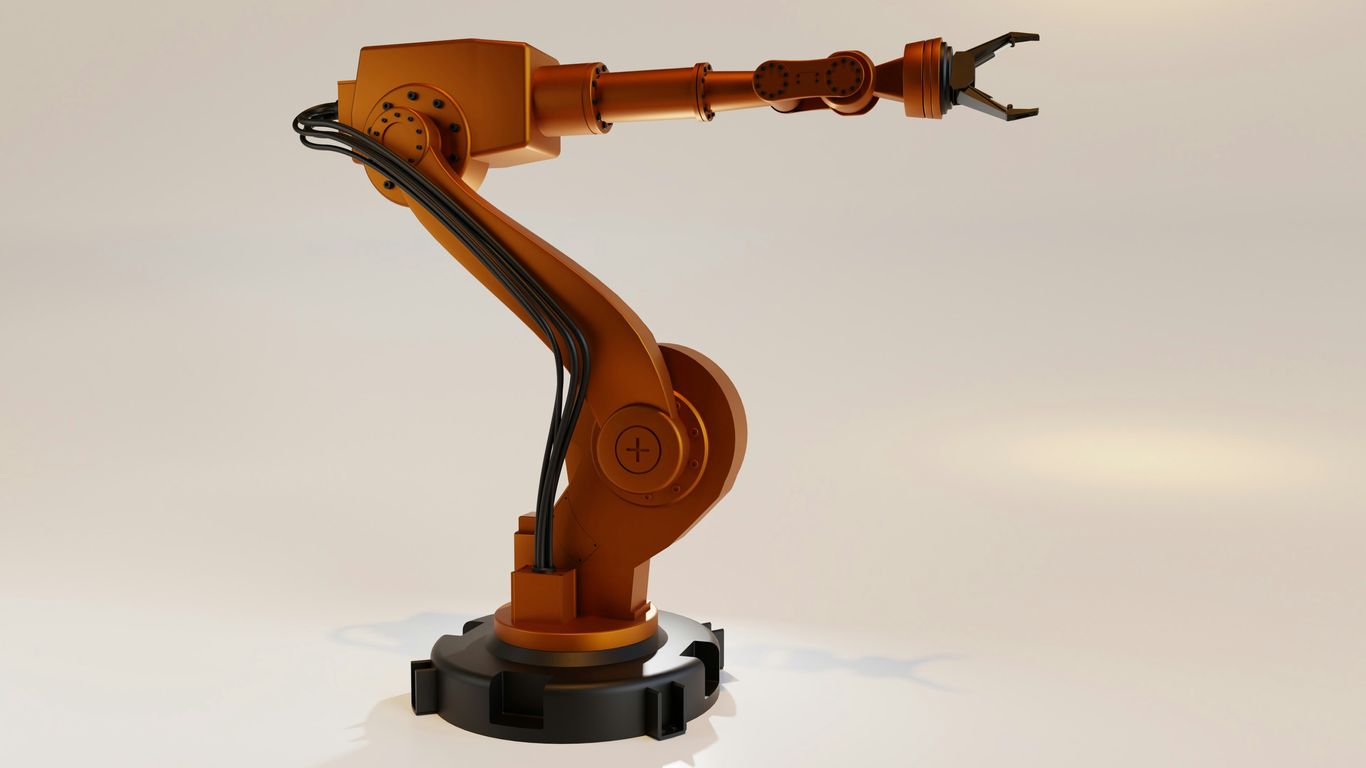
Key applications for physical AI
Physical AI becomes commercially meaningful when it improves a repeated physical process under real constraints. Warehouses, factories, farms, hospitals, and homes all present different combinations of variation, safety requirements, and economic pressure. The best application is not necessarily the one with the most impressive demonstration; it is the one where the system can operate reliably enough to justify deployment.
The application landscape ranges from narrow industrial workflows to more open-ended assistance. In each case, model capability is only one part of the business case. Integration, maintenance, worker acceptance, uptime, and liability can matter just as much.
Warehouse and manufacturing automation
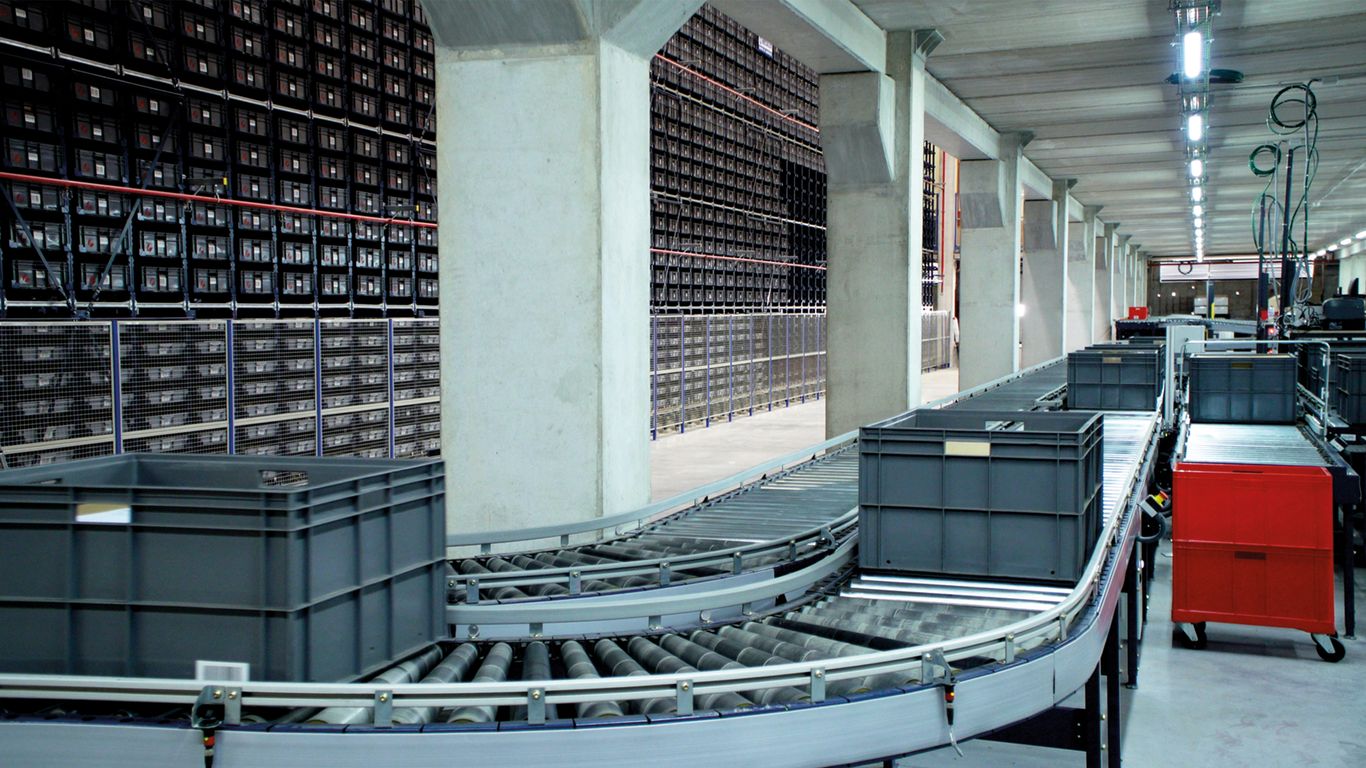
Warehouses and factories provide structured environments, but they are not perfectly static. Inventory changes, packaging varies, and production lines must accommodate exceptions. Foundation models can help robots interpret visual variation, handle more object types, and coordinate tasks that previously required extensive reprogramming.
Manufacturing is already moving beyond fixed automation toward perception, inspection, machine tending, assembly, and material handling. A practical system still needs deterministic safety zones and predictable cycle times. The model earns its place by reducing configuration work or improving flexibility without undermining those requirements.
Household and service robots
Homes are much less controlled than factories. Furniture, lighting, clutter, pets, and human routines change continually, while tasks such as tidying involve common sense and social judgment. A household robot therefore needs better uncertainty handling than a machine operating beside a fixed conveyor.
Service settings create a similar tension. A robot in a hotel, shop, or office must navigate shared spaces and communicate clearly when it cannot complete a request. Early deployments are likely to favor bounded tasks where the environment and acceptable behavior can be defined in advance.
Healthcare, agriculture, and logistics
Healthcare robotics must account for vulnerable people, sterile procedures, privacy, and strict accountability. Agriculture introduces outdoor variation, irregular objects, weather, and seasonal changes. Logistics combines mobility, manipulation, scheduling, and interaction with existing infrastructure.
Across these sectors, foundation models may support perception and task planning while specialized systems enforce domain rules. The model should not be treated as a replacement for clinical judgment, agricultural expertise, or operational controls. Its role is to make physical systems more adaptable within a carefully defined envelope.
Humanoid robots and general-purpose assistants
Humanoid designs are attractive partly because human environments already contain stairs, shelves, tools, and workstations built around the human body. Their versatility also creates a harder control problem: many degrees of freedom, complex balance, and frequent interaction with people. A general-purpose assistant must coordinate locomotion, manipulation, perception, and dialogue.
The commercial question is whether that flexibility produces enough value to offset mechanical and operational complexity. The answer will depend on repeatable deployments, not only on demonstrations. A useful overview of humanoid robot deployment makes that distinction central by focusing on utility, safety, integration, and task repeatability.
The challenges of deploying robot foundation models
Moving from a research environment to the physical world exposes failure modes that benchmarks may underrepresent. A model can be accurate on average and still be unsafe during a rare collision, an ambiguous command, or a sensor failure. Deployment therefore requires an engineering discipline that treats uncertainty as a first-class property.
Costs also extend beyond model training. Operators need data pipelines, monitoring, fallback behavior, hardware maintenance, and procedures for updating a policy. The economics of a robot foundation model are inseparable from the complete system around it.
Safety, reliability, and predictable behavior
Safety begins with physical limits and continues through software policies, emergency stops, collision detection, and human supervision. A model should know when it is uncertain, but uncertainty estimates are themselves imperfect. The safest architecture limits what a learned component can command and verifies actions before execution.
Reliability also means consistency. A robot that completes a task nine times out of ten may be useful in some low-risk settings and unacceptable in others. Developers must measure recovery behavior, near misses, and degradation over time rather than reporting only successful demonstrations.
Physical intelligence is useful only when its behavior remains legible under pressure.
That principle affects both design and deployment. Operators need to understand why a robot stopped, what it believes it sees, and which fallback will run next. Interpretability will not solve every control problem, but opaque failures are difficult to diagnose and harder to trust.
Latency, compute requirements, and edge deployment
Robotic control is time-sensitive. A cloud round trip may be acceptable for a high-level instruction but too slow for collision avoidance or balance correction. Onboard inference reduces dependence on connectivity, yet it introduces limits on memory, energy, thermal design, and model size.
The resulting architecture is often hybrid. A larger model may handle planning or occasional updates, while smaller models and conventional controllers run at the edge. Hardware-software co-design becomes important because the right model is partly determined by the processor, sensors, battery, and actuator dynamics available on the robot.
Data quality, privacy, and model bias
Robot datasets can encode the conditions in which they were collected: particular homes, factories, cultures, operators, object types, and lighting environments. A model trained on narrow data may perform unevenly when deployed elsewhere. Bias is not only a social concern; it can become a practical safety issue if the system misclassifies people, objects, or spaces.
The risks resemble those documented in algorithmic bias across financial AI, where historical data can reproduce or amplify unfair patterns. Robotics adds physical consequences and sensitive sensor streams, including video recorded in private spaces. Data governance must therefore address consent, retention, access, and the traceability of training examples.
Sim-to-real transfer and hardware compatibility
Simulation offers scale and control, but reality contains unmodeled details. A gripper may flex differently than expected, a floor may produce unexpected friction, or a camera may saturate under a new light source. Hardware changes can invalidate assumptions about reach, force, timing, and calibration.
Teams can reduce these risks through randomized simulation, real-world validation, and explicit hardware interfaces. They should also test graceful degradation: what happens when a sensor becomes noisy, a tool is missing, or the intended grasp fails? Transfer is not a one-time handoff from simulator to robot; it is a continuing calibration process.
Evaluating robot intelligence in the real world
Evaluation needs to reflect the operating envelope rather than a single success score. Useful tests vary objects, environments, users, lighting, task instructions, and failure conditions. They measure completion, time, intervention rate, recovery, energy, damage, and safety incidents.
NVIDIA Isaac GR00T appears in coverage that highlights generalization, safety, simulation-to-reality pipelines, and edge computing. Those dimensions point toward a more complete evaluation model: intelligence is not just whether the robot can perform a task, but whether it can do so repeatedly, within limits, across the conditions that matter to an operator.
How to evaluate and build with robot foundation models
A development team should begin with the operating environment and the cost of failure, not with the largest available model. The right architecture may combine a generalist policy with specialized perception, planning, and control. It should also define what the model is allowed to do and which decisions remain deterministic.
Evaluation then becomes an ongoing loop of data collection, testing, deployment, and review. The goal is not to remove all uncertainty, which is unrealistic, but to bound it and expose it before it reaches users or workers.
Choosing between general-purpose and specialized models
General-purpose models are attractive when tasks, objects, or environments change frequently. Specialized models can be smaller, faster, easier to validate, and better suited to a stable workflow. A team should compare the value of transfer against the cost of added complexity and compute.
A hybrid design often makes sense. A generalist model can interpret intent and propose a plan, while specialized modules handle grasp validation, localization, collision avoidance, or safety certification. The decision should follow the task’s variation and risk profile rather than the novelty of the model category.
Important benchmarks and performance metrics
A meaningful benchmark specifies the robot, environment, task distribution, allowed interventions, and failure definition. Completion rate alone can hide long pauses, unsafe behavior, or extensive operator correction. Repeated trials across unfamiliar conditions are more informative than a single polished run.
Teams should track metrics such as success rate, intervention frequency, recovery time, latency, energy use, collision or near-miss rate, and performance drift. They should report confidence intervals and failure cases where possible. That makes comparisons more useful for engineers and investors alike.
Integrating models with robot hardware and control systems
Integration starts with interfaces. The model needs calibrated observations, a clear action space, timing guarantees, and a way to receive feedback from the controller. Engineers must account for coordinate frames, actuator limits, sensor dropouts, and the difference between a proposed action and the motion the hardware can actually execute.
A system should also preserve observability. Logs of inputs, model outputs, controller responses, and outcomes make it possible to reproduce failures and improve the dataset. The integration layer is often less visible than the model, but it determines whether a promising policy can become a maintainable product.
Using safeguards, monitoring, and human oversight
Safeguards can include geofencing, speed and force limits, action validation, redundant sensing, emergency stops, and restricted tool access. Monitoring should identify uncertainty, unusual sensor patterns, repeated failed attempts, and changes in the environment. Human oversight can range from approval of high-risk actions to intervention only after a defined fault.
A useful interface makes supervision efficient rather than asking a person to watch every movement. For some systems, a human may approve a plan; for others, the person may correct a grasp or label a failure. These interactions create valuable operational data while keeping responsibility visible.
Where robot foundation models are headed next
The next phase will likely focus less on a single universal model and more on complete stacks that combine data engines, simulation, models, controllers, and deployment tooling. Better world representations, more efficient edge inference, and improved transfer across embodiments could expand the range of viable tasks. At the same time, evaluation and governance will become stronger differentiators as robots enter shared human spaces.
Physical AI will mature on the long arc of infrastructure, not on demonstrations alone. The systems that endure will be those that connect broad learned behavior with measurable limits, useful interfaces, and disciplined operational feedback. For builders, that makes the central question practical: which part of a physical workflow benefits from generalization, and how can the rest of the system make that benefit safe?
The surrounding ecosystem is also becoming more specialized. A company such as Chris Gulli Group illustrates how AI can be positioned within a broader digital services ecosystem, while NFC tags show a simpler way to connect physical objects with digital actions. These are not substitutes for robot intelligence, but they clarify a useful design principle: physical-digital systems become valuable when the interface is explicit and the user knows what will happen next.
The same principle applies to multimodal research beyond robotics. AI music videos combine audio, visual generation, and creative direction, showing how models can coordinate different forms of information without implying that one system solves every production problem. Robotics faces a harder version of that coordination because its outputs move through the world and can cause physical consequences.
Conclusion
Robot foundation models are best understood as a new coordination layer for physical AI, not as a replacement for mechanics, control, or safety engineering. They can make robots more adaptable by connecting perception, language, planning, and action across tasks, but dependable deployment depends on careful data, hardware-aware training, real-world evaluation, and clear limits. The field’s durable progress will come from systems that generalize usefully while remaining measurable and governable.
Frequently Asked Questions
What is a robot foundation model?
A robot foundation model is a pretrained AI system that can be adapted to multiple robotic tasks by connecting observations, instructions, and actions. It typically works as part of a larger stack that includes sensors, controllers, and safety systems.
How is a robot foundation model different from a traditional robot program?
Traditional robot programs often specify task behavior through engineered rules and modules. A foundation model learns broader representations from data, which can help it adapt to variation, while conventional planning and control remain important for precision and safety.
What data do robot foundation models need?
They can use robot trajectories, human demonstrations, simulation, video, language, and sensor data. The most useful datasets include varied environments, failures, recoveries, and outcome information rather than only successful demonstrations.
Can robot foundation models control any robot?
No. Robots differ in their bodies, sensors, actuators, action spaces, and control interfaces. A model may transfer concepts across platforms, but calibration, adaptation, and platform-specific control are usually required.
Why is sim-to-real transfer difficult?
Simulation cannot perfectly reproduce contact dynamics, sensor noise, latency, materials, lighting, or human behavior. Techniques such as domain randomization and real-world fine-tuning reduce the gap, but deployment still requires extensive validation.
How should robot intelligence be evaluated?
Evaluation should include repeated trials across objects, environments, users, and failure conditions. Useful metrics include success, intervention rate, recovery, latency, energy, damage, near misses, and performance drift.
Will robot foundation models make robots fully autonomous?
They may expand the range of tasks robots can handle, but full autonomy is not a guaranteed outcome. Dependable autonomy requires capable models alongside reliable hardware, feedback control, safeguards, monitoring, and appropriate human oversight.