Key Takeaways
This article examines the current state of neutral-atom architectures, highlighting their unique advantages and the path toward practical, error-corrected computing.
- Neutral-atom systems utilize individual cold atoms as high-precision, identical qubits.
- Optical tweezers enable the reconfigurable and scalable movement of atoms in a vacuum.
- Entanglement is achieved by exciting atoms to Rydberg states, allowing for long-range connectivity.
- Challenges include maintaining high fidelity across large arrays and managing precision control hardware.
- Ongoing research is bridging the gap between current noisy processors and fault-tolerant machines.
Understanding neutral-atom quantum computing
Quantum computing platforms are currently diversifying beyond traditional superconducting circuits, with one architecture standing out for its intrinsic hardware uniformity. By utilizing atoms in their natural state, these systems sidestep many of the fabrication complexities found in manufactured solid-state qubits. This approach provides a high degree of control over quantum states, which is essential for scaling complex circuits toward practical utility.
Defining neutral-atom architectures
Neutral-atom architectures function by trapping individual, non-ionized atoms within highly specific spatial arrangements. Unlike machines that occupy fixed locations on a silicon substrate, these systems provide a dynamic environment where qubits can be rearranged and moved during a computation. This agility presents a fresh path for quantum information processing, as it allows developers to reconfigure the connectivity of their processors on the fly to match specific algorithm requirements.
Distinctions from superconducting and trapped-ion qubits
While superconducting processors like those found in IBM Quantum leverage microscopic electronic oscillations, neutral atoms rely on the internal energy levels of the atoms themselves. Unlike trapped-ion systems, which typically use electromagnetic fields to hold charged ions in linear chains, neutral atoms are held in place by intense, focused light. This removes the strong Coulomb repulsion between charged particles, permitting much higher densities of qubits in a tighter space.
The significance of laser cooling for qubit stability
Stability in a quantum system relies on minimizing the thermal motion of the particles involved, which can act as a source of decoherence. Laser cooling techniques effectively freeze these atoms, bringing them to micro-kelvin temperatures and ensuring their internal states remain isolated from environmental thermal noise. Maintaining this deep cold state for extended periods is a foundational challenge for operational stability and high-fidelity logical operations.
The mechanism of optical tweezers
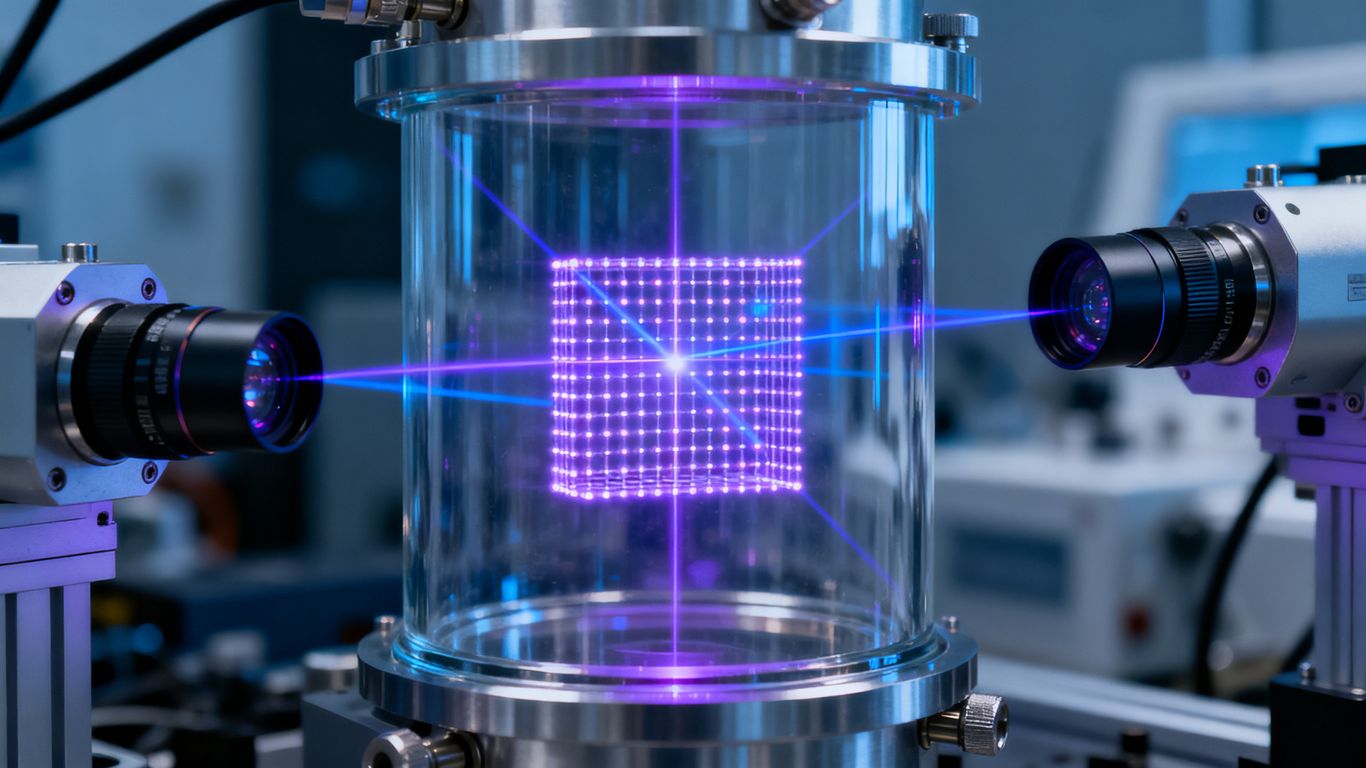
The ability to exert precise physical control over individual particles is what separates modern neutral-atom hardware from early laboratory setups. By using structured light fields, engineers can act on atoms with extreme accuracy, creating a programmable environment that functions like a dynamic optical lattice. These systems move beyond fixed chip layouts by using light as both the memory and the bus for quantum information.
Trapping individual atoms with light
Optical tweezers use highly focused laser beams to create potential wells that hold atoms in place against various physical disturbances. This process relies on the interaction between the atom’s polarizability and the gradient of the light field, allowing for the stable trapping of atoms within a vacuum. The resulting trap acts as a site for holding a qubit, ensuring it stays positioned while other system operations occur around it.
Arranging atoms into reconfigurable arrays
Once trapped, these atoms can be moved to form complex spatial patterns, often grids or 3D structures, that are entirely reconfigurable. This versatility is a hallmark of neutral-atom quantum systems, enabling developers to design an hardware layout that is optimized for specific computational graphs. The ability to shift atoms between clock cycles introduces a new dimension to how we think about circuit topology.
Maintaining spatial control within vacuum chambers
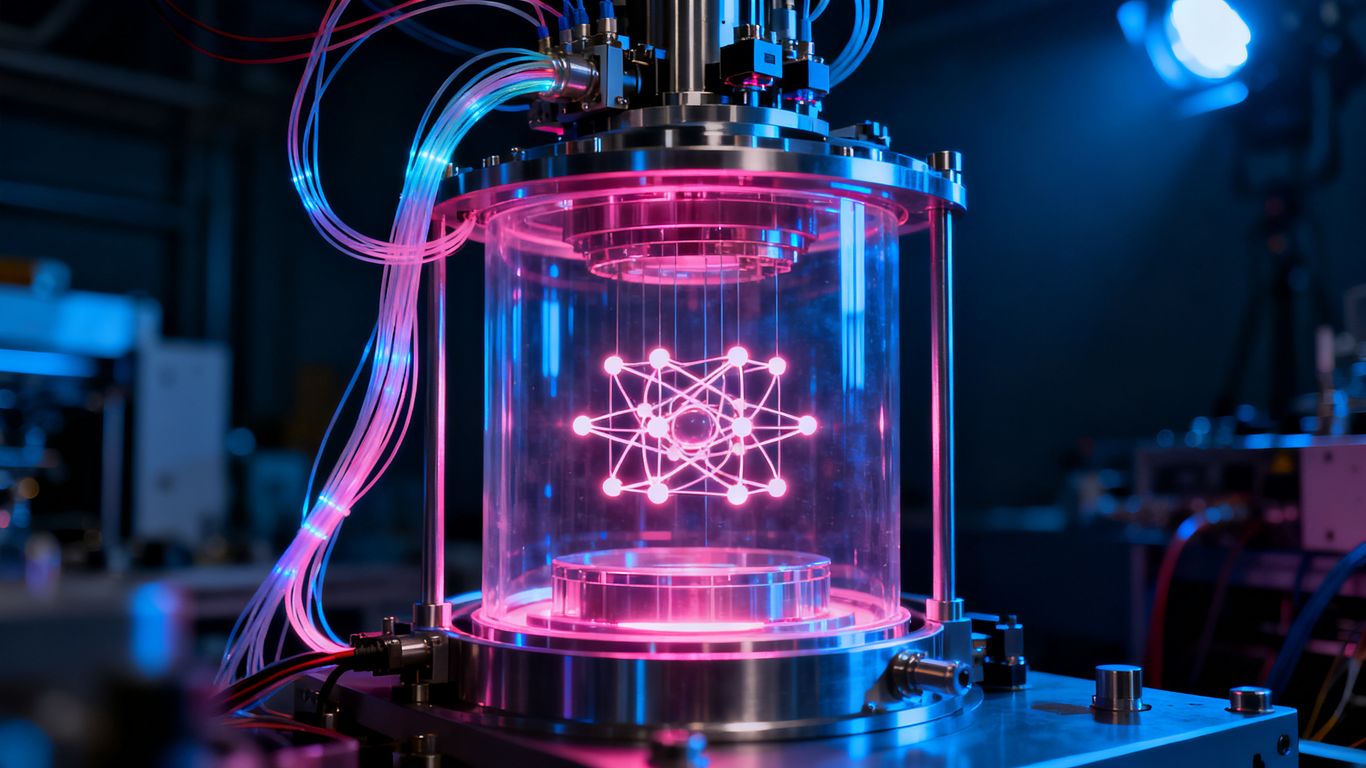
Vacuum chambers are required to keep the environment free of gas particles, as collisions could disrupt the fragile quantum states stored in the cold atoms. Within these chambers, engineers must maintain a delicate balance between light intensity and magnetic gradients to keep thousands of qubits steady. The precision of these systems determines the baseline error rates of the processor, as any shift in position can directly impact the fidelity of nearby quantum gates.
Managing quantum gates and connectivity
Effective computation requires interaction between qubits, a process that is notoriously difficult to scale in traditional architectures. Neutral-atom systems address this bottleneck by leveraging long-range atomic interactions, which allow for a more flexible and, in some cases, lower-overhead execution of logical gates.
Excitation to Rydberg states for entanglement
Entanglement is generated by exciting two neighboring atoms into high-energy states known as Rydberg states, where their electron clouds swell to significant sizes. This transition allows the atoms to feel each other's presence over longer distances than would be possible in their ground states. This mechanism is central to the neutral-atom array concept, driving the interaction between qubits to execute quantum gates.
Enabling long-range interactions between atoms
Because Rydberg atoms can interact at distances spanning several microns, they provide a level of connectivity that is superior to the strictly nearest-neighbor models of superconducting chips. This allows the system to achieve a high degree of entangling power, essentially enabling multi-qubit gates without needing to swap qubits across the array repeatedly.
Implementing high-fidelity multi-qubit logic operations
Executing logic operations with high fidelity requires precise control over the laser pulses that drive the Rydberg transition, ensuring the gate duration is perfectly synchronized with the atom's interaction. The following table highlights standard metrics for managing these logic operations within the current research-to-industrial pipeline:
| Operational Stage | Primary Challenge | Impact on System |
|---|---|---|
| Gate Calibration | Pulse timing precision | Direct error mitigation |
| State Readout | Signal-to-noise ratios | Total fidelity threshold |
| Array Shuffling | Mechanical transit time | Clock speed overhead |
By carefully optimizing the gate pulses and reducing timing jitter, developers are pushing toward the high confidence levels needed for complex error correction, similar to the work seen in Willow quantum chip testing.
Advantages of the neutral-atom approach
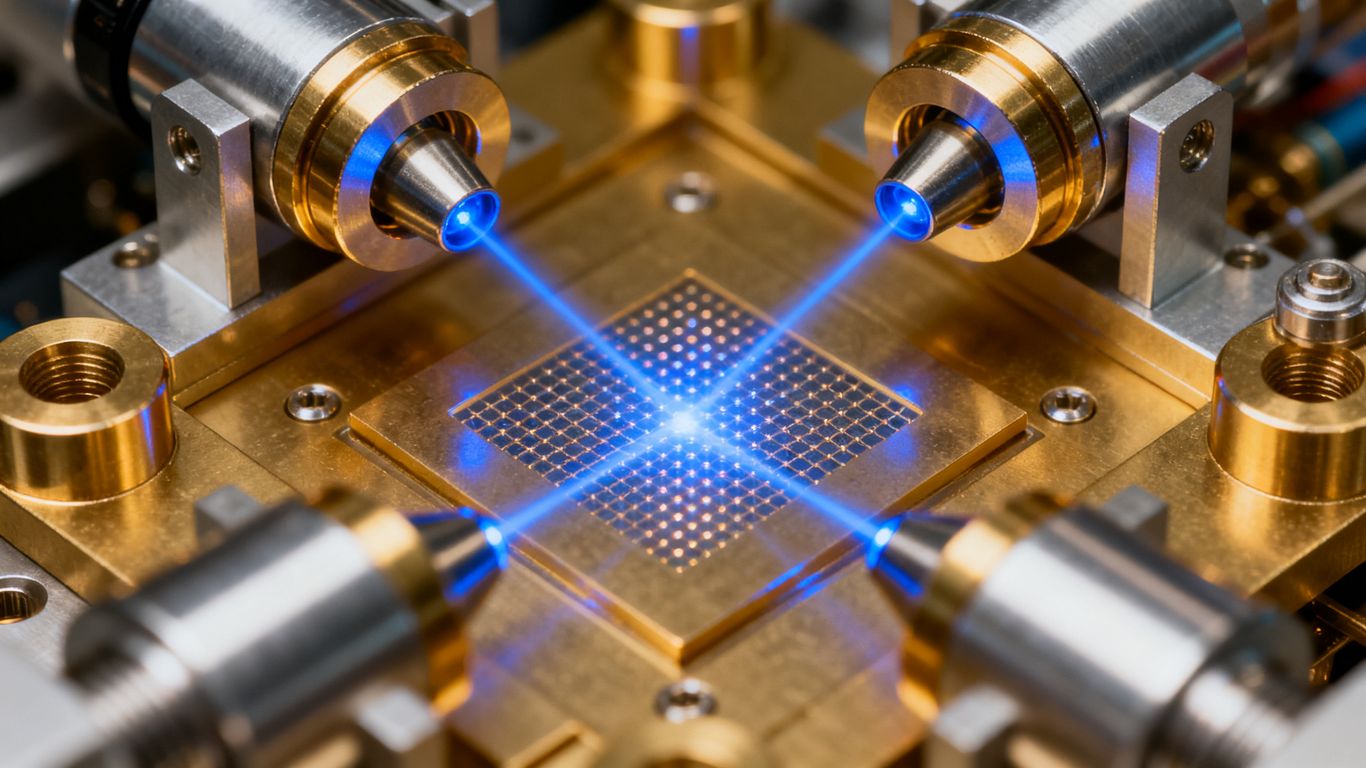
Neutral-atom technologies represent a distinct pathway toward fault-tolerant quantum computing, offering benefits that are particularly valuable as industry moves toward larger, more integrated machines. These systems are characterized by their natural, built-in consistency, which differentiates them from systems requiring extensive post-fabrication calibration.
Natural uniformity of identical qubits
Every atom of a given isotope is naturally identical to every other atom, meaning that the qubits themselves do not suffer from the manufacturing variances common in lithography-based hardware. This inherent uniformity simplifies the calibration steps, as experimentalists do not need to account for inconsistent coupling strengths or frequency offsets between different qubit locations on the array.
Superior connectivity and scalability potential
- Qubits can be rearranged to optimize gate connectivity for specific algorithms.
- The absence of physical wiring to each individual qubit reduces thermal load.
- Long-range Rydberg interactions minimize the need for multi-step swaps.
- Arrays can be scaled by extending the vacuum chamber and laser field coverage.
This inherent flexibility provides a clear advantage in how we scale processors while preserving coherence, a massive step forward compared to earlier methodologies.
Extended coherence times in isolated environments
Because neutral atoms are physically suspended in a vacuum and manipulated via light, they remain exceptionally well-isolated from external interference. This physical isolation allows the quantum state to endure longer than it would on a circuit board, providing a longer window for performing gate operations before decoherence occurs.
Technical hurdles to widespread adoption
Getting a system from a lab bench to a stable computing product involves overcoming significant engineering constraints beyond simple physics. While the atomic physics is well-understood, scaling the control electronics remains a non-trivial deployment challenge.
Maintaining gate fidelity during operations
Improving gate fidelity is difficult because even minor fluctuations in laser intensity or phase can translate to logical errors. This requires the development of ultra-stable optical systems capable of controlling hundreds of lasers simultaneously without adding latency or noise to the system.
Precision requirements for vacuum and laser control systems
Maintaining the ultra-high vacuum environment while allowing for rapid, high-frequency control of the laser fields requires sophisticated optomechanical engineering. As the number of qubits increases, the weight of this infrastructure grows, making facility footprint and energy efficiency critical areas of research for quantum hardware providers.
Integrating error correction protocols at scale
Scaling toward fault tolerance requires not just more qubits, but a massive overhead of logical qubits to detect and correct errors in real-time. This integration remains one of the largest obstacles in the field, as it requires moving from a few dozen controlled qubits to thousands of interconnected, error-mitigated entities.
The industrial landscape of neutral-atom systems
The commercialization of neutral-atom technology is accelerating as startups work to prove their hardware can interface with real-world applications. This move from experimental physics to industry is reshaping how investors view the long-term feasibility of the field and its diverse computational paradigms.
Profiles of emerging commercial hardware providers
Several companies are leading this transition, focusing on the development of modular hardware that can be scaled effectively. Their research is focused on translating the stability of cold atoms into robust machines capable of solving optimization problems, which have direct value in logistical and mechanical industries.
Impact of academic research on hardware development
Academic research remains the backbone of the field, providing the underlying insights into Rydberg blockade mechanisms and quantum control that commercial entities eventually refine. The feedback loop between universities and private labs ensures that the latest innovations in cooling and trapping are quickly integrated into the next generation of processors.
Milestones toward fault-tolerant quantum computing
Reaching fault tolerance will be defined by the ability to keep logical qubits running indefinitely, correcting their own errors as they process information. Ongoing milestones currently focus on improving raw gate fidelity and demonstrating the successful implementation of surface codes in atomic arrays, marking the final shift from prototype to standard-setting machine.
Conclusion
Neutral-atom quantum computing offers a compelling architecture that harmonizes physical isolation with massive, programmable connectivity. By leveraging the natural properties of atoms and the precision of optical control, this platform addresses the scaling limitations faced by alternative approaches. As the industry advances, the focus will increasingly shift toward refining error correction and creating the software stacks necessary for businesses to reliably build at the quantum frontier.
Frequently Asked Questions
Why are neutral atoms considered better than manufactured qubits?
Neutral atoms are intrinsically identical because they are fundamental particles from nature rather than built components. This eliminates the manufacturing defects that lead to variation in solid-state systems, ensuring more predictable behavior across the entire processor.
How cold do these atoms need to be?
These atoms are generally cooled to micro-kelvin temperatures using lasers, which removes the heat that would otherwise introduce noise and destroy the quantum information.
Can neutral-atom computers handle the same algorithms as other platforms?
Yes, because these machines can implement digital, gate-based circuits, they can run many of the same quantum algorithms used on superconducting or ion-based systems while offering unique benefits for specific connectivity-heavy problems.
Does this technology require cryogenic dilution refrigerators?
Unlike superconducting systems that require extreme sub-kelvin refrigeration, neutral-atom systems often operate at higher temperatures, using laser cooling to reach the necessary states without needing massive dilution fridges.
What keeps the atoms in place during computation?
Optical tweezers, which are highly focused laser beams, create optical potentials that trap the atoms, allowing for the precise spatial control of each qubit throughout the operation of the machine.
Is scalability easier for neutral atoms than other types?
Neutral-atom platforms utilize high-density arrays that can be expanded in physical space more easily than systems requiring complex wiring to every qubit, simplifying the path to larger qubit counts.
When will neutral-atom systems become fault-tolerant?
Achieving fault tolerance is a major long-term objective for the industry; while current research is focused on improving fidelity and error mitigation, reaching universal fault tolerance will likely require thousands of additional logical qubits and sustained multi-year engineering efforts.