Key Takeaways
This year marks a definitive shift as the industry moves beyond basic demonstrations toward infrastructure-grade quantum architectures. These are the primary developments driving the field forward in 2026:
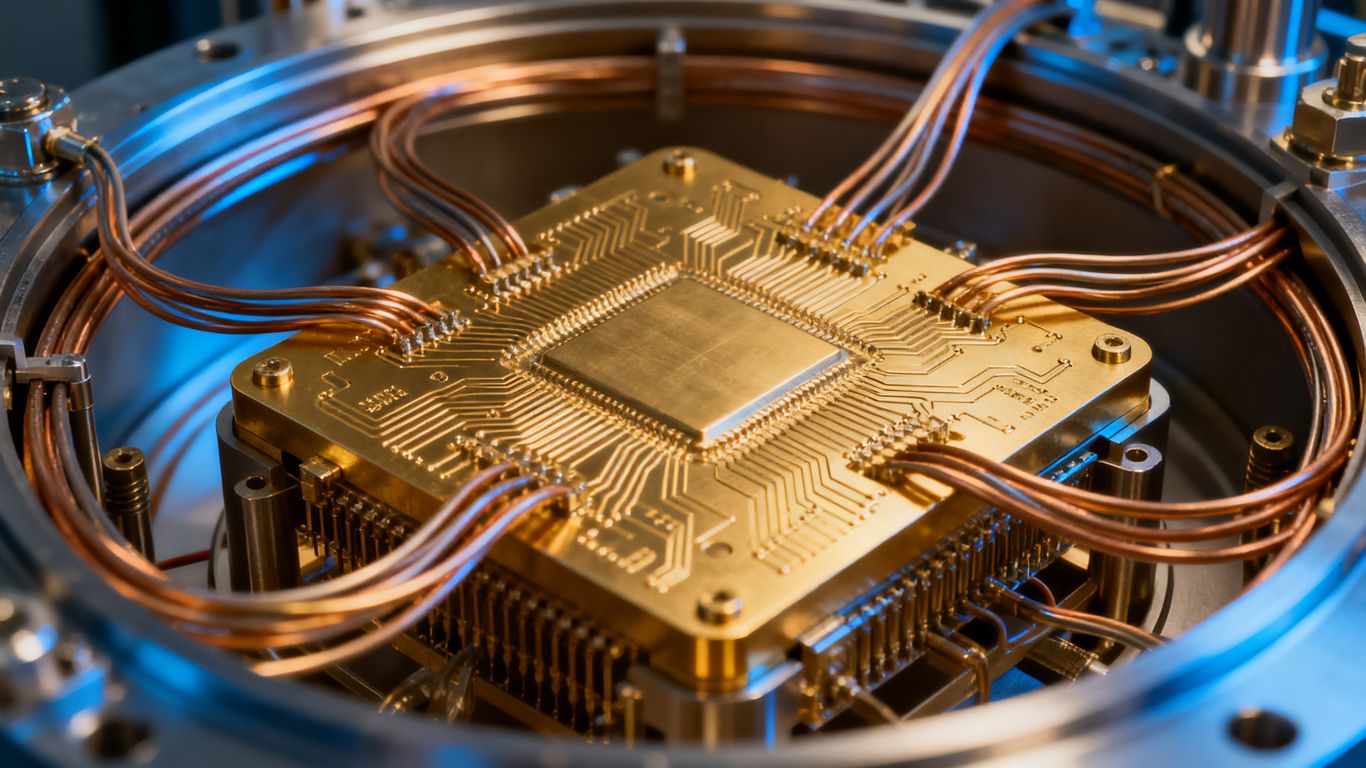
- Improved coherence times through material science advancements in superconducting chips.
- Experimental scaling of logical qubits using error-correcting codes.
- Greater adoption of unified software development kits across hybrid workflows.
- Strategic integration of quantum processors within existing high-performance computing centers.
- Standardization of post-quantum cryptographic protocols for secure data pipelines.
Advances in quantum hardware scalability
The landscape for physical quantum hardware has matured significantly, moving away from purely experimental designs to systems that prioritize long-term stability and interconnectivity. Researchers are no longer just chasing qubit counts but are focused on the quality and coordination of those units. These hardware advancements provide a more reliable substrate for the coming years of development.
Scaling neutral atom processor architectures
Neutral atom systems have emerged as a high-density solution for quantum operations by using optical tweezers to trap and manipulate individual atoms in highly controlled arrays. These architectures benefit from the ability to reconfigure atom positions dynamically during a computation, offering a distinct advantage in connectivity. As developers refine neutral atom technology, they are solving previous bottlenecks in cooling and state manipulation, making these processors increasingly viable for academic research and commercial scale-up.
Improvements in superconducting qubit coherence times
Superconducting circuits remain the backbone of many industry roadmaps, with significant progress made in material purity and environmental isolation to extend qubit lifespan. Engineers are now utilizing sophisticated fabrication techniques to minimize two-level system defects that historically caused decoherence. The current state of these processors is detailed below:
| Technology Type | 2026 Core Focus | Primary Hardware Metric |
|---|---|---|
| Superconducting | Qubit Coherence | 500+ Microsecond T1 |
| Neutral Atom | Array Density | 250+ Qubit Capacity |
| Photonic Chip | Interconnect Loss | <0.5 dB per Waveguide |
These technical improvements allow IBM Quantum to refine its modular approach, ensuring that processors can sustain complex gate operations without collapsing prematurely.
Integrated photonic circuits for quantum interconnects
Photonic interconnects enable the modular scaling of quantum processors by linking disparate chips into a single logical entity. By converting quantum states into optical signals, researchers can transmit information between modules with minimal noise, a critical requirement for building larger, distributed systems. While photonic quantum computing still faces hurdles with probabilistic gate operations, recent integration of these circuits onto standard foundry lines indicates a rapid path toward maturity.
Breakthroughs in quantum error correction
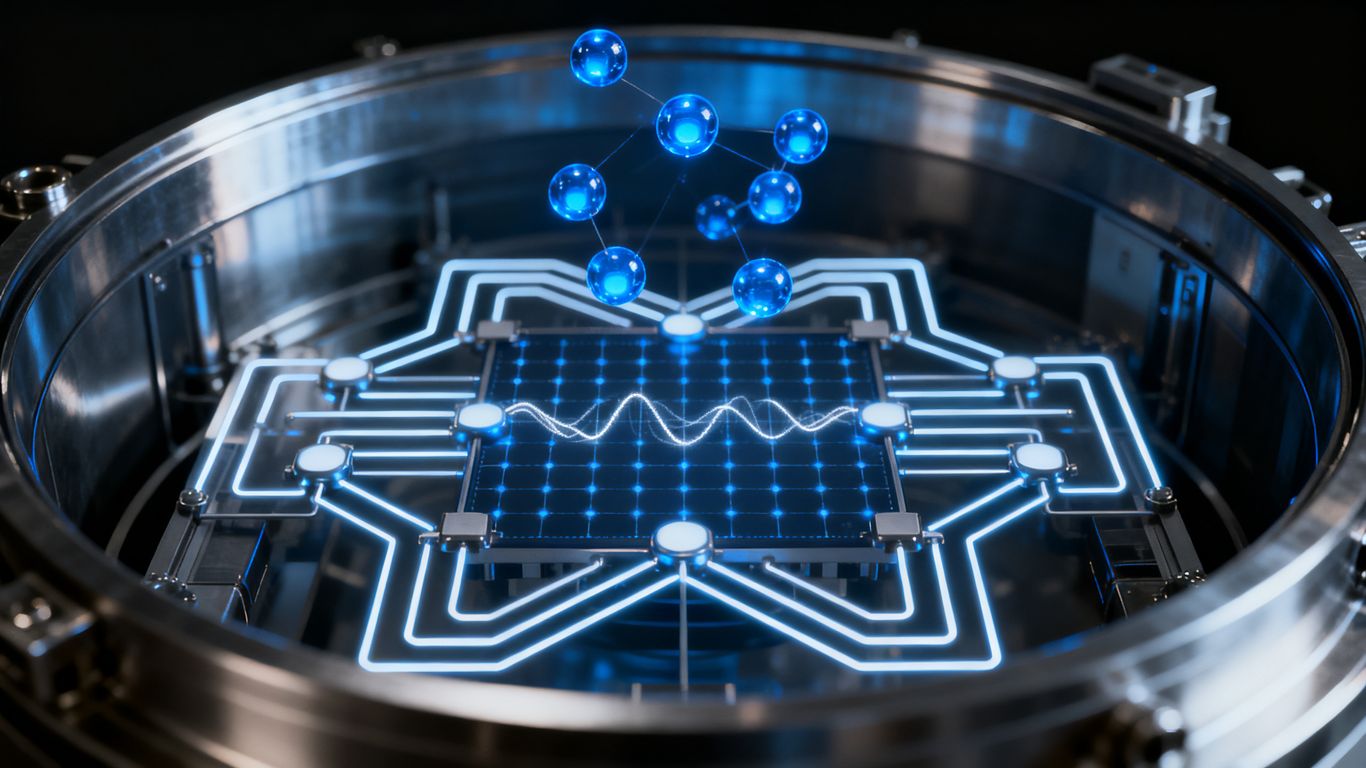
Error correction is the essential engine behind fault-tolerant computing, transforming inherently noisy physical hardware into stable, usable logical machines. This year, the focus shifted from theory to the physical validation of these code blocks in real workloads.
Achieving fault-tolerant logical qubits
Scientists are now successfully running operations on logical qubits constructed from several physical qubits, proving that error detection protocols can suppress noise faster than it accumulates. This capacity is vital for complex algorithms that require millions of gates. As Google Willow has demonstrated in recent benchmarks, hardware reliability is finally meeting the stringent requirements needed to sustain logical information over extended computation cycles.
Mitigation strategies for gate-level noise
Reducing gate-level noise involves a combination of active error suppression and physical shielding to ensure high-fidelity interactions between qubits. Organizations are currently deploying multiple layers of defense to protect sensitive calculations during runtime:
- Implementing gate-based calibration to neutralize crosstalk interference between neighboring qubits.
- Utilizing dynamic pulse shaping to prevent unwanted state rotation during high-speed gate execution.
- Applying digital error suppression on top of hardware-level isolation for maximum accuracy.
- Monitoring qubit health via continuous diagnostic toolstreams to catch drift early.
Effective noise mitigation is the most significant quantum computing milestones 2026 offered to date, as it enables algorithms to run deeper circuits than were previously possible.
Validation of scalable error suppression protocols
Validation requires consistent benchmarking of error rates across entire system architectures rather than individual component testing. By applying standard protocols to varied hardware modalities, companies can compare progress on a uniform scale. This iterative process ensures that code-based suppression improves in line with physical hardware manufacturing.
Progress in quantum software and middleware
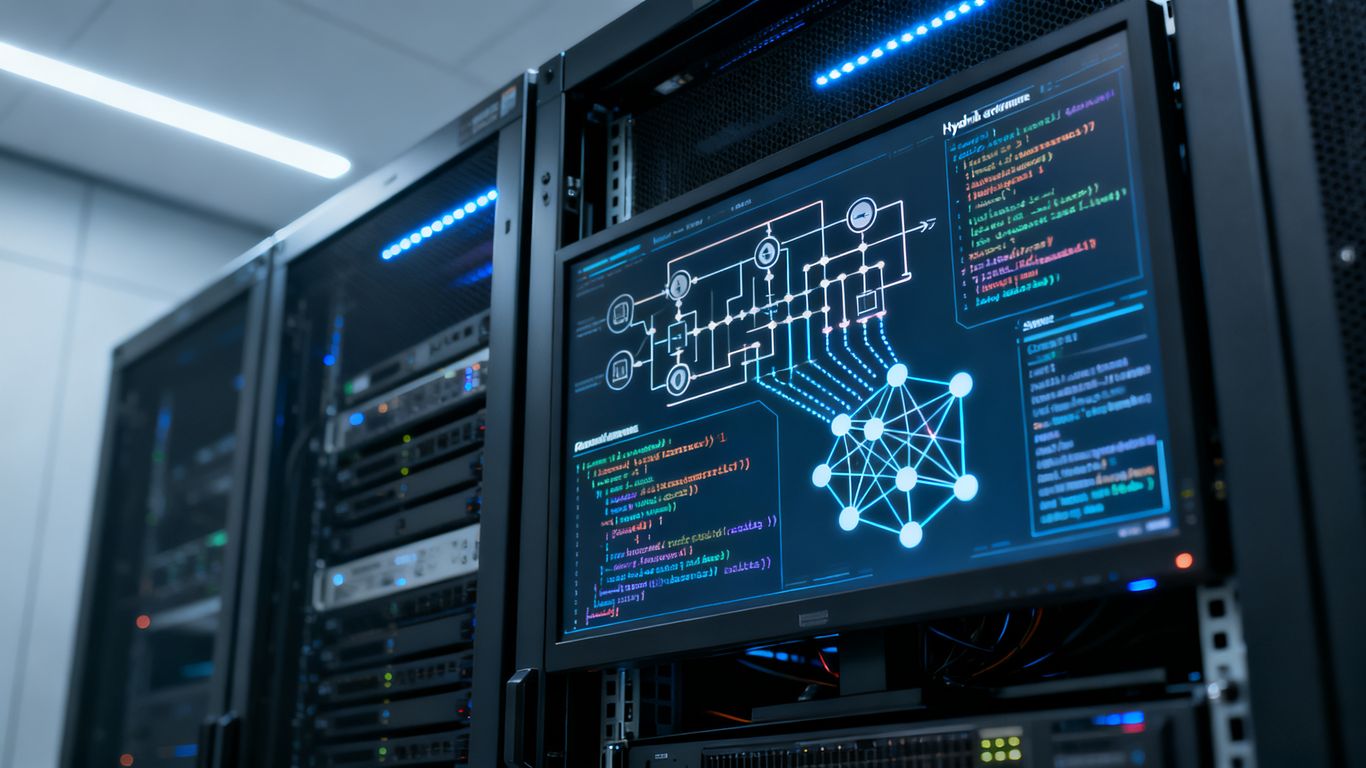
Software development has reached a tipping point where abstraction layers allow non-specialist engineers to design complex circuits. The transition involves shifting from low-level assembly-style coding to high-level framework-based optimization.
Evolution of quantum programming languages in 2026
Languages are now being built with a clearer focus on hardware independence and type safety, ensuring that developers can migrate code between backends without rewriting the underlying circuit logic. By switching quantum SDKs to modular environments, teams avoid vendor lock-in and optimize resource efficiency across a wider breadth of architectures.
Advancements in quantum-classical hybrid compilers
Hybrid compilers streamline the division of work between powerful classical CPUs or GPUs and quantum processors. By automating when a sub-routine should be sent to the quantum chip versus the classical host, these compilers reduce latency and ensure that hardware is utilized precisely when needed. This seamless integration is critical for practical applications where speed and accuracy are non-negotiable.
Cloud-based diagnostic toolsets for researchers
Accessing quantum hardware through cloud interfaces has democratized the field, allowing remote teams to profile their code in simulated environments before running them on physical hardware. Development of these quantum computing simulators has accelerated, giving researchers the feedback needed to catch subtle logic errors before deploying onto large-scale machines.
Real-world industry applications and deployment
Practical applications rely on the ability to embed quantum hardware into existing scientific and logistical workflows. This year has seen a spike in pilot projects that transition quantum utility from academic theory to commercial testing environments.
Quantum-enhanced modeling in material science
Material science has become the primary laboratory for quantum algorithms, as they can simulate molecular interactions that classical supercomputers struggle to map precisely. These simulations model atomic configurations in ways that lead to faster discovery of new catalysts and energy-efficient battery chemistries for industrial use.
Optimizing financial logistics through quantum algorithms
Logistics and risk analysis require the processing of massive datasets to determine the most efficient pathways for complex supply chains. Quantum algorithms, when combined with classical pre-processing, are demonstrating the ability to handle combinatorial optimization problems that represent a substantial performance jump over purely classical heuristics.
Milestone pilot projects in pharmaceutical drug discovery
Drug discovery involves the intensive modeling of protein-ligand interactions, a task where even a slight gain in resolution significantly reduces clinical trial failure rates. IonQ is currently engaged with partners to test these capabilities on trapped-ion platforms, focusing on speed and molecular accuracy.
Shifts in quantum security and cryptography
Security is shifting from a theoretical vulnerability concern to an active engineering requirement. As quantum computing advances, the urgency to upgrade global data infrastructure is becoming a priority.
Deployment of post-quantum cryptographic standards
Post-quantum cryptographic algorithms are being integrated into network communications to protect against harvesting attacks where sensitive data is intercepted now to be decrypted later. These standards are now the default for high-security environments, ensuring that information remains private even in a future where quantum machines are more powerful.
Benchmarking hardware against quantum-resistant protocols
Organizations are now rigorously testing the performance impact of quantum-resistant ciphers on existing network architectures. This validation phase is necessary to ensure that security updates do not introduce bottlenecks in high-throughput data streams.
Protecting sensitive data pipelines from future threats
Protecting data pipelines requires a layered approach, including quantum-safe encryption and quantum key distribution for ultra-secure communications. These strategies ensure that future computational capabilities do not jeopardize trust in modern finance and communication networks.
Conclusion
The developments witnessed in 2026 confirm that the transition from small-scale experimental rigs to reliable, error-corrected infrastructure is well underway. While the path to fault tolerance remains steep, the convergence of hardware progress, standardized software tools, and real-world pilot deployments provides a solid foundation for the technological shift ahead.
Frequently Asked Questions
What does fault-tolerant quantum computing actually mean?
Fault-tolerant computing refers to systems capable of correcting their own errors as they occur. By using redundancy within error-correcting codes, these machines can maintain stable states longer than their physical components alone would allow.
Why is neutral atom technology considered versatile?
Neutral atom processors use light to hold atoms in place, allowing for a reconfigurable layout. This gives developers the flexibility to change the geometry of their processing grid during active computation.
How do classical computers work with quantum processors?
Classical systems handle data pre-processing and post-analysis, feeding relevant portions of a calculation to the quantum controller. This hybrid workflow leverages the strengths of both technologies for efficiency.
What defines a logical qubit?
A logical qubit is a collection of physical qubits that act as a single, protected information unit. By working in concert, the group can detect and fix bit flips or phase errors that would compromise a single fragile physical qubit.
Why is error correction the highest priority for researchers?
Without error correction, quantum noise limits computation to very short, simple circuits. Only by fixing errors can machines perform the deep, complex logic necessary for real-world chemistry and optimization problems.
Are post-quantum cryptographic standards difficult to implement?
Implementation requires updating software and network protocols to recognize new mathematical structures. While it does not require brand new hardware, it is a massive logistical effort to secure every link in a global digital supply chain.
Is the race for quantum dominance over?
No single architecture has reached absolute dominance, and the field remains highly competitive. Organizations are pursuing multiple hardware modalities to find which will best meet the needs of large-scale, enterprise-ready computing.