Key Takeaways
Google's new processor represents a significant advancement in quantum hardware, proving that error rates can be lowered as the system scales. It demonstrates a massive speed advantage over classical supercomputing for specific benchmarks and signals a shift toward practical, fault-tolerant quantum applications.
- Improved quantum error correction through exponential error reduction.
- Capability to solve complex benchmarks in under five minutes.
- Architectural enhancements over previous generations like Sycamore.
- Integration with Cirq for hardware-aware circuit design.
- Foundation for future research in materials science and complex algorithms.
Defining the Google Willow chip
Evolution from Sycamore processor architecture
The Willow processor represents the latest iteration in a sequence of hardware developments aimed at stabilizing quantum states. While earlier architectures prioritized the initial demonstration of quantum advantage, the new design focuses specifically on the interaction between component scaling and error mitigation. This evolution allows the platform to maintain coherence across a larger qubit array than its predecessor, Sycamore, while maintaining predictable gate performance.
Core technical specifications and hardware design
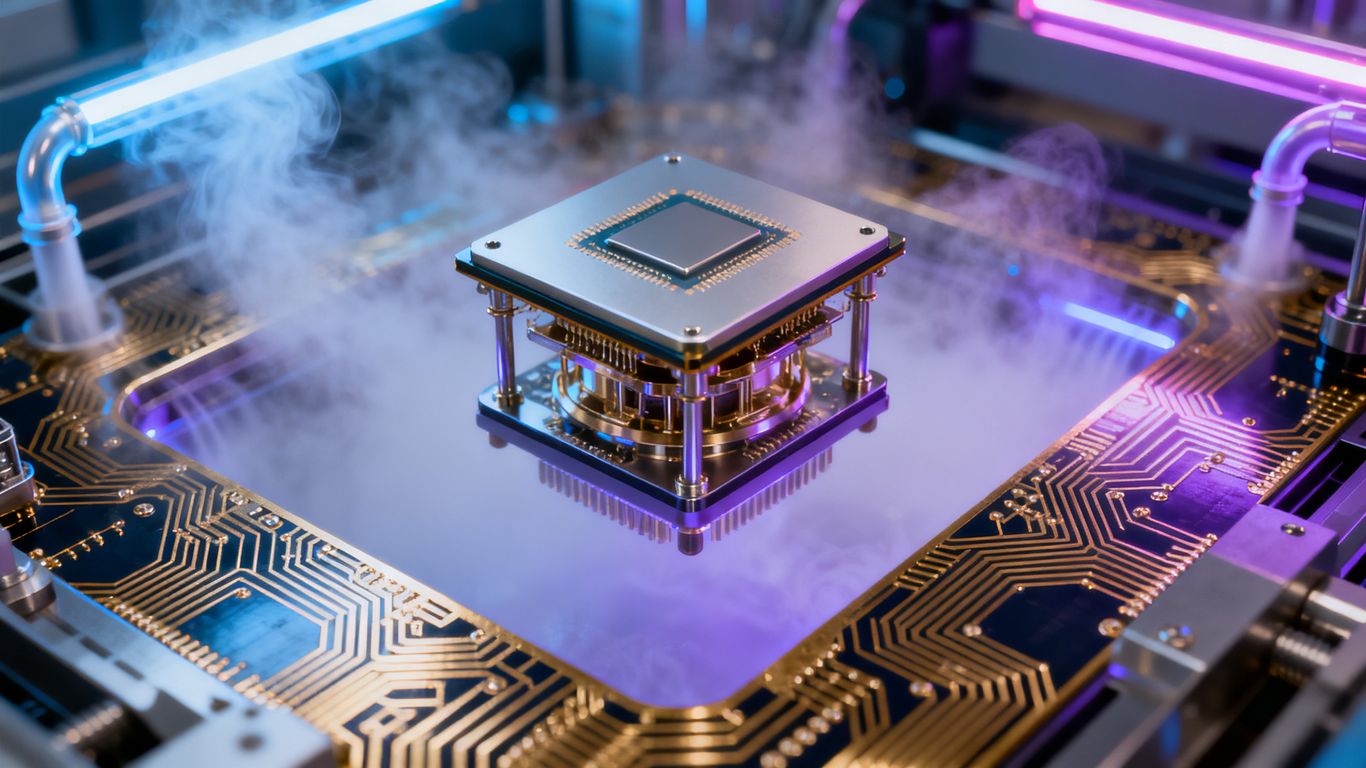
At the center of this hardware iteration is a 105-qubit array engineered to suppress environmental noise. The chip utilizes advanced superconducting loops that are precisely calibrated to manage high-speed logic gates. By refining the fabrication techniques of the underlying silicon, engineers have successfully managed the thermal footprint, which is necessary for scaling up to more complex circuits.
Role of Google Quantum AI in development
The engineering progress observed here is largely a result of dedicated efforts by the Google Quantum AI team. This group has focused on bridging the divide between theoretical model design and physical hardware implementation. By utilizing sophisticated control software, they are able to interface with the chip at a granular level, ensuring that every operation is tuned for maximum fidelity.
Positioning within the current quantum landscape
As the industry matures, the placement of this specific processor highlights a pivot toward utility-scale computing. Unlike early proof-of-concept hardware, this system is designed to stress-test the limits of error correction and algorithm execution. It serves as a benchmark for where the field currently sits relative to the goal of reliable, large-scale computation.
Innovations in quantum error correction
Improving logical qubit performance
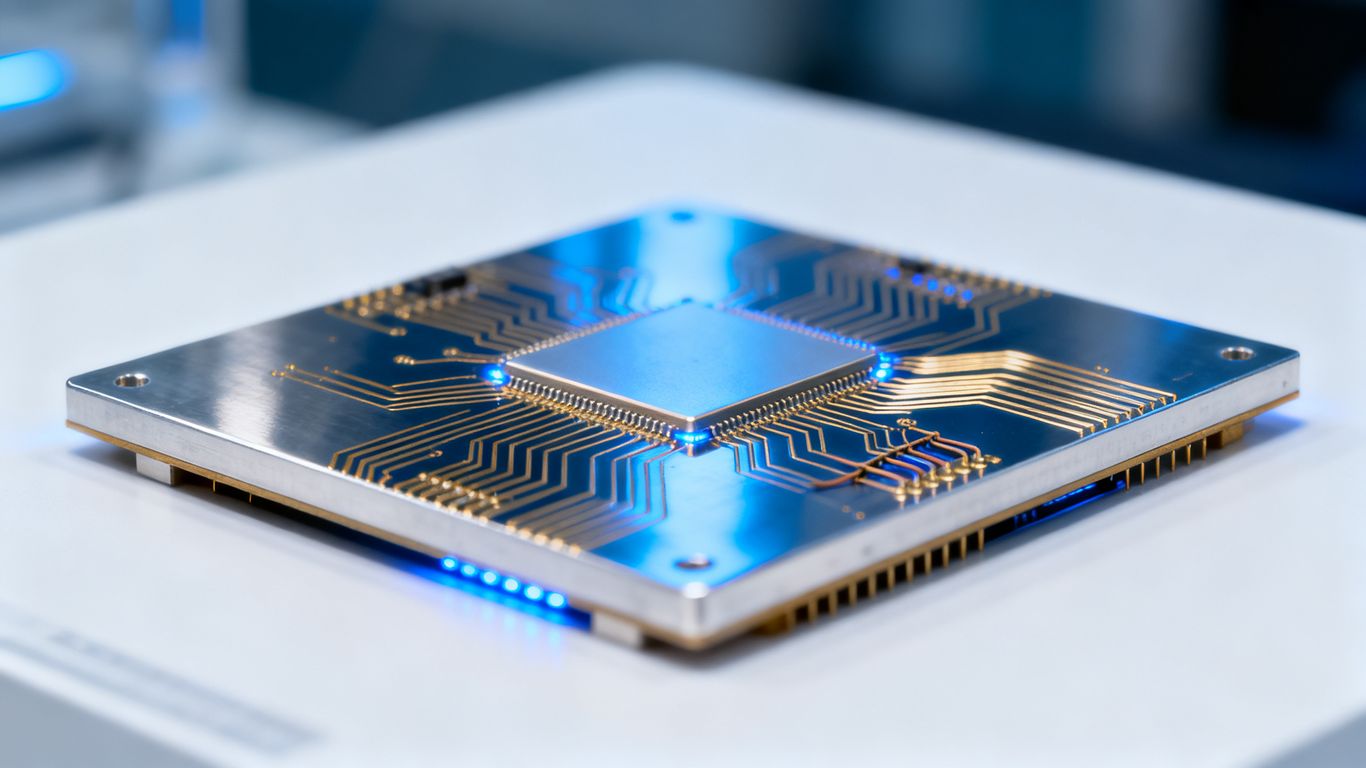
The primary focus of recent research has been the enhancement of logical qubit performance. By grouping physical qubits into error-detecting units, the system can effectively catch and correct bit-flips during computation. This advancement signifies that the platform is moving toward a fault-tolerant quantum systems architecture, where the reliability of the output remains steady even as the underlying gate operations become more frequent.
Scaling operational success with physical qubits
Scaling physical qubits while keeping error rates low remains the definitive hurdle for the field. The current implementation demonstrates that as the number of qubits increases, the corresponding error rates do not increase at an unmanageable pace. This linearity is a critical requirement for any machine intended to operate at high scales.
Significance of achieving lower error thresholds
Achieving lower error thresholds allows for longer and more complex computation chains. The hardware now operates within a regime where specific gates can be chained successfully, which was once thought impossible due to noise accumulation. This outcome has been verified through significant experimental testing at King's College London and other research institutions.
Mitigating system noise during long computations
System noise control is managed through highly active feedback loops. During actual operation, the controller monitors the environment for thermal and electromagnetic interference, adjusting pulse sequences to compensate for these ambient shifts. This active mitigation approach keeps the quantum signal sharp throughout the duration of the task.
Analyzing the performance of Willow
Benchmarking gate fidelity and hardware stability
Gate fidelity metrics demonstrate that the hardware remains stable even during high-density operations. When compared to previous industry standards, this processor shows less variance in gate behavior, which is essential for consistent result verification. The reliability of these gates is verified by running standardized tasks that check for deviations from expected state probabilities.
Interpreting observations of quantum echo phenomena
Researchers have successfully measured quantum echoes as a primary method for diagnosing system health. By reversing the direction of scrambling in a circuit, the team observed how information is recovered, gaining insight into the level of decoherence present. This experimental setup provides a detailed view of the chip's internal dynamics that was previously obscured by technical noise.
Data throughput and complex algorithm processing
| Task Type | Time Required (Willow) | Time Required (Supercomputer) |
|---|---|---|
| Standard Benchmark | < 5 Minutes | 10 Septillion Years |
| Random Circuit Sampling | Minutes | Thousands of Years |
| Quantum Echo Analysis | Hours | Effectively Infinite |
This table illustrates the massive computational gap between current quantum hardware and classical supercomputing methods for specific verification tasks. While classical machines struggle to map the probability space required for these simulations, the quantum chip processes the information natively. This throughput allows scientists to tackle algorithms that were once strictly theoretical, enabling new avenues for exploring molecular interactions and materials science models.
Verification through standardized benchmarking tests
The performance data is validated via a series of randomized benchmarking protocols that test both individual qubit states and multi-qubit gates. These tests compare the physical operation of the chip against mathematical models of ideal quantum behavior. Consistently positive alignment between experiment and theory validates that the chip is performing to its designed specification.
Comparing Willow to previous generations
Architectural improvements over earlier processors
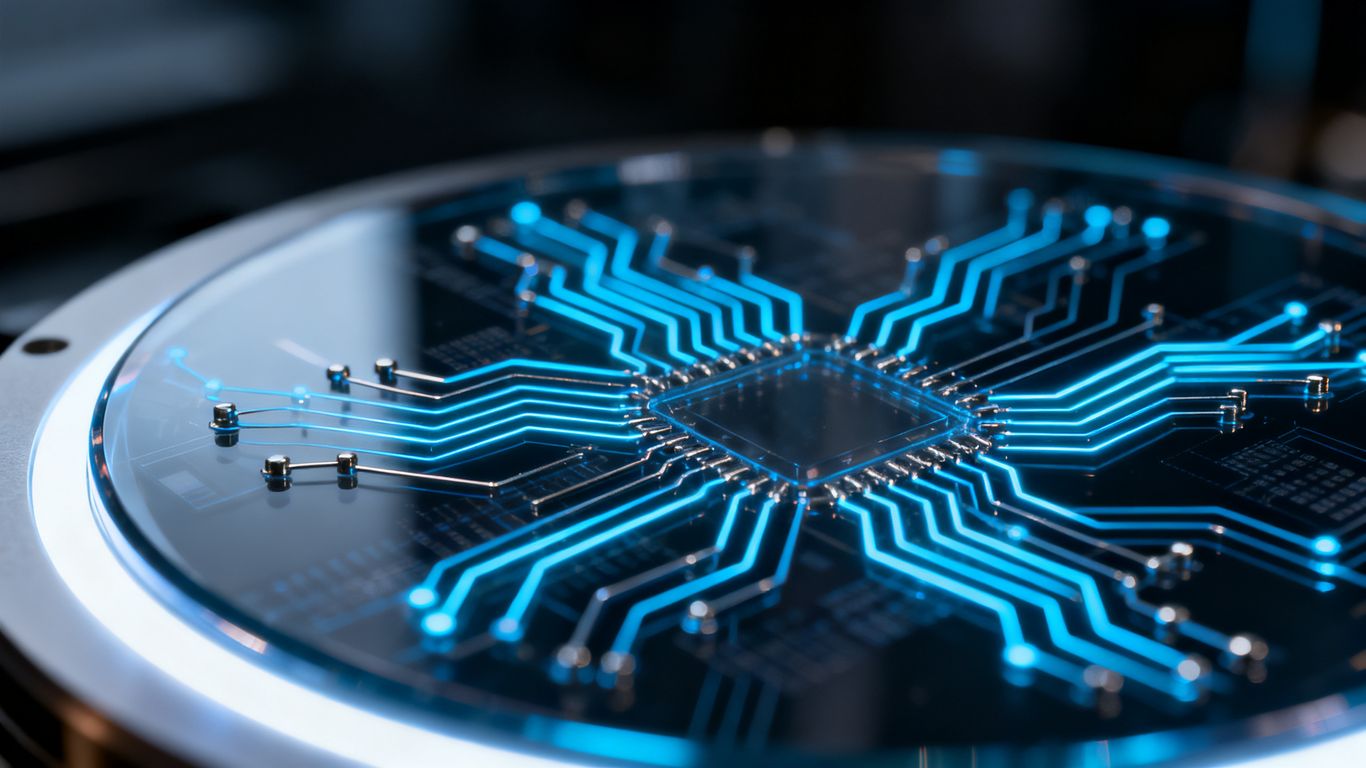
Compared to earlier generations, the current processor features improved wiring layouts that reduce physical space constraints. This has led to better connectivity between qubits, allowing for faster gate operations across the grid. These physical tweaks, while subtle, are the key to unlocking the higher performance observed in recent testing runs.
Advancements in overcoming crosstalk challenges
Crosstalk, where signal bleed between adjacent qubits ruins computational accuracy, has been significantly mitigated through novel microwave shielding designs. By isolating each qubit more effectively, the hardware can execute operations on multiple fronts without requiring a reset of the entire system state. This isolation has effectively doubled the operational capacity of the hardware.
Key milestones reached in computational complexity
With this release, the field has reached a major milestone concerning the sheer density of operations that can be performed simultaneously. Being able to address over a hundred qubits at once represents a transition from small-scale sandbox tests to a more robust machine setup. This shift is essential for researchers exploring real-world applications in drug discovery and complex optimization.
Assessing the jump in hardware reliability
- Enhanced thermal management modules.
- Stabilized pulse control for gate operations.
- Increased coherence times measured in microseconds.
- Scalable error detection during live benchmarks.
This jump in reliability is the result of years of meticulous iteration on the underlying physics of the superconducting circuits. By optimizing how these components interface with the cooling infrastructure, the overall system uptime has improved significantly. This increase provides researchers more time to run experiments before the system needs recalibration.
Practical implications for quantum computing
Accelerating the path to fault-tolerant systems
The availability of this hardware platform accelerates the timeline toward truly fault-tolerant machines. By establishing a baseline for error correction, future research can focus on algorithms that utilize these error-checked states for high-value applications. This move is essential for stakeholders looking to align quantum capabilities with industry-specific needs.
Real-world research applications and university collaborations
As seen with academic teams worldwide, access to this chip permits new experimental inquiry. Research groups can now simulate physical phenomena that exceed the capability of conventional methods. These collaborations are vital for ensuring that the development of the hardware remains grounded in practical, relevant science.
Impact on the global scientific research community
The global community has long awaited a platform that can genuinely test the limits of quantum operations without frequent failure. Providing this access allows researchers in various sectors to experiment with their own specific use cases. Such openness in the ecosystem promotes a faster development cycle for the entire field of quantum mechanics.
Shifting focus from proof-of-concept to utility
The field is moving from showing what is possible to demonstrating what is useful. By moving beyond simple demonstrations, the hardware is now capable of performing meaningful work on complex algorithms. This evolution, as highlighted in current quantum computing guides, signals that we are entering a new phase of research.
Challenges and future development
Current physical limitations of the hardware
Despite the recent progress, physical limitations involving decoherence and gate speed persist. The hardware still requires extremely low temperatures, and maintenance of the cryostat equipment is a resource-intensive endeavor. Bridging the gap from current performance to a fully commercialized machine will require further reductions in system noise and increased stability.
Scaling requirements for large-scale error correction
Scaling the current error correction protocols to support millions of logical qubits presents a massive engineering challenge. It requires a significant increase in control infrastructure, as each physical qubit must be individually monitored and corrected in real-time. This is essentially a hurdle regarding the mass integration of superconducting components.
Roadmap for subsequent Google quantum generations
Future versions are expected to focus on maximizing qubit density and refining the connection topology. The roadmap suggests a steady approach to building out the architecture while keeping the error rate low. By iterating on the current design, researchers aim to increase the operational duration of the machine beyond current limits.
Overcoming infrastructure hurdles for mass deployment
Deployment at scale requires a robust supporting infrastructure that goes beyond the chip itself. This includes specialized wiring, data processing pipelines, and a stable power source for the delicate cooling systems. Resolving these logistical hurdles will be the primary focus for the next several years of development.
Conclusion
The debut of Google's latest quantum processor marks a decisive step toward practical, large-scale computational power. By proving that error rates can be managed at scale, the team has validated a path forward for quantum technology that moves beyond purely theoretical demonstration. As the scientific community continues to leverage these high-fidelity systems, the potential for groundbreaking developments in areas like materials science and simulation remains on the horizon.
Frequently Asked Questions
What does the google willow chip do differently from previous processors?
The chip introduces enhanced error correction protocols and a more stable 105-qubit array that minimizes signal crosstalk, allowing for more sustained computational performance.
Is the current chip capable of replacing all classical supercomputers?
No, the current technology is specialized for specific quantum-native tasks. It is not designed to replace classical computers for general purpose computing or daily business operations.
How long until this technology is available for widespread commercial use?
The current generation remains in a research and experimental phase. Most experts suggest that it will be at least a decade before this technology reaches a stage of mass commercial utility.
What are the main obstacles still facing this chip?
Key challenges include the immense infrastructure required to cool and control the qubits, the complexity of scaling error correction to millions of physical qubits, and maintaining stable signal integrity.
How do researchers verify the results produced by the chip?
Verification is performed using standardized, randomized benchmarking tests that compare the quantum processor's outputs against mathematical predictions to ensure accuracy and limit noise-induced errors.
Does the chip rely on superconducting material for its operation?
Yes, the chip uses advanced superconducting loops, which are kept at extremely low temperatures to maintain quantum coherence and enable logical gate operations.
How can external researchers gain access to these technologies?
Access is typically managed through academic partnerships and dedicated research initiatives, such as those established with national quantum laboratories to foster collaborative breakthrough research.