Key Takeaways
Advancements in neutral-atom platforms are shifting the quantum computing paradigm toward scalable and highly interconnected architectures. This guide covers how these systems manipulate atoms to perform complex calculations with remarkable precision.
- Neutral atoms leverage natural atomic uniformity to provide consistent qubit states across the processor.
- Laser arrays and optical tweezers constitute the primary mechanism for isolating and moving atoms in vacuum environments.
- Rydberg blockade effects enable high-fidelity entanglement between physically distant yet controlled atomic qubits.
- Systems currently scale through modular control of thousands of atoms, advancing toward fault-tolerant architectures.
- Future integration relies on hybridizing these processors with existing cloud-based quantum classical infrastructure.
The fundamental principles of neutral-atom platforms

Neutral atom quantum computing is fundamentally shifting how researchers approach the physical realization of a qubit. Unlike superconducting circuits that require complex lithographic fabrication for every chip, these systems utilize identical atoms found in nature, such as Rubidium or Strontium, which possess no net electrical charge. This neutrality allows engineers to manipulate these particles with nature’s perfect qubits that avoid the variability often seen in manufactured components. By using highly focused light fields, researchers can isolate and position individual atoms with sub-micron accuracy.
What makes atoms neutral in quantum computing
Neutral atoms are defined by the balance between their positively charged nuclei and surrounding electron clouds. In this state, they respond minimally to external electromagnetic noise common in noisy electronic environments, preserving their quantum information for longer periods. This inherent stability makes them excellent candidates for representing binary states as either a ground level or a highly excited Rydberg state.
Trapping atoms with optical tweezers
Optical tweezers use the radiation pressure of tightly focused laser beams to exert an attractive or repulsive force on neutral atoms. By controlling the intensity and movement of these beams, scientists can create a 'trap' that holds an atom in place. This technique allows for the dynamic sorting and arrangement of atoms within a vacuum chamber, providing a level of geometric flexibility not possible with fixed-circuit architectures.
The role of laser arrays in qubit arrangement
Dynamic optical tweezers systems often rely on spatial light modulators to generate hundreds of individual traps simultaneously. These arrays map out an atom's location in three-dimensional or two-dimensional space, enabling the user to reconfigure the processor topology on the fly. Such reconfigurability is a centerpiece when discussing the neutral atom quantum computing explained concept as it applies to global research.
Hardware architecture of neutral-atom systems
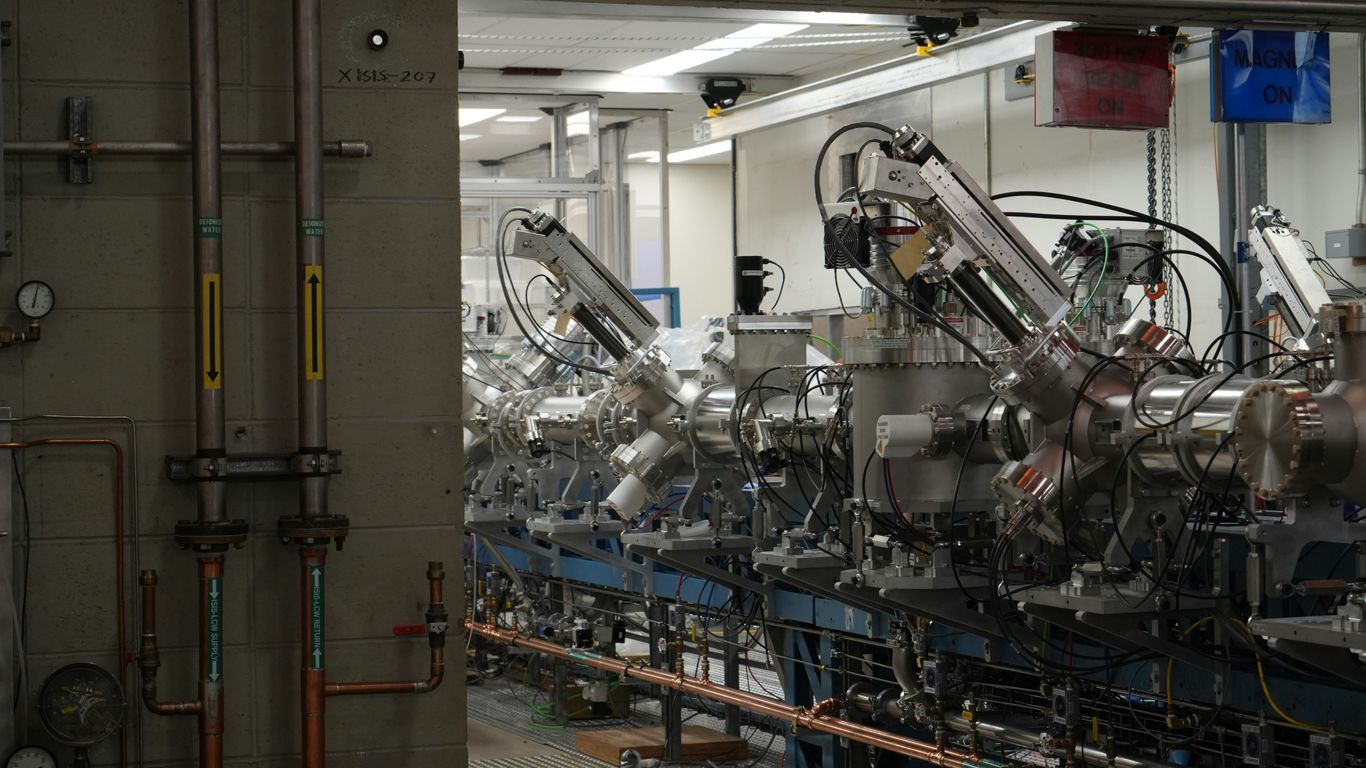
Building a neutral-atom processor requires a sophisticated environment that balances the need for extreme precision with the demands of macroscopic infrastructure. The core hardware involves a high-vacuum chamber where pressure is reduced to levels so low that atoms rarely collide with residual gas molecules. This isolation is essential for maintaining quantum coherence while control lasers interact with the atoms to perform logic operations.
Vacuum chamber requirements and environment control
Maintaining a pristine vacuum environment prevents decoherence caused by collisions with background gas. Within this chamber, laser-cooling stages reduce the atomic motion towards absolute zero temperature, essentially freezing the particles to a state of near-rest. This allows the system to resolve discrete energy levels and manipulate the internal state of each atom without thermal agitation interfering with the computing task.
Spatial arrangement and array scalability
Scalability in neutral-atom systems is achieved by simply adding more optical channels to the control laser system. Unlike other modalities, the spatial footprint grows linearly, and the platform can support hundreds or thousands of atoms in a single trap. The following table illustrates the components involved in maintaining these large-scale arrays:
| Component | Physical Role | Performance Goal |
|---|---|---|
| Vacuum Pump | Ensures atmospheric isolation | <10^-9 Torr vacuum |
| Laser Cooling | Reduces kinetic molecular energy | Micro-Kelvin temperature |
| Spatial Light Modulator | Controls atom positioning | High-fidelity beam routing |
Control systems for high-precision laser manipulation
High-precision laser systems are the muscle behind the neutral atom quantum computing approach, acting as both the trap and the gate operator. These systems employ frequency-stabilized lasers to perform rotations on the qubits, allowing for precise control of their quantum states. By precisely timing laser pulses, engineers guide the atoms to execute logical operations with high gate fidelity.
Executing quantum gates with neutral-atom qubits

Performing logic operations in a neutral-atom processor typically involves driving the atom into a Rydberg state. When an atom reaches this high-energy state, its electron cloud expands, dramatically increasing its effective size and susceptibility to electromagnetic influence from neighbors. This mechanism is key to performing two-qubit logic gates, as the presence of one Rydberg atom can prevent a neighbor from being excited, an effect known as the Rydberg blockade, which can be seen in the neutral atom architecture study of modern labs.
Harnessing Rydberg states for atomic interactions
- The internal energy transition is driven by laser pulses to reach the Rydberg state.
- Rydberg atoms interact over several micrometers, allowing long-range connectivity.
- The blockade mechanism effectively 'locks' the state of nearby atoms.
- This allows for large-scale entanglement patterns that are difficult to achieve in systems restricted to nearest-neighbor interaction.
These properties enable developers to design algorithms that leverage non-local connectivity. As quantum computing advances, the ability to utilize these long-range connections will be pivotal for simulating complex molecular dynamics efficiently.
Implementing single-qubit operations with light
Single-qubit operations are executed by shining resonant light pulses to flip the quantum state of a targeted atom. Because the control laser is extremely localized, it allows for individual addressing of qubits within the array. This selectivity is essential for running error-correcting codes, which require independent control over every physical qubit in the processor.
Achieving entanglement via the Rydberg blockade
Entanglement is a natural byproduct of the Rydberg blockade when two atoms are positioned within the interaction range. When a pulse acts on a control atom to put it into a Rydberg state, the neighbor's energy levels shift, effectively prohibiting an excitation. This logical correlation serves as the foundation for the CZ gates necessary for universal quantum computation.
Measurement methods for reading out quantum states
Reading out the data involves capturing the fluorescence of the atoms using a specialized camera or photodiode array. By applying a laser that causes the atoms to emit light only when in an 'excited' state, engineers produce an image where the presence or absence of a bright spot directly corresponds to the bit value. This process is generally fast and provides a direct, high-fidelity measurement of the quantum register at the end of the circuit execution.
Comparing neutral atoms to other qubit modalities
Neutral atoms share commonalities with trapped-ion architectures, as both operate in vacuum and use light for manipulation. However, the lack of charge reduces the complexity of handling repulsive forces between qubits, allowing for much higher density packing in the array. This distinction is often cited when comparing neutral atoms as a superior pathway for connectivity compared to the fixed wiring found in traditional superconducting systems.
Contrast with superconducting loops
Superconducting qubits are fixed in place on a chip, meaning their connectivity is permanently defined during the fabrication process. While these systems offer fast gate speeds, they face significant hurdles with wiring and crosstalk as qubit counts scale up. Neutral atoms, being mobile in vacuum, effectively circumvent these hard-wiring challenges.
Differences from trapped ion technology
Trapped ions rely on electromagnetic fields to levitate charged particles, which complicates the scaling of array density due to long-range Coulomb repulsion. In contrast, neutral atoms do not experience this repulsion, allowing for denser packing. This leads to cleaner control over individual qubit operations within the grid.
Efficiency in connectivity and gate fidelity
Connectivity is perhaps the most significant differentiator for this approach. By dynamically rearranging atoms, we can enable arbitrary connectivity patterns, reducing the 'swap' overhead that often plagues rigid architectures. This improves the overall gate depth and circuit execution efficiency for complex algorithms.
Technical challenges in scaling the technology
Managing decoherence and atomic lifetime
Atomic lifetime is limited by the vacuum environment and the potential for unintended heating from control lasers. While neutral atoms are naturally robust, they are still prone to noise and thermal fluctuations, which necessitates continuous calibration of laser intensity. Advanced cooling techniques are required to ensure the atoms remain coherent long enough to complete deep circuits.
Improving gate depth and overall fidelity
Gate depth represents the number of logical operations that can be performed before the total system accumulates too much error to produce useful results. Improving gate depth requires increasing individual gate fidelities to near-perfect levels. Current efforts focus on minimizing laser phase noise and optical aberrations, ensuring that each pulse interaction is identical across the entire array.
Optical system miniaturization and cryogenics
While neutral atom systems do not require the dilution refrigerators used by superconducting chips, they do require complex optical infrastructure, including large lens assemblies and laser stabilization platforms. Efforts are underway to miniaturize these components, potentially onto photonic integrated circuits. This miniaturization is crucial for building portable and cost-effective quantum units.
Current state of industry and research
Major research institutions pushing the frontier
Leading physical laboratories, including those backed by NIST, are refining the fundamental physics of neutral-atom interactions. These institutions provide the groundwork for understanding the limits of fidelity and the potential for scaling. Their research into advances in neutral atom arrays is widely considered the technical roadmap for the industry.
Prominent companies in the neutral-atom space
Several startups and dedicated quantum hardware firms are advancing this space, including those focusing on modular architecture. These entities are moving rapidly to integrate control electronics with their atomic vacuum chambers to improve the reliability of day-one quantum operations.
Real-world benchmarks and hardware milestones
Recent benchmarks have demonstrated the capability of neutral-atom machines to solve specific optimization problems efficiently. By scaling to processors with hundreds of atoms, firms have begun running complex algorithms that demonstrate real-time utility, marking a significant transition from academic experiments to usable hardware.
Implications for the future of quantum computing
Prospects for building fault-tolerant machines
Fault tolerance remains the ultimate goal for the sector. By using redundant atoms for error correction, neutral-atom platforms aim to reduce the overhead of error-correcting codes significantly. Their flexible connectivity naturally supports advanced surface codes, which are required for reliable, long-running quantum calculations.
Potential applications in complex material simulations
Simulating molecular structures is high on the list of potential applications for neutral-atom machines. Because atoms are themselves quantum objects, mapping a molecular structure onto an atom array allows for natural simulation. This may eventually lead to breakthroughs in synthetic biology and new materials science.
Integrating neutral-atom systems into hybrid cloud infrastructures
Integrating these systems into the cloud will allow researchers and industry partners to access these resources remotely. By building software layers that can manage hybrid quantum-classical workloads, the industry can leverage the fast processing of local CPUs alongside the specific quantum advantages of the atom processor. This hybrid model will define the initial era of practical quantum deployment.
Conclusion
Neutral-atom quantum computing bridges the gap between theoretical potential and practical hardware realities by utilizing nature's perfect qubits. By balancing precise optical control with the inherent stability of neutral atoms, this technology builds a path toward long-term fault tolerance and complex computational utility in material science and beyond.
Frequently Asked Questions
Why do neutral atoms perform better than charged ions for certain tasks?
Neutral atoms do not experience long-range electromagnetic repulsion, allowing for denser qubit arrangements and more flexible, dynamic interaction patterns during computation.
How does an optical tweezer hold an atom in place?
An optical tweezer uses the intense electric field gradient of a focused laser beam to create a trap that attracts and secures an atom within its focus.
What is the purpose of the Rydberg blockade?
This phenomenon prevents a second atom from being excited to a Rydberg state if a nearby atom is already in that state, providing the necessary mechanism for creating entanglement gates.
Do these systems require cryogenic cooling like superconducting computers?
They do not require the extreme dilution refrigeration needed for transmon qubits, although they use laser-cooling techniques to reach temperatures near absolute zero to stabilize atomic movement.
How are results 'read' from a neutral atom system?
Measurements are captured by observing the fluorescence of the atoms, with dedicated camera sensors identifying which atoms are in which logical state based on the emitted light.
Can neutral atom processors be reconfigured?
Yes, the spatial light modulators used in these systems allow the arrangement of atoms to be adjusted in real-time to suit the specific needs of different algorithms.
Is this technology ready for commercial use?
The technology is transitioning rapidly from high-end research demos to early-stage commercial cloud integration, representing a massive leap in accessibility for organizations looking to explore quantum utility.