
Key Takeaways
Collaborative robots cobots explained in practical terms: they are automation systems designed for defined tasks in shared workspaces, not universal substitutes for industrial robots or human judgment.
- Cobots combine sensing, controlled motion, and safety-oriented operating modes.
- Their main advantage is flexible automation near people, often in changing production environments.
- A risk assessment remains necessary even when a cobot is marketed for collaborative use.
- Task requirements should determine payload, reach, speed, tooling, vision, and integration needs.
- A sound business case measures throughput, quality, ergonomics, downtime, and payback together.
Collaborative robots explained: Definition and core concepts
Collaborative robots, or cobots, are industrial robots designed to perform tasks in proximity to people under defined operating conditions. Their value is not simply that they are smaller or easier to move; it is that the robot, application, workspace, and safety controls are considered as one system. That distinction matters when a factory is deciding whether to automate a constrained task or redesign an entire cell.
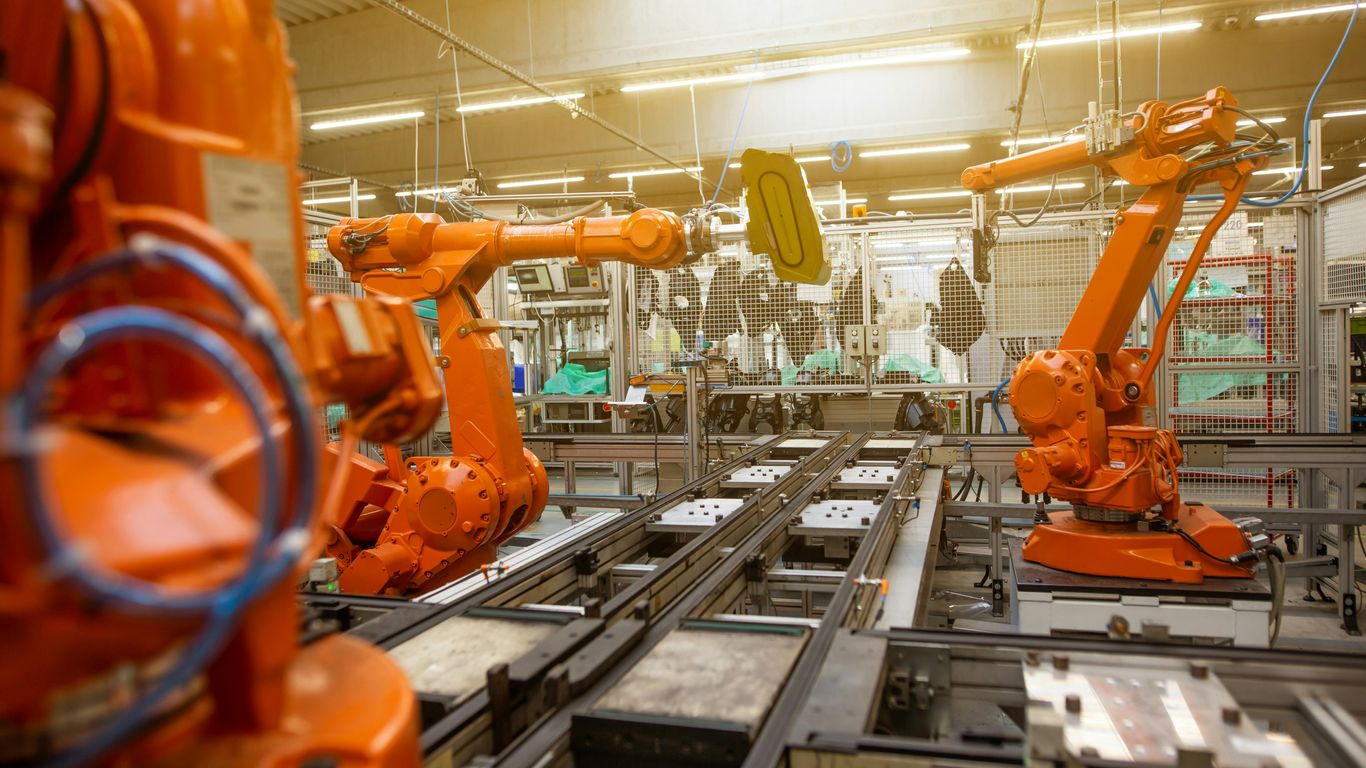
What makes a robot collaborative
A collaborative robot is built to detect specified changes in its environment and respond through controlled stopping, reduced speed, or other protective functions. Those behaviors do not make every application inherently safe. The equipment, tool, workpiece, and human interaction pattern must still be assessed together.
The term therefore describes a mode of operation as much as a mechanical design. A cobot may work beside a person during one step and operate behind guarding during another, depending on force, speed, access, and the consequences of contact.
How cobots differ from traditional industrial robots
Traditional industrial robots are commonly selected for high speed, high payload, and repeatable operation inside a controlled cell. Cobots generally trade some of that performance for easier relocation, closer human interaction, and simpler task changes. The right comparison is not “safe robot versus unsafe robot,” but rather which complete system fits the process.
A fenced industrial cell can remain the better choice when a process involves substantial kinetic energy or needs uninterrupted high-speed motion. Conversely, a cobot can make sense where operators still need to load parts, inspect results, or handle exceptions.
Common cobot components and capabilities
A typical system includes a multi-axis arm, motors and gearboxes, a controller, software, end-of-arm tooling, and safety-related sensing. Optional vision, force sensing, conveyors, fixtures, and machine interfaces extend what the cell can do, but each addition also changes the risk profile and validation work.
The arm is only one part of the automation. The application defines safety: a soft gripper handling a light object presents a different problem from a sharp tool, a hot part, or a fixture with a closing mechanism.
Where cobots fit in modern automation
Cobots occupy a middle ground between manual work and highly engineered fixed automation. They are particularly useful for repetitive, ergonomically difficult, or consistency-sensitive tasks where production volumes, product variants, or available floor space make a large dedicated cell unattractive.
They also sit within a larger robotics ecosystem. Readers comparing mobile systems, industrial arms, and other platforms can use industrial automation coverage as a broader reference, while ANYbotics offers a separate example of robotics focused on legged inspection and complex environments. Those systems are not interchangeable with a factory cobot; the comparison is useful precisely because their operating assumptions differ.
How cobots work alongside humans
Human–robot collaboration is a division of labor, not a theatrical handoff between two equal workers. The person often supplies judgment, dexterity, or exception handling, while the robot supplies repeatable motion and sustained attention. A well-designed cell makes that division visible in the physical layout and in the software sequence.
Human–robot collaboration methods
There are several common arrangements. A robot may work sequentially with a person, share a task at the same workstation, hand parts to an operator, or pause while a worker completes a variable step. The method should follow the process rather than the label attached to the robot.
The practical question is where human presence improves the outcome. If a person must enter the area only once per shift, a conventional guarded cell may be more efficient; if the process depends on frequent interaction, collaborative operation may reduce unnecessary separation.
Sensors, vision systems, and force control
Sensors provide the information needed to constrain motion and respond to changing conditions. Joint monitoring, external presence sensing, cameras, and force or torque measurement can each contribute, but they do not all solve the same problem. Vision can locate a part; force control can help regulate contact; neither automatically validates the complete application.
Engineers should define what the system must detect, how quickly it must respond, and what happens after a stop. Lighting, reflective surfaces, occlusion, tool geometry, and calibration drift can affect real-world behavior, so testing should use production conditions rather than an ideal demonstration setup.
Programming through teaching and software
Many cobots support task creation through graphical software, guided teaching, or hand-guided demonstrations. These approaches can shorten the distance between a process expert and a working robot, especially for straightforward pick, place, fastening, or machine-tending sequences.
Ease of programming does not eliminate engineering. A deployable program still needs reliable part presentation, error handling, permissions, recovery steps, and documented limits. Software simplicity is most valuable when it lets operators participate without hiding the controls that determine safety and quality.
Typical collaborative robot workflows
A representative workflow begins with part presentation, proceeds through grasping or process execution, and ends with placement, inspection, or a machine signal. The robot may repeat the nominal path while the operator handles replenishment, visual decisions, or exceptions.
A short training video can clarify the difference between a demonstration and a validated production sequence:
After the nominal cycle is understood, the team should test missing parts, misaligned parts, tool changes, restarts, and operator access. Those edge cases often determine whether the cell is genuinely useful.
Types of collaborative robot applications
Cobots are used where a task has enough structure for automation but enough variation or human involvement to resist a fully dedicated line. Manufacturing remains a major setting, but the same principles apply to laboratories, packaging areas, and technical workplaces. Application selection should begin with the work content, not with a catalog photograph.
Assembly, fastening, and machine tending
Assembly tasks can include part placement, screwdriving, dispensing, pressing, and other repeatable operations. A cobot can maintain a consistent path or torque while a worker supplies components, performs a nuanced fit, or checks an intermediate result.
Machine tending follows a related pattern: the robot loads and unloads a machine while an operator oversees tooling, quality, or replenishment. Interlocks and machine-state signals are central because the cobot must not enter a hazardous machine state merely because its own motion is controlled.
Picking, packing, and palletizing
Picking and packing applications depend heavily on presentation, grasp reliability, and variation in the objects. A stable stream of known parts is easier than a mixed bin of deformable products. Palletizing adds reach, payload, stacking pattern, and stability requirements that can quickly exceed a small collaborative arm's practical envelope.
For readers evaluating warehouse automation more broadly, warehouse cobot applications provides useful context on how cobots relate to mobile robots, pallet movers, and other systems. The key distinction is whether the robot moves the work, moves around the work, or manipulates each item directly.
Quality inspection and testing
A cobot can position a sensor, camera, probe, or product for a repeatable inspection. It can also perform controlled test motions while a human reviews ambiguous findings. This arrangement can improve repeatability without pretending that every quality decision can be reduced to a binary machine result.
Inspection cells need careful attention to calibration, lighting, tolerances, and data handling. A robot that reaches the same position every cycle is useful only if the measurement chain remains stable and the result is connected to the production record.
Welding, sanding, and finishing
Welding, sanding, polishing, and finishing can expose workers to heat, fumes, dust, vibration, and awkward postures. A cobot may carry out defined motions while the surrounding system manages extraction, workholding, consumables, and process-specific protection.
The application can still require guarding or restricted access. Tool energy and the workpiece may create hazards independent of the arm's collaborative functions. For a separate perspective on automated welding, readers can consult welding automation, while keeping the distinction between a cobot deployment and a specialized welding system clear.
Material handling and laboratory tasks
Material handling often benefits from repeatable transfers between stations, racks, instruments, or machines. Laboratory tasks can similarly involve loading instruments, dispensing, sorting samples, or moving containers, provided the process is sufficiently defined and contamination, temperature, and traceability requirements are addressed.
The strongest candidates usually have a clear handoff and a measurable bottleneck. Tasks that depend on changing physical judgment, fragile objects, or unstructured environments may need more sensing, more supervision, or a different class of robot.
Cobot safety requirements and risk management
Collaborative operation is a safety design objective, not a blanket certification for every use. A system can include force limits and still create danger through a tool, fixture, sharp edge, trapped body part, or heavy payload. The responsible approach combines the robot's functions with application-specific analysis and operating discipline.
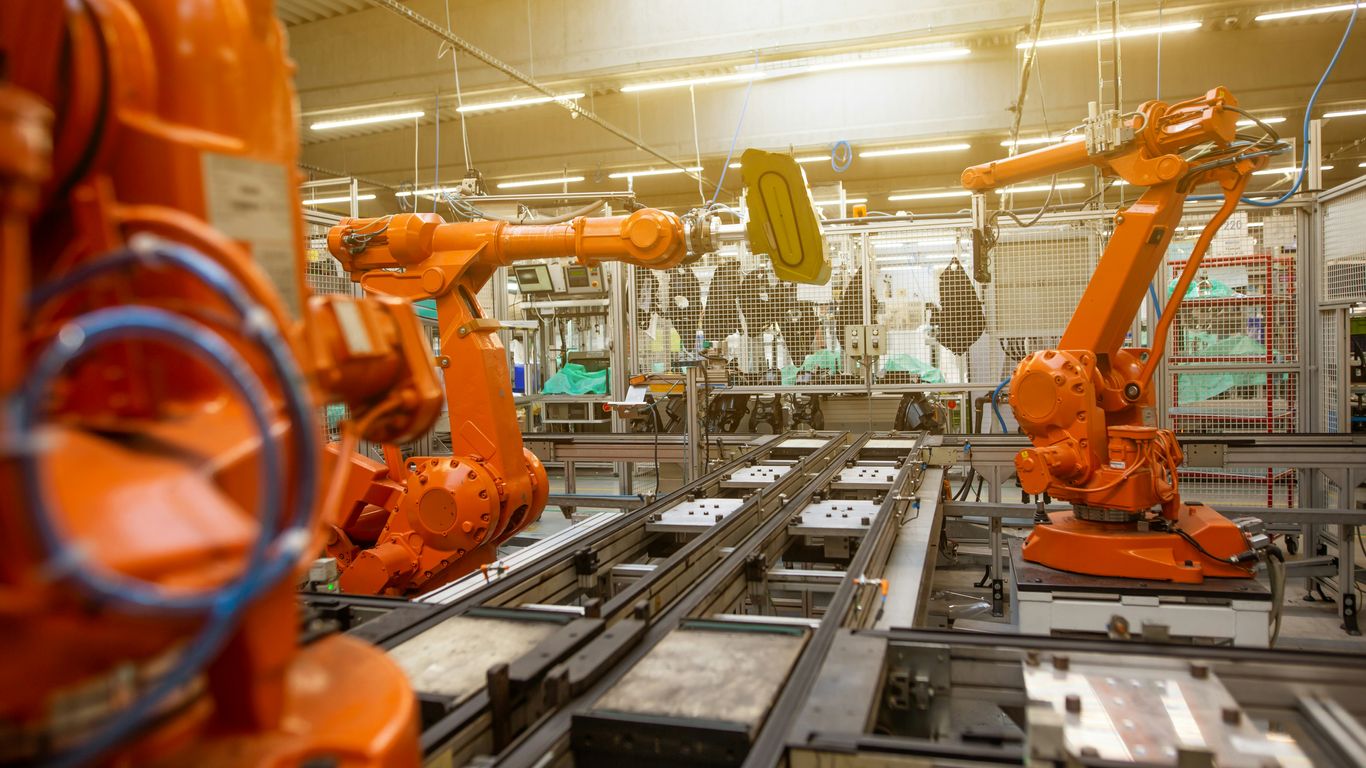
Built-in safety features and operating modes
Common protective functions include monitored stops, speed and separation limits, force or power limits, emergency stops, and restricted motion zones. Their availability and behavior vary by platform and configuration, so the integrator must verify the actual system rather than rely on a general product description.
Operating modes should be explicit. Setup, manual teaching, automatic production, maintenance, and fault recovery may require different permissions, speeds, and access controls. A safe nominal cycle is not enough if recovery mode allows an uncontrolled approach to the same hazard.
Risk assessment before deployment
A risk assessment starts with the intended task and follows the robot through installation, setup, production, cleaning, maintenance, and foreseeable misuse. It identifies who can enter the space, what can move, where energy is stored, and how a person could be trapped or struck.
The assessment should be revisited after a tool, fixture, program, payload, or layout changes. A practical deployment sequence is:
- Describe every human interaction and access route.
- Identify contact, crushing, cutting, thermal, and process hazards.
- Set operating limits and protective measures for each mode.
- Validate normal cycles, faults, restarts, and maintenance access.
This sequence turns safety from a commissioning formality into an operating requirement. It also gives the production team a shared language for deciding when a change requires review.
Safety standards, guarding, and workspace design
Applicable machinery and robot safety standards provide a framework for risk reduction, but compliance is not achieved by citing a standard alone. The cell still needs suitable layout, access control, emergency stopping, signage, and documented procedures.
Guarding is not a failure of collaborative design. A partial fence, scanner, light curtain, or restricted zone may be appropriate when the application contains hazards that speed and force limits cannot control. Workspace design should make safe behavior the easiest behavior for operators.
Managing pinch points, payloads, and speed
Pinch points can arise between the arm and a fixed surface, between a gripper and a part, or inside a fixture. Payload affects stopping behavior, and speed affects impact energy and reaction time. Reach also matters: a low-force contact at an extended position may behave differently from contact close to the base.
Teams should test the actual end effector and workpiece combination, not just the bare arm. They should also account for dropped parts, sharp tooling, hot surfaces, and unexpected motion after a recovery command.
Training operators and maintaining safe procedures
Operators need to know the intended cycle, normal stop behavior, restart rules, fault indications, and escalation path. Maintenance staff need additional instruction for energy isolation, access, tooling changes, and program control.
Training becomes stale when procedures drift from the cell. Audits, near-miss reviews, refresher instruction, and change control help keep the documented process aligned with the physical one.
Benefits and limitations of cobots
Cobots can make automation accessible for tasks that do not justify a large fixed cell, but flexibility is not the same as unlimited capability. Their advantages become clearer when measured against a specific workflow and its constraints. The same design choices that support human proximity can limit speed, payload, or throughput.
Improving productivity and process consistency
A cobot can repeat a defined motion for long periods without fatigue, while a person focuses on decisions, replenishment, or higher-value work. Consistency may improve in fastening, dispensing, inspection positioning, or material transfer, especially when the manual process varies with posture or attention.
Productivity should be measured at the system level. Waiting for parts, clearing faults, changing tools, and feeding upstream equipment can erase the apparent gain from a faster robot motion.
Reducing ergonomic strain and workplace injuries
Removing repetitive lifting, awkward reaches, and sustained force can reduce physical strain. This benefit is often more immediate than labor substitution because the operator remains central to the process while the robot takes on the least ergonomic portion.
The risk does not disappear; it can move to loading, exception handling, or maintenance. A well-designed cell evaluates the entire work cycle and avoids creating a new repetitive task beside the robot.
Supporting flexible production and quick changeovers
Cobots are attractive in mixed-product environments because programs, fixtures, and tooling can be changed more readily than a fully dedicated line. Their mobility can also help a facility test automation at one station before committing to a broader redesign.
Flexibility has an operational cost. Each change requires validation, training, part presentation, and sometimes a new risk assessment. The fastest changeover is the one designed into the process rather than improvised during production.
Understanding payload, speed, and reach limitations
A cobot's rated payload is only one selection input. Tool weight, part geometry, center of gravity, acceleration, reach, and required cycle time all affect practical performance. Collaborative limits may require slower motion or a different layout than the nominal specification suggests.
A useful comparison separates the headline specification from the production requirement:
| Requirement | Why it matters | Typical validation question |
|---|---|---|
| Payload | Determines whether the arm can move the complete tool and part | Does the system remain stable through the full path? |
| Reach | Defines accessible fixtures and machine interfaces | Can the arm reach without awkward extension or collision? |
| Cycle time | Connects robot motion to line throughput | Does the complete workflow meet takt time? |
| Repeatability | Affects placement and process consistency | Is the result adequate under production conditions? |
The table is a starting point, not a substitute for a physical trial. A short test with representative parts often reveals constraints that a specification sheet hides.
When a traditional industrial robot may be a better fit
A traditional industrial robot may be preferable for high-speed, high-payload work in a controlled cell where direct human interaction is not needed. External safety devices can make such systems appropriate for processes that would exceed the practical limits of collaborative operation.
The choice should be based on total system performance and risk, not on the assumption that one category is inherently superior. A facility may reasonably use both approaches in different stages of the same production flow.
How to choose and deploy a cobot
Selection should begin with a process description detailed enough to test. The team needs to understand the part, cycle, operator interaction, failure modes, and upstream and downstream dependencies before comparing arm models. This prevents a common mistake: choosing a robot first and then forcing the task to fit it.
Define the task, output, and performance requirements
Document the input state, required actions, output state, cycle time, shifts, changeovers, quality criteria, and exception paths. Include what the operator does today and what must remain manual. These details turn an attractive automation idea into a measurable engineering problem.
A good task definition also identifies the bottleneck. If the true constraint is part feeding or inspection disposition, automating the arm alone may produce little operational value.
Compare payload, reach, accuracy, and repeatability
Compare complete-system requirements rather than isolated arm figures. The end effector, cable routing, fixture, sensor package, and desired speed all influence the usable envelope. Accuracy describes how close the robot gets to a target, while repeatability describes how consistently it returns to a position; the distinction matters in tight processes.
Testing should include the farthest reach, the heaviest practical load, warm-up effects, and representative tolerances. A model that passes a light demonstration may fail once the production tool and actual parts are installed.
Evaluate end effectors, vision, and accessories
The end effector is the robot's interface with the process. Grippers, vacuum tools, screwdrivers, welders, dispensers, cameras, force sensors, and tool changers each add capability, mass, failure modes, and maintenance needs.
Select accessories around the part and the failure modes. A gripper that works on a clean sample may lose reliability with oil, dust, variation, or surface changes. Vision can improve flexibility, but it also introduces lighting, calibration, and data-validation requirements.
Plan integration with existing equipment and systems
Integration includes mechanical mounting, electrical signals, machine interlocks, network communications, safety circuits, production software, and data ownership. The cell must define what happens when a machine is unavailable, a part is rejected, or a robot stops mid-cycle.
It is also useful to understand adjacent automation architectures. For example, warehouse automation integration discusses a different class of robot and its relationship with warehouse management systems; the broader lesson is that interfaces and workflow ownership matter as much as the moving hardware.
Test, train, and scale the deployment
A pilot should use real parts, real operators, realistic cycle demands, and documented acceptance criteria. The team can then measure throughput, first-pass yield, stops, recovery time, ergonomic impact, and operator feedback before scaling.
Scaling works best when the first deployment creates reusable standards for programs, fixtures, safety reviews, spare parts, and training. It should also preserve room for corrective learning rather than treating the pilot as a marketing demonstration.
Cobot costs, maintenance, and return on investment
The purchase price is only one component of a cobot business case. Tooling, fixtures, integration, safety measures, training, software, facility changes, and downtime during commissioning can materially affect the total. A credible estimate includes both the new system's costs and the process costs it is expected to remove or reduce.
Main upfront and operating costs
Upfront costs may include the arm and controller, end effector, vision, safety equipment, fixtures, installation, programming, validation, and operator training. Operating costs include energy, consumables, software or service fees where applicable, maintenance, spare parts, and time spent recovering from faults.
The cost model should separate one-time engineering from recurring production expense. That distinction helps management compare a pilot with a mature deployment and prevents early integration work from being mistaken for steady-state cost.
Estimating labor savings and production gains
Labor analysis should describe task hours, not simply count headcount. A cobot may reduce direct handling time while preserving the need for supervision, replenishment, quality review, and maintenance. Production gains may come from longer unattended intervals, fewer defects, improved ergonomics, or better utilization of skilled workers.
Those gains should be stated as scenario estimates until measured. A process trial can reveal whether the limiting factor is robot motion, material supply, changeover, or downstream capacity.
Measuring payback period and key performance indicators
Payback is typically calculated by dividing net deployment cost by recurring annual benefit, but the result is only as sound as its assumptions. Teams should track output per hour, uptime, unplanned stops, first-pass yield, scrap, changeover time, manual hours, and ergonomic indicators.
A short payback based on unrealistic utilization is not a strong investment case. Sensitivity analysis across demand, staffing, uptime, and maintenance assumptions gives decision-makers a better view of downside risk.
Preventive maintenance and troubleshooting
Maintenance usually covers inspection of cables, connectors, tooling, fixtures, sensors, filters, lubrication requirements, and safety devices according to the equipment documentation. The schedule should reflect duty cycle, environment, payload, and process contaminants.
Troubleshooting is easier when faults are logged with time, program state, part condition, operator action, and recovery result. That record can distinguish a mechanical problem from poor part presentation, a vision issue, an interlock condition, or an unreliable process input.
Scaling from one cobot to a broader automation strategy
A single successful cell can provide evidence, standards, and operator confidence, but it does not guarantee that every neighboring task is a good candidate. Scaling should follow repeatable economics and shared infrastructure rather than enthusiasm alone.
The broader strategy may combine cobots with fixed industrial cells, mobile robots, software, inspection systems, or manual work. The editorial coverage of collaborative robotics is a useful external starting point for comparing flexibility and trade-offs, while the application-specific Universal Robots coverage describes cobots in terms of cost-effectiveness, safety, flexibility, and uses such as machine tending and quality inspection. Those documented capabilities should be evaluated against the actual process rather than generalized into a universal promise.
Related operational disciplines matter too. A deployment team may borrow lifecycle thinking from dynamic QR codes, facility-awareness principles from Robinson Preserve, and seasonal planning habits from Clay County fishing, but these are analogies, not robotics capabilities. The adjacent Animator Hub and web design resources likewise belong to different domains; they are linked here only as examples of how Inside Deep Tech's wider coverage connects technical systems to practical workflows.
Conclusion
Cobots are best understood as configurable automation systems for structured tasks that benefit from repeatable motion near human workers. Their promise lies in the fit between robot, tooling, process, and operator—not in the label alone. Teams that define the work clearly, assess risk honestly, test with production conditions, and measure the complete economics can determine where collaborative automation is genuinely useful and where another approach is more appropriate.
Frequently Asked Questions
What is a collaborative robot?
A collaborative robot is an industrial robot designed to operate near people under specified conditions, using controlled motion and safety-related functions. The complete application still requires risk assessment.
Are cobots safe without guarding?
Not automatically. Some applications may operate without full perimeter guarding, while others need scanners, barriers, restricted zones, or other protective measures because of tooling, payload, speed, or process hazards.
What tasks are cobots commonly used for?
Common tasks include assembly, fastening, machine tending, picking, packing, palletizing, inspection, testing, finishing, and material handling. Suitability depends on variation, payload, cycle time, and human interaction.
How are cobots programmed?
Many are programmed through graphical interfaces, guided teaching, or hand-guided demonstrations. Production deployment still requires error handling, validation, access control, and documented recovery procedures.
Can cobots replace human workers?
They can automate defined portions of a job, particularly repetitive or physically demanding steps. People often remain responsible for judgment, replenishment, quality decisions, exception handling, supervision, and maintenance.
How much does a cobot cost?
The total depends on the arm, controller, tooling, fixtures, vision, safety equipment, integration, training, facility changes, and ongoing maintenance. A purchase price alone does not describe the deployment cost.
When should a company choose a traditional industrial robot instead?
A traditional industrial robot may be preferable when the process requires higher speed or payload, or when human interaction is unnecessary and a controlled cell can provide the required protection and throughput.