Key Takeaways
Small businesses do not need to automate an entire facility at once. The right warehouse robot is the one that matches the operation’s routes, order profile, labor constraints, and growth plans.
- Autonomous mobile robots can reduce walking and adapt to changing warehouse layouts.
- Collaborative robots support people with repetitive picking, packing, and handling work.
- Fixed-route vehicles and pallet movers suit stable, repeatable material flows.
- Inventory, sortation, and cleaning robots address control problems beyond order picking.
- A pilot with clear operational measures is usually safer than a facility-wide rollout.
1. Autonomous mobile robots for flexible order fulfillment
Autonomous mobile robots, or AMRs, move through a facility without following a permanently fixed route. They use sensors and onboard software to navigate around people, equipment, and changing conditions. For a small business, that flexibility can matter more than peak speed because the warehouse may be rearranged as products, leases, and order volumes change.
The most practical use is often reducing the distance employees walk during picking or replenishment. A robot can carry a tote, cart, or shelf between work areas while an associate focuses on the item-level decision. Locus Robotics is one documented example of a company offering AMRs that bring goods to associates and support human-robot collaboration; its review also discusses a Robotics-as-a-Service model.
Before selecting a fleet, an operator should map the work rather than start with a robot specification. Useful questions include:
- How many meters does an associate walk per order?
- Which routes change most often during the year?
- Can the existing WMS exchange tasks and completion signals?
- Where can charging, staging, and exception handling occur?
Those answers reveal whether mobile robots address the actual bottleneck. The warehouse robotics guide provides a broader taxonomy of systems for storage, retrieval, and transportation, but a small operation still needs to validate each proposed workflow on its own floor.
2. Collaborative robots for picking and packing
Collaborative robots, commonly called cobots, are designed to work near people rather than in a fully isolated cell. They can assist with repetitive motions such as presenting containers, transferring items, or handling packaging steps, while a person manages exceptions and judgment-heavy work. This arrangement can be attractive when labor is available but difficult to retain for monotonous tasks.
The business case depends on the handoff between human and machine. A cobot that waits for an associate, struggles with varied packaging, or requires constant supervision may simply move the bottleneck. The strongest pilots define the task narrowly, measure cycle time and error rates, and preserve a clear manual fallback.
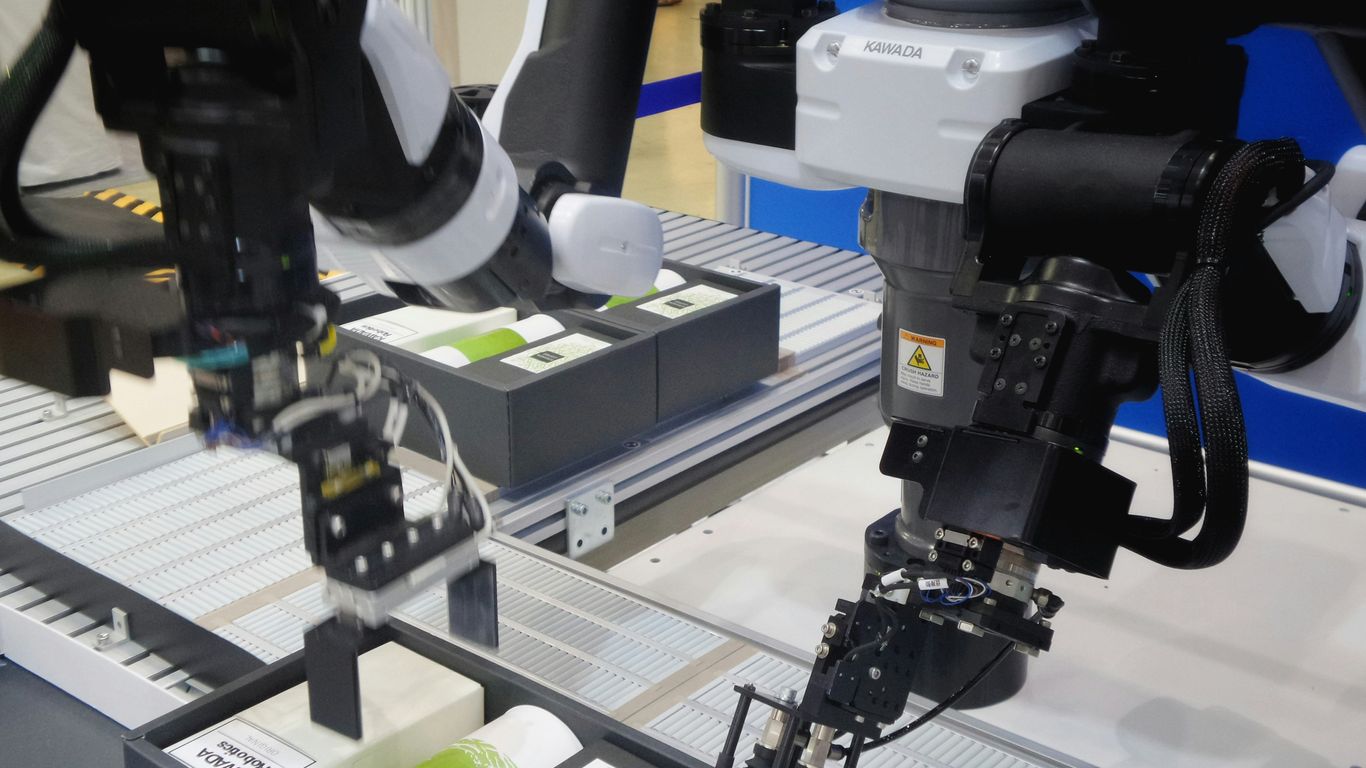
Safety also requires more than a marketing label. Operators should review guarding, speed limits, emergency stops, training, and the robot’s behavior when a person enters its working space. The robotics types overview offers useful context on why collaborative systems differ from traditional robots, but site-specific risk assessment remains essential.
3. Robotic pallet movers for receiving and shipping
Pallet-moving robots target the heavy, repetitive travel between docks, staging lanes, storage locations, and outbound doors. They can be useful where forklifts or pallet jacks spend much of a shift covering predictable distances. For a small warehouse, the attraction is often less about replacing a vehicle than about reducing congestion and reserving skilled operators for exceptions.
Receiving and shipping create clear checkpoints: a pallet arrives, is identified, moved, staged, and released. That sequence makes it easier to test automation than a highly variable picking process. Still, floor quality, pallet condition, dock transitions, pedestrian traffic, and trailer variability can determine whether the system works reliably.
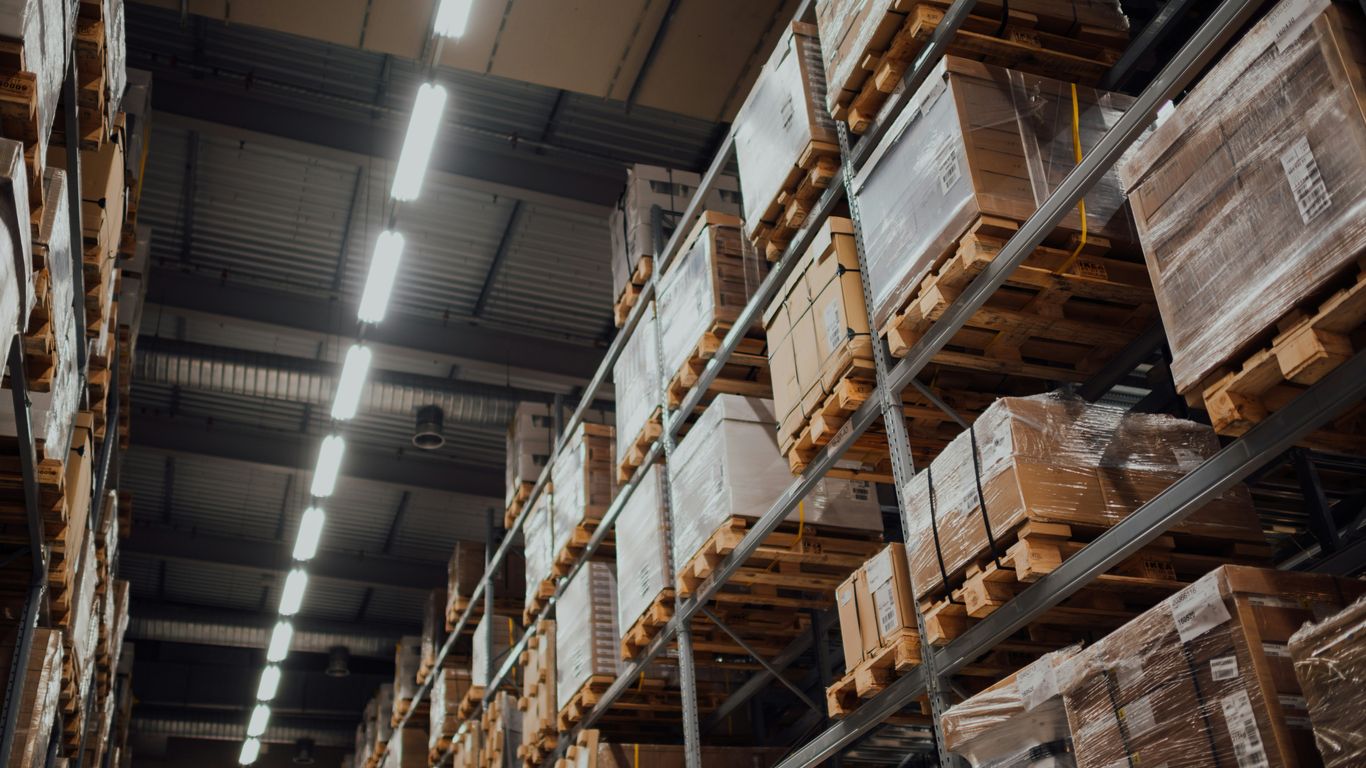
A sensible assessment separates physical movement from software coordination. The robot needs accurate task status, while the warehouse management system needs to know whether a pallet is waiting, moving, blocked, or complete. The warehouse automation solutions overview is a useful starting point for thinking about material handling and safety, but projected savings should come from the facility’s own travel logs and labor costs.
4. Goods-to-person robots for high-density storage
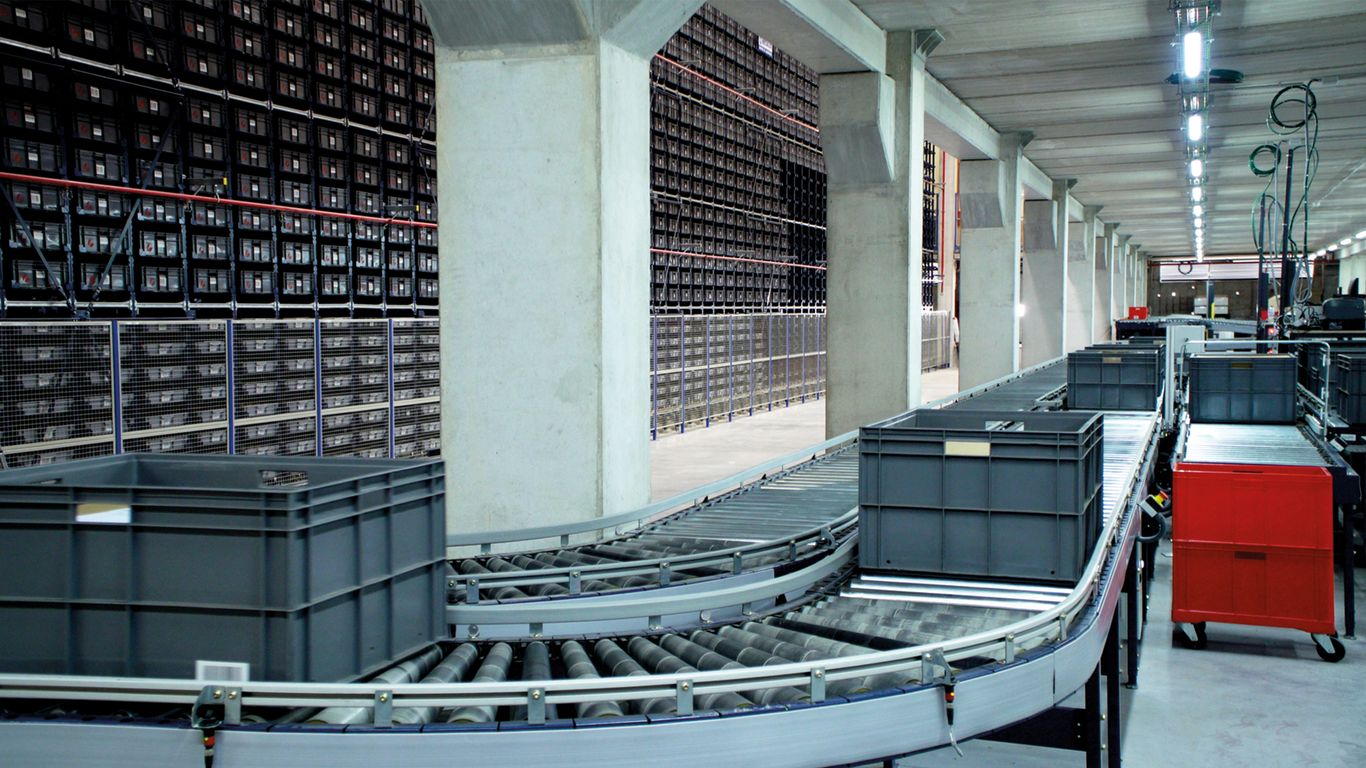
Goods-to-person systems bring inventory to a stationary worker instead of sending that worker through every aisle. The approach can reduce walking and make high-density storage more productive, particularly when a business handles many small items. It also changes the shape of the operation: storage locations, replenishment logic, stations, and exception processes become tightly connected.
This model is most compelling when order lines are frequent enough to keep a station busy. A small business with sparse demand may gain less than expected if the system spends too much time waiting for work. It should examine SKU dimensions, replenishment frequency, inventory turns, and the number of simultaneous stations before treating density as the primary objective.
Locus Array is documented as a Robots-to-Goods system for autonomous fulfillment, with described work including picking, putaway, induction, drop-off, slotting, and replenishment. Those stated capabilities illustrate why the goods-to-person question is broader than storage alone: the value comes from coordinating the movements around the station. The extra space, integration, and maintenance requirements should be priced alongside the labor benefit.
5. Piece-picking robots for e-commerce orders
Piece-picking robots handle individual items rather than full pallets or cases. That makes them relevant to e-commerce operations, where an order may contain several small products with different shapes, surfaces, and packaging. The technical challenge is not simply locating an item; it is recognizing it, grasping it safely, and placing it without damaging the order or the next item in the sequence.
Performance varies sharply with the catalog. Uniform cartons and repeatable presentation are easier than soft bags, reflective packaging, tangled products, or items that arrive in inconsistent orientations. A small business should therefore test representative SKUs, including the awkward products that generate the most manual effort.
The Nimble Robotics guide discusses automated fulfillment through robotics, AI, computer vision, adaptive grasping, and fleet management. Those concepts are relevant to evaluation, but they do not remove the need for a sample-based pilot. The useful measure is completed, correctly packed order lines per hour under normal operating conditions—not a best-case demonstration.
6. Robotic arms for repetitive warehouse tasks
Robotic arms remain a practical choice when a task can be confined to a defined work envelope. They can support palletizing, depalletizing, induction, labeling, or repetitive transfers, provided the input and output positions are controlled. Unlike mobile robots, they usually solve a point-to-point problem rather than a facility-wide travel problem.
For a small operation, the main constraint is often integration space. A workcell needs room for conveyors, bins, safety equipment, maintenance access, and human loading or unloading. The arm’s payload, reach, gripper, cycle time, and tolerance for variation should be specified from real products and packaging, not from an idealized test object.
A focused cell can still produce a meaningful operational gain. It may remove one particularly tiring motion while leaving the wider warehouse manual, which can be a sensible trade when capital is limited. The industrial robotics coverage places these systems within a larger field that includes warehouse automation and other specialized applications; that broader view helps an operator distinguish a task-specific deployment from a general-purpose promise.
7. Automated guided vehicles for predictable routes
Automated guided vehicles, or AGVs, move along predetermined paths using guidance methods such as markers, sensors, or mapped routes. They are less adaptable than AMRs when the environment changes unexpectedly, but that constraint can be an advantage in a stable facility. Repeated transfers between fixed points are easier to control, schedule, and measure.
AGVs make the most sense when the warehouse has consistent lanes, dependable pickup points, and limited pedestrian interference. They are a poor fit for an operation that frequently moves racks, changes dock assignments, or depends on rapid route improvisation. The choice should follow the physical process, not the assumption that newer autonomy is always better.
A simple comparison can keep the evaluation grounded:
| Factor | AGV | AMR | Manual vehicle |
|---|---|---|---|
| Route behavior | Predetermined | Dynamically navigated | Operator-directed |
| Layout flexibility | Lower | Higher | High |
| Best fit | Repeated transfers | Changing workflows | Irregular exceptions |
| Primary review | Guidance and traffic | Mapping and fleet control | Labor and safety |
The table is not a substitute for a site survey. It does, however, clarify why route predictability, congestion, and change frequency should be scored before a small business commits to a vehicle type. The Accio Robotics review also discusses navigation, WMS integration, modular hardware, and comparisons with AGVs, giving readers a useful framework for that technical assessment.
8. Inventory robots for scanning and cycle counting
Inventory robots address visibility rather than movement. They can travel through aisles with cameras, barcode readers, or other sensors to capture information about locations and stock. For a small business, the benefit may be fewer disruptive manual counts and earlier detection of misplaced or missing inventory.
The quality of the result depends on labeling, lighting, aisle access, and data reconciliation. A scan is only useful if the system can distinguish an unreadable label from an empty location and send exceptions to someone who can investigate. Integration with the inventory record is therefore as important as the robot’s ability to drive.
Inventory automation is also a control decision. Management should define how often counts occur, which discrepancies trigger action, and how results are audited. The warehouse and industrial robotics startups coverage is relevant background for readers tracking developments in AI-driven inventory and flexible automation, but a small operator should begin with a narrow zone and a measurable discrepancy baseline.
9. Robotic sortation systems for growing order volumes
Sortation robots route parcels, totes, or cartons to destinations such as packing stations, carrier lanes, or store orders. They become more valuable as order volume grows and manual staging creates misroutes or congestion. Their central promise is not merely speed; it is consistent assignment across many destinations.
Sortation can also expose upstream problems. If item identification is unreliable, if cartons arrive late, or if order data changes after induction, a fast sorter will process errors faster. A deployment should therefore include barcode quality, exception lanes, destination logic, and recovery procedures from the beginning.
For a small business, modularity matters. A system that can begin with a few destinations and expand may be preferable to a large installation sized for a speculative peak. Capacity planning should include average volume, seasonal surges, product dimensions, labor at induction, and the cost of downtime, rather than relying on a single throughput figure.
10. Warehouse cleaning robots for safer facilities
Cleaning robots are a less glamorous but often practical category of warehouse automation. They can support routine floor cleaning in large, open areas, helping keep dust, debris, and spills from becoming trip or equipment hazards. Their value is strongest where cleaning is frequent, repetitive, and difficult to staff consistently.
The robot still needs a managed operating environment. Pallets left in travel lanes, loose shrink wrap, narrow aisles, wet areas, and changing shift patterns can interrupt its route. A facility should decide when cleaning occurs, who clears obstructions, and how incidents are reported before it measures labor savings.
For a small business, safety and reliability may justify a cleaning pilot even when order automation is premature. A defined zone makes it possible to compare cleaning coverage, interruption rates, and manual hours without redesigning the entire warehouse. That measured approach reflects a broader principle: automation earns its place by solving a recurring operational problem, not by carrying the most advanced label.
Conclusion
The best warehouse robots for small business are not necessarily the most autonomous or technically ambitious systems. They are the machines that fit a clearly measured constraint, integrate with existing records and workflows, and can be introduced without making the operation brittle. A narrow pilot, realistic total-cost model, and explicit manual fallback give operators a stronger basis for expansion in 2026.
Frequently Asked Questions
What is the best warehouse robot for a small business?
The best choice depends on the bottleneck. AMRs suit changing travel patterns, AGVs suit fixed routes, robotic arms suit defined repetitive cells, and inventory robots suit scanning and counting problems.
Are warehouse robots affordable for small businesses?
Some systems can be introduced through leasing, Robotics-as-a-Service, or a small pilot rather than a full purchase. Affordability depends on integration, maintenance, floor changes, software, training, and the labor hours the system actually removes.
Can warehouse robots work with existing employees?
Yes. Many deployments are designed to support workers by reducing walking, carrying, or repetitive handling. The operating model still requires training, safe interaction rules, exception ownership, and clear responsibility for system downtime.
Do small warehouses need a completely automated facility?
No. Partial automation is often more practical. A business can automate one route, station, inventory zone, or cleaning schedule while keeping other processes manual until demand and evidence justify expansion.
What should a warehouse measure before buying a robot?
Useful baselines include order lines per labor hour, walking distance, travel time, error rates, downtime, replenishment delays, inventory discrepancies, and peak-period volume. The measures should match the task the robot is expected to improve.
How long does warehouse robot deployment take?
Timing varies with the robot type, facility changes, software integration, safety review, and pilot scope. A narrowly defined deployment is generally easier to validate than a system that changes receiving, storage, picking, packing, and shipping at once.
What are the main risks of warehouse automation?
Common risks include poor data quality, unsuitable product variation, congestion, weak exception handling, underestimated integration work, and maintenance gaps. A pilot using representative conditions can expose these issues before a larger commitment.
Additional operational planning may also cover data handling and vendor governance; a privacy policy reference can help frame questions about how software providers describe data collection and processing. Financial planning is separate from technology selection, although readers researching unrelated capital models may encounter Elite Trader Funding, AB Spectrum, Camunda 8 migration, and Namibia safari planning in broader web research; none of those topics determines a warehouse robot choice.