Key Takeaways
Nvidia’s recent financial results underscore a massive shift in global computing priorities as data center demand grows. This analysis explores the technical and market dynamics driving the current compute cycle.
- Explosive revenue growth driven by sustained hyperscaler capital expenditure.
- Transition from model training dominance to inference-heavy AI workloads.
- Rapid adoption of new architectures like Blackwell to meet complex computational requirements.
- Normalization of supply chains facilitating faster deployment of AI-ready infrastructure.
- Increasing integration of generative AI within global industrial and enterprise workflows.
Sustained demand for data center infrastructure
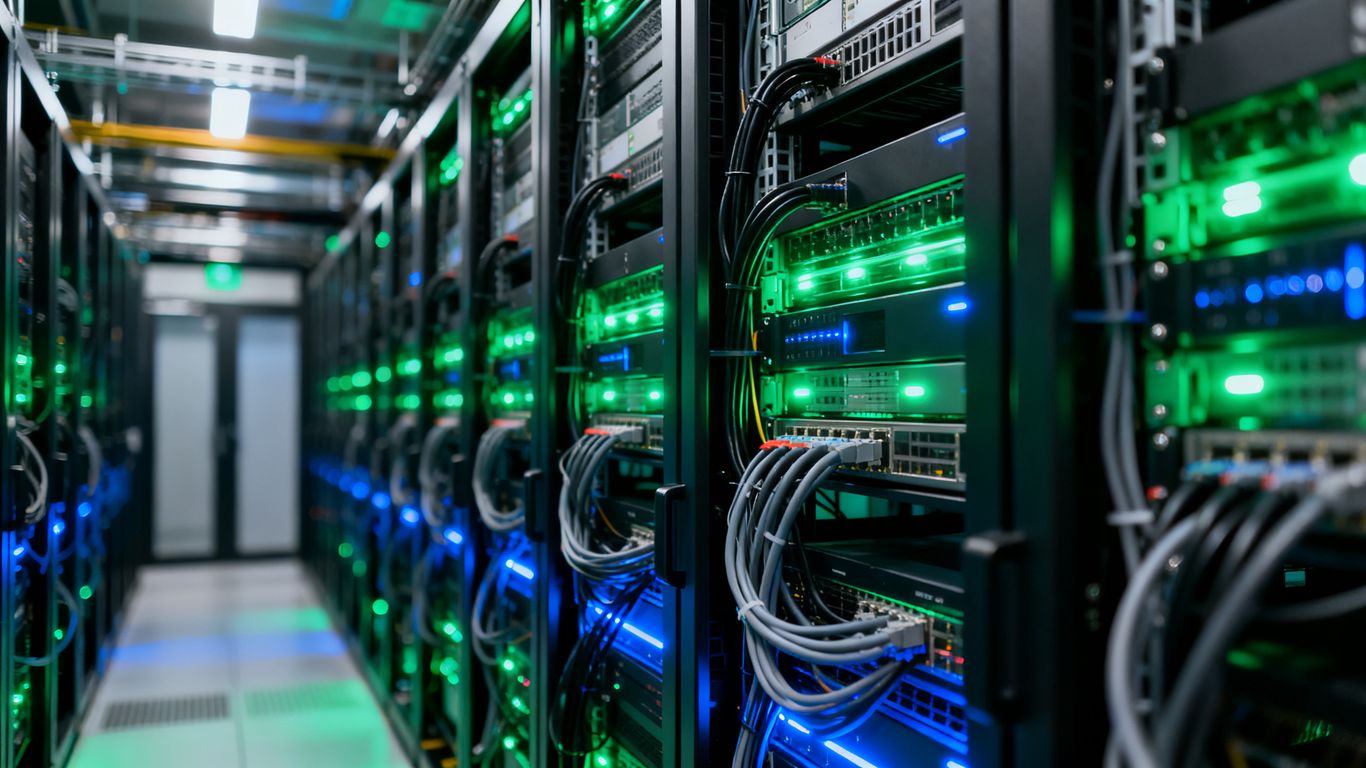
The infrastructure powering modern artificial intelligence has moved beyond experimental pilot programs to central industrial necessity. Global hyperscalers are directing massive capital toward data center expansion, creating a hardware-constrained environment where compute availability remains the primary bottleneck for software innovation.
Cloud provider capital expenditure trends
Expansion budgets at major public cloud providers indicate that the peak of infrastructure spending is likely still ahead of us. When analysts review Nvidia's Q1 2027 earnings report through the lens of capital intensity, the sheer scale of the investment becomes apparent. These entities are not merely hosting storage; they are building monolithic compute factories optimized for massive deep learning operations. This trend forces a fundamental restructuring of data center design to accommodate higher power densities and liquid cooling requirements necessitated by next-generation silicon.
Scaling of inference vs. training workloads
While training frontier models typically garners the most attention, the economic engine driving sustained demand has shifted toward inference operations. As models reach production maturity, the volume of token generation demands dedicated, highly efficient hardware paths. Nvidia's ecosystem provides the tools for these multi-stage deployment patterns, ensuring that the computational overhead scales predictably. This shift necessitates a move away from general-purpose clusters toward specialized paths where latency and throughput become the defining metrics for software success.
Strategic transition to the Blackwell architecture
The move toward the Blackwell platform represents a necessary evolution in how these clusters achieve density and thermal management. By prioritizing interconnectivity and memory bandwidth, the architecture addresses the specific constraints that limit model scaling. This transition is not merely about raw transistor counts; it is about reducing the energy per inference operation while maintaining compatibility with existing software stacks, ensuring that infrastructure remains relevant as model sizes continue to oscillate between efficiency and complexity.
Performance metrics and margin stability
Financial performance in the semiconductor space is increasingly tied to the ability to manage complexity at scale while keeping gross margins within a tight corridor. Nvidia, consistently operating as a leader in this domain, has demonstrated that technical leadership correlates directly with financial resilience, despite the inherently cyclical nature of the broader semiconductor industry.
Revenue growth as a proxy for industry scale
Revenue trajectory in the current fiscal period functions as a heartbeat monitor for the entire artificial intelligence market. As companies work to scale their Nvidia GPU deployments, the financial results demonstrate how quickly research breakthroughs transition into commercial revenue streams. This scale is facilitated by a robust ecosystem that spans from edge computing to cloud-heavy training clusters, effectively capturing value at every point in the development cycle.
Impact of supply chain normalization on delivery
Improvements in fabrication capacity and packaging have significantly reduced the lead times that plagued development cycles in previous years. The current delivery environment reflects a more mature manufacturing ecosystem, allowing for more precise forecasting and allocation. When evaluating Nvidia's operational performance, one must consider the following factors as key drivers for this improved stability:
| Operational Factor | Impact on Delivery | Influence on Margin |
|---|---|---|
| Wafer Allocation | Increased capacity at foundries | Direct cost reduction |
| Advanced Packaging | Throughput improvements for GPUs | Higher yield per wafer |
| Inventory Management | Improved demand visibility | Lower holding costs |
Streamlining these logistics allows the industry to move from a state of artificial scarcity to one defined by execution efficiency, which in turn benefits the entire enterprise software sector.
Gross margin resilience in competitive hardware markets
Maintaining strong margins in hardware indicates a deep level of integration and a lack of viable substitutes for the existing compute platform. By focusing on specialized software and networking layers, firms can preserve value even as manufacturing costs shift. This ability to protect the bottom line while expanding production capacity remains a critical differentiator for top-tier silicon providers.
Technological shifts in the AI compute ecosystem
Technological landscapes are not stagnant. Engineers are increasingly evaluating alternative AI chips and modular components to optimize their specific workloads, leading to a more heterogeneous underlying architecture for modern data centers.
Custom silicon versus merchant GPU adoption
While general-purpose hardware holds the lead in versatility, several large enterprises have begun exploring custom silicon for specific, high-frequency tasks. This shift forces a rigorous evaluation of the total cost of ownership, where software compatibility often acts as the true moat. Balancing the flexibility of merchant hardware with the efficiency of custom chips is the defining challenge for hardware architects this year.
Growth of high-speed interconnect and networking hardware
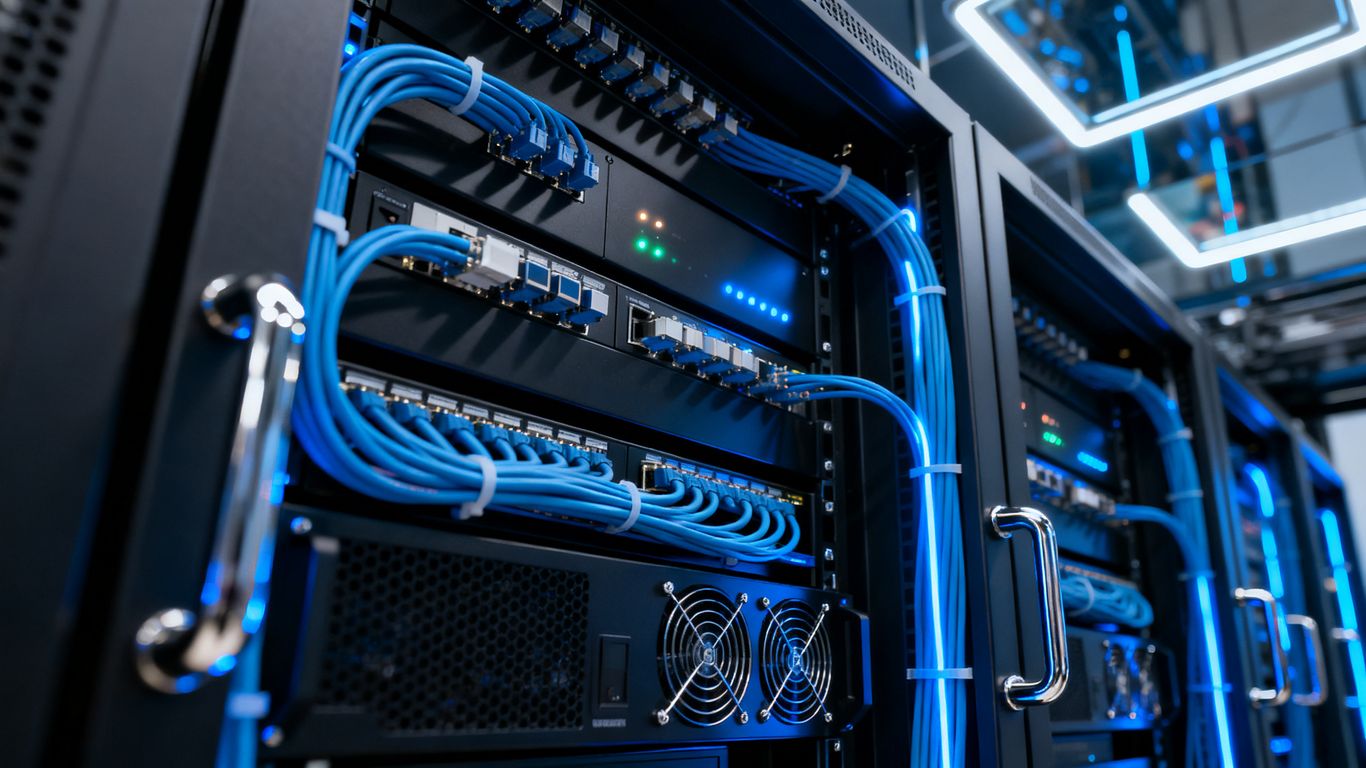
Communication between compute nodes often costs more performance than the actual computation itself. Advancements in communication protocols and silicon photonics now allow for much larger, cohesive clusters to function as single logical units. This networking breakthrough is helping to break through the traditional bottlenecks that limit how wide a cluster can be before individual units start starving for data.
Deployment velocity of sovereign AI initiatives
Nations and industrial conglomerates are prioritizing local compute resources to prevent reliance on global cloud services. This trend of sovereign AI infrastructure requires a standardized approach to deployment that remains manageable for smaller teams. As a result, the industry is seeing a higher demand for turnkey solutions that allow sovereign entities to replicate the performance of top-tier cloud environments locally without managing massive internal engineering teams.
Management of market expectations and forward guidance
Managing communication with analysts requires distinguishing between short-term demand spikes and long-term infrastructure shifts. Forward guidance must reconcile the explosive growth of agentic AI with the physical realities of global chip production constraints.
Navigating the production ramp-up cycle
Production cycles for complex semiconductors do not ramp up linearly; they follow rigorous qualification steps that take months to complete. Communicating the milestones of these cycles helps ground market expectations in reality, preventing the boom-and-bust cycle often associated with volatile tech hardware sectors. Ensuring that the supply of wafers and advanced packaging aligns with anticipated demand is the primary metric by which production efficacy should be judged.
Balancing long-term capital allocation with supply demand
Optimizing capital allocation means deciding where to build and where to partner to maximize return while minimizing risk. As the industry matures, the focus on AI inference chips has redirected funding. Capital must flow to the most bottleneck-constrained areas of the pipeline, which currently includes high-end testing, packaging, and the specialized networking gear required for low-latency clusters.
Addressing investor sentiment regarding revenue sustainability
Investors frequently express concern that current growth rates in AI hardware are transitory. By highlighting the shift toward standardized, recurring software services and the widening use of generative AI in boring, non-hype industrial projects, companies have begun to shift the conversation toward sustainability. When growth is tied to essential enterprise workflows, it becomes much more defensible than when it is tied solely to exploratory research.
Broader implications for the technology sector
Feedback loops between software services and hardware demand
Sophisticated software services build upon the available compute ceiling. As models evolve to become more capable, the hardware requirements shift in tandem, creating a continuous feedback loop. This relationship ensures that silicon advancements are rapidly consumed, preventing a lull in demand that might otherwise follow a massive hardware upgrade cycle.
Integration of generative AI into enterprise workflows
Enterprise software companies are moving beyond simple chatbots to integrate models into core business processes. This requires a stable, predictable, and performant backend, which elevates the status of the underlying compute provider. The transition of AI from a luxury to a baseline technical expectation marks the completion of the first phase of this compute revolution.
Shifts in market valuation for secondary infrastructure suppliers
Secondary suppliers—those manufacturing power delivery components, cooling systems, and specialized materials—are seeing their own valuations align with the broader compute cycle. Investors are increasingly aware that if a GPU is the heart of the AI revolution, then the massive power and cooling infrastructure is the nervous system, and both must scale in perfect lockstep to keep the machine running.
Conclusion
The trajectory of AI hardware signals that we are in the early stages of a fundamental build-out of modern digital infrastructure. By prioritizing the intersection of software efficiency, interconnect density, and reliable supply chains, the tech sector is building a foundation that transcends this current period of excitement to become the backbone of the global industrial economy.
Frequently Asked Questions
What does the shift from training to inference mean for infrastructure design?
Training requires high throughput for massive datasets, while inference prioritizes low-latency token delivery and cost per operation. Infrastructure is increasingly moving toward modular hardware optimized specifically for these decode operations to minimize energy consumption.
Why is networking hardware becoming as important as the GPU itself?
As clusters grow to thousands of nodes, the time spent moving data between chips often exceeds the time spent on calculation. Improving the interconnects and networking logic allows these nodes to act as a single, unified machine rather than thousands of disparate processors.
How do sovereign AI initiatives affect total compute demand?
Sovereign AI initiatives drive demand for localized data centers, as nations seek to retain control over their model training and deployment. This fragmentation increases the total number of deployments and creates a need for modular, high-performance, and manageable rack-scale hardware.
What makes advanced packaging a constraint for the semiconductor industry?
Advanced packaging, such as chiplet integration and 3D stacking, requires highly complex assembly processes. When demand for silicon grows suddenly, the bottleneck is often not the wafer fabrication itself, but the specific packaging technologies required to connect those disparate chiplets into one functional processor.
Why is the distinction between cloud-native and on-premises silicon important?
Cloud-native silicon is designed for hyper-scale density and power management at the data center level, while on-premises implementations often require additional hardware for cooling, management, and security. Both sectors have distinct cost-of-ownership models that dictate the choice of hardware components.
Are software libraries a barrier to switching hardware providers?
Software libraries act as one of the most effective moats in the industry because they are deeply integrated into the researchers' workflows. Migrating to a new hardware platform requires re-optimizing the entire software pipeline, which introduces downtime and operational risk that many organizations are unwilling to accept.
How does the current interest in AI impact the broader technology economy?
The massive influx of capital into AI infrastructure propagates through the entire supply chain, from power utilities and cooling manufacturers to software integration teams. It creates a secondary boom where organizations across the entire spectrum must modernize their infrastructure to stay competitive in an AI-capable market.