
The Top Robotics Startups to Watch in 2026

Key Takeaways
The landscape for autonomous systems in 2026 is shifting rapidly from experimental lab prototypes toward reliable, commercialized integration across diverse industrial sectors. These top robotics startups 2026 are refining foundational AI, hardware durability, and fleet management to solve critical operational bottlenecks.
- General-purpose humanoids are evolving to handle complex, multi-step tasks in unpredictable work environments.
- Advancements in bipedal locomotion enable robots to navigate human-centric spaces effectively.
- Foundational AI models are being trained specifically for embodied hardware to improve autonomy.
- Deployment tools are drastically reducing the time required to manage and update robot fleets in the field.
- Specialized automation in agriculture and manufacturing is demonstrating high return on investment through precision engineering.
1. Figure AI: Scaling general-purpose humanoid robots
Figure AI is positioning its humanoid platforms as a versatile labor solution capable of performing complex sequences in unstructured environments. By focusing on general-purpose hardware, the organization aims to address labor shortages in sectors like automotive manufacturing by deploying machines that can learn and execute tasks alongside humans. The company prioritizes large-scale interoperability, ensuring their units can integrate with existing facility workflows without requiring extensive infrastructure overhauls.
Their recent developmental milestones indicate a successful transition from basic locomotion to task-oriented dexterity, a critical step for broader industrial deployment. These robots leverage advanced neural architectures to process environmental data in real time, allowing for rapid adaptation to shifting station requirements on production lines. By standardizing the physical embodiment, Figure AI simplifies the process for firms looking to scale automation across multiple geographic sites simultaneously.
Ongoing performance testing in early-adopter facilities highlights the potential for sustained operational uptime. Reliability in these settings is driven by rigorous hardware validation and an iterative cycle of model training. As they continue to scale, the focus remains on the seamless translation of high-level task descriptions into precise, safe physical movements that meet stringent safety standards in collaborative workspaces.
2. Agility Robotics: Advancing bipedal mobility in industrial settings
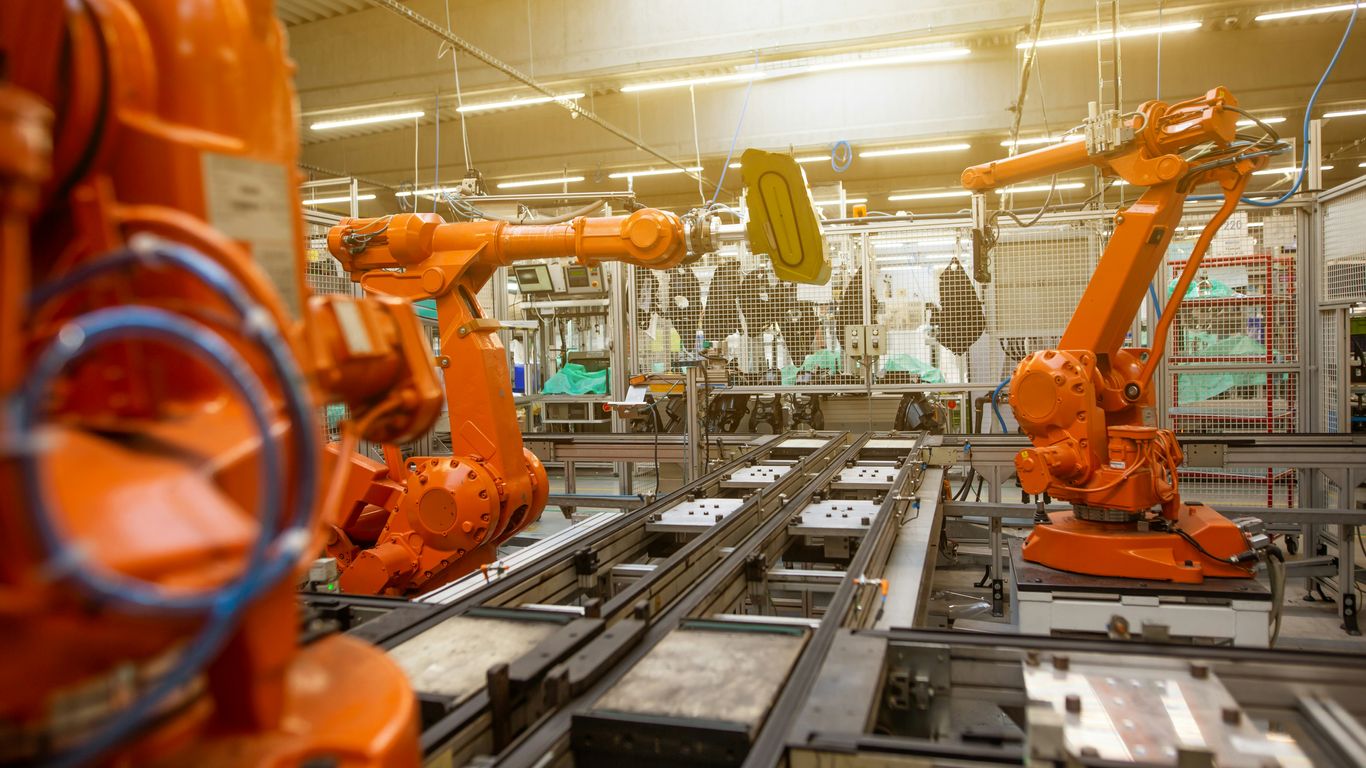
Agility Robotics has gained significant traction by prioritizing the physical realities of navigating industrial warehouses and manufacturing floors. Their approach emphasizes bipedal stability, which allows robots to operate within environments designed specifically for human movement, such as navigating staircases and maneuvering through narrow aisles. This Agility Robotics platform serves businesses aiming to automate vertical logistics without significant retrofitting of existing facility layouts.
Beyond mobility, the company focuses on the operational integration of their systems within existing human-robot collaborative frameworks. The integration of high-fidelity sensors and adaptive control algorithms enables these machines to maintain balance across irregular surfaces and during interactions with moving objects. This capability is essential for sustaining long-term operations where traditional fixed-automation systems would face limitations due to space constraints or fixed-path requirements.
Strategic deployment involves monitoring total cost of ownership as fleet sizes grow, a necessary consideration for large enterprise logistics partners. By documenting performance metrics in live operational data, the team ensures that their hardware addresses core engineering challenges rather than just theoretical proof-of-concept testing. Their focus on practical hardware durability positions them as a key player in the next generation of logistics automation.
3. Sanctuary AI: Developing human-like intelligence for labor tasks

Sanctuary AI distinguishes its work by focusing on the creation of human-like intelligence engines that can power a variety of labor-intensive roles. The underlying goal is to replicate the cognitive adaptability required for diverse manual tasks, enabling a single robot platform to handle different responsibilities based on task-specific software updates. This adaptability is key to making automation financially viable for mid-sized firms that cannot afford dedicated machines for every individual sub-task.
Understanding the nuance of fine motor skills remains a primary R&D focus for the team. By training models on extensive datasets reflecting human motion, they aim to produce autonomous actions that feel natural and highly precise. This allows for applications ranging from delicate equipment handling to repetitive maintenance duties that require a degree of situational awareness traditionally provided by human technicians.
As the company moves toward wider commercialization, they maintain a focus on the ethical data sourcing and safety training required for high-interaction environments. Their commitment to building a system that learns from human expert performance provides a pathway to bridging the gap between static programming and dynamic, situational responsiveness. This developmental trajectory is crucial for the eventual integration of humanoid workers into the modern labor force.
4. Viam: Simplifying robotics fleet management and backend operations
The software landscape in robotics is currently constrained by fragmented deployment environments. Viam addresses these issues by offering a unified infrastructure that connects the lab to the field, treating robot fleets as software-defined assets. This approach allows developers to iterate on algorithms and push updates to multiple devices simultaneously, regardless of the individual hardware specifications. For teams seeking a competitive intelligence report to evaluate market positioning, understanding how these software primitives influence deployment speed is essential.
| Feature Capability | Primary Benefit | Scaling Potential |
|---|---|---|
| Remote Execution | Fleet-wide updates | High impact |
| Sensor Abstraction | Unified data streams | High efficiency |
| Edge Processing | Reduced cloud latency | Operational cost reduction |
By decoupling the software layer from the underlying robotic hardware, firms can maintain consistency across diverse equipment types. This is particularly valuable for complex logistics networks that rely on a mix of autonomous mobile robots and fixed-arm systems. The capability for seamless data synchronization ensures that maintenance insights and operational logs are accessible in real time, preventing the data silos that often hinder rapid scaling.
Simplified backend operations also enable long-term sustainability by streamlining how businesses approach troubleshooting in remote locations. When an issue occurs away from the home office, technical teams can diagnose and rectify the software-defined state of the asset using remote access tools. This reduction in downtime is a massive differentiator for enterprises that need to manage assets like a remote gérer votre bien immobilier en France portfolio through digital management solutions.
5. 1X: Integrating embodied AI in collaborative workspaces

1X is carving a niche by focusing on embodied AI that thrives in human-centric collaborative workspaces. Their design philosophy centers on physical safety and intuitive interactions, ensuring that machines can operate efficiently alongside human team members without disrupting existing workflows. This focus on safe, effective coexistence is essential for the adoption of humanoids in professional settings that prioritize team-based productivity.
Integration involves leveraging advanced sensor suites and machine learning to predict human movement and intent. These capabilities allow the machines to adjust their trajectory and speed in real-time response to their surroundings. The result is a more fluid cooperative experience that minimizes the risk of accidents while maximizing throughput in shared task environments.
Key areas under development include:
- Neural-based planning for navigation in crowded areas.
- Haptic feedback loops for precise object interaction.
- Shared-state environments for synchronized multi-agent behavior.
- Regulatory compliance mapping across global regions.
By concentrating on these four pillars, the firm ensures that their technological growth remains rooted in the practical requirements of the end user. This strategic alignment between R&D output and market needs is a hallmark of Top 100 Companies that lead the deep tech space through iterative, grounded innovation rather than pure-play research.
6. Skild AI: Building foundational models for general-purpose robot hardware
Skild AI concentrates on the development of foundational machine learning models intended for a broad spectrum of robotic hardware. By creating models that are intentionally agnostic to the underlying mechanical structure, the firm empowers different manufacturers to build intelligence directly into their units. This represents a significant shift from proprietary, closed-source models toward a more modular approach to industrial autonomy.
These foundational models act as the brain that directs perception, planning, and control, effectively reducing the R&D burden for hardware builders who don't specialize in high-level AI. By distilling massive datasets of physical actions into optimized weights and parameters, the technology can function effectively across different types of limbs, grippers, and chassis. This horizontal approach allows the field to benefit from shared advancements in reasoning and environmental comprehension.
Testing and validation occur in both synthetic environments and physical testbeds to ensure behavior reflects real-world complexities. The team emphasizes the scalability of these models, aiming to support anything from industrial manipulators to autonomous mobile platforms. As inside deep tech reports have observed, the ability to build general-purpose models will fundamentally change the competitive landscape for robotics hardware in the coming years.
7. Machina Labs: Automating complex metal manufacturing with robotic additive engineering
Machina Labs targets the critical intersection of flexible manufacturing and high-end materials processing through robotic additive engineering. By utilizing advanced robotic manipulators to shape metal components with high precision, they avoid the need for specialized tooling, which traditionally slows down the production cycle. This method is particularly relevant for prototyping and low-volume production runs where speed and accuracy are paramount.
Engineering teams can iterate designs much faster by relying on programmatic adjustments to the robot’s pathing rather than modifying physical molds. This allows for the production of geometries that were once considered cost-prohibitive or physically impossible using standard CNC or manual metalwork. The combination of high-speed sensors and real-time modeling ensures that structural integrity is maintained throughout the additive process.
Industrial uptake of this technology is driven by the desire for agility in supply chains, especially in aerospace and energy sectors. By proving that robotic systems can handle high-force applications with accuracy comparable to traditional legacy methods, the company has established a new standard for efficient metal part production. Their work highlights the benefits of combining machine-based adaptability with industrial-grade mechanical output.
8. Serve Robotics: Expanding autonomous last-mile delivery networks
Serve Robotics manages autonomous delivery platforms specifically designed for the complexities of urbanlast-mile logistics. By deploying robots that navigate city sidewalks, the startup aims to provide a reliable solution to the rising demand for efficient local delivery. Their systems utilize sophisticated computer vision and path-planning modules to operate safely in busy street environments while interfacing directly with merchants and consumers.
Successful operation requires a resilient approach to both technological capability and urban compliance. The platform has demonstrated the ability to scale in densified metropolitan areas through iterative testing and continuous updates to its obstacle-avoidance logic. This strategy keeps operational costs low while maximizing the delivery throughput of each unit on the ground.
As they expand, the focus remains on building reliable network-wide autonomy that can handle unexpected street obstructions and weather-related challenges. The integration of robust teleoperation protocols ensures that human oversight exists for extreme edge cases, maintaining service continuity for customers. This balance of autonomous execution and reliable remote assistance is the foundational requirement for successful last-mile automation.
9. Carbon Robotics: Transforming precision agriculture with laser-weeding robots
Carbon Robotics demonstrates the efficacy of applying AI to sustainability through its advanced laser-weeding technology. By using high-resolution cameras and onboard computing, these robots identify invasive plant growth with extreme precision and neutralize weeds using thermal energy. This Carbon Robotics platform provides farmers with a non-chemical alternative to conventional crop management, directly improving the long-term health of agricultural land.
Agricultural efficiency isn't just about output speed; it is defined by the ability to optimize resources like water, soil, and labor while ensuring the long-term viability of the farm itself through precise autonomous intervention.
Integrating laser technology with autonomous vehicle platforms allows for high-throughput weeding that operates around the clock. By eliminating the reliance on herbicides, agricultural producers see significant savings and improved farm certification metrics for organic or pesticide-limited operations. The scalability of these solutions is proven across diverse agricultural settings, showing clear paths to operational profit and environmental stewardship.
10. Apptronik: Deployment of commercial-grade humanoid robots for logistics
Apptronik focuses heavily on the deployment of commercial-grade humanoid robots designed for warehouse logistics and material handling. Their engineering priority is to bridge the gap between abstract research performance and day-to-day warehouse reliability. By designing modules that are simple to integrate with existing logistics management software, they ensure that businesses can adopt humanoid systems without completely rebuilding their internal operations.
Safety is a paramount concern in any warehouse setting. The technical architecture includes layers of behavioral constraints that ensure safe cooperation between the machines and human workers. By focusing on standardization and testing in real-world scenarios, the team builds a product that can be safely fielded in diverse, changing environments without requiring specialized programming at every deployment site.
Looking toward mass adoption, the firm emphasizes the need for a balance between sophisticated AI capabilities and the durability required for sustained warehouse duty cycles. As they coordinate with logistics partners, the focus remains on proving that humanoid platforms provide measurable enhancements to productivity. This commitment to testing and clear performance metrics will likely set the baseline for commercial adoption in the global logistics industry.
Conclusion
The landscape of robotics is moving beyond the conceptual phase, with firms focusing on the transition from lab-bound research to reliable, scalable infrastructure. By prioritizing factors like hardware durability, software-defined fleet management, and specialized task intelligence, these companies are demonstrating that machines can indeed solve complex, real-world problems. For founders, investors, and engineers, the next stage of growth will stem from these foundational developments that prioritize long-term performance and widespread integration across our industrial, logistical, and agricultural sectors.
Frequently Asked Questions
What are the main limitations for humanoid robots entering the workforce today?
Primary constraints include power density for long-duration operation, the complexity of sensor-based AI models in unstructured environments, and the strict safety certification requirements for machines interacting directly with humans.
How will autonomous systems change warehouse management in the near future?
Automation will shift warehouse operations toward software-defined tasks, allowing for increased flexibility and dynamic reallocation of work, ultimately reducing the downtime associated with manual labor scheduling and traditional system retrofitting.
Why is software-defined fleet management becoming a priority for robotics companies?
Unified software management is essential as fleets grow in size; it allows for remote updates, standardized debugging across different hardware platforms, and the reduction of data silos that hinder efficient, large-scale operations.
What determines whether a robotics startup will succeed commercially?
Success is generally linked to whether a startup prioritizes documented operational uptime, cross-industry applicability, and integration into existing human-robot collaborative environments over theoretical lab performance or high-hype demo videos.
Are current AI foundational models sufficient for general-purpose robot control?
Foundational models have shown great promise in generalizing action patterns, but they still require massive, diverse training datasets and rigorous testing in physical testbeds to safely handle the unpredictability of real-world environments.
How can precision robotics impact modern environmental sustainability?
Autonomous systems like laser-based weeders or optimized logistics platforms reduce the need for chemicals and wasted energy, enabling highly targeted operations that conserve resources and protect the integrity of the soil and ecosystem.
What does human-robot collaboration look like in an industrial context?
Effective collaboration involves systems that predict human movement to ensure safety while dynamically shifting tasks to offload the repetitive, dull, or dangerous physical labor from human workers, thus augmenting overall team productivity.}, "metadescription": "Discover top robotics startups 2026: exploring advancements in AI, general-purpose humanoid robots, and sustainable automation.", "images": [{"id": "img-1", "query": "industrial robot arm", "fallbackQuery": "robotic hardware", "_tag": "stock"}, {"id": "img-2", "query": "artificial intelligence chip", "fallbackQuery": "computer brain", "_tag": "stock"}, {"id": "img-3", "query": "collaborative office workspace", "fallbackQuery": "modern desk", "_tag": "stock"}, {"id": "img-4", "query": "metal factory manufacturing", "fallbackQuery": "precision factory", "_tag": "stock"}], "featured": {"id": "featured-1", "query": "futuristic robotics concept", "fallbackQuery": "advanced technology studio", "_tag": "stock"}, "videosQuery": "latest humanoid robotics industry advancements 2026"}