Key Takeaways
This article reviews top defense tech startups in 2026, highlighting how software-defined autonomy and advanced manufacturing are reshaping the sector.
- Startups are increasingly utilizing commercial AI architectures to accelerate hardware deployment.
- Sovereignty is driving investment, with nations seeking localized production of critical defense systems.
- Counter-drone operations are shifting from expensive kinetic interceptors to cost-effective, swarm-capable platforms.
- Manufacturing scale and digitized supply chains are replacing legacy prototype-to-procurement cycles.
- Maritime and space domains have become primary frontiers for new autonomous platform deployment.
1. Anduril Industries and the shift toward sovereign autonomy
Anduril Industries stands as a primary architect in the modernization of national security infrastructure, focusing on the delivery of software-defined autonomous systems that operate independently of human mission control. This shift toward sovereign autonomy reflects an industry-wide pivot away from traditional, bespoke platforms toward agile, scalable solutions that can be rapidly iterated based on battlefield feedback. By treating hardware like software, the company allows for frequent updates to existing fleet capabilities.
Traditional prime contractors often relied on decades-long development cycles, but current market conditions demand rapid response times. The adoption of autonomous systems across domains has proved essential for maintaining operational superiority in contested environments. This systemic shift is supported by research from Inside Deep Tech which tracks how companies like Anduril Industries are bridging the gap between innovative research and field-ready capabilities.
Founders and investors are now prioritizing companies that can integrate these systems across existing military architectures. The focus remains on modularity and inter-service compatibility, ensuring that new tech can be deployed without requiring total overhauls of legacy communication gear. As we move further into 2026, the reliance on these agile systems will likely continue to scale alongside evolving geopolitical requirements.
2. Shield AI and the intelligence behind drone swarms
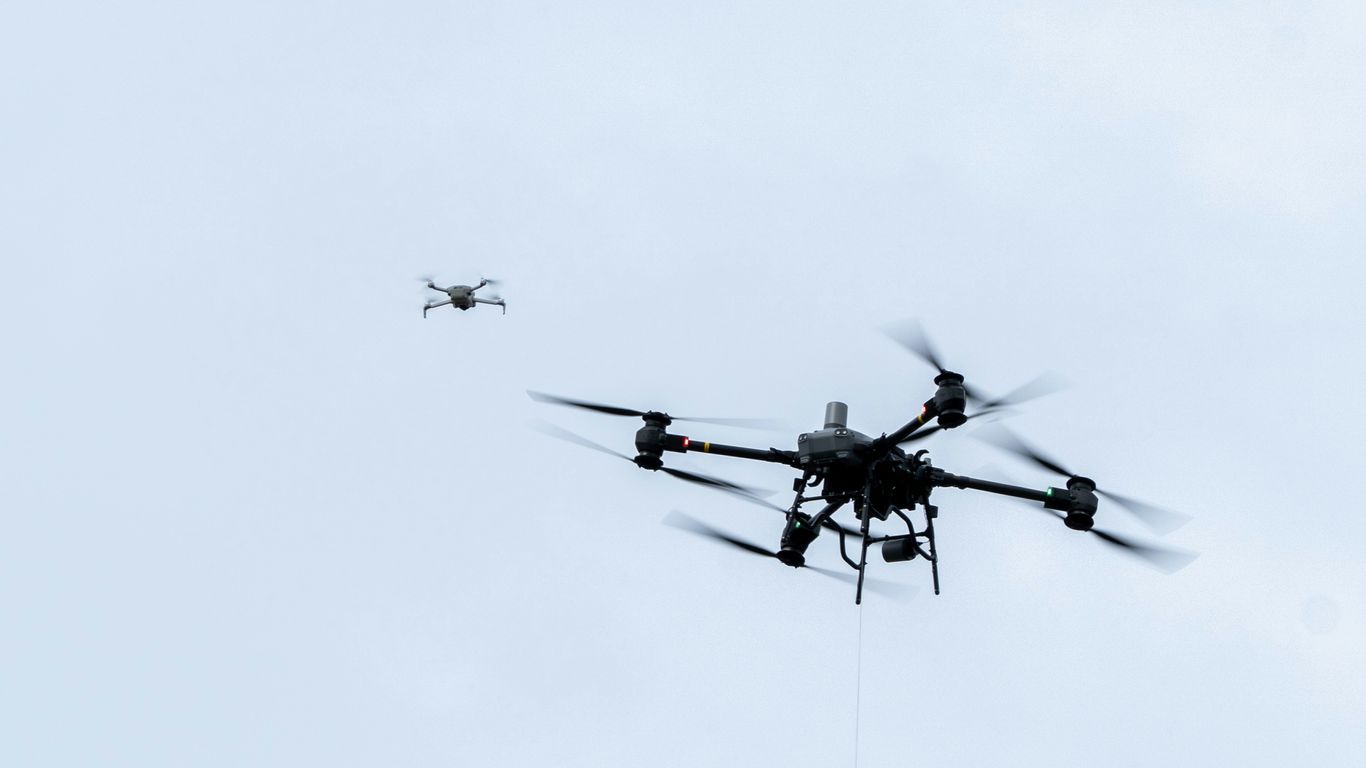
Shield AI is transforming the operational efficacy of aerial assets by embedding advanced localized intelligence directly into drone swarms. Their Hivemind software allows clusters of unmanned aircraft to navigate, communicate, and execute complex tactical missions in GPS-denied environments without needing persistent support from a remote pilot. This capability enables significant force multiplication while reducing the cognitive burden on human operators who manage these complex edge-computing platforms.
By leveraging autonomous artificial intelligence, these platforms achieve levels of performance previously reserved for highly specialized, manned manned-crewed aircraft. This evolution is vital as battlefield density increases, necessitating systems that can parse vast amounts of sensor data in real-time. For more context on these emerging trends in the broader landscape, Inside Deep Tech's guide to defense trends provides deeper analysis on the growth of AI-driven security modules.
Integration remains a critical factor for success in these deployments. The following table highlights the operational advantages of moving from traditional platforms toward software-centric, intelligent swarms:
| Feature | Traditional Systems | Intelligent Swarms |
|---|---|---|
| Control Method | Remote Pilot | Autonomous AI |
| Scalability | Low | High |
| Reliability | Variable | Robust/Redundant |
| Connectivity | Persistent | Denied-Capable |
3. Hadrian and the digitization of defense manufacturing
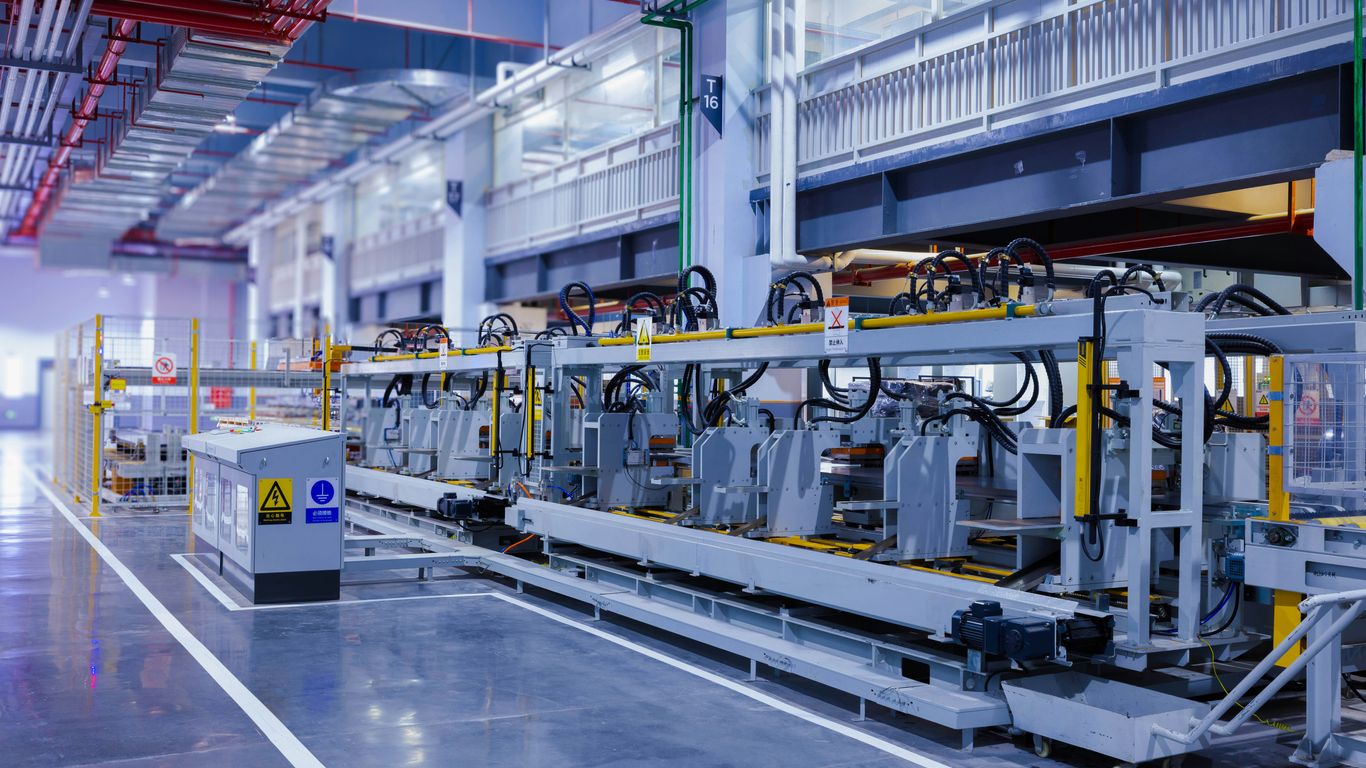
Hadrian is tackling the bottleneck of domestic production by automating the precision manufacturing process required for high-performance defense components. By digitizing the factory floor and implementing proprietary software to govern material flow, the company significantly reduces typical lead times that previously constrained the aerospace and defense sectors. This digitization creates a reliable supply line that mirrors the speed of software development, a capability critical for modern national security.
The industry has long struggled with the transition from lab-proven prototypes to full-scale production. Hadrian addresses this by focusing on throughput efficiency, ensuring that the necessary hardware can be produced at cost and at scale. This strategy is essential for companies looking to secure defense tech startups funding, as investors prioritize companies that demonstrate a clear pathway to manufacturing reality.
Scaling operations requires a strict focus on supply chain resilience and material quality. The following list details the core improvements Hadrian brings to the defense manufacturing stack:
- Automated pathing of raw materials to increase shop floor efficiency.
- Software-driven quality control protocols to reduce human error rates.
- Real-time inventory tracking for mission-critical aerospace alloys.
- Optimized scheduling to slash multi-month prototyping wait times.
4. Epirus and the future of counter-unmanned aerial systems
Epirus is redefining the approach to defending against proliferated drone threats, primarily through its development of directed energy systems that provide precise control over high-frequency electromagnetic pulses. These systems offer a non-kinetic method for neutralizing unmanned threats, which is increasingly vital for securing military sites and critical infrastructure without the collateral risks associated with traditional missiles. The scalability of these solutions allows them to be mounted on mobile platforms for deployment near the front lines.
Unlike conventional kinetic solutions that often cost more than the threats they neutralize, directed energy offers a significantly lower cost per engagement. This unit economics advantage is a necessary catalyst for achieving widespread adoption across the U.S. military services. As these technologies mature, their ability to provide instant, silent defense against massed threats will change how logistics convoys and military bases are protected in active combat zones.
The integration of these systems necessitates a deep understanding of RF physics, a domain where engineering-heavy startups are finding success. The shift toward software-defined EW (Electronic Warfare) capability is a defining characteristic of this generation of defense startups. As we look at the current competitive landscape for companies like Epirus, it is clear that software-first hardware is becoming the standard for modern defense applications.
5. Rebellion Defense and the application of ethical machine learning

Rebellion Defense deploys advanced software platforms designed to optimize decision-making processes for military commanders through the application of ethical machine learning algorithms. Their tools sift through massive, cluttered data environments to provide actionable intelligence, helping leaders identify threats and allocate resources across the spectrum of cyber and physical operations. By embedding ethical guardrails into the software, they ensure that machine-driven recommendations align strictly with mission-specific requirements and operational protocols.
Machine learning is not merely about identifying trends; it is about providing the data-rich context needed to navigate highly complex decision trees under pressure. Rebellion Defense has positioned its software to support mission command by automating the analysis of logs, sensor feeds, and communications traffic. This is a critical departure from legacy intelligence tools that often required weeks of offline analysis before becoming usable for field commanders.
As the volume of data extracted by modern sensors grows, the ability to process that data near the edge becomes a competitive necessity. Developing software that can handle these high-throughput volumes while maintaining rigorous security standards is the central challenge for contemporary defense intelligence firms. Investment in these capabilities has tracked alongside broader growth in deep tech VC activity, reflecting a realization that better data management is often as valuable as greater hardware capabilities.
6. Mach Industries and the integration of combat robotics
Mach Industries is focused on the rapid design and deployment of combat robotics that bring specialized kinetic capabilities to the tactical level. By standardizing the underlying components of their robotic systems, they allow for rapid adaptation to specific mission needs, such as reconnaissance, supply delivery, or offensive operations. This focus on modularity enables service members on the ground to field systems that are fit-for-purpose without waiting for years of development cycles.
Integrating robotics across the military branches requires solving the difficult problem of physical and digital inter-operability. Mach Industries has oriented its R&D around the idea that hardware should be a commodity-like plugin for a broader autonomous brain. This lowers the barrier to entry for users who need to swap out specialized effectors depending on the environmental constraints or the nature of the immediate target.
These advancements in robotics represent a broader transition toward machines taking on higher-risk tasks in contested environments. By providing force multipliers that are both portable and capable of high-intensity action, the company contributes to a more resilient military posture. The shift toward these technologies is representative of a larger, systemic evolution that investors frequently analyze when exploring frontier technology moats in the modern era.
7. True Anomaly and the modernization of space domain awareness

True Anomaly is addressing the growing challenges of space domain awareness by developing the infrastructure needed to autonomously track and observe high-value assets in orbit. As orbital congestion increases, the ability to identify potential threats or unintentional collisions has become a national security priority, driving a demand for better sensors and smarter analytical software. Their systems are designed to provide persistent, high-fidelity monitoring, which is critical for maintaining stability in this complex, contested domain.
Existing space situational awareness programs often rely on ground-based radar systems that suffer from gaps in coverage or lower resolution. True Anomaly's approach relies on deploying a distributed network of satellites that can perform close-proximity maneuvers to gain deeper intelligence on unknown orbital objects. This represents a proactive shift in orbit-side operations, treating space more like a dynamic territorial frontier than a passive vacuum.
The commercial implications of reliable space tracking are significant for both defense and civil infrastructure. With the growth of the space tech economy, the need for companies that can maintain the safety and integrity of orbital assets has never been higher. True Anomaly's current trajectory underscores why investors remain highly focused on companies that can demonstrate both technical rigor and a clear understanding of the regulatory landscape governing space-borne operations.
8. Saronic and the evolution of autonomous maritime platforms
Saronic is developing autonomous maritime platforms designed to operate in contested waters where larger manned vessels face significant risks. These vessels are equipped with high-end sensor suites and edge-processing capabilities that allow them to conduct surveillance, reconnaissance, and offensive missions in real-time. By removing the need for an onboard crew, Saronic allows these platforms to operate in high-risk zones, extending the reach of existing naval fleets while minimizing exposure for service members.
Autonomous maritime systems face harsh physical requirements, including long endurance in high-salinity environments and reliable communication through unpredictable sea states. The software architecture supporting these platforms must be capable of processing ocean-based sensor data with low latency, providing clear situational awareness to operators. This technical complexity is a barrier to entry that startups like Saronic are currently scaling through rapid testing and iterative hardware design.
Naval modernization programs are increasingly viewing these smaller, cheaper, and expendable maritime tools as vital additions to traditional aircraft carrier strike groups. This shift acknowledges the reality of asymmetric threats facing naval operations globally. As national security planners evaluate these tools against conventional assets, companies focused on autonomous platform scaling are likely to see sustained procurement interest as requirements become more clearly defined.
9. Astranis and the expansion of resilient defense communications
Astranis is expanding the reach of resilient satellite communications by building advanced, small-form-factor satellites that deliver high-capacity connectivity to specific, targeted theaters of interest. These satellites provide a critical backplane for the modern, data-hungry military, ensuring that units in remote areas maintain high-speed access to tactical info-feeds. In the face of increasing electronic warfare threats that target GPS and wide-area communications, the ability to deploy dedicated, low-cost satellites constitutes a significant leap in link resiliency.
The company’s approach focuses on agility, allowing for the rapid deployment of new orbital assets as security requirements shift. By reducing the size and mass of their satellites, they lower launch costs and increase the total number of vehicles that can be placed into orbit on a single delivery mission. This helps the DOD avoid relying on generic, over-stressed communication satellites that could easily be rendered ineffective by contested electromagnetic environments.
Resilient, high-capacity communication is the bedrock upon which all other software-delivered defense technologies depend. Without reliable data transfer, the capabilities provided by autonomous swarms and AI intelligence units would remain siloed and largely ineffective. In the context of the growing defense innovation ecosystem, Astranis provides the essential plumbing required to link modern battlefield systems across the entire command hierarchy.
10. Flux Marine and the demand for littoral electric propulsion
Flux Marine is addressing the critical need for silent, efficient, and reliable electric propulsion systems for littoral operations. By developing electric outboards that provide minimal heat and acoustic signatures, the company enables stealthy maneuvering and deployment in shallow or sensitive coastal environments. This is particularly valuable for small-unit combat operations where keeping a low thermal and audible profile is essential for covert mission success.
Electric propulsion represents a major shift from the vibration-heavy, loud internal combustion engines that have traditionally defined small naval craft. These electric engines are more efficient at low speeds and easier to maintain, which is a major advantage for teams operating far from traditional supply depot infrastructure. As the military moves toward more distributed, small-team-based tactics near potential conflict zones, the reliance on high-performance electric motors provided by vendors like Flux Marine is expected to grow.
The transition to electric platforms in the maritime domain mirrors the industry-wide move toward decentralization and stealth in modern battlefield tactics.
As the military continues its shift toward smaller, more numerous platforms, the importance of robust electric systems that support clandestine operations cannot be overstated. By focusing on hardware that optimizes for quiet performance and energy density, Flux Marine provides an essential component for the next generation of maritime security strategies. This technical excellence helps establish the durable foundation required for future autonomous vessel deployments in local waters.
Conclusion
The defense landscape of 2026 is defined by a rapid integration of commercial technology into military infrastructure, moving away from slow, legacy processes toward agile, software-defined systems. As startups increasingly tackle challenges in space domain awareness, autonomous maritime presence, and resilient communications, the barrier to innovation continues to fall, enabling more rapid deployment of capabilities that better reflect the realities of modern warfare and security.
Frequently Asked Questions
What does it mean for a system to be software-defined in a defense context?
A software-defined defense system is hardware that is designed to be easily upgradable or reconfigured via code, allowing platforms to evolve their operational capabilities long after they have been manufactured or deployed.
Why are companies moving toward autonomous drone swarms?
Autonomous swarms allow for the execution of complex tactical missions in high-density environments while significantly reducing risk to personnel and performing tasks beyond human fatigue limits.
How does the DOD currently contract with non-traditional defense startups?
The Department of Defense uses various innovation hubs, research grants, and rapid procurement cycles to engage with startups that do not follow the legacy prime contractor business model.
What are the main benefits of directed energy for counter-drone operations?
Directed energy offers a cost-effective, non-kinetic way to neutralize hostile drones without using expensive missiles or creating the debris and environmental risks associated with kinetic weapons.
Why is manufacturing scale considered a priority for defense startups?
After the initial research and development phase, moving to large-scale production is mandatory for a company to provide enough inventory to be considered a viable, standard-issue tool for national security.
What role does artificial intelligence play in modern battlefield intelligence?
AI is responsible for parsing vast, noisy datasets into actionable intelligence, which allows human leaders to make evidence-based decisions much faster than they would with manual intelligence analysis.
Why is the maritime domain becoming a focus for autonomous technology?
Maritime domains contain large areas that are difficult to guard; autonomous ships provide a persistent, low-cost presence that can monitor and defend these zones without needing a human crew present at all times.