
Key Takeaways
Deep tech companies are currently reshaping global infrastructure by prioritizing rigorous scientific research over incremental product iteration.
- Advanced startups are bridging the gap between theoretical labs and scalable industrial commercialization.
- Quantum computing pioneers are transitioning from noisy, intermediate-scale systems toward practical, error-corrected architectures.
- Synthetic biology platforms represent a fundamental shift in how pharmaceuticals and high-value materials are manufactured.
- Autonomous systems in defense and construction are leveraging sensor fusion to reduce operation costs and human risk.
- Modern venture funding is increasingly concentrating on enterprises that possess unique, defensible intellectual property in core hard-science fields.
1. OpenAI
OpenAI operates at the frontier of machine learning, focusing primarily on the scaling of large language models. By treating compute, data, and algorithmic architecture as variables that yield predictable emergent behaviors, the firm has set industry standards for generative performance. The core mission remains the advancement of artificial intelligence in ways that extend human capability.
The organization maintains a rapid release cycle, shifting research discoveries into actionable APIs that developers rely upon for diverse applications. This iterative approach allows for the discovery of safety and alignment challenges in real-world environments before they manifest as systemic risks. Understanding these dynamics is essential for any modern firm evaluating how advanced neural architecture impacts competitive signaling.
Investment into this sector has fundamentally changed how researchers view the ceiling of performance. As the firm continues to navigate the complexities of deployment, it provides vital data on how foundation models might eventually interface with hardware, influencing the trajectory of every company currently working in AI.
2. Anduril Industries
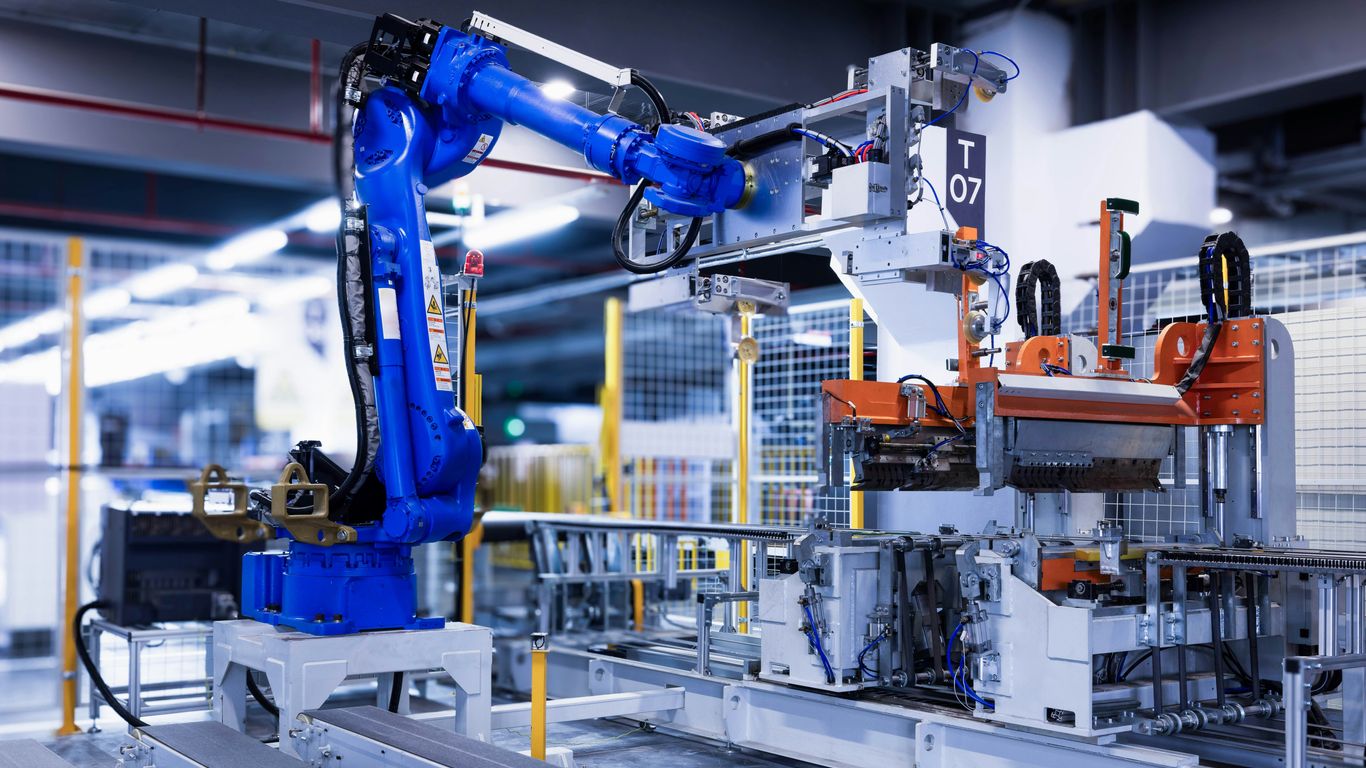
Anduril Industries utilizes a software-defined approach to defense technology, prioritizing modular systems over traditional, monolithic platforms. By integrating proprietary sensor suites with autonomous decision-making software, the company provides hardware that adapts rapidly to changing mission parameters. The engineering culture here treats field-readiness as the primary design constraint for all new assets.
Their portfolio focuses on vertical integration, ensuring that hardware and software are built in tandem to reduce latency in communication and execution. This design philosophy enables decentralized operations where hardware units function collectively without centralized human control, a shift from historical models of military procurement. By focusing on rapid prototyping, the firm significantly lowers the time between initial specification and operational deployment.
This methodology encourages a shift toward more responsive security infrastructure, allowing tactical teams to maintain situational awareness in contested environments. Such advancements remain crucial for national security, illustrating why the intersection of robotics and software is a primary driver for the best companies building in deep tech today.
3. Commonwealth Fusion Systems

Commonwealth Fusion Systems is developing compact, high-field fusion reactors to provide a virtually limitless source of clean energy. Utilizing advancements in high-temperature superconducting magnets, the team aims to shrink the physical footprint of fusion systems while maximizing plasma confinement efficiency. This project marks a transition from government-led experimental physics to industry-driven energy development.
Integrating Commonwealth Fusion Systems into the energy conversation requires an understanding of their specific approach to magnetic geometry and thermal management. The pursuit of net-gain fusion necessitates balancing extreme temperature constraints with the durability required for sustained, long-term reactor uptime. Their progress serves as a litmus test for the viability of universal quantum computing and other high-complexity physics projects that rely on precise magnetic control.
Successfully scaling this technology would fundamentally decouple industrial growth from carbon-intensive power sources. By pushing the boundaries of material science to accommodate the conditions required for fusion, the company is creating a blueprint for the next century of base-load power generation.
4. Relativity Space
Relativity Space is revolutionizing aerospace manufacturing by utilizing large-scale additive construction to print rockets with fewer parts. By automating the production floor, they reduce the complexities associated with traditional assembly lines and material supply chains. The proprietary printing process, known as Stargate, allows for rapid iteration of vehicle designs that would otherwise require months of retooling.
This manufacturing paradigm allows for structural optimizations that were previously impossible to achieve through welding or casting. Each rocket design serves as a testbed for new manufacturing parameters, enabling the company to lower the barrier for entering low Earth orbit. Their focus on deeptech engineering ensures that every flight provides data that directly influences the next generation of 3D-printed hardware components.
Reliability in launch services remains the ultimate goal for the firm as it scales toward regular flight cadences. By replacing heavy infrastructure with integrated print technology, they illustrate the potential for agile hardware production to disrupt legacy aerospace markets globally.
5. Form Energy

Form Energy addresses the intermittent nature of renewable energy through the development of iron-air battery technology. Unlike lithium-ion solutions, these systems prioritize cost-effective, long-duration storage, suitable for managing shifts in electricity availability. The technology essentially breathes oxygen to facilitate a reversible rust reaction, providing a stable, scalable mechanism for grid reliability.
Implementing these storage systems across electrical grids allows utility providers to smooth out the fluctuations that typically complicate the adoption of wind and solar power. Their approach combines chemical research with large-scale industrial manufacturing, targeting a price point that makes multi-day battery backups economically possible. This makes them a vital case study in the broader transition toward sustainable power architectures.
Building out this capacity requires a robust strategy for site management and grid integration. As they scale, their storage units provide essential infrastructure for regions struggling to balance grid stability with the urgent need for decarbonization.
6. IonQ
IonQ explores the potential of trapped-ion hardware to perform calculations in environments that require high coherence and precision. By using individual atoms as natural, identical qubits, the system minimizes the environmental noise that complicates traditional superconducting approaches. Their work is a cornerstone for firms evaluating the promise of quantum-assisted computation in fields ranging from material simulation to finance.
Researchers at the company focus on maximizing gate fidelity while expanding the total number of addressable qubits within their processors. The ability to manipulate these trapped ions with light allows for a highly flexible approach to gate operations, supporting various quantum algorithms. This flexibility is essential for creating high-performance computational assets that can solve specific, high-value business problems.
To better understand the current hardware capabilities at the firm, consider the following performance targets their team identifies as critical:
- High-fidelity gate counts for complex error reduction.
- Scalable interconnects designed for multi-module architectures.
- Room-temperature operational workflows for core logic.
- Precision control interfaces for cloud-accessible APIs.
This deliberate focus on physical atom manipulation distinguishes their path toward commercial utility. By systematically addressing the decoherence factors found in noisy environments, they move closer to achieving stable operations that exceed classical computer limits.
7. Ginkgo Bioworks

Ginkgo Bioworks designs custom organisms to act as biological foundries, capable of producing high-value compounds, ingredients, and medicines. Their platform automates the cellular engineering process, allowing clients to iterate through genetic design cycles at high speed. By treating DNA sequence design like software code, they accelerate the development of biological products for global industries.
Integrating this platform requires high-throughput genomic data processing and massive computational bandwidth to simulate potential outcomes. Their work demonstrates how digital modeling can lower the entry costs for traditional pharmaceutical manufacturing while ensuring precision in chemical synthesis. This approach has opened new horizons for the production of everything from specialty enzymes to advanced agricultural inputs.
Looking forward, the company continues to refine their bench automation and robotic sampling processes. This ongoing optimization allows them to handle an increasingly diverse set of biological projects, establishing a precedent for how data-driven synthetic biology functions at scale.
8. Carbon Robotics
Carbon Robotics utilizes laser-thin precision and computer vision to manage agricultural fields without the need for chemical herbicides. Their autonomous robots move through crop rows, identifying weeds based on visual signatures and neutralizing them instantly with heat. This hardware provides a scalable way to reduce chemical consumption in industrial farming operations.
This solution directly addresses labor shortages and the environmental impact associated with traditional weed management. By deploying fleets of these machines, farms can maintain high yields while lowering their reliance on labor-intensive hand-weeding or chemical spray regimens. Their hardware serves as an ideal example of how Physical AI can solve tangible operational problems in the field.
Success in this space relies on the consistent performance of the computer vision pipeline under varied lighting and terrain conditions. Their current trajectory indicates that as robotics become more robust, they will form the backbone of the next generation of efficient, autonomous food production systems.
9. Recursion Pharmaceuticals
Recursion Pharmaceuticals leverages digital biology to map the complex relationship between biological entities and drug performance. By using machine learning to analyze massive sets of phenotypic data, the company identifies potential medicinal targets with higher efficiency than traditional trial-and-error discovery methods. This computational pipeline effectively simulates thousands of interactions to prioritize the most promising molecules.
This shift towards a data-centric model of research changes the fundamental economics of the drug development lifecycle. Below, find a comparison of standard research methods and the digital approach utilized by modern labs like these:
| Research Stage | Traditional Method | Digital Biology Method |
|---|---|---|
| Target Identification | Manual Literature Review | Algorithmic Pattern Search |
| Molecule Testing | Sequential Wet-Lab Trials | Simulated High-Throughput |
| Result Synthesis | Human Analysis | Multi-Modal Data Fusion |
Implementing this workflow requires significant integration between cloud computing and laboratory hardware. The success of their projects validates the premise that biological phenomena can be successfully quantified and optimized through rigorous computational modeling.
10. Figure AI
Figure AI designs general-purpose humanoid robots intended to perform tasks across a variety of environments, from manufacturing floors to logistics hubs. By focusing on multimodal reasoning and motor control, the bots learn to interact with complex objects similarly to living agents. Their roadmap emphasizes the creation of machines that adapt to the surrounding environment rather than relying on pre-programmed instructions.
This vision aligns with the work of 1x Technologies, which also prioritizes learning from real-world human demonstration. By contrast, Agility Robotics has recently demonstrated significant progress in commercially focused deployments for high-volume logistics sites. Collectively, these firms are proving that humanoid hardware is transitioning from experimental research into viable business assets.
Managing the safety and reliability of such robots in human-centric spaces remains a critical part of their engineering hurdle. As the software governing their decision-making matures, these machines will become essential components for automating physical operations in sectors that currently struggle with chronic labor limitations.
Conclusion
The companies highlighted here represent the vanguard of a massive shift in how humanity interacts with physical and digital systems. By grounding their innovations in fundamental scientific principles, these organizations are building the foundations for a future that will rely less on ephemeral software trends and more on rigorous engineering breakthroughs.
Frequently Asked Questions
What qualifies a company as a deep tech firm?
A company falls into the deep tech category when its core business is built upon significant scientific research or advanced engineering breakthroughs that require substantial R&D before reaching commercial viability.
How does deep tech differ from typical software startups?
Typical software startups often focus on solving business workflow efficiency through code, whereas deep tech requires solving fundamental challenges in physics, biology, or advanced hardware that have high barriers to entry and long development arcs.
Why is there so much interest in the deep tech sector currently?
Investors are shifting toward the sector because the innovations within promise to solve large-scale systemic problems like climate change, disease, and data processing capacity, which offer massive utility and long-term economic returns.
What are the biggest hurdles for these companies?
Common challenges include long product development cycles, the initial high cost of research and development, regulatory compliance, and the requirement for highly specialized scientific talent that is difficult to source.
Does deep tech rely on existing infrastructure?
While some rely on existing frameworks, most deep tech projects aim to create entirely new infrastructure or replace aging, inefficient systems, necessitating significant investment in new physical machinery and computational tools.
How do these companies manage their research cycles?
Most utilize iterative prototyping, moving from small-scale lab experiments to controlled field trials and simulations, which allows them to validate core technology performance before committing to mass production.
What role does computational modeling play in these fields?
Computational modeling serves as the accelerator for almost all modern deep tech, allowing researchers to simulate complex physical or biological interactions at a fraction of the cost and time required for physical experimentation.