Last updated: October 12, 2026.
Key Takeaways
The defense technology sector is experiencing a rapid transformation as firms integrate software-defined autonomy to meet modern operational requirements. This shift moves the industry from legacy hardware-centric models toward resilient, scalable, and data-driven systems.
- Emerging defense leaders are prioritizing software-first development to enhance battlefield decision speed.
- Autonomous systems now operate effectively in GPS-denied environments without human intervention.
- Strategic reliance on directed energy and advanced robotics is becoming a standard in counter-drone operations.
- Global defense budgets are increasingly directed toward dual-use technologies that leverage commercial AI advancements.
- Integration between data analysis platforms and physical autonomous assets creates a closed-loop combat capability.
1. Shield AI
Shield AI has established itself as a critical player by developing autonomous AI pilots for a variety of aircraft. The company's flagship capability, Hivemind, allows unmanned systems to navigate and execute missions in dynamic environments without reliance on traditional GPS, communications, or continuous human oversight. This creates a resilient operational framework that can persist in contested airspace where traditional command-and-control links might be severed.
Their approach centers on machine intelligence that adapts to real-world battlefield conditions. By removing the need for manual remote control, the firm enables units to penetrate high-risk zones while minimizing the exposure of personnel. The software architecture is designed to be hardware-agnostic, meaning it can be deployed across various platforms to enhance existing fleet capabilities.
Integrating this intelligence into the broader defense ecosystem requires balancing performance with reliability. Operators across the sector are watching how these autonomous pilots handle edge cases during prolonged deployments. As demand for software-driven autonomy grows, the ability of these systems to function independently remains their most significant differentiator in the current market.
2. Palantir Technologies

Palantir Technologies brings specialized data integration and analytics to the defense sector, providing the infrastructure needed to synthesize vast information streams into actionable intelligence. Their platforms serve as the connective tissue for military operations, allowing commanders to view the battlefield across land, sea, air, and cyber domains simultaneously. By unifying siloed information, the software assists in rapid threat identification and operational planning.
The adoption of data-centric workflows represents a departure from traditional, fragmented procurement processes. When defense leaders consider anduril competitors in the software layer, they often evaluate how effectively these platforms can ingest sensor data and convert it into a coherent operational picture. The scalability of these tools ensures they remain relevant even as sensor density on the battlefield continues to climb.
Modern combat requires the ability to process information at the speed of the opponent. This requires platforms capable of handling high-velocity data inputs without system degradation. As these analytical tools mature, they increasingly function as the primary interface for managing complex autonomous missions in contested environments.
3. Epirus

Epirus focuses on directed energy capabilities that address the evolving threat of small unmanned aerial systems. Their approach centers on radio-frequency technologies that can neutralize electronic hardware without causing physical damage or relying on kinetic interceptors. By managing energy output with precision, the system creates a protective envelope around critical infrastructure or military bases.
The industry is seeing several firms tackle the growing challenge of swarm-based drone attacks. The following table summarizes key technical capabilities currently dominating the counter-drone sector:
| Capability | Primary Function | Operational Target |
|---|---|---|
| Directed Energy | Signal Disruption | Electronic Payloads |
| Kinetic Interception | Physical Neutralization | Drone Airframes |
| Data Fusion | Threat Classification | Group 1-2 Targets |
Selecting the right system often depends on the specific standoff distance and the density of the threat environment. While kinetic options are effective for individual threats, electronic solutions offer a more scalable answer for high-frequency interference. This balance is critical for facilities that require continuous, cost-effective coverage against evolving hazards.
4. Skydio
Skydio enables autonomous inspections and reconnaissance through advanced drone technology that utilizes visual perception to map its surroundings. By automating flight paths and obstacle avoidance, these systems reduce the cognitive load on operators tasked with surveillance missions. This capability is vital for maintaining situational awareness in cluttered or complex industrial and military environments.
Technological breakthroughs have shifted the focus toward drones that possess inherent spatial awareness. Instead of relying on manual inputs, these systems interpret their geometry and navigate accordingly, which is essential for safely operating in settings where GPS signals are unreliable or unavailable. This shift marks a transition from manual flight control to mission-oriented autonomy.
Autonomous systems must prioritize safety and navigation in complex settings to replace human intervention effectively. When a platform can interpret its environment in real-time, the operational potential for persistent surveillance expands beyond traditional manual limits.
This level of sophistication makes these platforms highly adaptable to various security applications. As the industry advances, the focus will continue to be on the robustness of these underlying perception engines, ensuring they can function under diverse lighting and environmental conditions without losing track of their operational objectives.
5. RTX
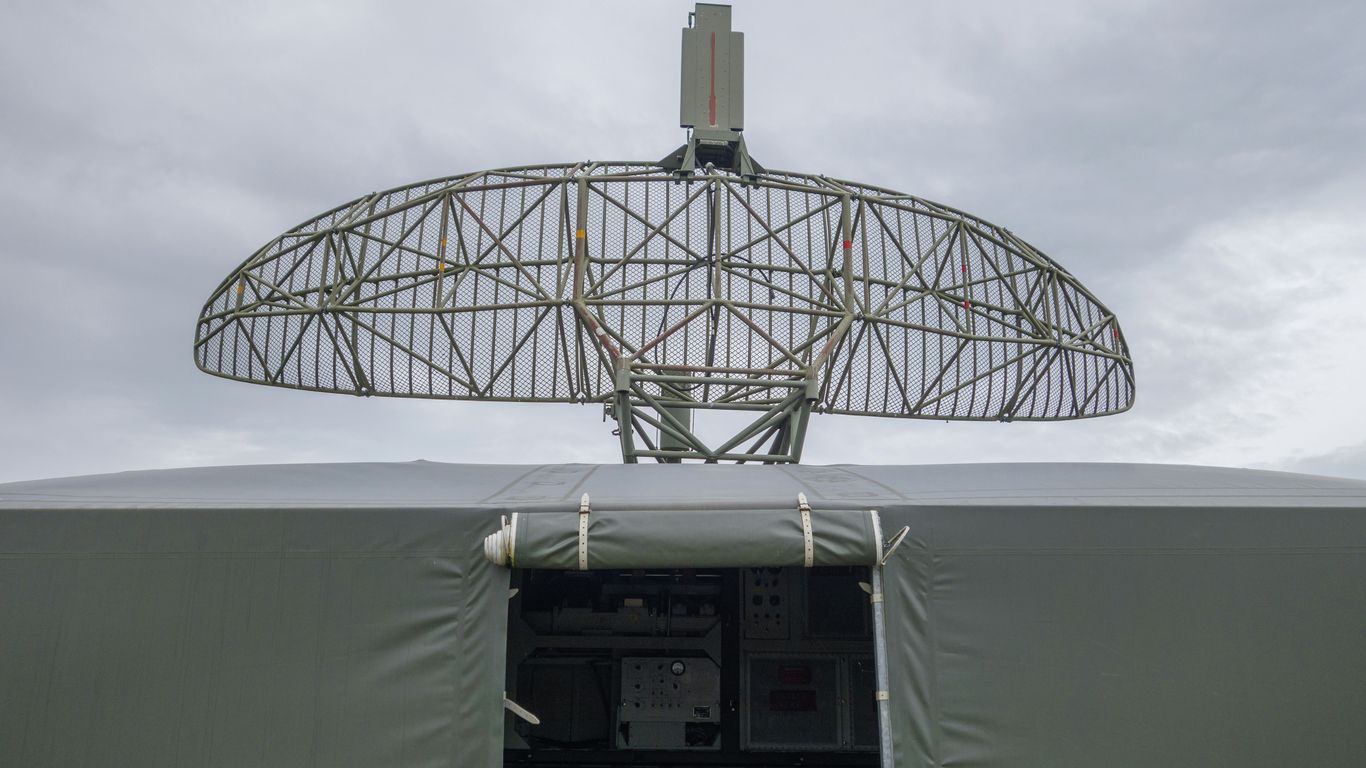
RTX maintains a significant presence through its development of large-scale sensor suites and interceptors. Their role involves providing the foundational hardware for complex air defense networks, which effectively detect and track incoming threats. Through extensive engineering efforts, the company ensures these massive systems can integrate with contemporary software-defined management tools to provide a seamless response.
When evaluating competitive landscapes, the importance of legacy hardware infrastructure remains high. Many systems require the longevity and power only established industrial manufacturers can provide, particularly for long-range surveillance or intercept missions. These assets serve as the backbone for national security, often paired with newer AI-powered software to manage the tactical response.
Transitioning toward a fully software-defined architecture requires that current hardware remains compatible with future upgrades. Companies that manage this transition successfully often define how the next generation of defense equipment is built. The long-term durability of these systems remains a core advantage in environments where reliable hardware is non-negotiable.
6. Northrop Grumman
Northrop Grumman specializes in diverse mission areas, including electronic warfare, advanced munitions, and space-based platforms. Their portfolio covers the spectrum of modern conflict, providing specialized detection and countermeasures that serve as a deterrent in high-stakes environments. The integration of high-end sensors with long-range weapons continues to be a cornerstone of their defense contributions.
Designing systems that address global security challenges requires meticulous technical rigor. The company often emphasizes the hardening of its platforms against cyber-physical threats, ensuring that electronic systems remain operable even during intense interference. This persistent approach to security defines their position in both domestic and international defense procurement.
Operational success in the air and space domains continues to rely on the firm's ability to maintain technological superiority. By focusing on multi-domain connectivity, the company ensures that its products act efficiently within a broader network of defense systems. This strategy remains vital for maintaining clear intelligence superiority against adversaries using increasingly complex electronic tactics.
7. Lockheed Martin
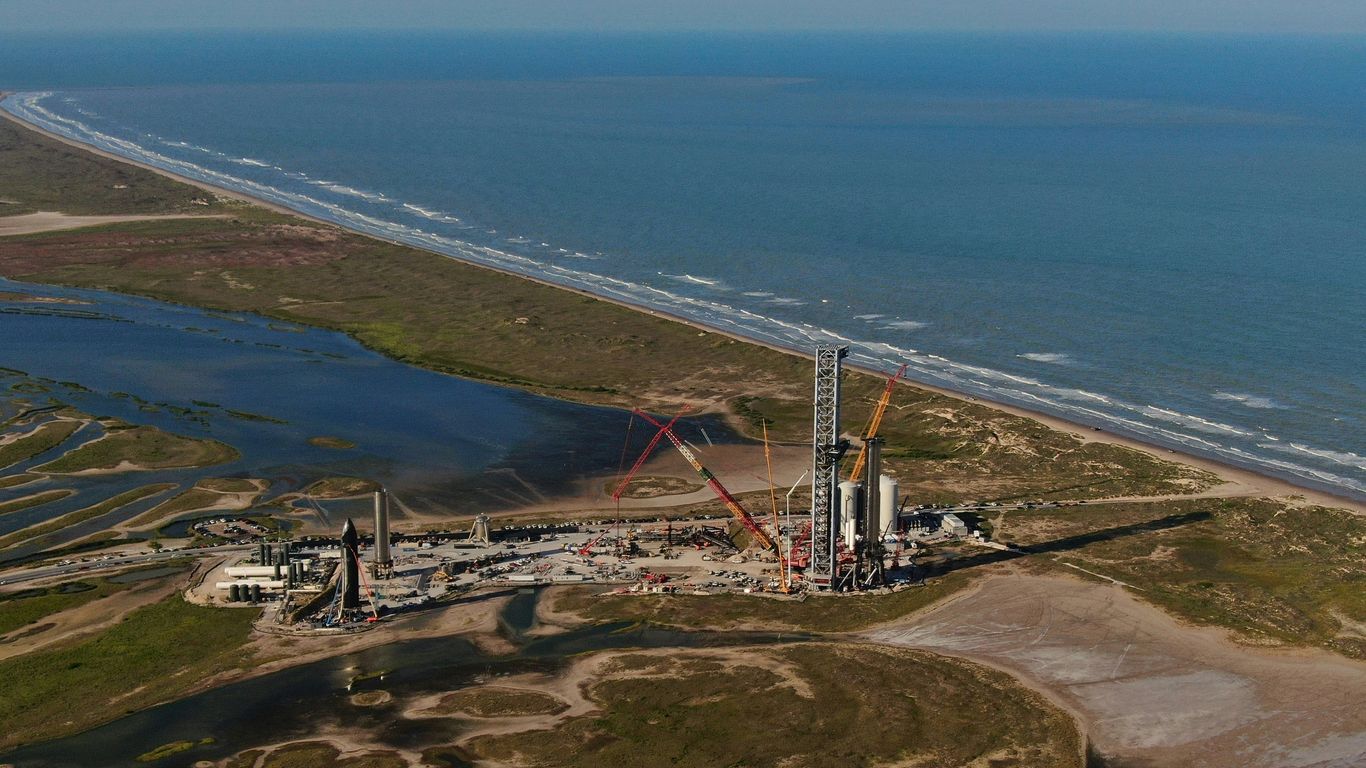
Lockheed Martin provides a wide array of aircraft and tactical defense systems that serve as the standard for many operational forces. Their engineering approach focuses on stealth, survivability, and high-performance flight characteristics. By integrating these systems with long-range sensor arrays, the company enables deep-strike capabilities that remain central to the current global defense posture.
Their recent focus includes several critical support areas that help maintain operational readiness:
- Advanced predictive maintenance to reduce unexpected downtime for deployed assets.
- Multi-domain communication links that allow platforms to share targeting data in real time.
- Modular software frameworks designed for rapid integration of new sensor payloads.
- High-velocity missile systems optimized for modern air defense environments.
These advancements ensure that legacy hardware remains capable against modern threats. The focus on software integration allows these platforms to adapt to shifting operational requirements, ensuring they can interface with modern command systems and autonomous entities. Such flexibility is essential for maintaining a meaningful advantage in today's rapid-innovation environment.
8. General Atomics
General Atomics has long defined the role of long-endurance unmanned aerial vehicles in reconnaissance and strike operations. Their systems provide persistent intelligence-gathering capabilities that allow military forces to maintain visual contact with tactical environments for extended periods. This persistence has reshaped how commanders approach mission planning and operational surveillance across multiple theaters of activity.
Designing platforms for extended flight requires optimization of aerodynamics and fuel management. These drones are developed to perform consistently under high-stress conditions, essentially serving as a primary node in the intelligence architecture of the U.S. military. As the mission scope expands, the ability of these machines to host various sensor payloads remains their strongest attribute.
Technological progress in mission endurance continues to influence defense acquisition strategies. By leveraging established platforms as a chassis for new technology, General Atomics ensures that their systems remain relevant, even as new autonomous capabilities change the requirements for aerial intelligence. This modular evolution keeps their platforms at the forefront of persistent surveillance.
9. AeroVironment
AeroVironment is a primary developer of tactical unmanned aircraft systems and loitering munitions. Their portfolio emphasizes rapid deployment and ease of use for ground units, providing immediate surveillance or precision-strike capabilities at the squad level. By focusing on systems that can be carried by a single person, they have created a portable, reliable set of tools that provide battlefield agility.
Their approach demonstrates the success of scaling down sophisticated technology for front-line applications. These systems provide ground commanders with the ability to look over the next hill or address a specific localized threat without requiring larger air support infrastructure. This accessibility is essential in modern conflicts where conditions change with significant speed.
Maintaining a product line that prioritizes field-level utility requires careful attention to durability. These devices are built to withstand rugged conditions, ensuring they remain operational despite transport or environmental extremes. As these platforms evolve, they are incorporating better autonomous features to further assist the user, cementing their status as essential defensive assets.
10. Kratos Defense & Security Solutions
Kratos Defense & Security Solutions focuses on high-performance unmanned jet aircraft and satellite communications technology. Their work on cost-effective, attritable autonomous platforms addresses the need for assets that can handle dangerous missions where the risk of loss is high. By focusing on production scalability, the company allows for the mass deployment of drones that can accompany more expensive manned aircraft.
Developing systems that balance performance with price point has become a major industry priority. This 'attritable' concept allows operators to engage in high-risk environments without the severe financial and strategic impact associated with the loss of traditional multi-million dollar platforms. It is a fundamental shift in how commanders view tactical aviation and resource expenditure.
Efficiency in manufacturing remains the driving force behind this approach. By utilizing advanced production techniques, the firm ensures that these systems are available in the volume required for modern contested environments. Their position as a developer of low-cost, high-utility autonomous airframes provides an essential alternative to the current inventory of conventional aircraft.
Anduril vs its competitors in 2026: funding, contracts and where they collide
The competitive picture moved fast in 2026. Anduril raised $5 billion at a $61 billion valuation in May 2026, on $2.2 billion of 2025 revenue. The same TechCrunch report notes that Shield AI raised $1.5 billion at a $12.7 billion valuation in March 2026, and Helsing was reportedly near a round at about $18 billion.
The sharpest head-to-head is the Air Force's Collaborative Combat Aircraft program. On June 17, 2026, the Air Force awarded production contracts to both General Atomics (FQ-42A) and Anduril (FQ-44A), with a goal of at least 150 CCAs combined by the end of the decade. Autonomy was split from the airframe: Anduril, Shield AI and Collins Aerospace each received six-month options to mature mission autonomy software, with a downselect to an initial provider expected by summer 2027.
Two more collisions are worth tracking. In command and control, the Army picked Anduril to lead NGC2 under a deal worth up to $1.8 billion over five years, the same software lane where Palantir sells to the Pentagon. At sea, Anduril's $6.6 billion Arsenal-2 submarine yard makes it a supplier to General Dynamics Electric Boat and HII rather than a direct rival.
Inside Deep Tech's take: General Atomics and Shield AI are the competitors Anduril meets head-on in 2026 contract awards, while the large primes on this list are as often partners as rivals. For the full company picture, read the Anduril Industries full guide, and for the wider field see the 10 defense tech companies to watch in 2026.
Conclusion
The defense landscape is currently being redefined by a transition toward software-defined autonomy and rapid, scalable hardware production. As the industry moves away from rigid legacy models, companies that successfully integrate autonomous systems with actionable data-processing capabilities will provide the critical infrastructure for national security. This evolution highlights deep tech innovation as the primary engine driving modern military capabilities and shaping the next decade of defense advancement across the board.
Frequently Asked Questions
What defines a modern defense tech company?
Modern companies in this sector prioritize software-first workflows, autonomous systems, and rapid iteration cycles, moving away from traditional long-cycle, hardware-only development models.
Why is software-defined autonomy important for current defense needs?
Software-defined autonomy allows systems to perform complex tasks in GPS-denied or high-threat environments, where communication links to humans are unstable or impossible to maintain.
How does the sector compare to traditional industrial defense contractors?
While traditional contractors focus on massive, long-lifecycle hardware, the current generation emphasizes speed, modularity, and the integration of commercial AI technology into military use cases.
Are startups replacing large defense incumbents?
Startups often drive innovation in software and specific autonomous tasks, but they usually move toward partnerships with established incumbents to achieve the manufacturing scale required for global defense coverage.
How are directed energy weapons changing battlefield dynamics?
These systems provide a cost-effective alternative to expensive kinetic interceptors, allowing for the rapid neutralization of small drone swarms and other electronic threats without relying on physical projectiles.
What role does data integration play in these systems?
Data integration acts as the connective tissue for military platforms, aggregating sensor streams from disparate sources to create a coherent operational picture for real-time decision-making.
What are the challenges in scaling these autonomous technologies?
Key challenges include ensuring reliability in dynamic combat environments, managing the security of autonomous decision loops, and establishing secure supply chains for specialized hardware components.