Key Takeaways
Locus Robotics has significantly influenced warehouse automation by introducing a collaborative model where robots work alongside human associates. The following points summarize the practical impact and operational considerations for modern logistics facilities.
- Collaborative robots augment human picking speed and improve overall fulfillment throughput.
- The Robotics-as-a-Service model lowers the barrier to entry by reducing upfront capital expenditures.
- High-density warehouse environments require careful planning to manage traffic and minimize floor space occupancy.
- Infrastructure demands include stable, high-coverage Wi-Fi to support continuous fleet communication.
- Evaluation of these systems should focus on scalability and integration with existing warehouse management architectures.
Overview of Locus Robotics
Locus Robotics represents a shift in how fulfillment tasks are managed within dynamic warehouse environments. By moving away from fixed-path automation, this approach focuses on human-assisted picking, where technology serves as a partner. This Locus Robotics Review explores the mechanics behind these systems and their role in the modern supply chain.
Core technology and autonomous mobile robots
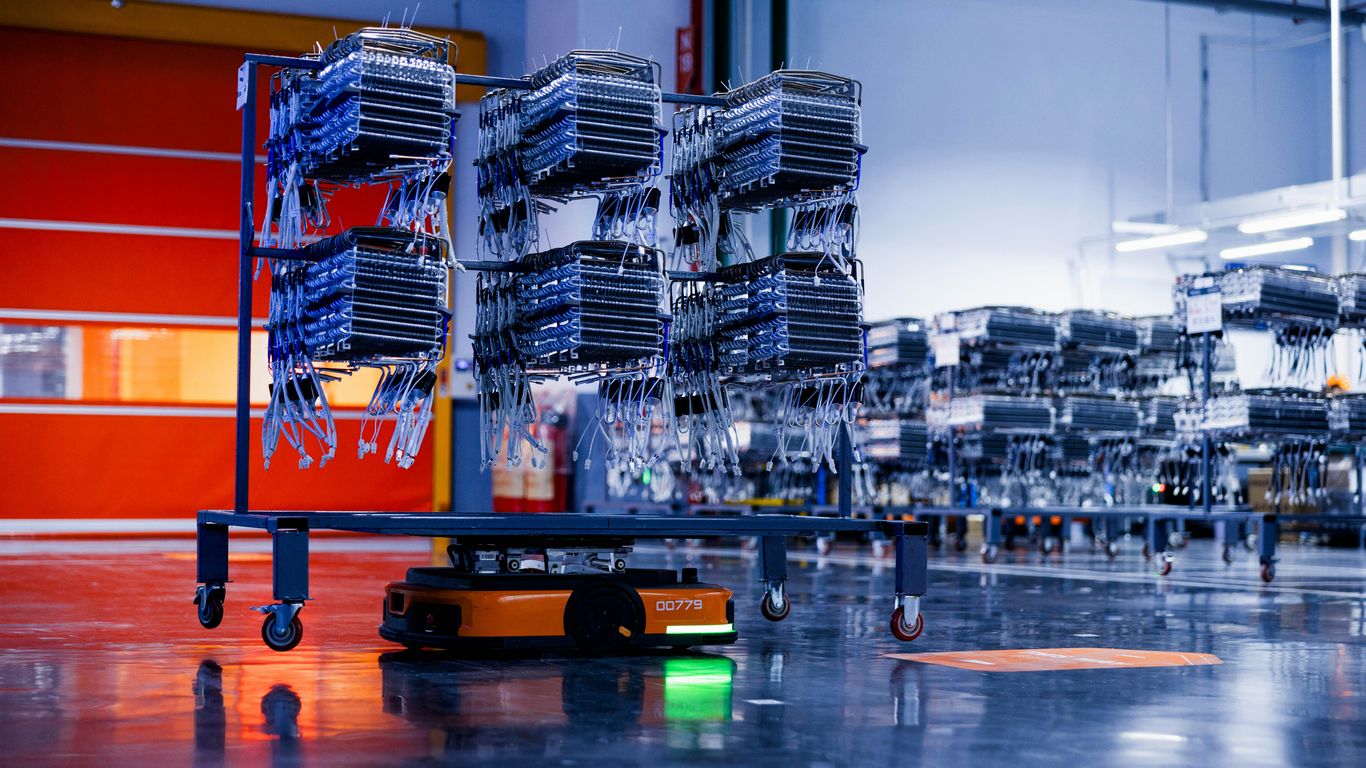
The fundamental innovation lies in autonomous mobile robots, often referred to as cobots, designed specifically for e-commerce distribution centers. These systems operate with sophisticated sensing arrays that allow them to coexist safely with human personnel on the warehouse floor. Unlike traditional fixed equipment, these units navigate fluidly throughout the facility to meet workers at designated points, significantly reducing transit time for picking tasks.
The concept of robotics-as-a-service
The business model behind these platforms has evolved alongside the hardware. Through a Robotics-as-a-Service, or RaaS, framework, companies can deploy fleets without the heavy initial capital investment traditionally associated with industrial automation. This approach allows operational expenses to scale with throughput, providing management with better visibility into the lifecycle costs of their investment in Locus Robotics.
Target industries and primary use cases
This technology is primarily applied within fast-paced e-commerce and retail environments where order variations and peak demand fluctuations are high. Organizations handling fashion, electronics, and general merchandise rely on this collaborative approach to maintain productivity as volumes shift throughout the year. For more specific insights into operational efficiency, experts often reference the independent consultant review by Marc Wulfraat regarding these deployments.
Key features and technical capabilities

Modern fulfillment systems rely on a layered interplay between software and hardware to maintain continuous flow. The technical architecture behind these fleets is designed to be both intuitive for staff and transparent for facility managers. Understanding how these features interact with human labor is critical for those considering Locus Robotics careers or facility-wide implementation.
Navigation and obstacle avoidance systems
Autonomous units utilize an array of sensors to map the warehouse and adjust paths dynamically in real-time. This capability ensures that as facility layouts change or human congestion occurs, the robots maintain optimal movement patterns. Maintaining high operational efficiency requires these devices to adapt flawlessly to unscripted physical obstacles without constant human intervention.
User interface and picker interaction ergonomics
Each robot is equipped with a display interface that guides the warehouse associate through their specific pick requirements. This interaction is designed to be straightforward, showing the item needed, the quantity required, and the ideal route. By removing the need for manual paperwork or complex handheld scanning procedures, the interface reduces the cognitive overhead for the warehouse worker.
Fleet management software and data analytics
Centralized management software serves as the brain for the entire fleet, orchestrating robot movement based on real-time task priorities. This software layer provides granular data analytics, offering leaders constant visibility into throughput metrics and battery health. Beyond mere movement, the system enables predictive maintenance and task batching to optimize the entire facility's fulfillment cycle.
Benefits for warehouse operations
Integrating autonomous mobile robots into a warehouse environment offers measurable advantages in terms of throughput and personnel management. These systems are structured to work alongside human capabilities, making them particularly effective in high-demand settings. As noted in various Locus Robotics' Video Archives, companies often see improvements in speed and accuracy almost immediately after deployment.
Increased throughput and pick density
Throughput is significantly enhanced as workers spend less time navigating the facility and more time at their picking stations. The robots handle the heavy lifting and movement, allowing assistants to concentrate on the accuracy of the pick itself. Facilities typically realize greater productivity across the following key areas:
- Improved accuracy through direct system-guided picking verification
- Higher volume capacity without adding physical square footage
- Dynamic task sequencing that keeps workers in their primary zones
- Real-time performance tracking for better labor management
Reduction in worker travel and physical strain
The ergonomic impact on the workforce is a primary benefit for many operators. By bringing the robot to the human instead of the human traveling miles across the warehouse floor daily, physical fatigue is minimized. This reduction in travel time not only protects employees from injury but also limits the turnover rates often seen in labor-intensive fulfillment roles.
Flexibility and responsiveness during peak season demand
During high-volume periods, the ability to add or subtract units from the fleet provides unmatched agility. This modular approach ensures that facilities do not need to overbuild their infrastructure for the entire year just to survive the seasonal peak. It represents a practical application of a Non-Negotiable Algorithm applied to operational decision-making, where the system scales based on actual fulfillment needs.
Integration and scalability considerations

Scaling an automation project requires significant attention to existing IT infrastructure and space management. Integrating Locus Robotics into an established facility involves a phased approach to minimize operational downtime while ensuring the digital backbone is ready to support the fleet.
Compatibility with major warehouse management systems
Seamless integration with existing warehouse management systems (or WMS) is a prerequisite for rapid deployment. The robotics platform must communicate effectively with the software that already handles inventory levels, orders, and pick waves. This integration ensures that the robots receive task instructions without requiring the facility to scrap their legacy inventory management software.
Infrastructure and facility network requirements
Stable, high-coverage connectivity remains the lifeblood of mobile robotics. Facilities must ensure that the Wi-Fi network is robust enough to handle the constant, low-latency data handshakes required for real-time navigation. Without high-bandwidth coverage, robot units might experience latency issues that hinder productivity and require manual resets.
Phased implementation and site expansion strategies
Most operators find success by introducing the fleet in smaller increments rather than a facility-wide rollout. This phased strategy allows teams to calibrate the software, test the navigation in specific sectors, and gather data on current workflow bottlenecks. Once the team is comfortable with the system dynamics, they can expand the fleet as the needs of the distribution center grow.
YouTube Video Embedding
Potential drawbacks and limitations
Initial setup costs and contractual structures
While the cloud-based billing models reduce capital expense, the cost of the initial site assessment, software licensing, and specialized training can be significant. Contracting for these services requires a clear understanding of the long-term commitment needed to achieve a favorable return on investment.
Physical space constraints in high-density facilities
Facilities with narrow aisles or complex layouts may find that introducing mobile units exacerbates congestion. While the software can optimize paths, there is a physical limit to how many robotic units can safely inhabit a specific zone before they start interfering with human floor traffic.
Dependency on stable, high-coverage facility Wi-Fi
Operating in a wireless-dependent environment makes the warehouse vulnerable to network instability. A failure in the local facility network will stall the entire fleet, creating significant bottlenecks in delivery. Facilities must maintain redundancy in their network planning to account for these risks.
Comparison with alternative automation solutions
Locus Robotics versus traditional conveyor systems
When choosing between Locus Robotics and large-scale conveyor systems, the decision often comes down to the balance of fixed versus flexible infrastructure. Conveyors offer high speed for repetitive, high-volume tasks but lack the ability to adapt to changing floor layouts or shifting inventory needs.
| Feature | Mobile Robotics | Conveyor Systems | Flexibility | High | Very Low | Installation Time | Short | Long | Scalability | Modular | Fixed Static | Efficiency | Dynamic | Predictable |
AMR fleet solutions versus automated guided vehicles
Autonomous units provide significantly more freedom than automated guided vehicles, or AGVs, which typically rely on magnetic tape or wires buried in the floor. While AGVs have been a staple of the industry for decades, the autonomy provided by current-generation AMRs makes them superior for tasks that require real-time adaptation and safety in a human-accessible workspace.
Evaluating human-collaborative robots versus full-scale automation
The choice between human-collaborative systems and full-scale warehouse automation depends on current labor costs and the long-term strategic vision for the distribution center. Collaborative systems are optimized to keep human judgment in the loop, which is often preferable for complex picking operations where quality control and delicate handling are paramount. Full-scale automation, conversely, may be more suitable for standardized, high-volume manufacturing environments where variability is extremely low.
Conclusion
Selecting the right automation partner requires a careful audit of existing fulfillment bottlenecks, site connectivity, and long-term scaling targets. While these robotic platforms have proven effective in augmenting human throughput and reducing physical fatigue, the successful integration depends on a clear understanding of the underlying infrastructure demands and the capacity for internal team training. By weighing the operational flexibility against the total investment cost, facility managers can effectively leverage these technologies to maintain competitiveness in the face of fluctuating market demands.
Frequently Asked Questions
How does collaborative automation impact warehouse safety?
Safety features such as obstacle detection sensors, speed regulation, and emergency stop protocols are built-in to prevent incidents, allowing humans and machines to share the same aisles.
Can warehouse automation operate in any facility type?
While flexible, efficacy depends on floor space, aisle width, and the quality of wireless network coverage across the operational zone.
What is the typical maintenance cycle for autonomous robots?
Maintenance is generally managed through remote monitoring and periodic on-site checkups coordinated with the service provider to minimize downtime.
Are software updates performed during operational hours?
System updates are carefully scheduled to occur during off-peak times or during planned maintenance, ensuring they do not interrupt fulfillment tasks.
How is worker performance measured with robotic assistance?
Performance is tracked through the fleet management software, which provides data on pick rates, task completion time, and individual unit efficiency.
Do these systems require specialized staffing for management?
Most warehouse teams can manage technical tasks with proper training, though technical oversight may be required from your IT team for network monitoring and system integration.
Is the robotic fleet compatible with multiple types of WMS?
Most platforms are engineered with open APIs and middleware to ensure compatibility with all major WMS providers currently in use across the logistics industry.