Quantum Computing Explained: A Beginner's Guide for 2026

Key Takeaways
Quantum computing is an evolving field moving from experimental noise to infrastructure-grade reliability in 2026. This guide details how the technology functions and its anticipated impact on global industries.
- Quantum bits store information in probabilistic states, unlike binary classical bits.
- Error correction and logical qubit fidelity are the current primary technical hurdles.
- Financial modeling and drug discovery represent the most mature enterprise use cases.
- Hardware diversity remains high, ranging from superconducting circuits to neutral-atom approaches.
- The industry is transitioning from noisy intermediate-scale devices to stable, fault-tolerant prototypes.
The fundamentals of quantum computing
Qubits vs. classical bits
Classical computing relies on bits existing in one of two states, represented as zero or one. Quantum computing utilizes quantum bits, or qubits, which move beyond this binary constraint. These units form the core of Inside Deep Tech analysis regarding the new era of processing, allowing machines to manage vastly more complex operations by representing multidimensional data states.
Understanding quantum superposition
Superposition allows a quantum particle to occupy multiple states simultaneously until measured. This property provides the massive parallelism necessary for quantum systems to evaluate countless possibilities at once. As noted in recent quantum computing guides, this capability is what fundamentally differentiates a quantum approach from a linear classical one.
Principles of quantum entanglement
Entanglement creates a correlation between qubits where the state of one is intrinsically linked to another, regardless of distance. By harnessing these physical connections, quantum processors can synchronize complex information arrays effectively. Understanding this phenomenon is essential for those exploring the basics of quantum physics in computing contexts.
The role of quantum interference
Interference is the process used to collapse these probabilistic states into a single, accurate result. By configuring qubits to reinforce correct answers and cancel out incorrect pathways, algorithms reach conclusions that classical systems would miss. This delicate orchestration is a primary focus for engineers building fault-tolerant systems as the field matures.
Current state of technology in 2026
Scalability of quantum hardware
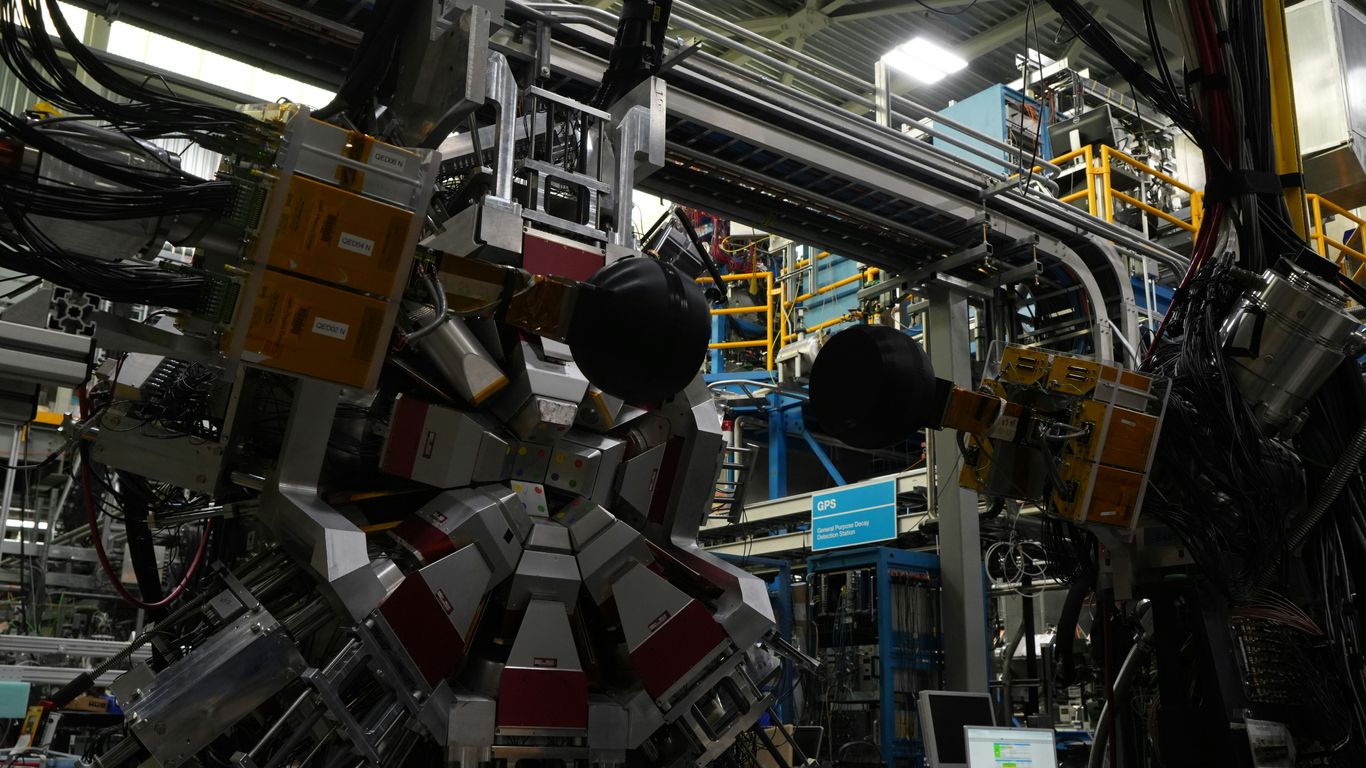
Scalability in 2026 depends on modular chip designs and connectivity improvements. Many researchers are moving toward interconnected processors to overcome single-chip size limitations. Our coverage of quantum hardware races highlights how modularity has become the standard for firms aiming to increase qubit counts without sacrificing performance.
Advancements in error correction
Error correction has shifted from experimental mitigation to foundational architectural requirements. Engineers now focus on logical qubits, where multiple physical qubits are grouped to protect data from environmental noise. This milestone represents a critical shift described in the latest quantum error correction manual for developers building stable environments.
Transition from NISQ to fault-tolerant systems
We are currently operating at the edge of the Noisy Intermediate-Scale Quantum era, moving toward industrial-grade fault tolerance. This transition is less about total qubit count and more about sustaining high gate fidelity. Inside Deep Tech reporting suggests that firms focusing on error rates are now seeing higher success in enterprise pilots compared to those pursuing scale alone.
Major players and global industry milestones
Industry leaders are now standardizing on specific architectures, with superconducting loops and trapped ions dominating the landscape. Tracking these milestones helps investors identify firms that prioritize enterprise-grade utility over speculative milestones. The global race has tightened, with national research agendas increasingly aligning with commercial hardware roadmaps.
Practical real-world applications

Drug discovery and molecular simulation
Quantum computers are uniquely suited to simulating molecular interactions that exceed classical capacity. By modeling how proteins fold or drugs bind to target sites, researchers accelerate development timelines significantly. Pharmaceutical entities are increasingly using these tools to identify candidates that were previously hidden in complex mathematical search spaces.
Financial modeling and risk assessment
Financial institutions rely on quantum algorithms to optimize portfolios and assess risk under high-volatility scenarios. The ability to model uncertainty at scale provides a competitive edge in rapid market analysis. Many of these firms are testing hybrid quantum finance setups that combine classical infrastructure with specific quantum optimization routines.
| Industry Sector | Primary Use Case | Performance Metric |
|---|---|---|
| Finance | Portfolio Optimization | Lower Latency |
| Pharmacy | Drug Candidate Discovery | Accuracy Gain |
| Logistics | Supply Chain Routing | Distance Reduction |
These data points reflect how core industries are beginning to integrate quantum outputs into existing decision-making pipelines. While still maturing, these tests confirm that quantum computing is no longer confined to academic theory.
Optimization in supply chain and logistics
Optimizing routing and inventory management represents a massive efficiency play for global shipping giants. When you consider the vast complexity of interconnected supply chains, the computational burden is often too great for classical heuristics to solve in real time. We have noted several successful trials where quantum algorithms identified cost-saving routes that human planners discarded.
Improvements in cybersecurity and encryption
Quantum computing threatens existing cryptographic standards, necessitating a migration toward post-quantum protocols. Understanding the shift to post-quantum cryptography is now a primary requirement for IT security directors globally. Protecting sensitive data against future decryption threats is becoming a mandatory infrastructure upgrade.
How quantum hardware operates

Superconducting loop circuits
Superconducting loops operate at near-absolute zero, allowing current to flow without resistance. These circuits provide the basis for some of the most stable processors available in the market today. Similar to how Paradise Recording engineers separate noise from signal in studio environments, these loops ensure high-fidelity qubit operation by minimizing thermal interference.
Trapped ion technologies
Trapped ions use electromagnetic fields to suspend individual atoms in a vacuum, creating highly stable qubits. These systems benefit from atom-to-atom uniformity, which simplifies the calibration process for users. It is a high-precision approach that currently leads in coherence times among several leading architectural benchmarks.
Photonic quantum architectures
Photonic systems leverage light particles for quantum information processing, offering unique advantages in scaling and room-temperature potential. These systems are often cited for their ability to integrate into fiber-optic infrastructure without requiring massive cooling apparatus. This flexibility makes them a key focus for future networked quantum infrastructure developments.
The necessity of extreme cooling environments
Most current hardware requires temperatures lower than deep space to maintain operational stability. This thermal management is the most expensive part of quantum facility logistics. While some architectures bypass parts of this requirement, Inside Deep Tech experts generally agree that infrastructure costs remain a significant gatekeeper for mass deployment.
Key challenges and limitations
Decoherence and environmental noise
Decoherence occurs when physical qubits lose their quantum state due to external interactions like magnetic fields or radiation. This short-lived stability forces engineers to prioritize speed over depth in current calculations. Mitigating this noise remains the most persistent barrier to building long-duration logic circuits.
The high cost of infrastructure development
Building out a commercial-scale quantum laboratory requires specialized talent and significant hardware investment. Because capital requirements are intense, many newcomers are leveraging partnerships to gain access to cloud-based systems. A few common barriers to entry include:
- Prohibitive hardware acquisition and maintenance costs
- The necessity for highly stabilized laboratory environments
- Dependence on a small pool of specialized quantum researchers
- Difficulty in integrating classical software with quantum hardware
When you approach the sector, evaluating the long-term feasibility of a firm's lab infrastructure is as crucial as evaluating its technological software breakthroughs.
Shortage of specialized quantum algorithms
Writing for a quantum computer involves mapping traditional problems into new logical frameworks that suit quantum physics. The shortage of developers who can bridge this gap between classical logic and quantum circuits slows down implementation. Many firms are now offering internal training to close this persistent expertise divide.
Managing connectivity between physical qubits
Connectivity limits how effectively qubits can work together, often restricting the size of the circuits that can be run reliably. Improving this hardware layout is a foundational challenge for anyone building robust processors. Much like choosing a specific Maui venue for an event, selecting the right hardware architecture determines the quality of your entire operational result.
Beginning your journey in quantum computing
Essential mathematical prerequisites
Linear algebra and probability theory form the bedrock of successful quantum computing research. Students should focus on mastering vector spaces and complex numbers before attempting to build experimental models.
Popular quantum development kits and SDKs
Open-source kits are now available that allow users to simulate quantum circuits locally or on cloud machines. These tools have democratized the field, allowing those with limited hardware access to write and test code. For students planning their career path, resources like Gateway International Loan suggest that academic preparation combined with these tools is key to international mobility in deep tech roles.
Accessible cloud-based simulator platforms
Cloud platforms provide immediate access to quantum simulators and actual hardware processors for research. These services allow developers to iterate on algorithms without needing a laboratory of their own. They serve as a critical bridge for independent learners who need to validate their research against real-world processors.
Educational paths and foundational frameworks
Foundational education usually involves participating in hybrid workshops and industry-recognized certifications. To be successful, learners should balance theoretical reading with practical coding tasks. Like getting the right camping light for a night hike, ensuring you have the right baseline equipment—mathematics and basic software SDKs—will keep your learning journey illuminated.
Conclusion
The field of quantum computing is currently shifting from foundational physics research toward engineering discipline, making it an ideal time for interested builders and researchers to get involved. By understanding the core mechanics of qubits and the specific challenges of hardware stability, professionals can better position themselves to contribute to the next wave of industrial deep tech applications.
Frequently Asked Questions
Will quantum computers replace classical PCs?
No, quantum computers will function alongside classical systems, serving as acceleration units for specific complex problems rather than replacing our daily work devices.
How fast are modern quantum computers?
Speed in quantum computing is measured by the ability to solve specific complex algorithms exponentially faster than classical supercomputers for certain mathematical tasks.
Do I need to be a physicist to understand quantum computing?
While a physics background helps, the field increasingly requires software engineers, data scientists, and hardware architects who can translate quantum research into production-ready workflows.
Are quantum computers available to the public today?
Yes, through various cloud-based interfaces provided by major research firms, individuals can run programs on actual quantum hardware from any location with an internet connection.
What is a qubit, really?
A qubit is the basic unit of information in quantum computing that utilizes superposition to exist in multiple states at once, providing the basis for massive parallel processing.
What are the main limitations in 2026?
Environmental interference leading to decoherence and the high cost of cooling and maintaining stabilized hardware are the primary bottlenecks for current commercial adoption.
Where can I find reliable news on quantum developments?
Independent publications that focus on primary sources, technical fidelity, and long-term industry analysis are typically the most reliable places to track frontier research and corporate milestones.