Key Takeaways
Photonic quantum computing utilizes light as the physical medium for encoding qubits, offering unique advantages in modularity and operational stability. By leveraging existing telecommunications infrastructure, this approach aims to bypass major bottlenecks encountered in cryogenic-heavy architectures.
- Photons provide low-decoherence environments, naturally preserving quantum states at room temperature.
- Scaling requires precise integrated photonic circuits to manage photon sources, routing, and detection.
- Probabilistic state generation remains a significant hurdle compared to deterministic alternatives.
- Silicon-based fabrication offers a viable path for manufacturing at enterprise-scale.
- Error correction necessitates significantly higher photon throughput than current lab-grade systems allow.
Foundations of photonic quantum computing
Photonic systems operate on the principle of using light-based particles to store and manipulate quantum information rather than relying on electrons or ions. Unlike setups requiring millikelvin temperatures, the quantum states of photons remain remarkably stable, allowing for potential operation in ambient environments. This approach leverages photonic quantum computing principles to create scalable systems that can be integrated into existing semiconductor fabrication processes.
Defining quantum computing with light
Quantum computing with light involves using photons as the fundamental carriers of information. By encoding data into discrete properties of the light field, such as polarization or timing, researchers can implement logic using optical interference. This paradigm shift treats the vacuum as a high-fidelity channel, effectively minimizing the environmental noise that plagues traditional superconducting qubits.
Distinguishing photonics from superconducting circuits
Superconducting platforms require industrial-grade cryogenic cooling near absolute zero, which presents significant challenges for large-scale data center deployment. In contrast, photonic architectures can function at or near room temperature for key operations, significantly reducing infrastructure overheads. As detailed in this comparison of qubit types, photonics provides a distinct architectural departure from microwave-circuit based systems.
Core advantages of room-temperature operation
Operational simplicity is the cornerstone of the photonic value proposition, as it relaxes the strict thermal constraints that limit qubit density. By removing the need for extreme dilution refrigeration, designers can focus on increasing component miniaturization and integration density. This stability also extends to long-distance communication, as light is naturally suited for fiber-optic transmission, bridging the gap between local processing and distributed quantum networking.
How photonic qubits encode information
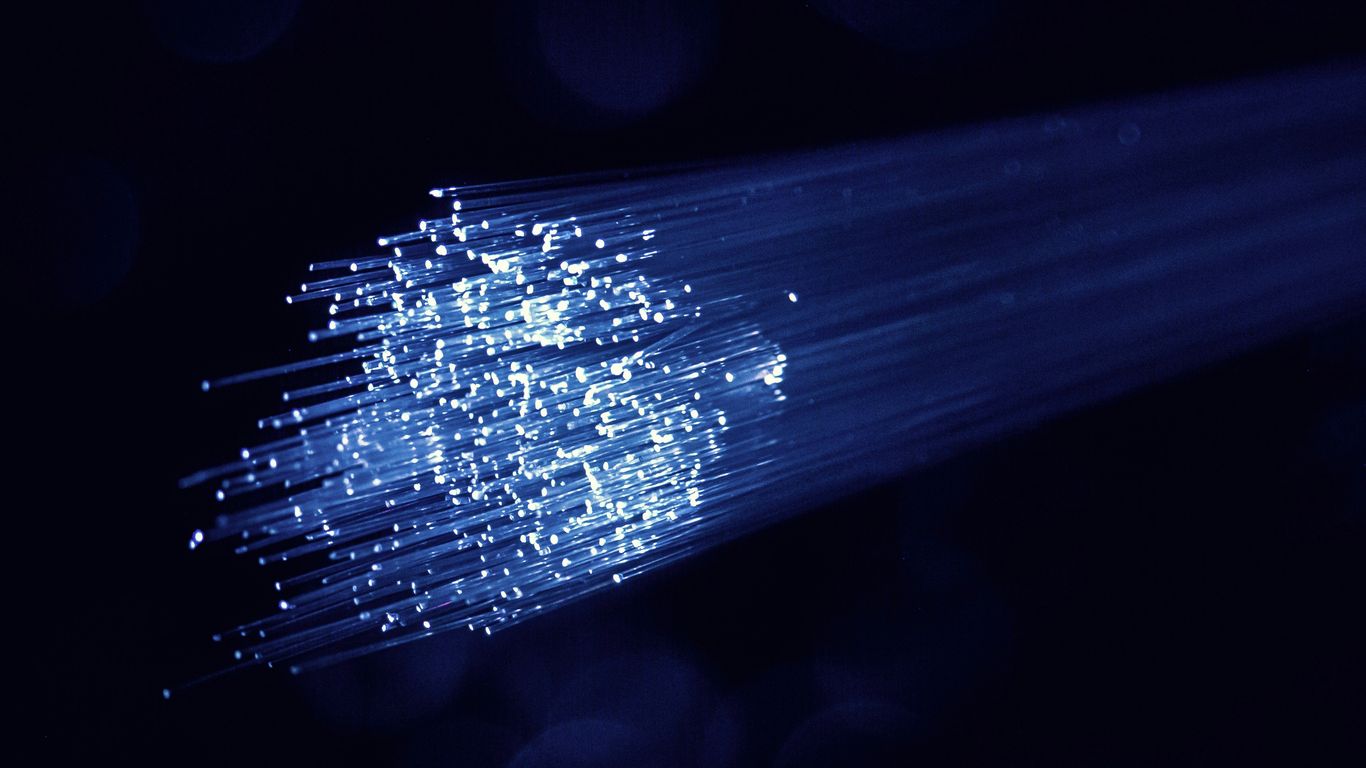
Encoding data in light requires precise control over the modal properties of the electromagnetic field through sophisticated optical engineering. Developers often choose between discrete-variable systems, where polarization defines the bit, and continuous-variable systems that use wave amplitude. These choices dictate the hardware requirements for modulation and the types of error correction protocols that must eventually be applied to the system.
Single-photon generation techniques
Reliable, deterministic single-photon sources form the heartbeat of these machines, ensuring that qubits are available on demand. Current methods often involve spontaneous parametric down-conversion or specialized solid-state emitters integrated directly onto the chip. Achieving indistinguishability between generated photons is critical for successful quantum interference, requiring stringent manufacturing tolerances on every emitter site.
Manipulating states with linear optical components
Logic gates in a photonic machine are constructed using precise arrangements of passive instruments like beam splitters and phase shifters. Because photons do not naturally interact with one another, these linear components must facilitate interference to induce effective non-linearities necessary for universal quantum operations. The following list summarizes common mechanisms used in linear optical routing:
- Mach-Zehnder interferometers for precise phase control between paths.
- Beam splitters to create superposition states across different modes.
- Waveguides to guide light with minimal attenuation across complex layouts.
- Tunable phase shifters to apply specific gates using thermal or electro-optic effects.
This deliberate routing of photons across a deterministic chip architecture ensures that operations are both repeatable and scalable, forming the basis of high-speed optical logic.
Measurement and detection in photonic systems
Detection is the final bridge between the quantum and classical worlds, where photon-counting circuits convert optical states into electrical signals. High-efficiency superconducting nanowire single-photon detectors are the current gold standard, capable of resolving single bits of light with high temporal resolution. Improving the extraction of these detectors from the cold environment back to room-temperature processing hardware remains a primary engineering objective.
Architectural benefits and scalability
Photonic architectures inherit vast technological investments from the global telecommunications industry, providing a ready-made pathway for mass integration. By utilizing standardized semiconductor platforms, firms are moving toward monolithic chips that consolidate logic, routing, and detection. This vertical integration is a crucial milestone for industry scalability, potentially allowing for rapid scaling of qubit arrays without needing bespoke laboratory-scale manual assembly.
Leveraging existing telecommunications infrastructure
Because light signals are identical to those found in standard fiber-optic networks, photonic qubits can be seamlessly integrated into existing communication grids. This compatibility enables a future where quantum machines function as parts of a larger, distributed fabric. The ability to use standard silicon photonics allows companies to iterate quickly on hardware designs using established fabrication pipelines originally built for optical networking.
High-speed processing at the speed of light
Computation in these systems occurs at incredibly high frequencies, as the processing logic is not limited by the gate speeds typical of slower microwave-based systems. Data transfer between processing nodes can happen over long distances with minimal losses, provided that fiber-optic interconnects support low-latency transmission. This inherent speed-of-light propagation is what makes these systems attractive for modular architectures where multiple small processor chips are linked together.
Multi-qubit connectivity via integrated photonics
Connectivity is often the primary bottleneck in quantum hardware, but photonics solves this by using waveguides as persistent, low-loss interconnects. Architects can place quantum emitters across large silicon wafers and link them using integrated circuitry, effectively constructing a multi-qubit processor on a single device. This modular connectivity is essential for implementing complex quantum algorithms that require dense entanglement across thousands of physical locations.
Major players in the photonic quantum ecosystem

Industry participants are rapidly coalescing around specific manufacturing strategies, primarily leveraging the mature silicon-on-insulator platform. While smaller startups initially led the field with innovative gate designs, larger tech firms have recognized the potential for manufacturing-led advantages. The ecosystem today is characterized by a mix of specialized academic research and well-capitalized firms aiming to commoditize optical chip production.
Established startups and their unique approaches
Several companies have emerged to define the technical landscape of optical quantum hardware. PsiQuantum has focused on developing an enterprise-scale architecture that treats quantum computing as a semiconductor fabrication task rather than a physics experiment. Their approach emphasizes the production of large-scale silicon photonic chips to reach the high qubit counts required for fault-tolerant operation. Meanwhile, Photonic Inc. investigates spin-photon interfaces, connecting local spin-based qubits via photonic interconnects to enhance both communication and processing power across architectures.
Contributions from academic and research institutions
University laboratories have historically provided the initial proof-of-concept for linear optical quantum computation. Fundamental research into squeezed light states and continuous-variable logic continues to push the theoretical boundaries of what is possible within a photonic framework. These academic contributions bridge the gap between experimental physics and the engineering realities required for light-based chips in production environments.
Collaborative ventures between tech giants and photonic firms
Large-scale integration often necessitates partnerships between high-volume semiconductor manufacturers and specialized quantum developers. The following table provides a snapshot of how these organizations differentiate their strategies.
| Organization Type | Primary Focus | Scaling Strategy |
|---|---|---|
| Semiconductor-First Firm | Silicon photonics manufacturing | Large-scale wafer lithography |
| Spin-Interface Specialist | Spin-photon quantum links | Modular chip interconnection |
| Academic/Research Lab | Logic gate algorithms | Qubit density and fidelity improvement |
These collaborations are vital, as they move the field away from one-off bespoke hardware designs and toward the commoditized manufacturing cycles necessary for industrial-grade systems.
Technical hurdles and current limitations
Despite the clear advantages, practical implementation faces persistent hurdles regarding the reliability of photon sources. Generating single photons on demand with perfect indistinguishability is quite difficult, and most sources are currently probabilistic, meaning that a photon might not even be emitted in a given cycle. Overcoming this requires complex multiplexed architectures that consume massive amounts of on-chip resources just to create a single usable qubit.
The challenge of probabilistic state generation
Most existing photonic hardware relies on spontaneous processes where photons are generated with a certain probability, necessitating high-speed switching to select the successful events. This results in significant overhead, as the system must effectively handle a stream of "mostly empty" states to isolate actual quantum data. Future progress depends heavily on developing deterministic emitters that can guarantee an output every cycle.
Signal loss in integrated photonic circuits
Light traveling through even the most polished silicon waveguides will experience some level of attenuation over distance. While fiber losses are well-understood in communications, the tighter bends and smaller footprints of on-chip photonics demand even higher standards for material transparency. Even small losses in these circuits degrade the fidelity of complex quantum states, ultimately limiting the depth of algorithms that can be successfully executed.
Overcoming the requirements for high-efficiency detectors
Detectors must be extremely sensitive to successfully read out the quantum states without introducing excessive noise or timing jitter. Current leading detectors are effective but require their own specific environmental controls, adding complexity to the overall assembly. Developing high-efficiency integrated detectors that function across a wider temperature range is a critical goal for future, more portable hardware designs.
The path toward fault-tolerant quantum computing
Scaling to a useful device requires shifting from small-scale demonstrators to machines capable of active error correction. Fault tolerance ensures that the system can survive the degradation of physical qubits by encoding information into multiple logical qubits. This transition will be the defining challenge for the industry over the next several years, requiring consistent increases in component yield and gate fidelity.
Moving from NISQ to error-corrected architectures
Moving past the noisy, intermediate-scale era involves implementing robust quantum error correction protocols at scale. Because qubits are subject to environmental interference, developers are creating architectures that can detect and correct bit and phase flips in real-time. This requires significantly more overhead than currently exists, necessitating massive scale-ups in the number of physical photons the hardware can process per clock cycle.
Integration of photonic chips with conventional hardware
Practical quantum machines will likely function as co-processors, linked closely with classical CMOS chips for control and classical feedback. Integrating these distinct technology stacks requires high-speed optical-to-electronic conversion that minimizes latency, ensuring the quantum logic can react fast enough to maintain coherence. This hybridization is essential for bridgeable, enterprise-ready systems.
Predicted milestones for industry maturation
Industry maturation will be marked by the transition from experimental chip design to full-scale fabrication processes that produce standardized components. Achieving reproducible results across multiple batches of chips will be a key performance indicator. As fabrication improves, analysts expect a shift toward pilot programs that explore domain-specific computations, such as chemical modeling or optimization, in controlled industrial settings.
Conclusion
Photonic quantum computing represents a unique and highly promising trajectory in the global race to build a scalable, fault-tolerant device. By leveraging the existing prowess of semiconductor manufacturing and the unique, low-decoherence nature of photons, this field is successfully turning complex physics into a reproducible hardware challenge. With the integration of robust error correction and the continued refinement of deterministic photon sources, light-based systems are moving from theoretical research toward practical, industrial infrastructure that will inevitably shape the technological landscape for decades to come.
Frequently Asked Questions
How are photonic qubits different from other types?
Photonic qubits are encoded into particles of light rather than electrical or atomic states, which allows them to function with significantly less environmental noise and often at room temperature, unlike superconducting qubits that require extreme cooling.
Can photonic quantum computers replace classical PCs?
They are not designed to replace personal computers but rather to serve as specialized co-processors for complex tasks such as material discovery and optimization that are currently impossible for conventional semiconductor chips to manage.
Why is room-temperature operation a significant advantage?
Eliminating the need for bulky and expensive cryogenic cooling systems permits higher density integration and provides greater flexibility in where quantum systems can be physically installed and maintained.
What does the term linear optics imply?
Linear optics refers to the use of passive components like beam splitters and phase shifters as the primary building blocks for executing quantum logic gates by manipulating the interference patterns of light.
Is photon loss a major issue for performance?
Yes, signal loss in waveguides is a critical limiting factor, as it impacts coherence and overall fidelity, meaning that low-loss materials are essential for building reliable, long-depth quantum processors.
What role does the telecommunications industry play here?
The telecommunications sector provided decades of research into light transmission, waveguides, and optical components, which the quantum industry is now directly repurposing to build reliable, scalable optical hardware.
When will photonic quantum hardware be usable for utility?
Utility is widely predicted to emerge as developers reach the thresholds for fault-tolerant operation, which relies on consistent progress in manufacturing, error correction codes, and qubit count scaling over the coming years.