
Key Takeaways
The dominance of proprietary GPU stacks forces a difficult trade-off between immediate deployment speed and long-term architectural flexibility. Organizations are currently weighing the maturity of established ecosystems against the potential for cost-effective, open-hardware scalability.
- Nvidia maintains a significant advantage through years of deep library integration and driver stability.
- AMD ROCm represents the most ambitious open-source effort to provide a functional replacement for common AI workloads.
- Intel’s oneAPI initiative focuses on abstracting hardware differences to allow code portability across diverse accelerators.
- Specialized compilers and domain-specific languages are increasingly reducing the manual burden of writing optimized GPU kernels.
- Strategies for avoiding lock-in center on evaluating the total cost of ownership alongside the technical debt of porting established codebases.
Understanding the Nvidia CUDA ecosystem
The role of proprietary driver optimization
Nvidia has spent decades refining the interface between its hardware and the software that drives it. This tight coupling ensures that developers can extract maximum throughput from their silicon without needing to worry about low-level driver bugs or unexpected hardware behavior. When users select Nvidia for their data center, they are not just buying transistors; they are investing in a mature operational layer that minimizes the friction often found in more fragmented environments.
Why CUDA libraries like cuDNN remain industry standards
The persistence of specific libraries is perhaps the most powerful anchor keeping researchers tethered to a single vendor. Tools such as NVIDIA's CUDA-X offer highly optimized versions of essential operations like convolutions and matrix multiplications that have become the bedrock of modern deep learning. These libraries are often the first to receive support for new hardware generations, ensuring that the latest research papers and models function flawlessly on existing infrastructure from day one.
The lock-in effect for research and enterprise AI
Transitioning away from a proven workflow introduces risks that many organizations find difficult to justify. Because experimental pipelines often rely on the stable, predictable performance of existing primitives, moving to alternative platforms frequently requires significant refactoring. This creates a powerful inertia where developers prioritize established reliability over the potential strategic benefits of exploring cuda alternatives that might offer more open licensing or competitive pricing models in the long-term.
AMD ROCm and the quest for open source parity
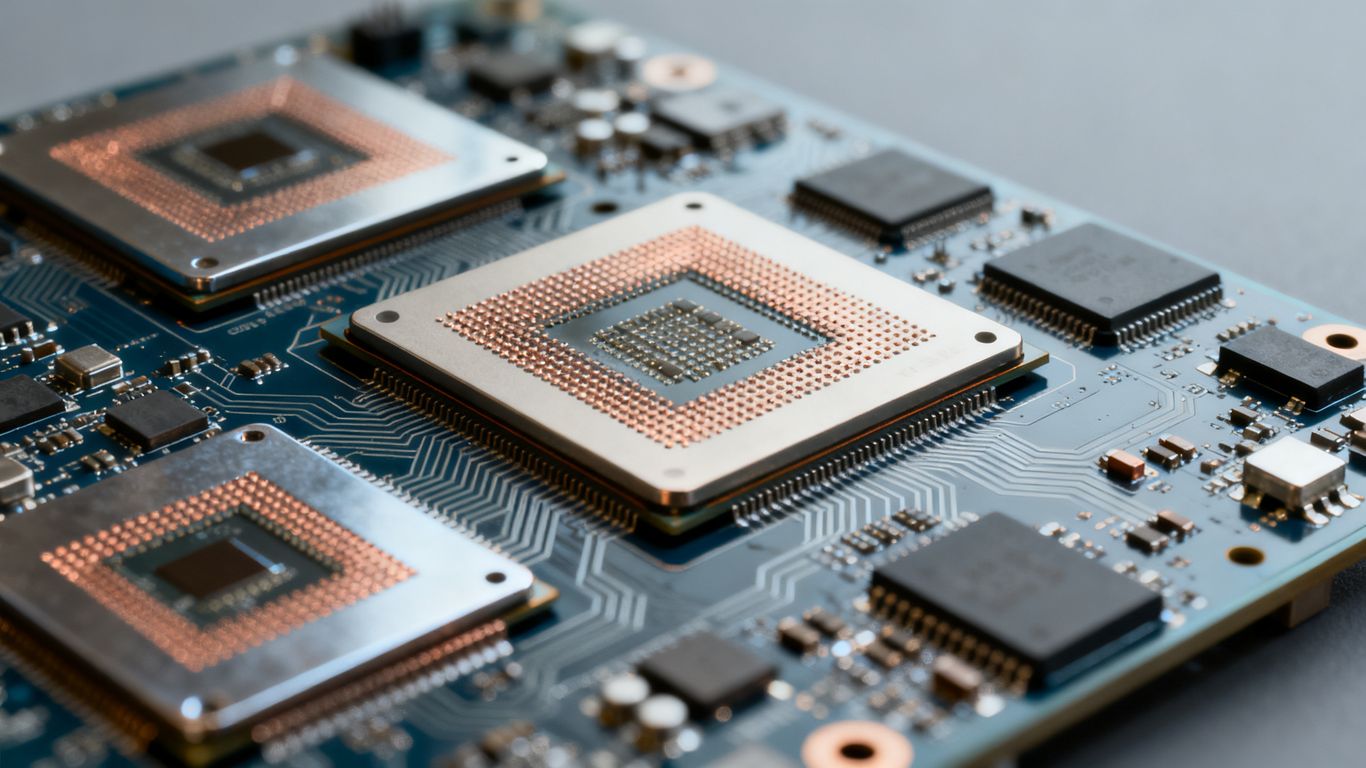
Architectural differences between ROCm and CUDA
AMD has designed its compute stack to serve as an open-source answer to the monolithic architecture of its primary competition. Where traditional proprietary stacks keep their ISA and optimization paths hidden, this approach allows for greater transparency in how kernels interact with functional units. Developers working on heterogeneous platforms can inspect the underlying code, contributing to a more modular development lifecycle that avoids the black-box nature of older designs.
Current status of PyTorch and TensorFlow support on AMD
Software support has reached a point where most major AI frameworks can run on non-Nvidia hardware with relatively little modification. While these integrations are increasingly stable, they often trail behind the bleeding edge of new releases. The current landscape includes several essential aspects of ensuring workload success:
- Improved kernel compatibility with standard PyTorch operators
- Native integration for popular model training pipelines
- Expanded support for large-scale cluster deployments
- Active community contributions to bridge performance gaps
Challenges in translating existing CUDA kernels
Translating high-performance code from its native source frequently hits bottlenecks due to deep-seated assumptions about memory management and warp execution. While tools like HIP help automate some of this portability, the manual labor required to squeeze out equivalent performance on different architectures remains substantial. Engineers must often decide whether to spend weeks optimizing for a new backend or simply accept the performance overhead of universal scripts.
Intel oneAPI and the SYCL ecosystem
Using DPC++ for multi-architecture programming
Intel is advancing a vision where programming models exist above the physical hardware layer, rather than being bound to the specific design of a single manufacturer. By using DPC++, developers can write code that spans CPUs, GPUs, and FPGAs, theoretically untethering logic from specific silicon constraints. This strategy makes it easier to shift workloads based on availability rather than being stuck with a specific vendor's silicon roadmap.
Porting CUDA codebases to SYCL
Moving a complex codebase from one environment to another often involves automated tooling, yet the final results frequently require manual tuning to match target latency. The goal of using SYCL is not necessarily to achieve a perfect drop-in replacement, but to create a sustainable abstraction layer that allows engineers to shift their target architecture when business requirements or capacity availability change over time.
Intel’s strategy for hardware-agnostic compute
Building an platform-independent stack is a heavy lift that requires wide industry participation to be viable. Intel attempts to lower the barrier to entry by ensuring their tools can interface with multiple backends, effectively creating a path for developers to choose infrastructure based on inference performance or cost-efficiency rather than purely software availability.
Language-level abstractions and modular innovation
OpenAI Triton for kernel development
Kernel development has traditionally been a niche skill, requiring deep knowledge of low-level GPU hardware. Modern abstractions are changing this by allowing researchers to define high-level behavior in Python code that is then compiled into highly optimized machine instructions. By moving the complexity into the compiler, these tools allow for rapid iteration and testing of custom operations without the years of experience needed for raw assembly.
Mojo as a high-performance alternative to Python and CUDA
Technological progress in languages is bridging the gap between high-level ease of use and low-level performance execution. New frameworks are enabling developers to write code that looks like readable scripting, but executes with the type-safety and memory layout efficiency of near-metal code. This allows teams to iterate faster while simultaneously maintaining the deterministic throughput required for heavy AI production applications.
How compiler technology lowers the barrier for non-Nvidia GPUs
Compilers act as the great equalizer, potentially allowing even smaller hardware players to compete on the same level as established giants. By automatically mapping abstract operations to the specific physical capabilities of different cards, these systems can provide optimized performance for a wider array of hardware without requiring developers to write custom code for every individual model.
Standards-based frameworks for cross-platform GPU compute
The evolution of OpenCL in modern development
The history of standardized compute APIs is central to understanding why portability is often a difficult goal to achieve in practice. While these frameworks succeeded in providing a baseline for cross-vendor support, they often struggled to keep pace with the hyper-specialized needs of frontier AI models. Many development teams today weigh the benefits of these standards against the practical performance realities of using specialized, vendor-tuned backends.
Vulkan compute shaders for lightweight applications
For engineers working on real-time applications or edge devices, compute shaders offer an alternative path to hardware-accelerated math. These pipelines provide predictable performance and fine-grained control over execution, making them well-suited for scenarios where latency must be minimized and infrastructure costs must be carefully managed. They provide a predictable, if lower-level, experience compared to the massive ecosystem surrounding standard AI libraries.
Limitations of standardized APIs compared to proprietary solutions
Standardized APIs often suffer from a lack of high-level optimization features that are inherent in proprietary stacks. When a workload requires every possible bit of performance, the gap created by the lack of vendor-specific tuning becomes impossible to ignore. The following table summarizes how these approaches compare in real-world deployment scenarios:
| Feature Category | Proprietary Stack | Standards-Based Stack | Open-Source Alternatives |
|---|---|---|---|
| Kernel Optimization | Extreme | Moderate | Growing |
| Hardware Compatibility | Limited/Locked | Wide | Broad |
| Initial Setup Speed | Rapid | Slow | Variable |
| Long-Term Portability | Minimal | High | High |
Standardized approaches prioritize universality, which inherently prevents them from fully leveraging the unique, often idiosyncratic power features found in custom silicon designs.
Navigating the vendor lock-in dilemma
Evaluating the total cost of ownership for hardware
Calculating costs involves looking far beyond the purchase price of the physical hardware itself. Engineering time spent on optimizing code, debugging driver-specific issues, and managing infrastructure complexity represents a major portion of the real investment. When faced with cloud deployment options, firms must assess whether the upfront expense of a proprietary environment is offset by the reduced internal development load over the lifespan of a project.
Balancing engineering speed with long-term portability
Teams often prioritize the path of least resistance because the immediate need to ship functionality or complete experiments outweighs the theoretical benefit of future-proofing. However, this decision creates a form of technical debt where the entire model library and workflow become effectively tied to a single supplier's silicon lifecycle. Establishing coding internal standards early on can mitigate this risk by forcing developers to compartmentalize hardware-specific logic.
When it makes sense to stick with Nvidia vs. exploring alternatives
For research teams where time-to-result is the absolute constraint, there is little incentive to move away from the most stable, well-supported environment. Conversely, for large-scale enterprise rollouts where volume can drive down the cost-per-compute, diversifying the hardware stack—even at the cost of higher upfront R&D—can provide a defensive moat of flexibility. The shift is most common for companies that have reached a scale where they can justify the investment in custom kernels and independent software maintenance.
Conclusion
The software-hardware gap remains the defining challenge for developers seeking flexibility in an era of rapid AI scaling. While proprietary ecosystems offer undeniable efficiency, the rising interest in open frameworks signals a long-term shift toward a future where compute is treated as a modular commodity rather than a vendor-locked asset.
Frequently Asked Questions
Are there significant performance penalties when moving away from proprietary stacks?
Yes, there is often a performance degradation when switching, as proprietary stacks are highly tuned for their specific hardware and lack the generic abstractions that open-source alternatives must maintain for compatibility.
How does driver stability affect the choice of GPU hardware?
Drivers act as the translation layer between high-level code and physical hardware; bugs or incomplete feature sets in drivers can break entire workflows, making stability a critical factor in hardware reliability.
Can existing PyTorch models run on multiple hardware types automatically?
While frameworks like PyTorch provide cross-hardware support, individual kernels and performance-critical operations may still require platform-specific optimizations to reach their full potential.
What are the main barriers to adopting open-source GPU frameworks?
Primary barriers include the overhead of engineering custom kernels, a lack of deep-integrated library support equivalent to proprietary standards, and the requirement for higher technical expertise to maintain production pipelines.
Should startups focus on proprietary platforms or cross-platform portability?
Startups usually benefit from using the most mature and widely supported platform initially to maximize development speed, delaying the transition to portable, hardware-agnostic infrastructure until their scale justifies the additional R&D cost.
Is it possible to use different hardware for model training and model inference?
Yes, it is common to use highly proprietary, feature-rich hardware for complex training runs while migrating to more flexible or cost-effective hardware for production inference deployment.
Will compiler automation eventually eliminate the need for manual hardware-specific tuning?
While automation is rapidly improving, the complexity of modern hardware architectures ensures that specialized hand-tuning will likely remain the gold standard for peak performance in high-stakes environments for the foreseeable future.