
Key Takeaways
Neuromorphic computing represents a fundamental shift in hardware design by mimicking biological neural systems rather than relying on traditional von Neumann structures. This approach enables specialized chips to perform complex AI tasks with remarkable energy efficiency, making them an ideal candidate for future deployment in resource-constrained edge environments.
- Neuromorphic systems diverge from traditional CPUs by integrating memory and processing to minimize data movement.
- Event-driven processing allows these chips to operate only when input data changes, drastically reducing idle power consumption.
- The architecture relies on spikes to communicate signals, closely replicating the behavior of biological synapses and neurons.
- Major industry players are advancing specific research platforms while numerous startups test unique, open-source hardware strategies.
- Widespread adoption remains limited primarily by the lack of mature programming software and standardized development kits.
What are neuromorphic computing chips?
As artificial intelligence workloads grow more intricate, the limitations of traditional hardware are becoming increasingly apparent to designers and engineers. Neuromorphic computing chips offer a distinct path forward by leveraging the fundamental principles found in biological brains to process information. By moving away from rigid, clock-dependent cycles, these systems aim to solve the massive inefficiencies inherent in current computing models used for high-performance AI deployments.
Biological inspiration and neural networks
At the core of this field is the attempt to replicate the brain's unique ability to process vast amounts of unstructured data with extreme power efficiency. Rather than relying on binary logic gates that switch continuously, a neuromorphic system uses specialized structures that mirror the neural and synaptic connections found in nature. This biological inspiration suggests that computing should be an organic process of adaptation rather than a series of sequential arithmetic operations. For a deeper look at this transformative paradigm, readers can explore the evolution of neuromorphic computing.
Distinguishing neuromorphic design from traditional CPUs and GPUs
Traditional systems rely on the standard von Neumann architecture, which mandates a strict physical separation between the central processing unit and memory storage. This separation creates a distinct bottleneck, as data must be shuttled back and forth through a limited communication bus, consuming significant time and electrical energy. In contrast, neuromorphic hardware effectively merges these functions into a singular fabric. Understanding the nuances of modern AI hardware helps clarify why this shift from general-purpose GPUs to specialized silicon is essential for the next generation of artificial intelligence.
The shift toward event-driven processing
While conventional chips perform calculations even when processing empty space or static data, neuromorphic designs utilize an event-driven paradigm. This means the hardware remains largely dormant until it detects a specific change or trigger, at which point it processes only relevant data spikes. This fundamental architectural advantage allows the chip to operate at a fraction of the power required by conventional devices that monitor inputs on a constant, high-frequency loop.
The architecture behind neuromorphic hardware
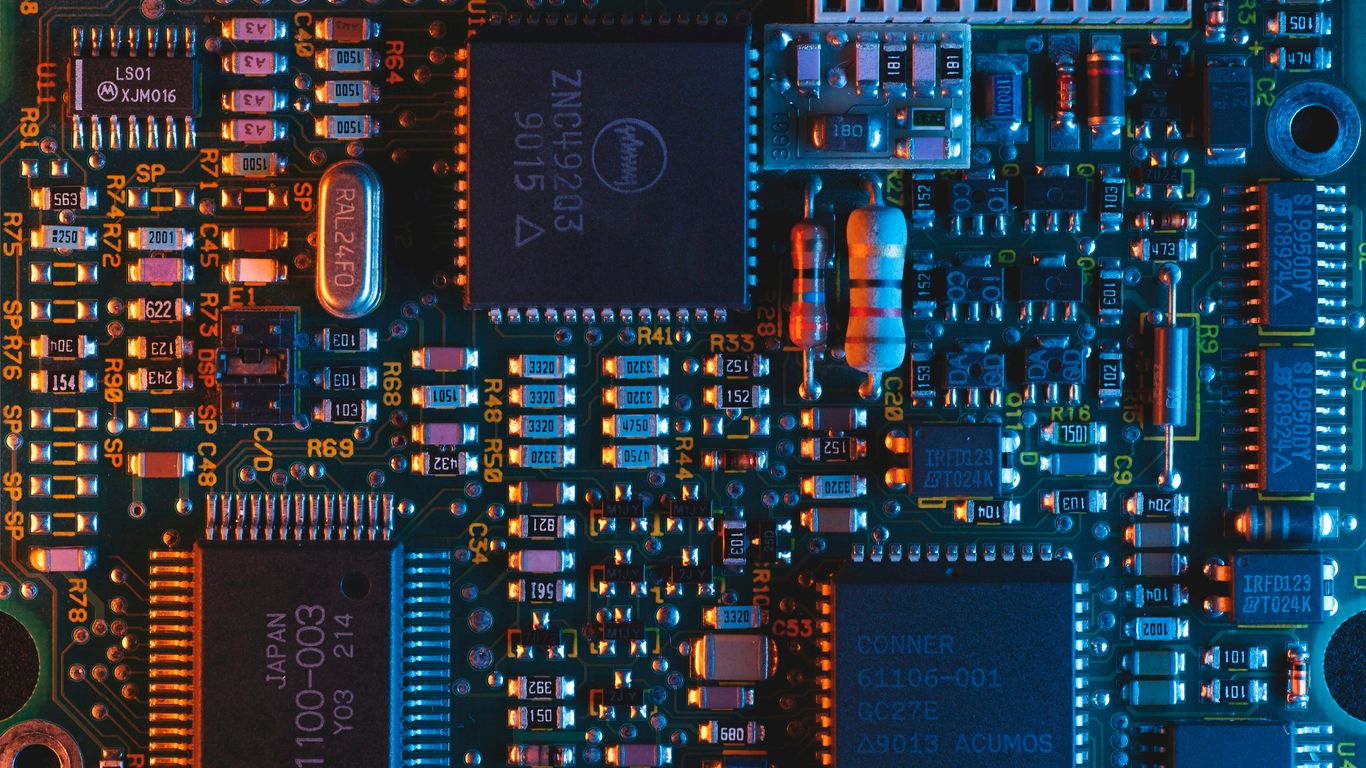
Building hardware that functions like a biological brain requires a complete reimagining of the electrical pathways that define modern silicon design. These systems rely on massively parallel architectures where components are interconnected to allow for high-speed information flow without central coordination. The resulting structure prioritizes fluid connectivity over the strict, top-down control typically seen in large-scale data center chips.
Co-locating memory and processing units
By placing computing elements directly adjacent to memory cells, the physical distance data must travel is reduced to near zero. Traditional systems waste an enormous amount of power moving bits between disparate caches and the processor itself. Neuromorphic hardware addresses this through a design that stores neural weights locally, allowing for near-instantaneous retrieval and computation that scales efficiently as the network size grows.
Emulating biological synapses and neurons
Engineers design these chips to behave like autonomous agents, where each processing node represents a physical synapse or group of neurons. Through concepts like synaptic plasticity, the hardware can update its internal connections in response to incoming stimulus, mimicking how a brain learns. For those tracking the development of these systems, this detailed neuromorphic hardware guide explains how memristors and other specialized components facilitate this adaptive behavior.
Asynchronous communication and spike-based signaling
Instead of a global clock that dictates when every transistor fires, each node functions according to its own local requirements. This asynchronous approach uses short, precise electrical pulses—often called spikes—to signal activity across the system. This method ensures that the hardware only consumes power when data is being actively transformed, maintaining efficiency even throughout long durations of operation.
Why neuromorphic chips reduce AI energy consumption
Energy efficiency is the primary driver behind the transition toward these brain-inspired systems, particularly as AI models continue to expand at an unsustainable rate. By moving away from inefficient sequential processing, neuromorphic chips can handle inference tasks using a tiny fraction of the watt-hours required by standard data center architectures. This makes them a vital technology for projects requiring sustainable and scalable AI compute.
Eliminating the von Neumann bottleneck
Eliminating the constant transfer of data between storage and processor resolves one of the greatest energy drains in modern computing. Because the calculation happens exactly where the information resides, the system avoids the prohibitive electrical cost of moving terabytes of data across metal interconnects. This architectural efficiency helps designers create systems that maximize throughput while keeping thermal output well within manageable limits.
Minimizing idle and active power usage through sparsity
Sparsity refers to the ability of a system to ignore non-essential data, focusing only on the signals that hold value. Neuromorphic systems inherently favor sparse computation because they do not waste cycles on zeros or redundant information. By minimizing both idle operational power and active switching, these chips achieve a remarkably high performance-per-watt ratio compared to traditional CMOS designs, as outlined in this technical overview of neuromorphic technologies.

Efficiency gains in real-time edge processing
In remote devices, every joule counts, especially when performing complex tasks like image processing or speech recognition. The ability to process data locally without frequent connections to a power-hungry cloud server is a game-changer for battery-powered systems. As research continues to refine these designs, the potential for autonomous navigation in resource-constrained environments grows, provided the advanced semiconductor startups keep hitting their efficiency milestones.
Key players and current industry developments
- Intel is actively pushing the boundaries of neuromorphic research with platforms designed to emulate large-scale spiking neural networks.
- IBM maintains a significant footprint in this space, having produced pioneering research processors designed for efficient, long-term learning.
- A variety of emerging startups are currently testing specialized silicon aimed at democratizing access to neuro-inspired hardware.
- Open-source initiatives provide developers with the tools to simulate, test, and validate neuromorphic algorithms well before they touch physical hardware.
- The broader semiconductor industry is closely watching these developments as a way to extend performance gains now that standard lithography is approaching physical limits.
| Research Focus | Primary Objective | Current Development Phase |
|---|---|---|
| Neural Emulation | Brain-like pattern recognition | Prototyping |
| Event-driven Sensing | Low-power data acquisition | Commercial testing |
| Flexible Synapses | Adaptive learning logic | Laboratory research |
These developments signify that while the technology is still maturing, the ecosystem is rapidly gaining the density and capabilities required for real-world integration.
Intel’s Loihi research processors
Intel has established itself as a leading force in this sector with processors engineered specifically for research into asynchronous spiking structures. These chips allow academics to explore complex algorithms that would be impractical on conventional hardware, serving as a critical testing bed for new neuromorphic primitives. Researchers are applying these chips to diverse fields, ranging from olfactory signal detection to autonomous robotics control.
IBM’s TrueNorth and NorthPole initiatives
IBM was among the first giants to publicly demonstrate hardware that prioritized neuromorphic efficiency over standard general-purpose metrics. Their initiatives have consistently focused on integrating memory and logical processing to solve massive scale neural network problems. By continuing to iterate on these designs, they provide a roadmap for how enterprise-grade hardware can eventually shed the constraints of traditional architecture.
Emerging startups and open-source hardware projects
Beyond the established industry giants, a wave of agile startups is experimenting with non-traditional materials and architectures. Many of these firms are contributing to open-source software stacks, helping to bridge the gap between abstract research and deployable silicon. This openness is vital for the health of the field, as it allows for collaborative benchmarking and rapid iteration across a diverse set of hardware design approaches.

Primary use cases for neuromorphic systems
Edge-based sensor fusion in robotics
Neuromorphic chips excel at reconciling disparate information streams from multiple internal and external sensors in real-time. By processing tactile, visual, and spatial cues simultaneously, robots can make nearly instantaneous decisions without relying on delayed communication with a remote brain. This ability is foundational for the development of highly responsive machines that operate in dynamic, changing environments.
High-speed gesture and voice recognition
These chips handle continuous audio and visual streams by looking for changes in activity rather than processing every frame as a static block. This makes them perfectly suited for human-computer interaction, where latency must be kept low to feel natural. By ignoring the static background, these systems remain silent until they identify a specific gesture or phrase, keeping the energy draw low for portable electronics.
Autonomous navigation in resource-constrained environments
Autonomous vehicles and drones often navigate in areas where space and power are severely limited, necessitating the highest possible efficiency. Neuromorphic systems provide the compute density required for obstacle avoidance and path planning without draining a lightweight battery in minutes. They process spatial inputs with a speed that mirrors biological reflexes, enabling safer flight and traversal in cluttered conditions.
Challenges and limitations to widespread adoption
Complexity of programming and software algorithms
Writing for neuromorphic hardware is a radical departure from standard C++ or Python development, as it requires thinking in terms of temporal spikes and synaptic weights. The absence of familiar abstractions makes it difficult for traditional data scientists to adapt their existing models to these unique architectures. Bridging this gap will require the development of intuitive compilers and high-level languages that can automate the conversion of standard neural networks into spiking equivalents.
Lack of standardized toolkits and development environments
While projects like Fraunhofer IIS continue to promote innovative neuromorphic initiatives, the field lacks a unified software ecosystem. Industry standards are currently fragmented, with most developers limited to proprietary toolkits provided by individual hardware manufacturers. A lack of interoperability slows down the pace of discovery and makes it difficult for companies to pivot strategies without essentially restarting their software development lifecycle.
Scaling and fabrication costs for commercial deployment
Manufacturing neuromorphic chips at the same economies of scale as standard GPUs remains a difficult hurdle. The specialized design requirements often necessitate unique fabrication processes that drive up the unit cost during pilot production phases. Only when production volumes increase significantly will the cost per chip reach levels that justify widespread adoption in commercial consumer electronics or large-scale automation projects.
Conclusion
Neuromorphic computing stands at a critical juncture between lab-based theoretical research and practical, infrastructure-level silicon innovation. By fundamentally rethinking how memory and processing interact, these technologies promise a sustainable path for the future of artificial intelligence in an energy-limited world. While significant software and manufacturing barriers remain to be cleared, the gains in efficiency and speed demonstrate that a brain-inspired approach to silicon is essential for the next major leap in machine intelligence.
Frequently Asked Questions
How does neuromorphic computing differ from traditional hardware?
Traditional hardware relies on the von Neumann architecture, which strictly separates processing and memory, causing energy-intensive data transfer. Neuromorphic systems instead integrate these functions into a singular, interconnected fabric, which mirrors biological structures and minimizes the energy wasted on moving data.
What are the main benefits of using spiking neural networks?
Spiking neural networks provide high energy efficiency by focusing activity only when specific events or temporal patterns are detected. This prevents the system from wasting power on dormant or redundant data, allowing for sustained operation in edge environments with very low thermal output.
Is neuromorphic technology already available for commercial use?
The field is currently in its transitional phase from intensive research and prototyping to early commercial deployment. While select research processors are capable of handling sophisticated tasks today, full-scale deployment in consumer hardware still requires further optimization of software ecosystems and lower fabrication costs.
Does neuromorphic computing replace standard GPUs and CPUs?
It is not intended to replace current processors but rather to complement them in specific, event-driven, or ultra-low-power scenarios. For compute-heavy tasks that benefit from traditional linear processing, standard chips remain the best option, while neuromorphic hardware dominates in tasks requiring rapid, local, and energy-efficient inference.
Why are spikes used to communicate in these systems?
Spikes serve as the fundamental unit of communication because they allow for asynchronous signaling that is highly efficient and scalable. This mirrors how biological neurons fire to relay information only when necessary, effectively enabling a system that scales its power consumption directly with the intensity of the incoming data.
What industries stand to benefit most from this technology?
Industries that rely on edge-based decision-making currently lead the demand for such technology, specifically robotics, automotive autonomous systems, and advanced consumer sensors. These sectors require the capability to process complex, shifting data streams locally without consistent cloud accessibility.
What prevents neuromorphic chips from being adopted everywhere today?
The primary obstacles include a steep learning curve for developers, the lack of standardized software development kits, and the higher costs associated with fabricating these specialized, non-standard architectures. Standardizing these tools and scaling fabrication is essential before the technology can reach its full potential in mainstream electronics and infrastructure projects.