
Key Takeaways
Comparing surgical robot companies requires more than ranking recognizable names. The practical question is whether a platform fits a hospital’s specialties, workflow, evidence standard, and long-term economics.
- Soft-tissue, orthopedic, and specialty robots solve different operating-room problems.
- Regulatory status and clinical adoption matter as much as technical novelty.
- Modularity can affect room setup, training, service, and utilization.
- Instrument economics and procedure volume shape the business case.
- Hospitals should score platforms against local needs rather than buy on reputation alone.
How surgical robot companies are being compared
The phrase “surgical robot companies compared” covers several distinct markets rather than one uniform product category. A soft-tissue platform, a joint-replacement navigation system, and a microsurgical assistant may all be called surgical robots, yet their clinical workflows and purchasing logic differ sharply. A serious comparison therefore starts with scope, evidence, and operational fit. It also separates a cleared product from a prototype or a company still building its clinical base.

Platform scope: soft-tissue, orthopedic, and specialty systems
Soft-tissue systems generally support laparoscopic access and surgeon-controlled manipulation. Orthopedic systems often combine planning, navigation, anatomy-specific data, and implant workflows. Specialty systems may address a narrower procedure set, where the value lies in repeatability or access rather than broad procedural coverage.
That distinction prevents a common analytical error: treating breadth as automatic superiority. A compact platform focused on a hospital’s highest-volume procedure may be more useful than a broad system that is difficult to schedule or underused.
Company maturity, regulatory clearance, and clinical adoption
Maturity has several dimensions. Regulatory clearance establishes that a defined use has been reviewed, while clinical adoption indicates that teams have incorporated the system into real operating routines. Neither fact alone proves better patient outcomes, and early demonstrations should not be presented as equivalent to sustained deployment.
Evidence should be read with the same care applied to any frontier technology. The wider robotic surgery platform review is useful background for understanding how system architecture and end effectors have developed, while a hospital should still examine procedure-specific evidence and its own credentialing requirements.
Capital cost, operating cost, and service requirements
The purchase price is only one line in a robotics budget. Hospitals also need to model instruments, disposables, software, service coverage, training time, room changes, and the utilization required to spread fixed costs across cases. A platform with a lower acquisition price can still be expensive if its procedure economics or support model are unfavorable.
The most useful comparison is therefore a full lifecycle view. It should include realistic case volume, expected downtime, replacement cycles, and the cost of changing workflows rather than relying on a headline quote.
Surgeon experience, hospital workflow, and training needs
A system is used by a surgical team, not by a procurement department. Console design, instrument control, visualization, docking, bedside assistance, and emergency conversion procedures all shape adoption. Training must cover surgeons, nurses, anesthesiology staff, sterile processing, biomedical engineering, and scheduling teams.
A technically impressive system can underperform if it adds friction at every handoff. The strongest evaluation observes a full case pathway, from room preparation through turnover and post-case instrument processing.
The leading alternatives in soft-tissue robotic surgery
Soft-tissue robotics is moving toward a more varied market, with systems differing in arm arrangement, console design, portability, instruments, and commercial model. The important comparison is not simply which platform resembles an established incumbent. It is which architecture gives a particular hospital useful access, manageable setup, and credible support for its procedure mix.
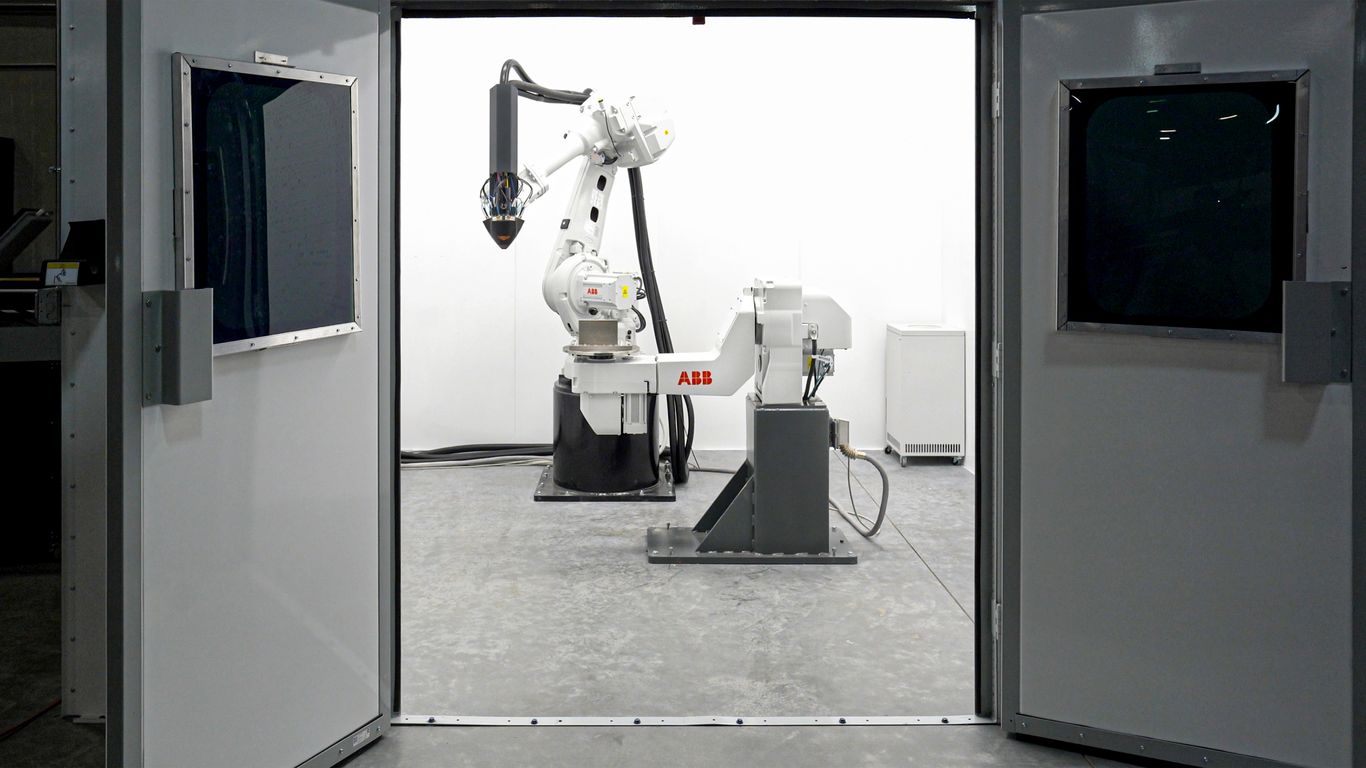
Medtronic Hugo RAS and its modular operating-room design
Medtronic Hugo RAS is described in the available market coverage as a modular system for soft-tissue procedures, with an open console and a focus that includes urology and gynecology. Those documented attributes make it relevant to hospitals examining whether separate cart arrangements could suit their room configuration.
The practical question is how that modularity affects setup, positioning, staffing, and turnover. A hospital should test those effects in its own rooms rather than assume that modular hardware automatically produces a simpler workflow.
Johnson & Johnson Ottava and integrated robotic surgery ambitions
Ottava belongs in a comparison as a development effort whose significance depends on regulatory progress, clinical availability, and the precise indications supported at the time of purchase. A company ambition is not the same thing as a cleared, routinely deployed product.
For buyers, the disciplined approach is to request current documentation: clearance status, intended use, published evidence, service commitments, and deployment references. That keeps an attractive roadmap from being mistaken for present capability.
CMR Surgical Versius and its compact, portable architecture
CMR Surgical Versius is described as a portable soft-tissue platform for general, gynecological, and colorectal procedures. Its compact architecture is relevant to hospitals that need flexibility across rooms or that cannot dedicate a large operating suite to one fixed system.
Portability still has to be evaluated operationally. The assessment should cover cart movement, positioning consistency, instrument availability, cleaning, and whether the platform can support the volume needed to justify adoption.
Asensus Surgical Senhance and digital laparoscopy features
Senhance is best considered in the context of digital laparoscopy, where control interfaces, visualization, instrument handling, and feedback can influence how surgeons translate existing minimally invasive skills. The comparison should remain anchored to documented indications and available instruments rather than assuming that a digital interface equals autonomy.
Hospitals should ask how the system fits current laparoscopic training and whether its advantages are visible in the procedures the institution already performs. A familiar workflow may matter more than a longer feature list.
Distalmotion Dexter and surgeon-controlled modular workflows
Dexter should be assessed as a surgeon-controlled platform whose value depends on its documented workflow, regulatory status, instruments, and support model in the markets under consideration. The central issue is control: the system should assist the surgeon without creating ambiguity about who directs the case.
A live evaluation should include routine cases and an interruption scenario. That reveals whether the promised modular workflow remains practical when a team must reposition, change instruments, or convert to conventional laparoscopy.
Orthopedic robotic companies beyond Intuitive Surgical
Orthopedic robotics has a different center of gravity from soft-tissue surgery. Planning data, bone preparation, navigation, implant compatibility, and imaging workflows can matter more than a surgeon console or flexible laparoscopic instrument. The right comparison follows the procedure and implant ecosystem from planning to execution.
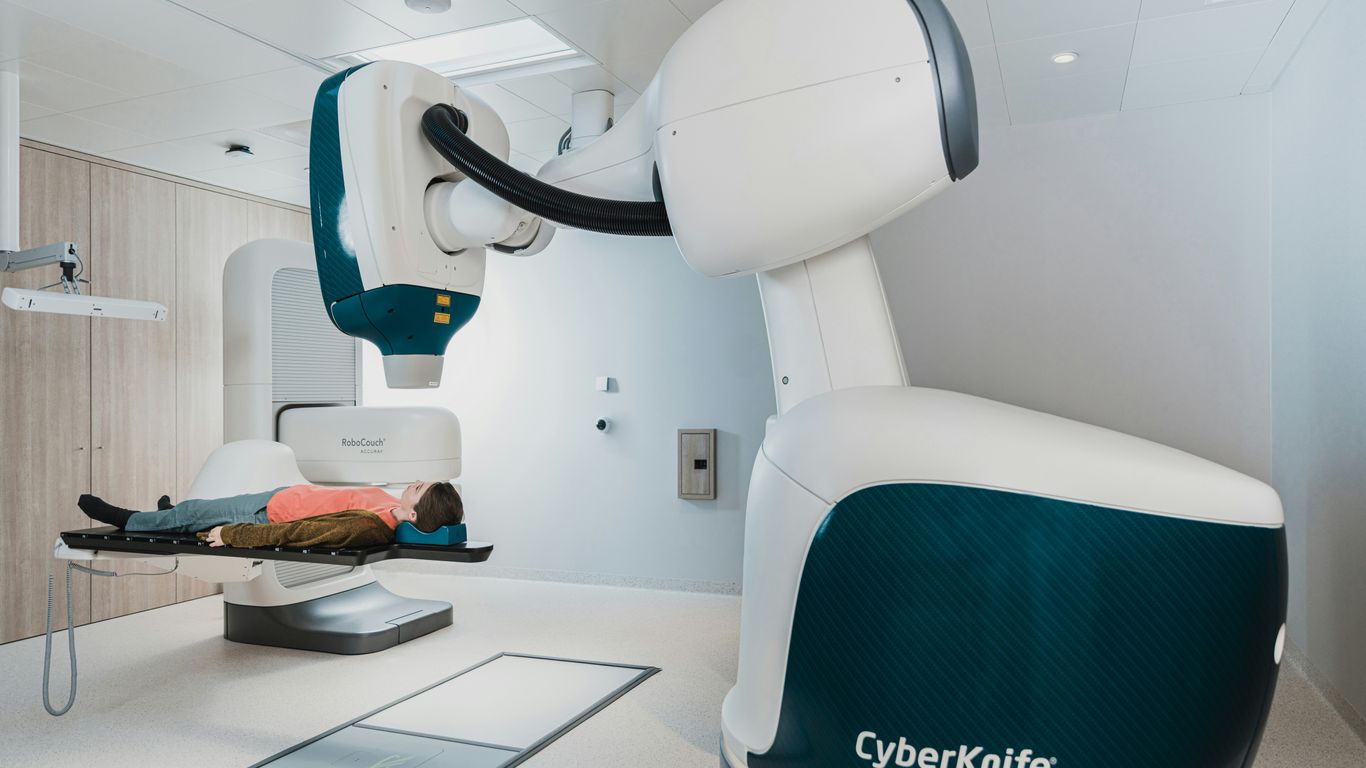
Stryker Mako for joint replacement and orthopedic planning
Stryker Mako is identified in the available coverage as an orthopedic system used for joint replacement, including hip and knee applications, with CT guidance. That makes preoperative planning and imaging compatibility central to its evaluation.
Hospitals should examine how imaging moves into the planning workflow, how the plan is reviewed, and how surgeons use the system during the operation. The relevant value is not the robot in isolation but the repeatable chain connecting data, preparation, and implant placement.
Zimmer Biomet ROSA across knee, hip, and spine procedures
Zimmer Biomet ROSA is presented in the available coverage across knee, hip, and spine procedures. Its comparison therefore depends on the specific ROSA configuration, procedure, implant family, and data workflow being considered rather than on the platform name alone.
That specificity matters in capital planning. A hospital should ask which procedures are supported locally, what imaging is required, and whether the proposed configuration aligns with its orthopedic volume.
Smith+Nephew CORI for handheld robotic assistance
CORI is described in market coverage as a compact orthopedic system for knee arthroplasty and handheld robotic assistance. That form factor may be relevant to hospitals seeking to limit dedicated room infrastructure or support ambulatory settings, subject to the documented configuration and local clearance.
The evaluation should focus on setup time, surgeon control, bone-preparation workflow, instrument processing, and the training required for consistent use. Compact equipment is valuable only if it remains dependable under real scheduling pressure.
The role of implants, navigation, and imaging compatibility
Orthopedic robotics cannot be separated from implants and navigation. Implant inventory, planning software, imaging protocols, tracking, and surgeon preference may determine whether a system improves a pathway or creates another layer of coordination.
A useful hospital review asks four practical questions:
- Which implants and procedures are supported in the proposed configuration?
- What imaging must be acquired, transferred, or repeated?
- How are plans reviewed and changed before surgery?
- What happens when navigation data are unavailable or incomplete?
These questions turn a technology comparison into a service-line assessment. They also expose integration costs that may be invisible in a product demonstration.
Emerging companies and new robotic surgery models
Emerging companies are testing models that do not simply reproduce the dominant operating-room arrangement. Some emphasize collaboration with the bedside team, some reduce hardware footprint, and others target microsurgery or a narrow clinical task. Their promise should be weighed against regulatory stage, manufacturing maturity, support coverage, and evidence.
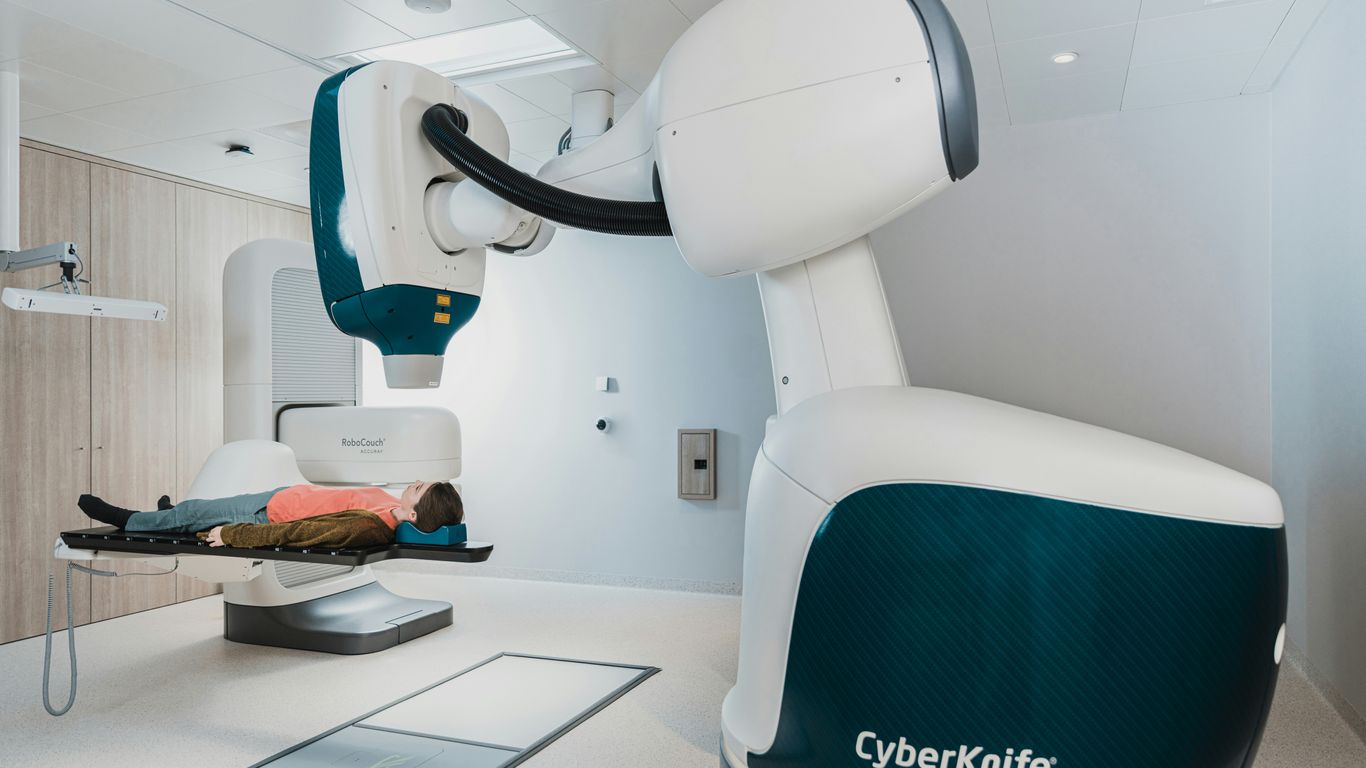
Moon Surgical Maestro for collaborative laparoscopy
Maestro is associated with a collaborative laparoscopy model in the available market description. That framing places the emphasis on how the robot works alongside the surgeon and bedside team, rather than implying that the system independently performs an operation.
Hospitals considering such a model should observe who controls each action, how responsibilities are divided, and whether the setup reduces or adds coordination. Collaboration is a workflow claim that needs to be tested in the actual room.
Rob Surgical Bitrack and remote-center-of-motion design
Bitrack is included in the emerging-platform discussion because remote-center-of-motion design is a meaningful engineering choice in minimally invasive access. The concept concerns how instruments pivot around an entry point while the system supports controlled movement.
Its clinical relevance depends on the complete product: instruments, visualization, control interface, clearance, and approved use. An elegant mechanical principle is not, by itself, evidence of a finished clinical platform.
Galen Robotics and lightweight assistance for microsurgery
Galen Robotics is associated in the outline with lightweight assistance for microsurgery. A focused system in this category may be judged less by broad procedure coverage than by steadiness, ergonomics, precision, and the fit between assistance and delicate manual work.
The hospital should distinguish a research platform, a cleared device, and a routinely supported product. That distinction is particularly important in microsurgery, where small changes in control and visualization can have large procedural consequences.
How smaller platforms differentiate from established systems
Smaller companies generally cannot match an established vendor on installed base, service reach, or instrument breadth. They may instead differentiate through a focused indication, smaller footprint, flexible deployment, a collaborative workflow, or a commercial structure designed for lower utilization.
The surgical robotics startup landscape offers a broader view of how these companies are moving from prototypes toward clinical infrastructure. For an investor or hospital, the decisive evidence remains practical: repeatable cases, regulatory clarity, reliable manufacturing, and a support model that can survive growth.
Technology differences that affect clinical use
Technical specifications become meaningful only when they change what a team can do in a real case. A few millimeters of reach, a different instrument connection, or a new visualization mode can affect setup, fatigue, turnover, and the range of procedures a hospital can schedule. The comparison should therefore translate engineering choices into clinical consequences.
Open versus closed instrument and accessory ecosystems
An open ecosystem may give hospitals more choice among instruments, accessories, and integration partners, while a closed ecosystem may offer tighter control over validation and support. Neither model is automatically better. The decision turns on availability, quality assurance, cost, and the hospital’s tolerance for vendor dependence.
Procurement teams should map which components are proprietary, which are reusable, and which require recurring contracts. They should also ask how a change in supplier or software version would affect validated workflows.
Haptic feedback, visualization, and AI-enabled guidance
Haptic feedback can provide force information through the control interface, while visualization determines how the surgeon interprets anatomy and instrument position. AI-enabled guidance may support planning or decision-making, but the clinical role, validation, and human oversight must be explicit.
The robotics in healthcare analysis places these issues in a wider context that includes decision support, miniaturized devices, and cybersecurity. A hospital should still assess each feature against a defined use case rather than treating AI as a quality signal by itself.
A useful demonstration shows not only the best visual moment but also how the system behaves when anatomy, access, or equipment differs from the planned case. That is where interface quality becomes a clinical property rather than a marketing description.
Modular arms, docking requirements, and operating-room footprint
Arm geometry, cart placement, docking steps, cable paths, and bedside access all influence room logistics. A system that fits one operating room may obstruct anesthesia access or force a different staff position in another. These details affect turnover and safety even when they never appear in a headline specification.
Hospitals should use representative room layouts and timed simulations. The goal is to measure movement, not merely confirm that the equipment can physically enter the room.
Data capture, interoperability, and cybersecurity considerations
Robotic systems can generate valuable procedural data, but data capture raises questions about ownership, export, integration, retention, and access. Interoperability with imaging, electronic records, planning tools, and reporting systems can determine whether the data are useful beyond the console.
Cybersecurity review should cover updates, authentication, network segmentation, remote service, incident response, and downtime procedures. Connected equipment expands the operational surface that a hospital must govern.
Comparing commercial value for hospitals
Commercial value is the point where clinical enthusiasm meets budget discipline. A platform must earn its place through appropriate utilization, acceptable procedure costs, dependable support, and a credible path to replacement or expansion. The calculation is local: case mix, staffing, reimbursement, room availability, and surgeon demand all matter.
Upfront acquisition costs and financing models
Acquisition can involve purchase, lease, subscription, per-procedure pricing, or a hybrid arrangement. Each model shifts risk differently between the hospital and vendor. A lower initial commitment may carry higher recurring exposure, while an outright purchase may leave the hospital responsible for utilization risk.
Finance teams should compare total cost over a defined period and run sensitivity cases for lower volume, delayed adoption, service interruption, and a slower-than-planned training curve.
Disposable instruments, procedure costs, and utilization targets
Procedure economics include instruments, drapes, accessories, sterile processing, maintenance, staffing, and room time. Utilization targets should be based on cases the hospital can realistically schedule, not on a vendor’s best-case forecast.
The comparison becomes clearer when costs are organized by workflow rather than invoice category:
- Fixed capital and financing obligations.
- Per-case instruments and disposable supplies.
- Service, software, and training commitments.
- Room time, staffing, turnover, and contingency costs.
After these costs are mapped, leaders can test whether the proposed volume supports the investment. That analysis also shows which assumptions deserve negotiation before a contract is signed.
Training, credentialing, and technical support
Training is an operating requirement, not a launch event. Surgeons need a credentialing pathway, while nurses, technicians, and biomedical staff need role-specific instruction. Support quality can determine whether a system remains available during the difficult first months of adoption.
Contracts should define response times, preventive maintenance, spare equipment, software updates, training refreshers, and escalation routes. These terms often matter more than a polished demonstration.
Vendor stability, installed base, and product roadmaps
An installed base can support service capacity, peer learning, and instrument availability, but it is not proof that a product fits every hospital. A smaller vendor may offer focus and responsiveness while carrying greater continuity risk. The relevant question is whether the company can support the platform through the hospital’s planning horizon.
Roadmaps should be treated as forecasts, not guarantees. The medical robotics company overview provides broad market context, but procurement decisions still require current documentation, references, and contractual commitments.
How hospitals can choose the right surgical robotics partner
Selection should begin with clinical demand rather than a technology tour. Hospitals need to know which specialties, procedures, surgeons, rooms, and patient pathways are actually in scope. They then can compare platforms on evidence, workflow, economics, and resilience.
A useful process is deliberately unglamorous. It observes real cases, includes skeptical users, and records the work that happens before and after the robot is used. That approach is more likely to produce a durable decision than a single executive demonstration.
Matching platforms to specialties and procedure volume
A platform should match the procedures a hospital can perform consistently and at sufficient volume. Breadth is useful only when the organization has the surgeons, staffing, instruments, and scheduling capacity to use it. A narrow platform may be rational where the clinical pathway is concentrated.
Volume should be segmented by procedure, surgeon, room, and expected adoption rate. This prevents an aggregate service-line number from hiding a weak business case.
Evaluating clinical evidence and surgeon adoption
Clinical evidence should be reviewed by indication, comparator, study design, follow-up, and relevance to the hospital’s patient population. Surgeon adoption deserves equal attention because a platform that few qualified clinicians want to use will not generate dependable utilization.
A structured review can distinguish established evidence from early signals and vendor claims. It should also record what remains unknown, especially when a product is new or its intended use is narrow.
Assessing implementation, staffing, and operating-room logistics
Implementation requires a named owner, a training calendar, room preparation, sterile-processing readiness, biomedical support, and a plan for cases that do not follow the ideal pathway. Staffing models should account for setup, docking, troubleshooting, turnover, and holiday or night coverage.
Hospitals should run a simulation before signing. The simulation can expose whether the proposed system blocks access, requires extra personnel, or creates delays that would erase its expected financial benefit.
Building a scorecard for platform selection and long-term ROI
A scorecard makes trade-offs visible and keeps the decision from collapsing into a popularity contest. It should weight clinical fit, evidence, workflow, economics, cybersecurity, support, and vendor continuity according to the hospital’s priorities.
The final score should include both present capability and future risk. A disciplined buyer asks what must be true for the investment to work, how those conditions will be measured, and what contractual protections apply if the assumptions fail.
Conclusion
The best way to compare surgical robot companies is to connect product architecture with clinical evidence and hospital economics. Platforms differ in scope, workflow, maturity, and support obligations, so no single ranking can replace a procedure-level assessment. Hospitals that test real room logistics, model full lifecycle cost, and demand clear evidence will be better positioned to adopt robotics for durable clinical value rather than short-lived novelty.
Frequently Asked Questions
What are the main types of surgical robots?
The main categories include soft-tissue laparoscopic systems, orthopedic planning and navigation systems, and specialty platforms for focused procedures such as microsurgery or endoluminal intervention.
Are surgical robots autonomous?
Most surgical robots are surgeon-controlled assistance systems. They may provide mechanical positioning, visualization, navigation, or guidance, but the level of automation depends on the specific product and approved use.
What should hospitals compare first?
Hospitals should first compare intended procedures, regulatory status, clinical evidence, room workflow, training requirements, and realistic case volume before reviewing finer technical features.
How does a hospital estimate robotic surgery ROI?
It should model capital or financing costs, per-case supplies, service, staffing, training, room time, utilization, reimbursement, and the cost of delays or underuse over a defined period.
Why does instrument compatibility matter?
Instrument compatibility affects recurring cost, supply continuity, sterile processing, surgeon choice, and the hospital’s dependence on a single vendor or accessory ecosystem.
What role does training play in platform selection?
Training affects credentialing, adoption, safety, room efficiency, and the speed at which a hospital can reach dependable utilization. It should include the entire operating-room team.
Should hospitals prefer established vendors?
An established vendor may offer a larger installed base and support network, while an emerging vendor may offer a focused workflow or different commercial model. The right choice depends on evidence, continuity, fit, and contractual protection.