Key Takeaways
Quantum and classical computers operate on fundamentally distinct physical principles that dictate their ideal use cases and performance limits. These systems are designed to complement one another, creating robust hybrid infrastructures rather than serving as direct replacements.
- Bits exist in discrete binary states, whereas qubits leverage quantum mechanics for massive state spaces.
- Superposition allows quantum processors to represent multiple states simultaneously for complex parallel calculations.
- Entanglement creates deep correlations between qubits, enabling information throughput speeds impossible with sequential logic.
- Error correction remains the primary hurdle in scaling quantum hardware from prototypes to stable commercial machines.
- Hybrid environments combine classical reliability with quantum specialized co-processing for industry-scale problem solving.
Architectural foundations of bits vs. Qubits
How classical bits function as binary switches
Classical computing relies on bits which act as the fundamental units of data, existing solely as either zero or one. These switches are realized through transistors, which effectively gate electrical current to represent binary information. While this approach is highly efficient for most standard computing tasks, it is restricted to sequential operations that process data one step at a time. The deterministic nature of this system ensures that calculations are repeatable and stable across wide algorithmic variations.
The role of superposition in quantum states
Quantum computing processes information using qubits, which can inhabit a superposition of states simultaneously. This means a single qubit is not just zero or one, but a complex probability distribution that expands exponentially with each added qubit. Accessing these fundamental conceptsAllows researchers to explore a vast solution space in a single operational step. By maintaining these delicate states, quantum machines distinguish themselves as uniquely capable of tackling problems that stall out on standard silicon chips.
Understanding entanglement and quantum correlation
Entanglement binds qubits together such that the state of one is inextricably linked to the state of another, regardless of distance. This core mechanism enables a level of information throughput that fundamentally changes how data is processed within a system. This interconnectedness allows quantum algorithms to perform highly efficient operations by manipulating multiple qubits as a single, unified entity rather than isolated bits. Researchers exploring these correlations are actively working on improving coherence times to ensure this connectivity remains stable during longer computation cycles.
Computational speed and processing paradigms
Sequential processing in classical architectures
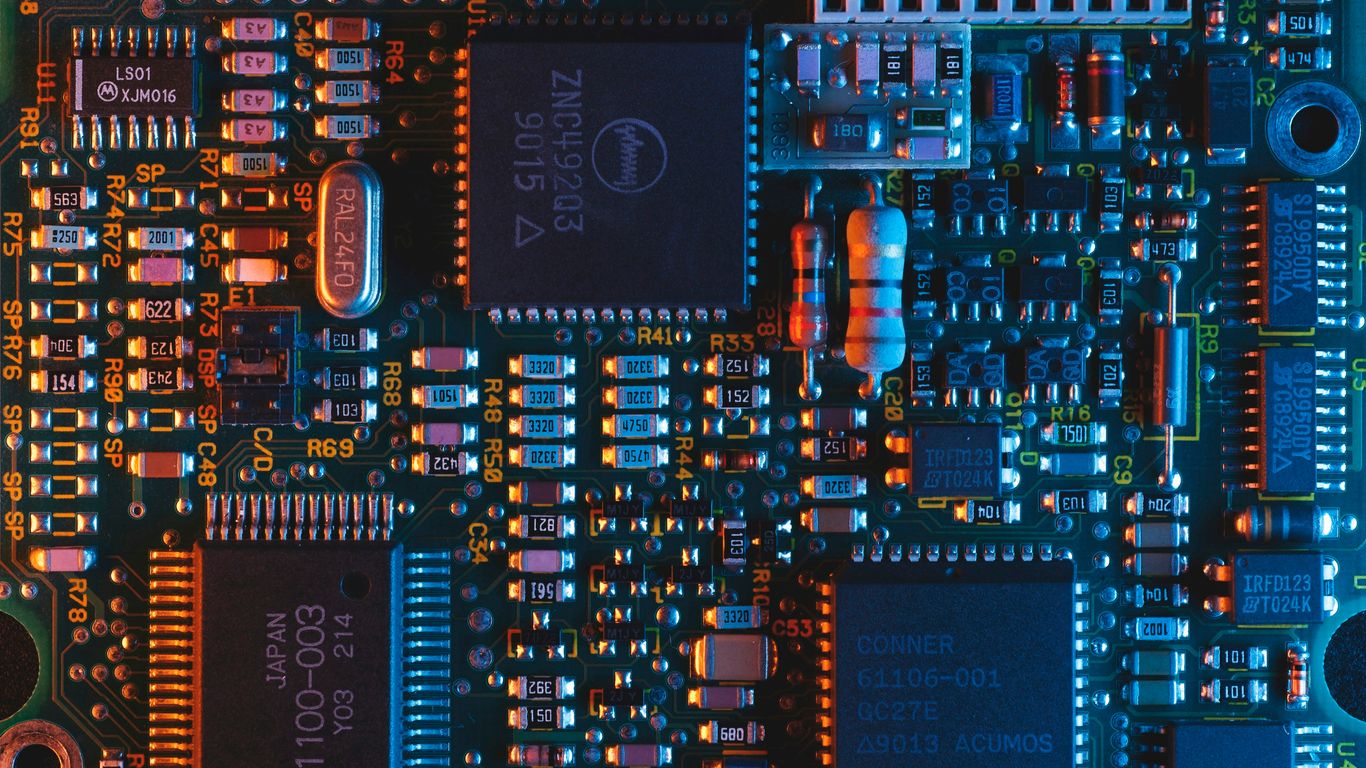
Classical processors follow a rigid, step-by-step execution path where each logical gate operates based on inputs from previous stages. This ensures high predictability and makes them excellent for general-purpose workloads, including database management and common desktop automation. While they can be scaled through massive server clusters, they face intrinsic limitations when attempting to model highly interconnected systems that require concurrent processing. The sequential bottleneck remains a persistent challenge in fields defined by immense complexity.
Parallel problem solving with quantum algorithms
Quantum algorithms leverage interference and probability amplification to arrive at solutions much faster than classical brute-force approaches. By using the superposition of states, these systems can implicitly analyze vast datasets, making them ideal for tasks involving extensive pattern recognition. The following table contrasts the primary operational differences between these two methodologies:
| Feature | Classical Systems | Quantum Systems |
|---|---|---|
| Memory Unit | Binary Bit | Quantum Qubit |
| Logic Model | Deterministic | Probabilistic |
| Complexity | Polynomial Scaling | Exponential Scaling |
This shift allows for significant efficiency gains in specialized domains, though it requires specific mathematical reframing to map problems into a form that quantum processors can parse effectively.
Scaling laws and exponential acceleration potential
Scaling in classical systems often encounters a wall known as Moore’s Law, where adding more transistors yields diminishing returns due to physical heat and size constraints. Conversely, quantum systems gain computational power much more rapidly as qubit counts increase. This exponential acceleration potential forms the basis for current efforts in research to achieve a practical advantage, where quantum performance outstrips the most powerful classical supercomputers by several orders of magnitude for specific, well-defined mathematical tasks.
Error rates and system stability

Decoherence and external environmental noise
Qubits are fragile entities that lose their quantum state when exposed to the slightest fluctuations in temperature or electromagnetic radiation. This phenomenon, known as decoherence, necessitates sophisticated cryogenic shielding to keep hardware operational. Without these isolation methods, the information encoded in qubits degrades rapidly, rendering long, complex calculations impossible to complete in the current generation of hardware.
Active error correction protocols in quantum processors
To overcome intrinsic fragility, scientists use specialized error correction codes that spread information across multiple physical qubits to create a stable logical qubit. This involves significant overhead, as many physical units are required to protect a single piece of logical data. Organizations like IBM Quantum are pioneering techniques to improve these gate error rates, moving toward systems that can sustain computations despite the inherent instability of the hardware.
Deterministic reliability in classical computing systems
Classical systems benefit from high-density transistors that are exceptionally resilient to environmental interference. They rely on redundant hardware and mature software layers to ensure that every output is 100% accurate, which is essential for banking, aviation, and critical infrastructure. The primary difference is that classical systems do not require active correction to maintain their state; their design inherently prevents the bit-flip errors that plague the quantum domain today.
Practical applications and industry impact
Accelerated drug discovery and molecular simulation
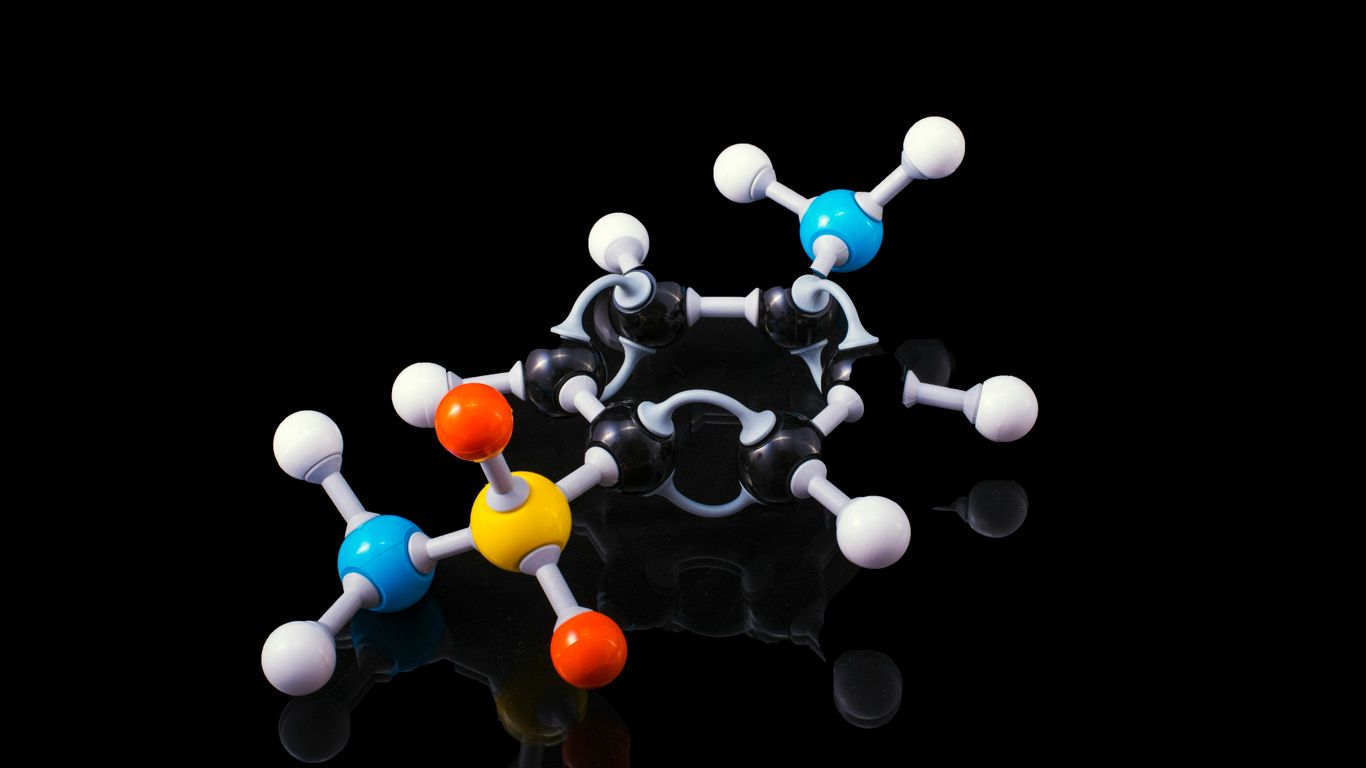
Quantum computers are being targeted for their natural capability to model chemical reactions with high precision. By mapping molecular interactions onto quantum gates, researchers can evaluate candidates for therapy development without the need for endless lab testing. The shift toward quantum-assisted discovery marks a departure from trial-and-error chemistry, offering the ability to simulate complex bonds and reaction pathways that classical simulators struggle to resolve.
Complex optimization for logistics and finance
Optimization challenges in finance and logistics often involve evaluating millions of potential paths to find the most efficient outcome. Quantum systems use specialized algorithms to navigate these decision trees faster than traditional heuristics. The following list outlines key industries undergoing transformation:
- Global shipping supply chain management
- High-frequency portfolio rebalancing
- Large-scale traffic grid flow control
- Manufacturing resource allocation scheduling
By identifying the most effective configuration in minutes, these tools can save organizations massive amounts of time and energy compared to classical computational models.
Quantum-resistant cryptography and data security challenges
While quantum computers offer immense benefits, they also present a unique challenge to current widely used asymmetric encryption standards. Preparing for the post-quantum era is a priority for cybersecurity experts who look for vulnerability mitigation strategies today. Transitioning to cryptographic systems that are resistant to quantum decryption is now widely recognized as a mandatory upgrade for ensuring global data integrity.
Future of hybrid computing environments
Integrating quantum processing units with classical servers
Future datacenters will likely function as hybrid organisms where classical CPUs manage control logic and storage, while quantum processors serve as accelerators for particularly heavy computational loads. This architectural synergy allows for seamless integration into existing workflows without requiring a full replacement of current IT stacks. As we integrate these units, engineers must reconcile the massive differences in communication protocols and data representation.
Managing data workflows across different architectures
Moving data between a classical memory buffer and a quantum register is a significant technical hurdle in modern hybrid quantum workflows. Efficiently managing these inputs keeps the overall latency low and ensuring the quantum hardware stays busy rather than waiting for classical instructions. Specialized software layers are being developed to optimize these handoffs, creating a unified environment for developers to build applications that span both paradigms.
Transitioning from research prototypes to commercial tools
Moving from laboratory experiments to industrial utility requires a shift toward higher standards of manufacturability and cloud accessibility. As companies refine their hardware, the focus moves from simply proving that the systems work to ensuring they remain reliable on a continuous uptime schedule. At Inside Deep Tech, we track this progress closely, observing as these prototypes move from specialized research projects to commercialization pathways that can support sustained enterprise service models.
Conclusion
The ongoing evolution of quantum and classical computing represents a significant milestone in our ability to process information at scale. By leveraging the specific strengths of each, we are forging a future where complex simulation and optimization are handled by the right underlying architecture. The transition to a hybrid landscape is not about binary winners or losers; it is about building a versatile technological toolkit capable of solving the most intractable challenges of the modern age.
Frequently Asked Questions
Will quantum computers eventually replace all classical computers?
Quantum computers are not designed to be general-purpose replacements for standard devices but rather as powerful co-processors for specialized, computationally intensive problems.
What makes quantum computers so much faster for specific tasks?
Quantum computers utilize mechanics like superposition and interference to evaluate vast solution spaces in parallel, enabling acceleration for problems that grow exponentially in complexity.
How do environmental conditions affect quantum computation?
Quantum systems are highly susceptible to decoherence, where external noise like heat or electromagnetic waves causes the loss of the delicate quantum state necessary for processing.
What does the term fault-tolerant computing mean?
Fault tolerance refers to the ability of a system to continue operating accurately even if some of its building blocks, or physical qubits, encounter errors or noise during the calculation.
Why is current encryption at risk from quantum advances?
Quantum algorithms have the potential to solve specific mathematical problems, such as integer factorization, much faster than classical methods, which could break standard public-key encryption.
What are bit and qubit differences in core operations?
Classical bits operate in binary states of zero or one using deterministic logic, while qubits represent probability distributions that facilitate probabilistic calculations.
How will hybrid computing impact existing IT infrastructure?
Integration involves connecting quantum processing units to conventional servers via cloud interfaces, allowing classical systems to delegate specific complex tasks to the quantum co-processor.