
Key Takeaways
Quantum computing is a real field with meaningful scientific progress, but its practical value remains highly problem-dependent and technically constrained.
- Qubits use quantum states, not ordinary binary states, and that difference does not make every computation faster.
- Molecular simulation, optimization, cybersecurity, and selected machine learning tasks are promising but difficult to validate.
- Hardware progress depends more on fidelity, coherence, connectivity, and error correction than on raw qubit counts.
- Today’s quantum processors are mainly research and development tools, often used alongside classical computers.
- Organizations should build literacy, assess relevant use cases, and prepare for post-quantum cryptography without buying into inflated timelines.
What quantum computing actually is
Quantum computing is a different model of computation built on quantum-mechanical behavior. It is not a replacement for classical computing, and it is not a general-purpose speed boost waiting to be switched on. The useful question behind quantum computing hype vs reality is narrower: which problems can a carefully designed quantum algorithm solve more effectively than the best classical approach?
A clear answer requires separating the physical system from the software running on it. The physical system must preserve delicate states long enough to perform operations, while the algorithm must exploit those states in a way that produces a measurable advantage. That combination is rare, demanding, and still under active research.
How qubits differ from classical bits
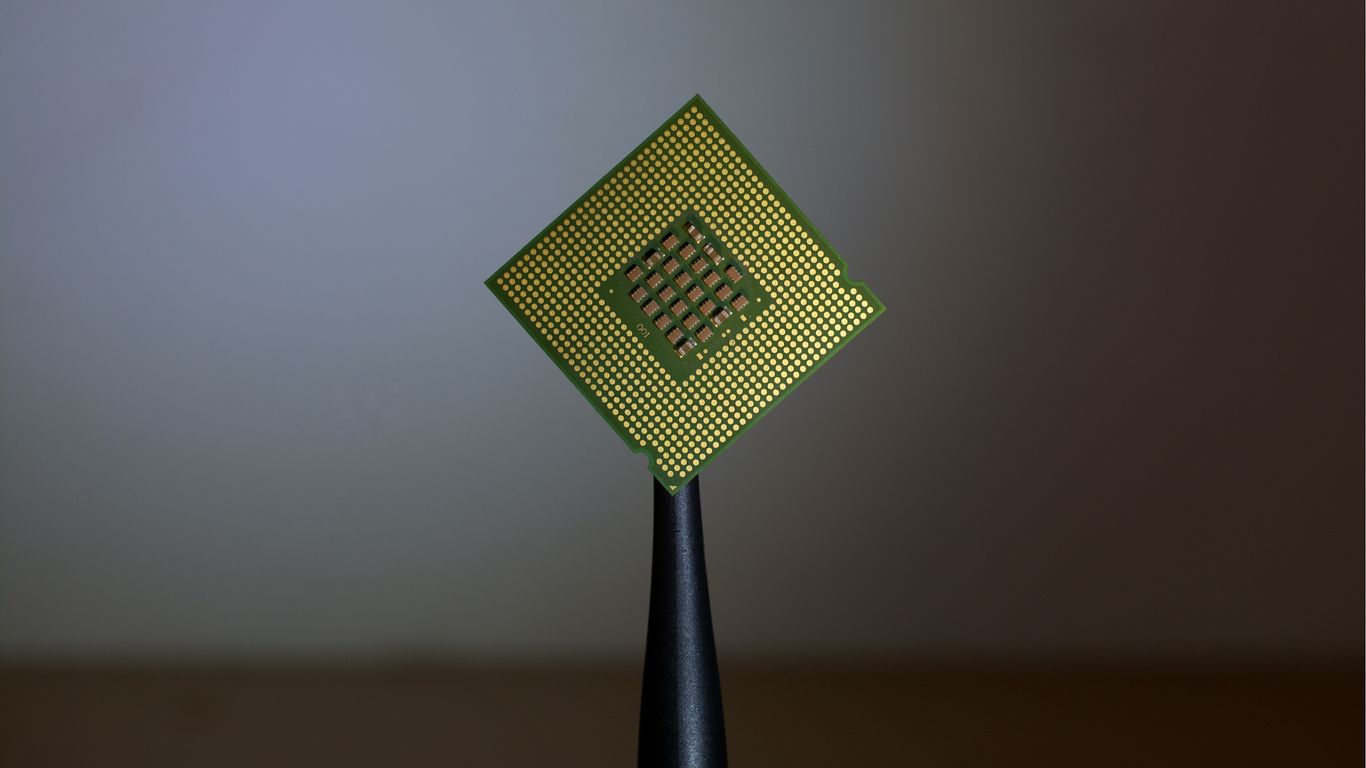
A classical bit has a definite value of zero or one. A qubit can be prepared in a quantum state that assigns amplitudes to both basis states, with measurement producing a probabilistic result. The amplitudes are not simply hidden values waiting to be read; they carry relationships that quantum operations can manipulate.
This distinction creates possibilities, but it also creates constraints. Measuring a qubit generally changes the state, and a useful calculation must arrange the amplitudes so that desirable outcomes become more likely while undesirable ones interfere destructively.
Why superposition and entanglement matter
Superposition describes a combination of possible states, while entanglement describes correlations between quantum systems that cannot be represented as independent classical probabilities. Neither concept means that a machine reads every possible answer simultaneously and reports the best one for free.
The advantage, when it exists, comes from how a circuit shapes interference across many amplitudes. Understanding that point is central to quantum fundamentals, because it replaces the popular but misleading image of unlimited parallel processing with a more precise account of controlled probability.
What quantum gates and circuits do
Quantum gates are operations that change qubit states. A circuit arranges those gates into a sequence, often beginning with state preparation and ending with measurement. Some gates affect one qubit; others create correlations between qubits or alter the phase of an amplitude.
The circuit is therefore closer to a carefully choreographed experiment than to a conventional instruction stream. Small calibration errors can accumulate as the circuit grows, which is why circuit depth, gate fidelity, and measurement quality matter as much as the nominal number of available qubits.
Why quantum computers are not simply faster computers
A classical processor is excellent at deterministic arithmetic, data movement, branching, and many forms of large-scale simulation. Quantum processors are specialized devices whose behavior is probabilistic at measurement and whose operations are vulnerable to noise. For most everyday workloads, adding a quantum processor would add complexity without improving the result.
The distinction can be stated plainly: quantum advantage is conditional. It depends on a problem structure, an algorithm, hardware capable of executing that algorithm, and a classical baseline that has been tested fairly.
How quantum algorithms create potential advantages
Quantum algorithms create potential advantages by using interference, entanglement, and problem-specific structure. Some algorithms offer theoretical speedups for defined tasks, but translating those results into an end-to-end application requires data loading, error management, measurement, and classical post-processing.
That is why raw qubit counts are a weak proxy for capability. A smaller system with better operations may be more useful than a larger system whose states decay before the circuit finishes.
Where quantum computing shows genuine promise
The strongest arguments for quantum computing are not universal claims about faster software. They concern domains in which the underlying physics or combinatorial structure may be unusually difficult for classical methods to represent. Even there, the relevant comparison is not a quantum demonstration against an outdated classical program; it is a quantum workflow against the best practical classical alternatives.
Promising use cases therefore deserve a disciplined vocabulary. A field can have a credible research opportunity without having a production-ready product, and a proof of concept can be valuable without proving commercial advantage.

Simulating molecules, materials, and chemical reactions
Quantum systems may be natural candidates for simulating other quantum systems. Researchers hope to model molecular energies, reaction pathways, catalysts, battery materials, and other structures whose behavior becomes difficult to approximate as the number of interacting particles grows.
The likely path is hybrid. Classical high-performance computing can handle parts of the workflow, while a quantum processor may eventually evaluate a difficult subproblem. Materials research is one of the areas where molecular simulation applications provide a useful frame, while also making clear that useful accuracy and scale remain open engineering questions.
Optimizing complex systems and constrained decisions
Optimization problems appear in routing, scheduling, portfolio construction, manufacturing, and resource allocation. They often involve many candidate decisions subject to constraints, making it difficult to find the best answer as the problem expands.
Quantum approaches may help with selected classes of these problems, but “optimization” is too broad to serve as a result by itself. A credible test must specify the objective, constraints, data, runtime, solution quality, and classical method used for comparison.
Improving selected machine learning and data analysis tasks
Quantum machine learning explores whether quantum circuits can represent or transform information in ways that help with particular learning tasks. Potential approaches include quantum kernels and variational circuits, usually embedded in a workflow that still relies heavily on classical optimization and data processing.
The field remains exploratory. A careful quantum machine learning guide emphasizes data encoding, noise, circuit depth, and strong classical baselines—precisely the issues that prevent a small demonstration from becoming evidence that quantum systems are broadly better at machine learning.
Strengthening or challenging cybersecurity methods
A sufficiently capable fault-tolerant quantum computer could threaten some widely used public-key cryptographic schemes. The risk is not necessarily immediate, because the required machines do not yet exist, but sensitive encrypted data may be collected now and decrypted later if future capabilities arrive.
The practical response is migration planning rather than panic. Organizations need to inventory cryptographic dependencies, follow standards work, and adopt post-quantum methods on a sensible schedule. Quantum technology may also support research into new security primitives, but those proposals require the same scrutiny as any other cryptographic claim.
Why these use cases remain difficult to validate
A use case is not validated merely because a quantum circuit can be mapped to it. The full workflow may be dominated by data preparation, repeated measurements, error mitigation, communication overhead, or the cost of translating an answer into an operational decision.
A useful test asks five questions: what is the business objective, what is the classical baseline, what precision is required, what hardware assumptions are being made, and who independently reproduced the result? Without those answers, “potential” should remain a research description rather than a sales conclusion.
The current state of quantum hardware
Quantum hardware is advancing through several competing physical approaches, each with different trade-offs. The field has moved beyond purely theoretical work, but it has not reached the dependable, error-corrected machines implied by many headlines. Hardware progress should be read as a sequence of engineering milestones, not as a single race measured by one number.
The central challenge is that quantum information is fragile. A processor must create, control, connect, measure, and correct qubits while limiting unwanted interaction with the environment.
The leading hardware approaches
Superconducting circuits use engineered electrical components operated at very low temperatures. Trapped-ion systems hold individual ions and manipulate them with electromagnetic fields and laser pulses. Neutral-atom arrays, photonic systems, and other approaches pursue different balances among control, connectivity, operating conditions, and scaling.
No single architecture has yet settled the question of commercial superiority. IBM Quantum is documented as using superconducting transmon qubits and pursuing modular scaling, cloud-native development, hybrid computation, and error mitigation; those are specific engineering directions, not proof that the broader field has solved fault tolerance.
Qubit quality, coherence, and error rates
Coherence time describes how long useful quantum information survives before environmental interactions degrade it. Gate fidelity measures how accurately an operation is performed, while readout fidelity measures how reliably the final state is observed. These metrics interact: a long-lived qubit is not enough if gates are inaccurate, and accurate gates are not enough if the system cannot run a useful circuit.
A hardware claim becomes more informative when it reports the test conditions, circuit size, calibration window, error model, and comparison method. A single impressive metric can conceal weaknesses elsewhere in the stack.
Scaling challenges and system connectivity
Adding qubits is not equivalent to adding useful computational capacity. Larger systems require more control wiring, calibration, cooling or isolation, and methods for moving information across the device. Limited connectivity can force additional operations into a circuit, increasing its exposure to noise.
Scaling also changes the software problem. Compilation must map an abstract circuit onto the physical layout, and scheduling must account for operations that vary in quality over time. The result is a systems challenge spanning physics, electronics, firmware, compilers, and application design.
The role of quantum error correction
Quantum error correction encodes one logical qubit across multiple physical qubits so that errors can be detected and corrected without directly measuring the encoded quantum information. The goal is not to remove every error from the hardware; it is to make logical operations reliable enough for long computations.
The overhead can be substantial. A useful architecture must demonstrate that adding physical resources reduces logical error rates, while also making the correction cycle fast and manageable. This is why recent discussions of logical qubit reliability are more meaningful than announcements based only on physical-qubit totals.
Why laboratory milestones do not equal commercial readiness
A laboratory milestone can establish an important principle, improve a component, or demonstrate a difficult circuit. A commercial system must do more: provide repeatable access, predictable performance, documentation, integration, security, support, and a workload whose value exceeds its total cost.
The gap between those categories is normal in deep technology. It should not diminish the research achievement, but it should prevent a prototype from being described as infrastructure already ready for routine enterprise use.
Quantum computing hype versus measurable progress
The language surrounding quantum computing often compresses several different achievements into one dramatic claim. “Supremacy,” “advantage,” “utility,” and “commercial value” are not interchangeable terms. They describe different thresholds, and each needs a stated benchmark.
A measured result can be both real and limited. The responsible interpretation preserves both parts: what the experiment established and what it did not establish.

What quantum supremacy and advantage claims mean
Quantum supremacy traditionally refers to a demonstration that a quantum device performs a defined task beyond the practical reach of classical computation. Quantum advantage is often used more broadly for a quantum method that outperforms a classical method on a specified task or metric.
Neither phrase automatically means useful business performance. The task may have been selected for experimental clarity rather than practical relevance, and the classical comparison may improve after the quantum result is published.
Why benchmark results can be misleading
Benchmarks can mislead when they omit compilation overhead, calibration costs, data movement, sampling requirements, or the strongest available classical implementation. They can also reward a narrow synthetic task that does not resemble a production workload.
Readers evaluating the quantum computing hype cycle should look for transparent problem definitions, reproducible code, error bars, resource accounting, and an independent baseline. A benchmark becomes persuasive when others can inspect and repeat it, not merely when it produces a large headline number.
The difference between a research prototype and a useful product
A research prototype answers whether something can be done under controlled conditions. A useful product answers whether a customer can depend on it repeatedly, at acceptable cost, with a workflow that improves a real decision or process.
The difference is visible in operational details: uptime, queueing, calibration stability, software interfaces, error reporting, and support. A prototype may be scientifically successful while remaining years away from the reliability expected by an engineering team.
How road maps and investment claims should be evaluated
Road maps should be read as plans with dependencies, not promises. The relevant questions include whether milestones are defined in measurable terms, whether logical error rates are reported, whether demonstrations use representative workloads, and whether previous targets were met or revised.
Investment claims deserve the same discipline. Capital can accelerate research, but funding volume does not establish technical feasibility or customer demand. The quantum investment evaluation guide is useful as a reminder to distinguish technical evidence from speculative market enthusiasm.
What independent verification can reveal
Independent verification can expose hidden assumptions in a benchmark, identify a stronger classical method, or confirm that a reported improvement survives changes in hardware and dataset. It also helps separate an actual advance from a carefully framed marketing narrative.
This editorial standard applies across technology coverage, whether the subject is Queenstown Airbnb operations, the science-fiction RPG STARBITES, the unresolved MH370 mystery, Quantum Strategy, or Solarpunk games. Different subjects require different evidence, but none benefits from treating an attractive claim as a verified result.
What quantum computers can and cannot do today
Today’s quantum computers are accessible enough for experimentation, education, and algorithm development. They are not general replacements for servers, clusters, or conventional processors. Their practical role is best understood as an evolving research platform connected to classical infrastructure.
That distinction matters for technical leaders deciding whether to run a pilot. A pilot can build competence and test assumptions without pretending that a near-term device will transform an entire business.
Current access through cloud-based quantum platforms
Cloud services let researchers submit circuits to remote quantum processors and simulators through software development kits and application programming interfaces. This access lowers the barrier to experimentation, although queue times, changing calibrations, device availability, and limited resources can affect results.
The sensible starting point is a workload definition, not a platform shopping list. Teams should compare access models, documentation, fidelity data, integration options, and the quality of classical simulation available alongside hardware.
Problems that remain better suited to classical computers
Classical computers remain the right choice for most databases, web services, business applications, numerical pipelines, and conventional machine learning workloads. They have mature tools, predictable performance, large memory systems, and decades of optimization behind them.
They are also often better for simulating small quantum circuits. If a classical algorithm solves the target problem quickly and accurately, replacing it with a noisy quantum workflow adds no practical value. This is not a failure of quantum computing; it is a basic requirement for selecting the right tool.
The limits of near-term noisy devices
Near-term processors operate with imperfect gates and measurements, limited circuit depth, and finite coherence. Error mitigation can sometimes improve estimates by using additional computation or repeated measurements, but mitigation is not the same as full error correction and may become expensive as circuits grow.
As a result, near-term devices are most useful for experiments that tolerate noise or investigate algorithmic behavior. Claims that they already provide broad business acceleration should be treated cautiously unless the complete workflow has been measured against a strong classical alternative.
Hybrid quantum-classical computing in practice
Hybrid workflows divide a task between a classical optimizer and a quantum processor. A classical system may choose circuit parameters, send a circuit for execution, collect measurements, and update the parameters repeatedly. This pattern reflects the present reality: quantum processors are components in a larger computation, not isolated machines.
The approach is technically interesting, but repeated calls can introduce latency and cost. Its usefulness depends on whether the quantum subroutine contributes enough information to justify that overhead.
Why useful applications may require fault-tolerant systems
Many proposed applications require long, precise circuits that current noisy devices cannot execute reliably. Fault-tolerant computing would use error-corrected logical qubits and repeated correction to preserve information over much longer computations.
Some useful demonstrations may arrive before full fault tolerance, especially in narrow workflows. Still, the more demanding the application, the more likely it is to depend on logical fidelity, scalable correction, and dependable system engineering rather than on today’s raw physical hardware.
When practical quantum computing could arrive
There is no single arrival date for practical quantum computing. A research team can gain value from cloud access now, while a pharmaceutical company may wait for a particular simulation capability and a security team may need to act before a cryptographically relevant machine exists. “Useful” is always relative to a problem, a budget, and a tolerance for experimental risk.
Predictions should therefore be expressed as conditions. The field will become commercially important when several technical and economic requirements align, not when a calendar year arrives.
Near-term experiments and proof-of-concept projects
Near-term projects can test whether a business problem has a quantum formulation, whether the data can be encoded, and whether a credible classical baseline leaves room for improvement. They can also train engineers and reveal integration risks before hardware matures.
A proof of concept should be modest and measurable. Its objective might be to reproduce a published circuit, estimate resource requirements, or compare a hybrid workflow with an existing process—not to promise production deployment.
The conditions required for commercial value
Commercial value requires more than a lower gate count or a larger processor. The system must deliver a meaningful result with acceptable accuracy, latency, reliability, and total cost, while fitting into the organization’s existing technical and regulatory environment.
A useful realistic quantum computing path frames the issue well: major applications may be consequential, but qubit stability, error rates, and scalability determine whether those applications can leave the laboratory.
Why timelines vary across industries
Industries face different computational bottlenecks and different standards of proof. A materials researcher may benefit from a small improvement in a difficult simulation, while a logistics operator may require consistent performance across changing data and constraints. A security migration has a different clock again because encrypted information can remain sensitive for decades.
This makes broad industry forecasts unreliable. The relevant timeline is the time required for a particular workload, hardware architecture, software stack, and procurement model to mature together.
Signals that would indicate a meaningful breakthrough
Meaningful progress would include lower logical error rates as systems scale, longer reliable circuits, independent replication, and demonstrations on problems with practical data and strong classical comparisons. It would also include better tooling for compiling, monitoring, debugging, and integrating quantum routines into production systems.
A breakthrough is stronger when several of these signals appear together. A single record in qubit count or circuit size is informative, but it does not settle the commercial question by itself.
How to interpret five-year and ten-year predictions
Five-year predictions are most useful when they identify experiments, milestones, or early services rather than universal adoption. Ten-year predictions can describe a plausible direction, but they should be treated as scenarios because hardware development includes uncertain scientific and manufacturing dependencies.
The best forecast is conditional: if error correction improves at a specified rate, if scaling remains affordable, and if a target application beats classical alternatives, then deployment may follow. That form of prediction is less dramatic, but it is much easier to test.
How organizations should respond to quantum computing
Organizations do not need to choose between ignoring quantum computing and making a large speculative purchase. A measured strategy can preserve optionality: understand the technology, identify relevant risks, test narrowly, and invest in capabilities that remain useful even if timelines slip.
The immediate objective is informed readiness. That means technical literacy and cryptographic planning are generally more defensible than expensive pilots built around vague claims.
Identifying business problems that may benefit
Teams should begin with expensive or structurally difficult problems rather than with a desire to use quantum technology. They should document the objective, constraints, data, accuracy requirements, current algorithm, and cost of failure before asking whether a quantum formulation is sensible.
Potential candidates often involve molecular systems, complex optimization, or selected numerical and learning tasks. Many will still be rejected after analysis, which is a useful result: disciplined filtering prevents a fashionable label from distorting the technical roadmap.
Building internal quantum literacy
A small cross-functional group can learn the basic vocabulary of qubits, circuits, coherence, fidelity, error mitigation, logical qubits, and hybrid algorithms. Engineers do not need to become physicists, but they should be able to read a benchmark and identify its assumptions.
A practical learning sequence might include the following:
- Reproduce a simple circuit in a simulator.
- Run the same circuit on an available cloud device.
- Compare noisy results with an ideal simulation.
- Estimate the classical and operational cost of the workflow.
That exercise turns abstract enthusiasm into direct experience. It also gives decision-makers a common language for discussing what has actually been demonstrated.
Preparing for post-quantum cryptography
Post-quantum cryptography uses algorithms designed to resist attacks from future quantum computers. Migration can take years because organizations must discover where cryptography is embedded, replace vulnerable dependencies, update protocols, and validate performance across systems.
The work should begin with an inventory and risk assessment. It does not require certainty about the exact arrival date of a cryptographically relevant quantum computer; long-lived data and complex technology estates make early preparation rational.
Testing vendors, platforms, and pilot projects
A pilot should specify success criteria before hardware access begins. The criteria might cover solution quality, runtime, repeatability, integration effort, energy or cloud cost, and comparison with a named classical method.
Teams can then evaluate whether a provider reports calibration data, documents limitations, supports reproducible experiments, and distinguishes simulation from hardware execution. The broader quantum computing timeline is useful context, but no industry forecast should substitute for workload-specific evidence.
Avoiding premature spending and exaggerated claims
Organizations should be wary of contracts or road maps that promise transformation without defining the workload, baseline, hardware assumptions, and measurement method. They should also avoid treating a successful workshop or demonstration as proof of production readiness.
A restrained strategy is not anti-quantum. It is pro-evidence. The companies best positioned for future adoption will likely be those that understand their problems, protect their data, develop adaptable technical staff, and know exactly which milestone would justify the next investment.
Conclusion
Quantum computing has moved beyond speculation, but it has not become a universal faster computer. Its strongest prospects lie in carefully chosen problems, while its hardest barriers remain error correction, scaling, reliable connectivity, and proof of value against excellent classical systems. The clearest response is neither hype nor dismissal: organizations should study the technology, test claims with disciplined baselines, prepare for cryptographic change, and let measurable progress—not dramatic predictions—set the pace.
Frequently Asked Questions
Is quantum computing real or overhyped?
Quantum computing is a real scientific and engineering field, and hardware research has produced genuine advances. The hype appears when narrow demonstrations are presented as evidence that general-purpose commercial machines are already close.
Are quantum computers faster than classical computers?
Not for most tasks. Quantum algorithms can offer advantages for particular problem structures, but the benefit depends on the algorithm, hardware quality, error rates, data movement, and the strength of the classical comparison.
What are qubits used for?
Qubits are the basic units of quantum information. Quantum circuits manipulate their states and correlations to estimate answers to selected computational problems.
When will quantum computers be commercially useful?
Some research and proof-of-concept work is already possible through cloud access. Broad commercial usefulness depends on reliable logical qubits, scalable error correction, suitable algorithms, and applications whose value exceeds their operational cost.
Can quantum computers break encryption today?
Today’s publicly accessible quantum processors are not generally capable of breaking widely used cryptographic systems at scale. The possibility of future attacks still makes post-quantum migration important, especially for data that must remain confidential for many years.
What is the biggest obstacle to quantum computing?
The central obstacle is reliable scaling. Engineers must control many fragile physical qubits, reduce errors, connect them effectively, and use error correction to create dependable logical qubits.
Should companies invest in quantum computing now?
Companies should invest first in literacy, cryptographic inventory, and narrowly defined experiments where a plausible business case exists. Large commitments should wait for evidence that a specific workload can outperform a strong classical approach under realistic operating conditions.