
Key Takeaways
Determining whether quantum computing is overhyped requires a rigorous look at the gap between academic research results and genuine enterprise utility. The sector is moving from experimental physics to engineering, yet significant hurdles remain in hardware reliability and error correction.
- Quantum shift to hybrid architectures is essential for long-term progress.
- Qubit fidelity remains the primary bottleneck for scaling reliable systems.
- Commercial readiness hinges on error-corrected fault-tolerant environments.
- Distinguishing between lab-scale milestones and real-world applications is vital.
- Investors should prioritize hardware maturity over short-term PR announcements.
Understanding the current state of quantum computing
The field of quantum information science currently occupies a delicate position between theoretical promise and functional prototype. While physical systems are increasingly capable of performing specialized tasks, these devices exist primarily in a state of noisy operation rather than full operational capacity. Understanding the development arc requires distinguishing between laboratory demonstrations and the industrial infrastructure needed to support reliable, long-term computation.
The distinction between NISQ devices and fault-tolerant hardware
Noisy Intermediate-Scale Quantum (NISQ) devices represent our current reality, where qubits operate in an environment of constant interference and error. These systems lack the comprehensive error-correction protocols necessary for deep-circuit calculations, limiting their use to research and small-scale proof-of-concept tests. As detailed in our guide to the quantum computing timeline, the industry is actively working to transition from these fragile, noisy processors toward true fault-tolerant hardware that can sustain logical qubits without data collapse.
Current milestones in qubit coherence and error mitigation
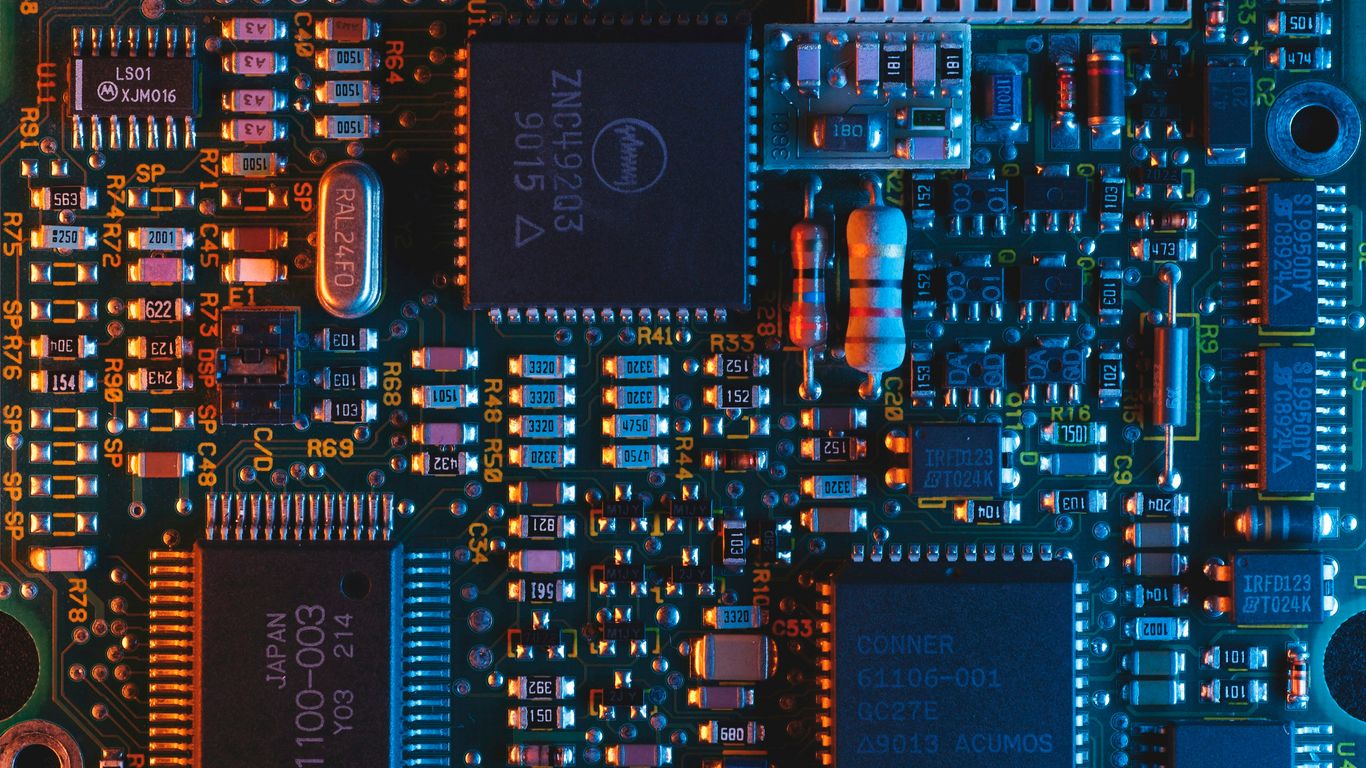
Recent progress focuses on improving the duration a state can be maintained before decoherence strips the system of its quantum advantages. Researchers are implementing sophisticated hardware-level error mitigation techniques that allow logic gates to run with higher fidelity than previously possible. These advancements, while incremental in nature, are the foundational steps required before companies can reliably explore the leading companies driving this hardware innovation.
Comparison between laboratory progress and classical computing power
Quantum systems are not intended to replace classical computers but rather to serve as specialized acceleration engines for intractable problems. Classical supercomputers remain vastly superior at logical, sequential tasks and reliable data handling. However, identifying where quantum machines outperform classical architectures requires precise benchmarking against specific complex variables, an area explored in the hybrid quantum-classical systems analysis.
How the hype cycle influences perception
Marketing departments often mirror the excitement of research labs, leading to a disconnect in the broader business narrative. When an advance in a research setting is presented as an immediate technological shift, it can create a cycle of mismatched expectations that harms the sector's long-term credibility. It is necessary to maintain a sober perspective, identifying which breakthroughs represent a genuine shift in capability and which are merely routine engineering iterative updates.
The gap between research breakthroughs and industrial readiness
The transition of a lab result to a commercial product is a multi-decade process requiring significant investment in peripherals and software. While researchers may demonstrate a new algorithm on a fixed processor, translating that into a standard Delta 8 Crumble style product consistency—reliable, repeatable, and accessible—remains a major barrier. Many firms today are stuck in the phase of running pilot programs that cannot yet scale to meet the enterprise-grade workflows required by global financial or logistical organizations.
Analyzing marketing claims versus verified technical data
Distinguishing verified data from vague marketing requires an engineering-first lens. Much of the industry buzz serves to attract stakeholders who may not be fully aware of the physics-based limits on qubit count and coherence times. Analyzing the realistic path to quantum readiness reveals that actual enterprise adoption requires moving away from proprietary marketing claims and focusing on benchmark transparency.
Risks of unrealistic timelines for commercial adoption
Unrealistic expectations lead to capital mismanagement and frustrated partners. When firms promise widespread utility within an aggressive timeframe, it causes a subsequent blowback when those metrics are inevitably missed. The community must address the risks of over-commercializing quantum computing in finance and other sectors before the infrastructure can handle the load, ensuring sustainable growth rather than inflationary bubbles.
Identifying genuine quantum potential
Genuine quantum potential lies in the ability to process high-dimensional information through silicon-based qubits and other stable platforms that could fundamentally change material science. We must isolate the specific tasks where quantum scaling will offer an advantage over conventional high-performance computing centers.
Application in molecular modeling and material simulation
Quantum computers excel where classical systems falter: simulating interactions at the atomic scale,, such as finding new catalysts or Bona hardwood floor care solutions that rely on precise material chemistry. The ability to model these states with precision represents the truest form of industrial value.
Potential impacts on existing cryptographic infrastructure

Advances in quantum hardware create legitimate long-term threats to standard public-key encryption. While a functional, cryptographically relevant quantum computer is still years away, organizations are already assessing the risks to their intellectual property. The quantum revolution requires that we begin a transition toward quantum-resistant algorithms today, viewing this as a mandatory infrastructure update rather than an optional feature.
Optimization capabilities for complex logistical systems
Complex supply chains face bottlenecks that grow exponentially as variables increase. Quantum algorithms could help in solving these problems effectively. Below is a breakdown of key evaluation metrics for those assessing quantum service offerings:
| Feature | NISQ-era Status | Future Target | Commercial Utility |
|---|---|---|---|
| Error Correction | Active/Research | Native/Integrated | Low/High |
| Qubit Stability | Variable/Short | Sustained/Permanent | Poor/Excellent |
| Scalability | Challenging | Modular/Automated | Limited/Broad |
The metrics above illustrate that we are currently in a phase of establishing utility architectures rather than broad commercial distribution.
Major technical obstacles to overcome
Beyond theoretical advancements, the physical engineering pipeline presents severe challenges. Scaling hardware requires massive investments in climate-controlled environments and software stacks that can manage complex error cycles without human intervention for every micro-operation.
The challenge of scaling qubit counts without data loss
Scaling qubit numbers causes electromagnetic crosstalk and thermal leakage that threaten to collapse the quantum-entangled states. Practitioners are currently using various trapped-ion systems to mitigate these issues, but stabilizing a high number of coherent qubits remains one of the largest engineering puzzles in modern science. One should note these factors:
- Improved shielding of the quantum processing unit environment.
- Development of cryogenic networking for multi-chip integration.
- Automated calibration software to maintain state consistency.
- Higher throughput for input/output data processing tasks.
These points are central to achieving meaningful breakthroughs in quantum architecture that transcend the limitations of current noisy, mid-scale prototypes.
Infrastructure demands and cryogenic cooling requirements

Maintaining a quantum computer typically requires temperatures colder than outer space to prevent thermal noise from destroying the quantum information. This infrastructure restricts access to specialized, centralized facilities. One needs to understand the costs of ABA therapy benchmarks in other professional fields to appreciate how expensive, specialized resources create significant competitive entry barriers in deep tech.
The limited availability of specialized quantum programming talent
There is a critical shortage of developers with deep knowledge of both quantum-circuit physics and high-performance classical algorithms. Bridging this gap requires OnlyFans name like creativity in career branding for engineering roles, ensuring organizations can attract experts capable of managing the complex interface between classical front-ends and quantum back-ends.
Evaluating the credibility of quantum news
Distinguishing between high-quality research reporting and press-release journalism is essential for any serious observer of the frontier. Not all announcements deserve the same level of attention, and understanding the source of a claim is just as important as the claim itself.
Interpreting the debate over quantum supremacy versus utility
Quantum supremacy often signals a specific lab achievement that lacks general applicability. It is more productive to evaluate claims based on quantum utility, where the device performs a genuinely useful task that a classical machine could not reasonably handle. As discussed in recent quantum computer hype reports, moving this definition is the next major shift in the industry debate.
Distinguishing research partnerships from commercial service offerings
Many industry announcements serve to mask the lack of a shippable product by highlighting academic partnerships. A partnership is not a service offering; it is a research project. To ensure advertising results on your own investments or strategies, you must differentiate between firms providing access to a stable, usable quantum cloud and those merely experimenting in a closed laboratory environment.
Criteria for assessing the viability of long-term investments
Sustainability in deep tech means ignoring current hype to look at the physical roadmap of a firm. Does the company have a clear path to error correction? Are they transparent about the fidelity of their logic gates? Assessing the quantum error correction roadmap for any long-term investment is the best way to separate the winners from the firms that will struggle to maintain funding through the coming consolidation period.
Conclusion
Quantum computing is certainly not an overhyped impossibility, but it is currently traversing a difficult phase where the promise of the technology has outpaced its physical maturity. Success in this sector will reward those who can look past the daily news cycle to focus on the long-term fundamentals of error correction, hardware scaling, and hybrid systems integration.
Frequently Asked Questions
Will quantum computers make my personal laptop obsolete?
Quantum computers are not replacements for classical hardware because they are expensive, delicate, and require extreme environments to function.
Is it possible to use quantum computers for common software today?
Developers currently access quantum machines remotely to run specialized scientific calculations, not standard commercial software applications.
How do quantum computers perform calculations so fast?
By leveraging the physics of superposition, these systems can explore vast numbers of possibilities simultaneously rather than processing them one by one.
What are the main limitations keeping quantum computers away from the public?
Significant hurdles include extreme temperature requirements for operation, high error rates during computation, and the extreme difficulty of scaling qubit counts.
Why are there so many headlines about quantum breakthroughs lately?
The surge in quantum research funding has led to a natural increase in academic output and organizational PR attempts to maintain mindshare.
Are current quantum computers trustworthy for financial security?
Existing machines lack the fault tolerance to perform secure, large-scale financial operations reliably, making classical security standards currently more robust.
How can investors identify genuine long-term progress?
Look for companies that publish transparent error-mitigation benchmarks and demonstrate modular hardware scaling rather than static, one-time research experiments.