Key Takeaways
Quantum computing is evolving through distinct hardware paths, each presenting unique engineering trade-offs and commercial viability models for enterprise applications.
- Trapped-ion systems prioritize high gate fidelity.
- Superconducting circuits leverage existing semiconductor fabrication methods.
- Quantum annealing excels in specific combinatorial optimization tasks.
- Cloud-native access is standardizing developer workflows across architectures.
- Commercial adoption depends on scaling beyond current noisy qubit limitations.
Understanding differing quantum architectures

The landscape of the industry is defined by how engineers manipulate quantum states to perform useful calculations. While traditional digital logic relies on binary bits, quantum processing utilizes states that can overlap and correlate, creating complexity in how we build the hardware itself. The debate regarding ionq vs rigetti vs d-wave underscores the fundamental choice between different physical systems that handle these operations in ways that are far from uniform.
Gate-based systems defined
Gate-based computers are designed to execute sequential logical operations, similar to a standard CPU but using quantum gates to manipulate qubits. This approach seeks to provide a universal framework for solving diverse computational problems, from molecular discovery to complex system simulation. The goal is to reach a level of fault tolerance where algorithms can run reliably without being prone to errors that arise from environmental noise.
The role of quantum annealing
Unlike universal gate-based systems, quantum annealing is a specialized approach designed primarily for optimization problems that involve finding the lowest energy state of a system. By allowing qubits to explore possible states to find an optimal solution through tunneling, this architecture is particularly suited for high-stakes business variables such as supply chain logistics and financial modeling. While limited in general-purpose utility compared to gate-based systems, it provides a functional bridge to real-world applications today.
Qubit quality versus quantity
Engineering a quantum processor requires balancing the number of qubits against their coherence times and error rates. Without high fidelity, a large-scale system becomes unusable due to the exponential accumulation of noise, which is why research is heavily focused on improving individual qubit performance before scaling device counts. The following table highlights core performance metrics:
| Architecture Type | Primary Metric Focus | Typical Use Case |
|---|---|---|
| Trapped Ion | Gate Fidelity | High Precision Tasks |
| Superconducting | Switching Speed | Fast Logical Execution |
| Analog Annealing | Energy Minima | Optimization Problems |
- Coherence time length determines the window for computation.
- Gate fidelity dictates how reliably operations complete.
- Error rates define the scale of manageable software.
- Interconnectivity limits effective parallel logic execution.
This balance remains the central challenge that companies must navigate as they move from laboratory environments to sustained commercial production.
IonQ: The trapped-ion innovation

IonQ utilizes individual atoms charged as ions held within electromagnetic fields to serve as qubits, a technical choice that offers high stability and connectivity compared to solid-state alternatives. By isolating these atoms in high-vacuum chambers, the hardware achieves exceptional stability that remains decoupled from the immediate imperfections of a manufactured substrate. This specific design focus allows for highly deterministic gate operations which analysts often cite as a major advantage for complex, high-depth algorithms.
Technical advantages of trapped ions
Trapped ions feature long coherence times because atoms of the same element are essentially identical and inherently stable, avoiding the fabrication-induced defects that plague semiconductor-based quantum processors. Because every qubit can be entangled with any other qubit in the system due to the ion trap geometry, the architecture avoids the restrictive near-neighbor connectivity requirements found in other platforms.
Fidelity and coherence times
Because the system is based on naturally stable atomic transitions rather than manufactured circuits, the error profiles are often lower than those found in synthetic superconducting devices. This physical advantage provides a clearer path to executing deeper logical operations while waiting for more sophisticated error-correction protocols to reach maturity across the industry.
Scaling challenges for trapped-ion hardware
Moving beyond a laboratory, IonQ must address the physical constraints of scaling thousands of ion traps while maintaining precise laser control and vacuum integrity. As systems increase in size, the complexity of the optical control systems scales linearly, requiring significant innovations in modularity to ensure that the fidelity remains stable across all integrated components.
Rigetti: Advancing superconducting circuits
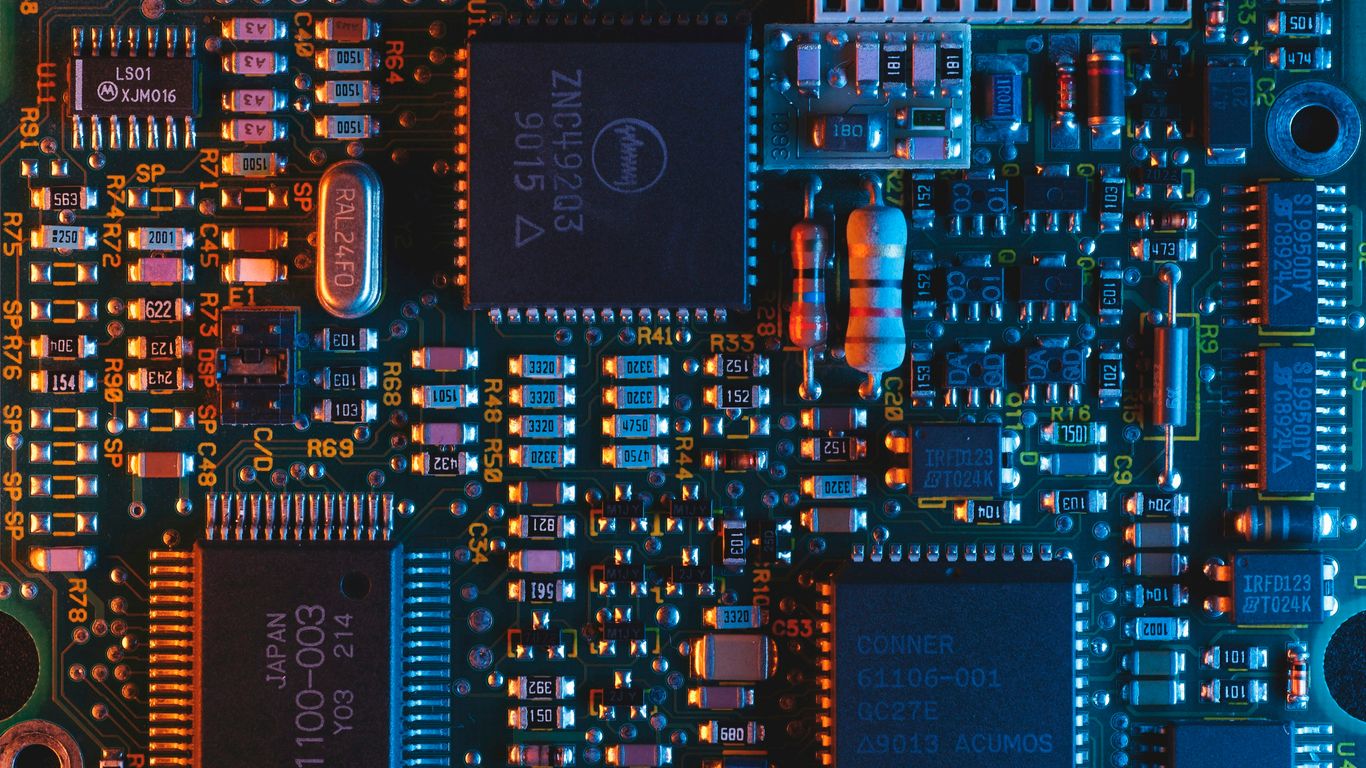
Rigetti develops processors based on superconducting qubits, using microwave technology to control quantum states within a circuits-based environment. This approach is highly compatible with existing semiconductor manufacturing infrastructure, allowing for faster iteration cycles and the potential benefit of leveraging high-volume foundry processes. By focusing on CMOS-integrated fabrication, there is a clear strategic intent to lower the overhead of building large-scale arrays by borrowing the massive scale of human-established silicon electronics.
Design principles for superconducting qubits
Superconducting qubits operate by circulating electrical currents in loops with Josephson junctions, creating artificial atoms that can be driven by microwave pulses. This design allows for fast gate speeds, which is essential for certain classes of algorithms that require rapid state manipulation before decoherence can occur.
Superconducting systems are leveraging the historical investment in semiconductor manufacturing to drive hardware iteration cycles forward at speeds rarely seen in academic-grade experimental platforms.
This methodology allows the company to rapidly deploy updated qubit layouts in their Rigetti hardware line, testing new topologies without waiting for complete re-architecting of the physical control systems.
Integration with classical manufacturing
By utilizing standard fabrication equipment, the path to commercial volume appears more streamlined, though it requires precise control over materials science to ensure the qubits are not overly susceptible to noise. This integration strategy is designed to balance the speed of development with the requirement for extremely high-purity materials to prevent crosstalk.
Current hardware milestones and limitations
While fast, superconducting qubits remain sensitive to microscopic fabrication defects and thermal noise, which necessitates massive cryostat infrastructure. Engineering efforts remain highly focused on minimizing the overhead required to isolate these sensitive components from heat sources generated by classical interfaces needed for signal processing.
D-Wave: Specializing in quantum annealing

D-Wave has pioneered the commercialization of quantum annealing, a method that is explicitly tuned to solve massive discrete optimization problems rather than universal quantum gate operations. The platform is designed to find global minima for complex variables by letting the system settle into its lowest energy configuration, effectively mapping business problems onto a physical quantum layout. This gives the company a distinct market profile compared to gate-based competitors, as they can deliver value for specific classes of constrained optimization today.
Unique utility of quantum annealers
Quantum annealers are specifically engineered to provide an immediate performance advantage in tasks like portfolio optimization or resource allocation. By focusing on physical state mapping rather than gate logic, the hardware side-steps the overhead problem of universal quantum error correction in the short-term, meeting enterprise needs for large-scale problem heuristic solving.
Transitioning toward gate-based systems
While their core business is built on annealing, current research efforts have expanded into exploring gate-based hybrid systems to provide broader utility. This move is a recognition that industrial clients require both rapid optimization and future-ready logical operations as the field matures toward fault tolerance.
Industry-specific applications and use cases
Financial firms and logistics providers have utilized these machines to test large-scale optimizations that were previously impossible for classical machines. By treating business variables as potential energy states, D-Wave helps organizations optimize high-dimensional problems across energy, drug discovery, and financial risk modeling.
Comparative software and cloud accessibility
Success in the current market is predicated on how easily developers can access this hardware through existing cloud infrastructure. Standardizing the interface layer allows researchers to move their workloads across different hardware backends, enabling a truly hybrid computing future where classical and quantum processors work in unison. The competitive environment is increasingly moving toward integrated ecosystems that prioritize seamless software flow.
Platform-as-a-service offerings
Most modern companies provide web-based platforms that act as gateways to their physical quantum machines, allowing for job submission and queue management directly from a browser. This abstraction hides the extreme complexity of operating cryostats or laser systems, enabling data scientists to focus on algorithm performance rather than the nuances of the underlying physics.
Integration with major public cloud providers
Infrastructure providers are now integrating quantum processors into their managed services, treating quantum circuits as specialized co-processors for hybrid workflows. This approach allows enterprises to leverage existing cloud budgets for experimenting with quantum algorithms on demand without the heavy capital expense of direct infrastructure ownership.
Developer tools and SDK support
To drive adoption, the industry is investing in open-source SDKs that provide high-level abstractions, allowing developers to target specific hardware targets through standard language libraries. Ensuring code portability between fault tolerant computing standards and noisy current-generation devices is key to building a defensible software moat.
Market strategy and business viability
Commercial success in the quantum sector involves balancing significant research expenditure against long-term contracts and enterprise pilot programs. The ability to demonstrate a measurable quantum advantage in specific industrial pipelines acts as the strongest indicator of a company's durability in a market that remains sensitive to hype cycles. Investors are shifting focus toward companies that can translate lab results into reliable infrastructure access for heavy-regulated industries.
Revenue growth versus R&D expenditure
Building this technology requires intense capitalization, with R&D spending often dwarfing early-stage revenue as research teams strive for the next major milestone in qubit fidelity. The long-term viability requires a disciplined approach to managing cash burn while keeping the engineering velocity necessary to beat technical roadblocks.
Partnerships and enterprise pilot programs
Establishing collaborative research agreements with tier-one manufacturing or financial institutions guarantees a steady pipeline of real-world problems that define the parameters of product development. These programs validate the tech stack and build strong organizational ties, creating stickiness that prevents companies from migrating simple workloads to competing cloud providers.
Long-term sustainability in the quantum market
Sustainable growth requires balancing the need to solve technical scalability challenges with the requirement for consistent revenue generation. As the sector moves toward reliability, the winners will likely be those who successfully bridge the gap between niche optimization and broad-spectrum computational utility without over-promising on timelines.
Conclusion
The evolution of quantum computing architectures today represents a confluence of diverse physical engineering challenges, from atomic trapping to superconducting circuit integration. While universal gate-based systems promise the ultimate future of programmable logic, currently deployed annealers are solving tangible business problems for enterprises that cannot wait for full fault-tolerant systems to appear. Ultimately, the industry will favor those who deliver reliable system uptime and verifiable performance advantages over experimental novelty, marking a shift from the era of exploration to an era of specialized, industrial-scale infrastructure.
Frequently Asked Questions
What are the main differences between trapped-ion and superconducting qubits?
Trapped-ion systems rely on electrostatically isolated atoms that are intrinsically stable, whereas superconducting systems utilize fabricated circuits on silicon substrates. This leads to differences in how the two architectures manage connectivity, operational temperature, and gate speed.
Why is error correction considered the final barrier for quantum computing?
Because qubits are so sensitive to their environment, they quickly lose their computational state, a process known as decoherence. Error correction introduces redundant physical qubits to protect the information, though this requires current systems to scale by several orders of magnitude to be practical.
Can existing classical software be run on a quantum machine directly?
No, quantum computers require an entirely different algorithm design because they process information using probability amplitudes rather than binary bits. Most hybrid models involve keeping the bulk of the processing on classical hardware, offloading only the most computationally complex segments to the quantum processor.
What determines whether a company chooses a specific quantum architecture?
Companies typically weigh the specific requirements of their optimization needs against the hardware's current maturity and connectivity strengths. Some tasks are better suited for the optimization-heavy nature of annealers, while others demand the general logic gates found in universal systems.
How does the cloud affect the accessibility of quantum research?
Cloud integration removes the need for organizations to maintain their own quantum laboratories, allowing users to send jobs to remote chips with a few lines of code. This dramatically expands the reach of the hardware to private enterprises and researchers who lack specialized cryogenics facilities.
Will quantum computers eventually replace classical binary computers?
Quantum systems are expected to function as accelerators, much like GPUs do for graphical workloads, rather than replacing general-purpose computers. They will likely be restricted to specific high-complexity tasks while classical machines handle standard interface and data management operations.
What is the projected timeline for reliable commercial quantum utility?
Commercial timelines are highly variable, as they depend on solving complex challenges in hardware scaling and software error-mitigation. Most analysts look for small-scale practical utility in specific industries before broad, general-purpose advantages arrive in the coming decade.