Key Takeaways
Fault tolerance is the engineering discipline that could turn fragile quantum experiments into dependable computational systems.
- Physical qubits are vulnerable to noise, drift, leakage, and loss of coherence.
- Logical qubits use many physical qubits plus repeated checks to suppress errors.
- Quantum error correction detects error patterns without directly copying quantum information.
- Fault-tolerant gates must prevent one fault from spreading through an encoded computation.
- Useful machines will require better hardware, faster decoding, lower overhead, and sustained logical performance.
What fault-tolerant quantum computing means
Fault-tolerant quantum computing is the design of a quantum computer that can continue a computation accurately even when individual components occasionally fail. That does not mean eliminating every error. It means detecting errors, limiting their spread, and reducing the remaining logical error rate as the system grows. The distinction matters because simply adding physical qubits can increase the number of opportunities for failure. This is the central idea behind fault-tolerant quantum computing, but the practical goal is more demanding than a small laboratory demonstration.
Why physical qubits are error-prone
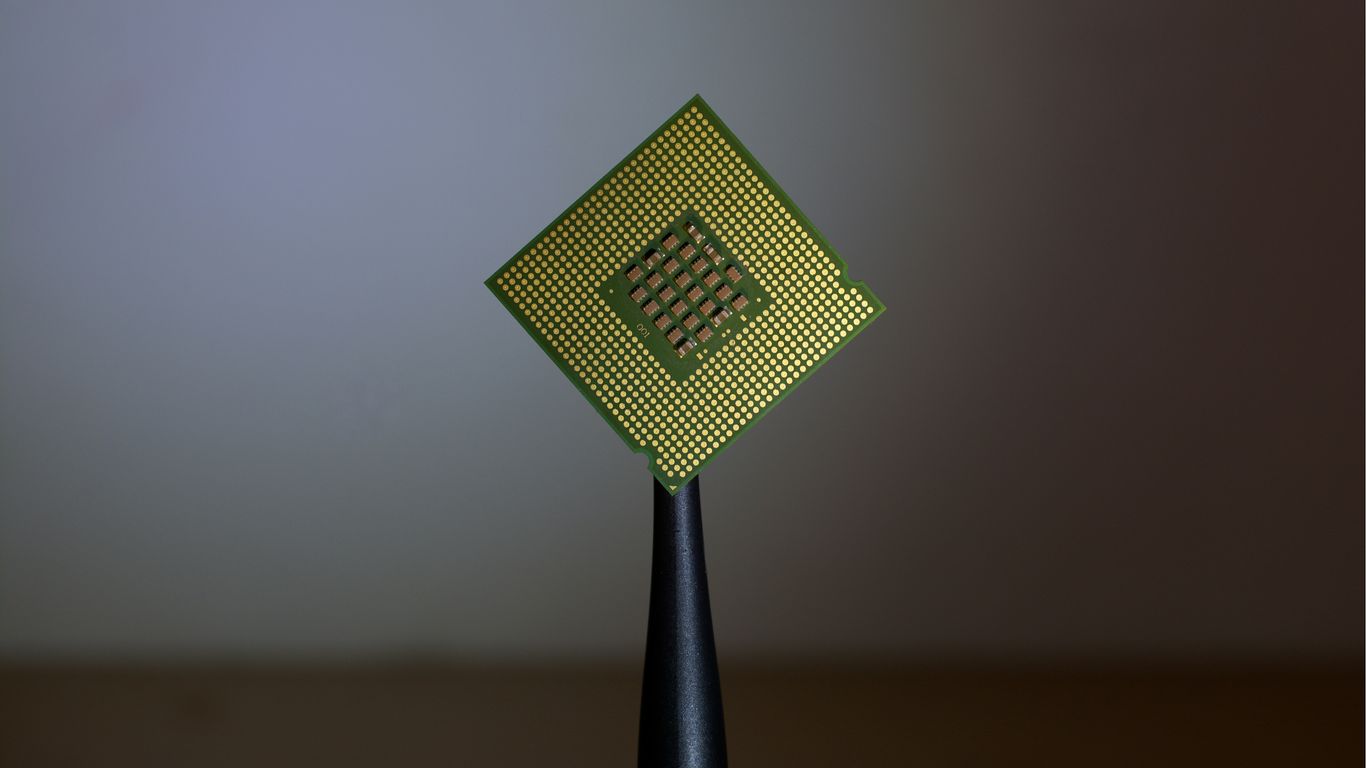
A physical qubit is an actual device or quantum system used to represent quantum information. Its state can be disturbed by thermal fluctuations, electromagnetic interference, imperfect control pulses, measurement mistakes, or interactions with nearby hardware. The resulting loss of quantum coherence is often called decoherence, although not every fault has the same physical cause. A computation with many sequential operations therefore needs more than a qubit that works well in isolation; it needs a system whose errors remain measurable and manageable.
The difference between physical and logical qubits
A logical qubit is an encoded unit of quantum information built from several physical qubits. The physical qubits provide redundancy, while carefully chosen measurements reveal whether an error has occurred without exposing the encoded state itself. The logical qubit is useful only if its effective error rate is lower than the error rate of the underlying hardware. That comparison, rather than the raw number of physical qubits, is one of the clearest tests of progress.
How fault tolerance changes quantum computing
Without fault tolerance, circuit depth is constrained by the rate at which errors accumulate. With it, the computer repeatedly performs error-detection routines alongside the algorithm and applies corrections, or tracks them in software. The architecture becomes a hybrid of quantum hardware, control electronics, decoders, compilers, and classical computing. A useful quantum computing timeline is therefore not just a record of qubit-count milestones; it is a record of when these layers begin working together.
What “reliable” means in a quantum system
Reliability is statistical, not absolute. A fault-tolerant system aims to make the probability of a wrong answer small enough for the intended algorithm, while keeping that probability from rising uncontrollably with circuit length. Researchers assess logical error rates, logical gate fidelity, memory lifetime, decoder performance, and the system’s behavior as the code is enlarged. Reliable quantum computation means that adding protection improves the computation rather than merely adding more machinery.
How quantum errors are detected and corrected
Quantum error correction uses structured redundancy to infer faults in an encoded state. The computer measures selected relationships among qubits, records the resulting syndrome, and uses a decoder to estimate which correction is most likely. Those measurements are designed to reveal error information while preserving the computational information. This is why quantum error correction is not simply classical parity checking applied to a different machine.
Bit-flip and phase-flip errors
A bit-flip error changes the computational basis state in the familiar way, roughly analogous to changing 0 to 1 or 1 to 0. A phase-flip error changes the relative phase between components of a superposition, so it may not look like a visible bit change when measured in the usual basis. Quantum codes are designed to detect both types, along with combinations of them. Treating phase as seriously as bit value is essential because algorithms depend on interference, not only on final classical outcomes.
Why quantum information cannot be copied directly
The no-cloning principle prevents an unknown quantum state from being copied perfectly. Error correction must therefore encode information indirectly, distributing correlations across entangled qubits rather than making identical backups. The system can measure these correlations to learn about a fault, but it cannot read out the protected state and reconstruct it by ordinary duplication. That constraint explains both the elegance and the cost of quantum error correction.
Stabilizer measurements and syndrome extraction
Stabilizers are operators whose expected relationships define the valid code space. Measuring a stabilizer does not generally reveal the logical state; it reveals whether the state has moved outside that space in a way associated with an error. A sequence of these outcomes forms a syndrome, which a classical decoder interprets. In practice, syndrome extraction also has faults, so the measurement circuits themselves must be designed to avoid turning one local problem into a wider one.
Protecting information without measuring the qubit state
The key is to measure properties of the encoded state rather than the logical state’s computational answer. If the syndrome indicates a likely fault, the correction can be applied physically or represented as a software update known as a frame change. This approach preserves superposition and entanglement while still providing a stream of diagnostic information. A concise quantum error correction guide helps separate this process from the mistaken idea that every qubit must be read after every operation.
The role of quantum error-correcting codes
A quantum error-correcting code specifies how information is distributed, which checks are measured, and how recovery is performed. Different codes trade physical-qubit overhead against connectivity, decoding complexity, tolerance to particular faults, and ease of implementing gates. No code is universally best across all hardware platforms. The choice is an architectural decision that links device physics to software and operations.

Surface codes and topological protection
Surface codes arrange data and measurement qubits on a local geometric layout. Their protection comes from the structure of extended error chains: a small local fault can often be detected, while a damaging logical fault requires a chain spanning the code. This makes surface codes attractive for hardware with limited nearest-neighbor connectivity, though they require many physical qubits and repeated measurement cycles. Their appeal is practical as much as theoretical.
Code distance and logical error rates
Code distance describes, broadly, how many elementary faults must combine to create an undetectable logical error. Increasing distance generally improves protection when physical error rates are below the relevant threshold, but it also increases the number of qubits, measurements, and decoding work required. The relationship is not a free scaling law: correlated noise, leakage, calibration drift, and imperfect syndrome extraction can weaken the expected improvement. Engineers therefore test how logical error rates change as the code grows.
Concatenated codes and alternative approaches
Concatenated codes protect a logical qubit by encoding it in one code and then encoding the resulting units again. Other approaches include low-density parity-check codes, bosonic codes, color codes, repetition-based schemes, and hardware designs that seek some protection from the physical system itself. Each option changes the balance between overhead and operational complexity. A code that looks efficient on paper may be difficult to control, decode, or connect to a universal gate set.
The fault-tolerance threshold
The threshold is a regime in which improving the physical error rate allows increasingly strong logical protection as the code grows. Below that threshold, error correction can in principle drive logical errors down; above it, extra layers of encoding may make matters worse. The exact threshold depends on the code, noise model, circuit design, and decoder. The fault-tolerance threshold is thus a condition for scalable progress, not a single universal performance number.
How fault-tolerant quantum operations work
Protecting memory is only half the problem. A computer must also perform gates, move information, prepare states, and measure results without allowing those operations to overwhelm the code. Fault-tolerant protocols are built so that an individual physical fault produces an error that remains detectable or confined. The logical circuit is consequently an engineered process spread across many physical operations.
Executing logical gates on encoded qubits
A logical gate acts on an encoded state while preserving the code’s structure or translating it in a controlled way. Some gates can be implemented through coordinated physical operations, while others require code deformation, lattice surgery, teleportation, or special ancillary states. The compiler must schedule these actions with error correction in mind. A short logical circuit may therefore correspond to a substantial physical circuit.
Transversal gates and their limitations
A transversal gate applies operations across corresponding parts of separate encoded blocks. Because a single physical fault generally cannot spread to many qubits within the same block, transversal operations are naturally attractive for fault tolerance. The limitation is mathematical: no single code can provide a universal set of gates using only transversal operations. Additional techniques are needed to complete the gate set.
Magic-state distillation for non-Clifford gates
Many quantum architectures implement Clifford operations relatively efficiently but need a special resource for universal computation. Magic states supply that resource. Because they are noisy when first prepared, a distillation routine combines several imperfect states to produce fewer states of higher quality, consuming substantial qubits and operations. Non-Clifford workloads can therefore be dominated by state preparation and distillation rather than by the algorithm’s visible logical gates.
Managing errors during measurement and qubit movement
Measurement can be used to finish a computation, teleport quantum states, perform lattice surgery, or update a Pauli frame. Each use introduces timing, calibration, and decoding requirements. Moving information can also mean physically transporting qubits, dynamically changing interactions, or teleporting states through an encoded network. The system must keep track of these operations while continuing syndrome extraction, since protection cannot pause whenever the computation changes location.
The hardware and engineering challenges
Fault tolerance turns a quantum processor into a tightly coupled systems-engineering project. The qubits must be stable, but so must the wiring, lasers or microwave controls, readout chain, calibration software, cryogenic environment, and classical decoder. Small improvements in one component can be cancelled by bottlenecks elsewhere. The relevant question is not whether a device has impressive isolated specifications, but whether the complete stack supports repeated error-correction cycles.
Requirements for high-quality physical qubits
Physical qubits need long enough coherence times to support operations and measurements, high-fidelity gates, reliable initialization, and accurate readout. They also need reproducible behavior across a large array. A platform with excellent coherence but slow control may face a different scaling barrier from one with fast gates but substantial crosstalk. Device uniformity and the ability to diagnose faults at scale are as important as headline fidelities.
Connectivity, control, and measurement accuracy
Connectivity determines which qubits can interact directly and how much routing is required. Control systems must address selected qubits without disturbing neighbors, while measurement must distinguish states quickly and consistently. Crosstalk, frequency collisions, optical addressing errors, and imperfect couplers can create correlated faults that simple independent-error models miss. Architecture decisions made at this layer shape the code that can be used later.
Error-correction cycle time and classical processing
Syndrome data is generated continuously, so a decoder must process it quickly enough to keep pace with the quantum hardware. A slow classical path can create latency, memory pressure, and delayed corrections even when the qubits themselves perform well. The full design therefore includes real-time data movement, low-latency inference, feedback, and logging. The quantum processor and classical processor function as one operational system.
Reducing the resource overhead
Overhead can be reduced through better physical error rates, more efficient codes, improved decoders, compact control electronics, and algorithms that require fewer expensive non-Clifford resources. The most useful improvements often interact: a modest hardware gain may permit a smaller code, which lowers decoding demand and simplifies wiring. Engineering teams commonly prioritize several linked targets rather than a single qubit metric.
What it takes to build a useful fault-tolerant quantum computer
A useful machine must cross several thresholds at once. It needs enough logical qubits for a meaningful algorithm, enough logical lifetime for the computation to finish, and sufficiently low gate and measurement error to preserve the intended result. Demonstrating one protected qubit is valuable, but it does not by itself establish a scalable computer. The transition from noisy devices to practical systems is a staged program of validation.
From noisy intermediate-scale devices to logical qubits
Noisy intermediate-scale quantum devices can run experiments with limited depth, but their errors restrict how far those experiments can be extended. Logical qubits introduce repeated protection and make deeper circuits possible when the underlying physical error rate is favorable. The transition also changes software: compilers, resource estimators, decoders, and algorithm libraries must understand encoded operations. Logical qubits and NISQ systems are best viewed as points on an architectural transition, not mutually exclusive product categories.
Estimating the number of physical qubits required
The physical-qubit count depends on the code distance, target logical error rate, gate set, connectivity, measurement quality, and algorithm. Ancillary qubits for syndrome extraction and magic-state factories can add substantially to the data-qubit requirement. A simple ratio of physical to logical qubits is therefore useful only as a first approximation. Resource estimates must model the complete workload, including routing, error correction, state preparation, and classical processing.
The importance of logical qubit lifetime and gate fidelity
A logical qubit must survive long enough to participate in the algorithm, and its logical gates must be accurate enough that the computation gains from encoding. Memory performance alone is insufficient if operations introduce too many faults; gate fidelity alone is insufficient if the state cannot be stored. Useful benchmarks combine lifetime, logical error per operation, cycle time, and the number of operations supported before failure. These measures connect laboratory performance to an actual workload.
Current development paths and remaining milestones
Development paths differ in physical platform, code choice, modularity, and control strategy. The common milestones are clearer: demonstrate error suppression as code size increases, operate reliable logical gates, scale the decoder and control stack, and run algorithms with a meaningful logical workload. The field still faces open questions about manufacturing yield, correlated noise, interconnects, and economics. A credible roadmap distinguishes a research result, a prototype, and a commercially useful machine.
Why fault-tolerant quantum computing matters
Quantum algorithms rely on delicate interference patterns that can be destroyed by small errors accumulating over time. Fault tolerance is what could allow those algorithms to run at the depth and scale their theory assumes. It does not guarantee economic value, but it changes the set of experiments that can be attempted. That makes fault tolerance a prerequisite for many long-horizon claims about quantum computing rather than an application in itself.
Problems that could benefit from reliable quantum computation
Potentially relevant problems include simulating quantum systems, searching certain structured spaces, factoring selected mathematical objects, and solving some optimization or sampling tasks. The advantage will depend on the algorithm, input structure, error-correction overhead, and comparison with classical methods. Many proposed applications remain research questions rather than settled commercial opportunities. Reliable hardware widens the testable territory; it does not predetermine the result.
Potential applications in chemistry, materials, and cryptography
Chemistry and materials research are often cited because molecules and materials are quantum systems that can be difficult to model classically. Cryptography is a different case: sufficiently large fault-tolerant machines could threaten some public-key schemes, which is why organizations are already studying post-quantum cryptography. The timing of that risk remains uncertain, but migration can take years because cryptographic systems are deeply embedded in infrastructure.
How fault tolerance affects quantum algorithms
Fault-tolerant algorithms must be evaluated in logical resources, not only abstract gate counts. A circuit may need decomposition into supported gates, repeated state preparation, routing, syndrome cycles, and error-budget allocation. Those costs can change which algorithm is practical and which input sizes matter. Algorithm designers consequently optimize for the architecture’s full resource profile rather than treating error correction as an invisible hardware layer.
What fault tolerance cannot solve on its own
Fault tolerance cannot make an inefficient algorithm efficient, remove the cost of data loading, or guarantee that a quantum result beats the best classical method. It also cannot fix poor problem formulation, weak verification, unfavorable hardware economics, or inadequate classical post-processing. Some applications may remain better served by conventional computing. The value of a fault-tolerant machine will ultimately be determined by end-to-end performance and usefulness, not by error correction alone.
Conclusion
Fault-tolerant quantum computing explained in plain terms is a story about turning fragile physical behavior into dependable logical computation. It requires codes, fast measurements, fault-tolerant operations, classical decoding, and hardware designed around the whole error-correction loop. The path is technically difficult and resource-intensive, but it offers a disciplined way to test whether quantum algorithms can move from elegant theory to sustained computation.
Frequently Asked Questions
What is fault-tolerant quantum computing?
It is an approach to quantum computing that uses error correction and fault-tolerant operations so a computation can remain accurate despite faults in its physical components.
Why are quantum computers especially sensitive to errors?
Qubits interact with their environment and can lose coherence, while imperfect gates, measurements, control signals, and device fluctuations introduce additional errors.
What is the difference between a physical qubit and a logical qubit?
A physical qubit is an individual hardware-level quantum system. A logical qubit is encoded across multiple physical qubits and protected through repeated error-detection procedures.
Can quantum error correction copy a quantum state?
No. The no-cloning principle prevents perfect copying of an unknown quantum state, so error correction uses entanglement and measured correlations instead of ordinary duplicates.
What is a fault-tolerance threshold?
It is an approximate operating regime below which improving physical error rates and increasing code size can reduce logical error rates rather than increase them.
How many physical qubits will a useful machine need?
There is no fixed number. The requirement depends on the code, target error rate, algorithm, gate set, connectivity, ancillary resources, and the performance of the physical hardware.
Does fault tolerance guarantee quantum advantage?
No. It makes deeper and more reliable computations possible, but an application still needs an effective algorithm, suitable data, competitive performance, and a defensible economic case.