
Key Takeaways
The landscape of reinforcement learning has matured significantly, shifting from experimental research to specialized industrial deployment. This analysis details the innovations driving autonomy and decision-making systems in 2026.
- Algorithmic efficiency now prioritizes sample-efficient learning through refined scaling laws.
- Generative AI architectures have successfully integrated preference optimization within traditional reward cycles.
- Robotics platforms are demonstrating higher reliability through improved sim-to-real transfer techniques.
- Multi-agent coordination is proving scalable even in highly dynamic, non-stationary simulation environments.
- New safety frameworks focus on reward function alignment to mitigate unintended execution behaviors.
Evolution of algorithmic efficiency

The field of reinforcement learning has shifted toward prioritizing compute-per-task efficiency, moving away from brute-force simulation approaches. By refining the mathematical understanding of how agents extract information from limited interactions, researchers have effectively lowered the energy overhead required for high-performance training. These adjustments ensure that future systems remain viable in resource-constrained environments.
Scaling laws for sample-efficient learning
Recent investigations into task complexity suggest that performance gains can be predicted based on initial data throughput, allowing engineers to pre-allocate training resources more effectively. This predictability reduces the experimental trial-and-error cycle often seen in early-stage development.
Breakthroughs in offline reinforcement learning
Offline methodologies have reached a critical threshold, enabling agents to learn from static datasets without requiring constant live interaction with an environment. By leveraging these existing historical logs, models can now achieve superior performance before ever entering a production setting. This shift significantly reduces the risks associated with early-phase training in sensitive robotics deployments.
- Data-driven pre-training reduces initial environment exploration.
- Conservative Q-learning minimizes divergence from established historical logs.
- Policy evaluation becomes feasible without live-streamed feedback loops.
- Batch processing allows for faster iteration on existing state-space models.
Reduction in computational power for training
Engineers are now implementing weight pruning and knowledge distillation to create leaner policy networks. These compact representations process inputs with significantly less FLOPS, making complex inference viable for edge devices that previously lacked the necessary memory capacity.
Advancements in meta-learning architectures
Meta-learning has enabled agents to generalize across disparate task distributions rather than optimizing for a single domain. This versatility allows models trained on navigation to adapt their decision-making logic to facility sorting tasks with minimal fine-tuning.
Integration with generative AI

Reinforcement learning now serves as a backbone for aligning large-scale generative models with human expectation. This integration ensures that models output content or actions that adhere to strict safety guidelines while maintaining the flexibility of their underlying neural architectures. This hybrid approach has redefined how developers manage control over broad-scope generative systems.
RLHF workflows for large language models
The standard process involves collecting human feedback to refine the target behavior of foundation models. By creating a reward model that interprets human preference, the system iterates on its output until it reaches an equilibrium of accuracy and relevance.
Direct preference optimization vs traditional RL
Direct preference optimization has emerged as a computational shortcut, allowing for alignment without the explicit training of a secondary reward model. This technique simplifies the pipeline significantly while maintaining the high-quality response standards expected by industry practitioners.
Closing the loop between latent space and action space
Agents are now capable of interpreting high-dimensional latent variables directly into motor primitives. This link creates a seamless transition from abstract conceptual outputs in generative AI to concrete movements in physical robotic systems.
Multimodal RL agents in creative workflows
Multimodal agents process disparate data types—such as visual, audio, and textual input—to inform a single action sequence. This capability is currently being benchmarked against specialized creative tasks where consistency across different modalities is a critical requirement for success.
Applications in autonomous robotics
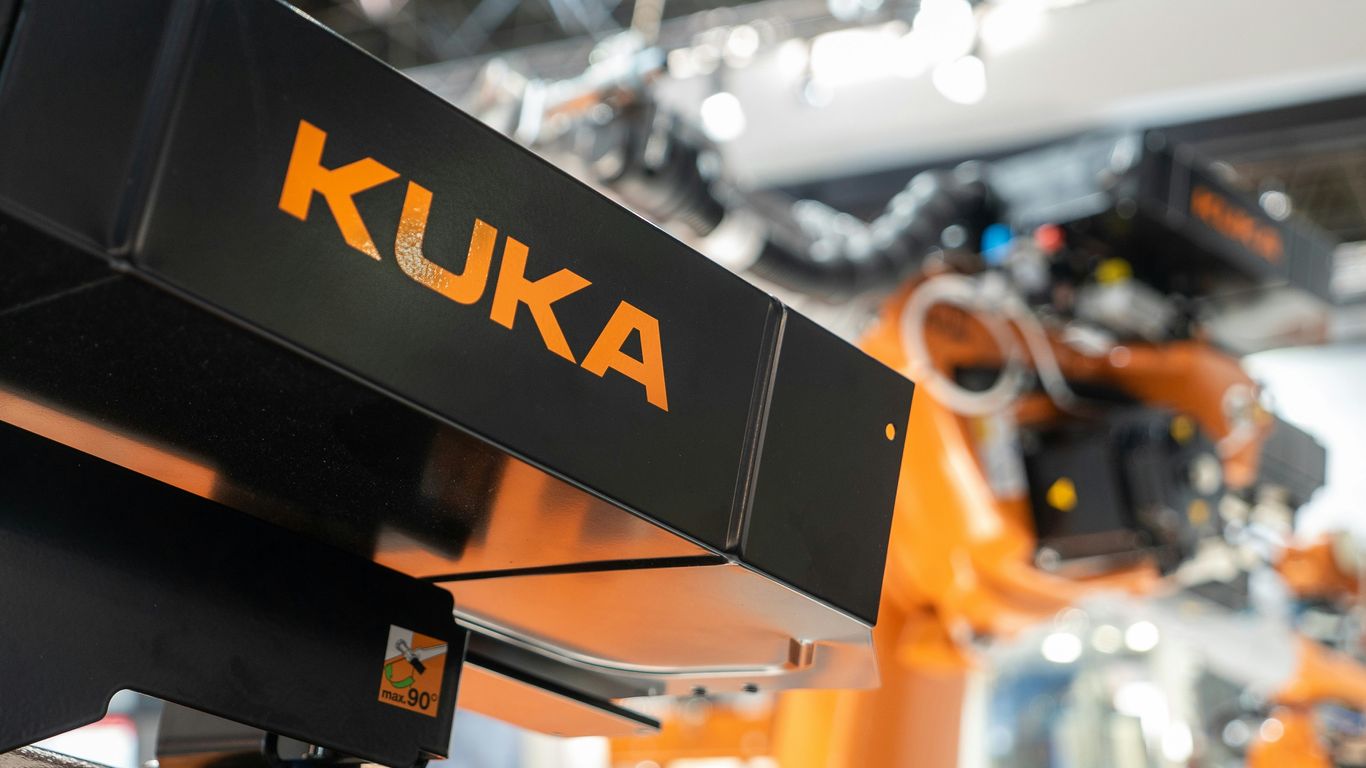
The deployment of autonomous systems in physical facilities requires balancing navigation speed with high safety performance. Modern agents are being tested against stringent reliability metrics that simulate years of operation in weeks, providing operators with confidence in system integrity before a full site rollout. These advancements are critical for the industrial adoption of ANYbotics technology in hazardous or remote sites.
Real-world deployment in warehouse logistics
Warehouse environments present a mix of structured paths and unpredictable human movement, requiring adaptive pathing that learns in real-time. Automated agents now coordinate within these spaces to optimize throughput and energy usage.
Sim-to-real transfer optimization techniques
Techniques such as domain randomization provide high-fidelity simulations that mirror the physics of real-world environments. This ensures that the weights learned in a virtual space remain stable when applied to physical motors and sensors, a known hurdle in Physical AI research.
Navigating uncertainty in dynamic outdoor environments
Navigating variable terrain requires agents that can adjust their stance and friction modeling dynamically. By analyzing sensor feedback from previous footfalls, models can predict soil integrity and adjust pressure distribution across different contact points.
Collaborative human-robot interaction protocols
Safety remains the primary design constraint when teams and machines share floor space. Current protocols utilize real-time prediction to map human motion trajectories, allowing agents to decelerate or route around personnel before any potential contact occurs.
Solving complex multi-agent environments

Massive multi-agent simulation has become the primary testbed for logistics and market modeling systems. By simulating thousands of agents with conflicting objectives, researchers can identify the emergence of coordination strategies that would otherwise remain hidden. This empirical approach reveals deeper insights into how AI Reinforcement Learning governs group dynamics during rapid environmental shifts.
Game theory applications in market modeling
Agent-based models simulate competition by assigning specific reward functions to different firm behaviors. These experiments help analysts predict how specific policy adjustments might cascade through established global markets.
Coordination strategies in swarm intelligence
Swarm coordination involves decentralized decision-making where agents communicate only with their immediate neighbors. These local exchanges lead to cohesive global behaviors, such as collective object manipulation or distributed surveillance coverage.
Dealing with non-stationary partner behavior
When partners in a multi-agent system change their policies, the environment effectively shifts, forcing other agents to update their internal models to compensate. Robust systems use Bayesian belief tracking to predict these shifts rather than reacting solely to the last known state.
Scalability challenges in large-scale simulated societies
Scaling these networks requires significant infrastructure to manage the synchronization of millions of state transitions. Engineers are utilizing distributed computing to partition the state-space and minimize the latency involved in agent communication.
Ethical frameworks and safety in deployment
Safety is no longer an optional add-on but a foundational element of the training architecture itself. As we push toward autonomous decision-making in public spheres, the industry is aligning on standardized reward verification processes. These processes are essential when tackling complex models where outcomes carry significant real-world stakes.
Implementing reward function alignment
Alignment involves mapping subjective human preferences into objective numerical rewards that the system can consistently optimize. This ensures that the agent's objective function remains tethered to human interest throughout the entire lifecycle of the model.
Mitigating unintended behaviors in autonomous execution
Formal verification methods are used to test the limits of agent policies, searching for corner cases that might trigger unsafe actions. These safeguards operate at the execution level, intercepting commands that deviate from authorized safety parameters.
Regulatory standards for automated decision-making
Regulatory bodies are increasingly focusing on the explainability of model outputs, requiring developers to provide documentation on how decisions were derived. This transparency is crucial for ensuring that autonomous agents remain accountable to the stakeholders they impact.
Designing robust safeguards against adversarial attacks
Adversarial training involves intentionally exposing agents to invalid sensor data to strengthen their resilience. This practice ensures that models do not collapse or produce errors when faced with noisy or intentionally deceptive environmental input.
Advancements in model training infrastructure
Infrastructure has evolved to prioritize high-throughput data processing and automated hyperparameter optimization. These services allow small teams to conduct complex architectural experiments that previously required the dedicated resources of a large research lab. This democratization of infrastructure is accelerating the development of autonomous mobile warehouse robots.
Cloud-native orchestration for RL pipelines
Infrastructure as code has enabled researchers to spin up massive clusters of compute resources for specific training jobs. This elasticity allows teams to manage costs by scaling down resources during the analysis phase of their project.
High-performance benchmarking tools for 2026
Benchmarks now measure not just end-performance but also convergence speed and energy efficiency per unit of reward. These holistic metrics provide a fairer assessment of how different architectures perform in real-world conditions.
GPU-accelerated simulation environments
By running physics simulations directly on GPU hardware, agents can observe millions of frames of data every second. This hardware alignment bridges the significant performance gap between legacy sequential CPU training and modern accelerated approaches.
Managed services for hyperparameter tuning
Dedicated orchestration layers now handle the repetitive process of hyperparameter searching, allowing engineers to focus on architectural design. These services track historical runs and intelligently prune search spaces that demonstrate poor early convergence, maximizing the utility of available compute nodes.
Conclusion
As we look at the trajectory of autonomous systems, it is clear that reinforcement learning has transitioned from laboratory curiosity to a foundational technology driving major industrial sectors. The convergence of better training infrastructure, rigorous safety frameworks, and refined meta-learning architectures suggests that 2026 will be remembered as the year these systems began reliably performing in the messy, unstructured environments of the physical world. This progress not only optimizes current workflows but establishes the precedent for how future intelligent machines will be aligned with the complex demands of our society.
Frequently Asked Questions
How does an agent learn without labeled data?
Agents learn through environmental interaction, receiving a reward or penalty signal based on the action taken at each state, allowing them to optimize their strategy over time.
Is reinforcement learning the same as deep learning?
Reinforcement learning is a paradigm of learning focused on sequential decision-making, while deep learning refers to the use of multi-layered neural networks as function approximators within that paradigm.
What makes 2026 different from previous years in this field?
This year is marked by a focus on industrial-grade safety, the scaling of simulation efficiencies, and the practical application of offline datasets in real-world deployment scenarios.
Are reward functions always easy to define?
Defining reward functions is one of the most challenging aspects of the field, as poorly defined rewards can lead to unexpected behaviors known as reward hacking by the agent.
Can reinforcement learning work in outdoor settings?
Yes, agents are increasingly applied to outdoor navigation by utilizing robust sensor suites and simulation environments that model complex terrain variables.
Why is sim-to-real transfer so difficult?
Sim-to-real transfer is difficult because the "reality gap" arises whenever the simulator fails to perfectly capture the physics, friction, or environmental noise inherent in the real world.
What is considered the primary risk of autonomous agent deployment?
Beyond safety, the primary risk involves unintended behavior caused by distributional shifts in the environment where the agent operates, necessitating robust oversight and safeguard protocols.