
Key Takeaways
Transitioning to secure cryptographic systems is a critical imperative for organizations preparing for the quantum era. This article examines the risks to current security and the path forward.
- Quantum computing will likely break standard public-key cryptography used today.
- Attackers currently harvest encrypted data to decrypt it once quantum technology matures.
- NIST has finalized post-quantum standards to provide a foundation for future security.
- Organizations must conduct cryptographic audits to identify vulnerable infrastructure components.
- Crypto-agility is necessary to adapt systems to evolving quantum-resistant standards over time.
The fundamental threat of quantum computing to current encryption
Limitations of classical bits versus quantum qubits
Classical computers rely on bits that represent a binary state of zero or one, which limits their efficiency for solving specific mathematical challenges. In contrast, quantum computers leverage qubits that exist in a state of superposition, enabling them to process vast amounts of data simultaneously. This fundamental difference in computational power allows quantum machines to approach problem-solving in ways that traditional hardware finds impossible.
Breaking current RSA and ECC security standards
Most secure channels today rely on protocols like RSA or ECC which secure everything from web traffic to financial records. These rely on the difficulty of integer factorization or discrete logarithms for current machines. As research progresses, the ability to solve these problems by quantum computing threatens to dismantle the bedrock of modern digital trust. The looming concern is whether our current defensive layers can survive these advancements.
Why global security infrastructure is inherently unprepared
Global digital systems are woven into a complex tapestry of legacy protocols that do not support modern security updates easily. Many enterprises do not know where their cryptographic keys reside, leaving them blind to potential vulnerabilities tied to future encryption standards. This lack of visibility across organizational assets makes the necessary shift to new infrastructure particularly difficult.
Shor’s algorithm and asymmetric encryption vulnerabilities

Mathematical foundations of integer factorization
Public-key systems have long relied on the assumption that reversing the multiplication of two massive prime numbers is computationally infeasible. Shor’s algorithm transforms this assumption by providing a logical path for quantum computers to factor these numbers at high speeds. This bypasses the brute-force limitations that classical computers encounter, effectively reducing the difficulty of the task to a manageable function.
How Shor’s algorithm compromises public-key infrastructure
Once a sufficiently powerful quantum computer is active, it renders the core security of public-key infrastructure (PKI) obsolete. This vulnerability means that private keys derived from public information can be reconstructed with ease. As this field evolves, the quantum computing community is focused on developing architectures that can withstand these specific algorithmic threats to existing digital identities.
Critical impacts on digital signatures and key exchange protocols
Digital signatures ensure that messages originate from a trusted source, yet these too rely on mathematical properties susceptible to manipulation. Key exchange protocols are similarly at risk, as they form the primary mechanism for establishing secure connections. Maintaining the integrity of these systems requires an immediate shift toward algorithms that are fundamentally resistant to the unique mechanics of Shor’s algorithm.
The current state of post-quantum cryptography

Overview of lattice-based cryptography techniques
Lattice-based cryptography is currently a leading candidate for secure communication, as its security relies on hard problems involving multi-dimensional patterns. Unlike factorization, these geometric structures do not have an obvious shortcut for quantum machines to exploit. Protecting sensitive assets often involves researching these lattice based schemes to replace traditional asymmetric methods before they succumb to the next generation of hardware.
Hash-based and code-based encryption models
Alternative models using hash-based functions and error-correcting codes offer secondary pathways for securing data. Hash-based signatures, in particular, are valued for their well-understood mathematical security properties. These diverse approaches ensure that if one mathematical foundation encounters a discovery, the entire ecosystem does not collapse simultaneously, which is why post-quantum cryptography involves several distinct mathematical families.
Performance and scalability trade-offs in quantum-resistant algorithms
Adopting quantum-resistant algorithms introduces real-world trade-offs in memory usage and computational speed. Many of these new protocols require larger public keys or produce larger signatures compared to traditional standards. Organizations must balance these performance costs against the imperative of security, often testing which algorithms integrate best into legacy environments without disrupting daily operations.
Analyzing the "store now, decrypt later" risk
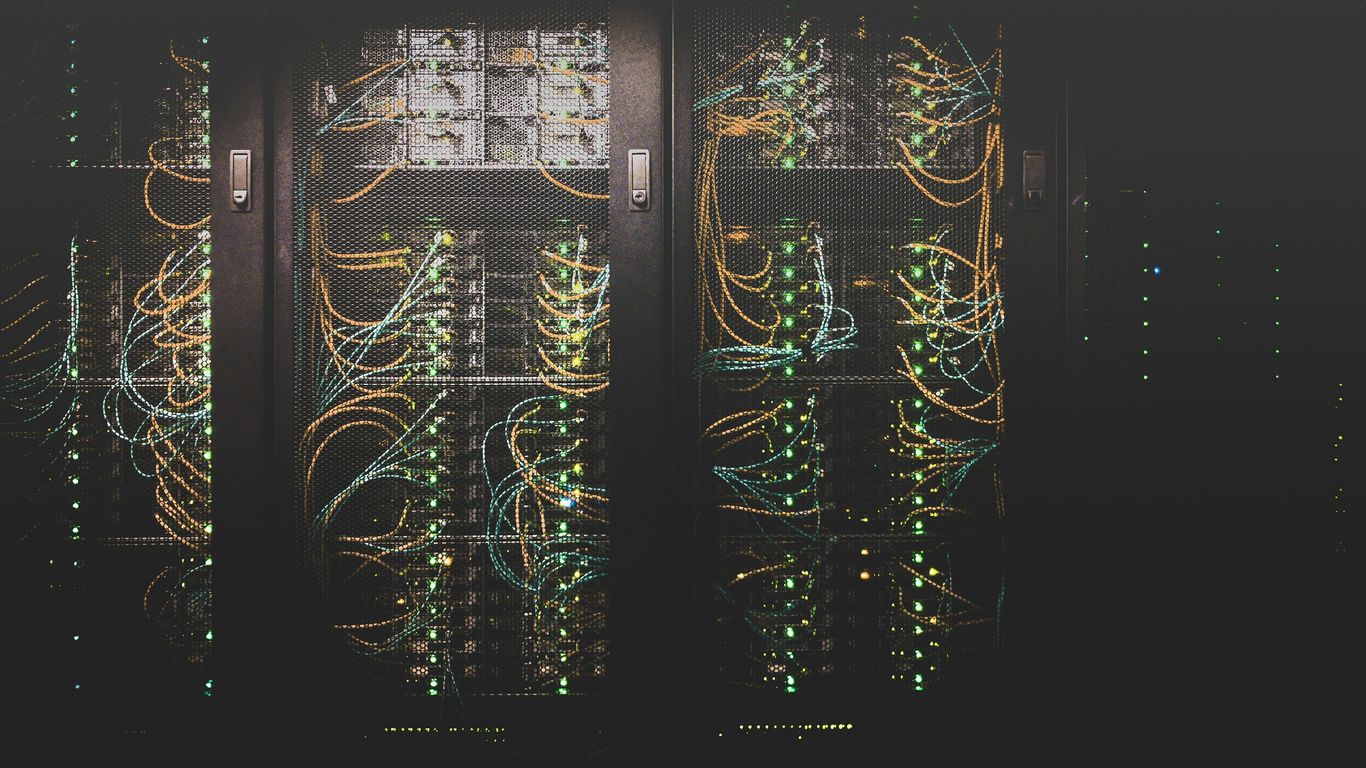
Explaining the mechanics of harvest-now-decrypt-later tactics
Adversaries are currently capturing encrypted traffic and storing it indefinitely to exploit future computational capabilities. This "harvest now, decrypt later" approach is a strategic threat to sensitive data that must remain confidential for long periods. By the time a fault-tolerant quantum computer is operational, the intercepted data could be retroactively accessed if it was encrypted with today's standard algorithms.
Long-term data sensitivity and shelf-life considerations
Data longevity significantly impacts the risk assessment for enterprises in sectors such as health, finance, and government. Information that carries significant value decades into the future is a prime target for these retrospective decryption campaigns. Understanding the shelf-life of digital assets allows leaders to prioritize which records require immediate protection through more robust, modern encryption standards to avoid compromise.
Why current encrypted communication is vulnerable to retrospective decryption
Most modern communications lack forward secrecy properties capable of resisting quantum analysis once the traffic is captured and stored. As security architectures often rely on fixed handshakes that can be analyzed retrospectively, the risk becomes constant. Organizations should consider the following steps to mitigate this specific vulnerability:
- Perform a sensitivity analysis on all stored communication logs.
- Assess the transition path for existing VPN and TLS implementations.
- Deploy hybrid key-exchange mechanisms alongside current protocols.
These proactive measures ensure that current traffic remains secure against future threats, even before a total transition to full quantum-resistant standards is finalized across the entire global stack.
NIST standardization and global implementation efforts
The NIST selection process for primary PQC algorithms
NIST has been evaluating cryptographic candidates for years through a rigorous, transparent selection process intended to identify the most robust options. By finalizing standards like FIPS 203 and 204, the agency has provided a vetted baseline for the industry to move toward. This standardization process ensures that implementations remain interoperable across borders, which is a major hurdle for global digital security.
Role of international bodies in coordinating cryptographic standards
Global bodies provide the consensus architecture required to harmonize these standards across different technological jurisdictions. Without this coordination, organizations would face fragmented systems where security interoperability becomes a significant operational burden. The goal is a uniform adoption layer that allows quantum-resistant algorithms to function reliably regardless of geographic location or regional regulatory requirements.
Transitioning from legacy algorithms to FIPS-compliant post-quantum standards
Moving from legacy infrastructure to compliant PQC standards is a multi-year project requiring careful coordination with vendors and service providers. This transition involves replacing established software libraries throughout the enterprise and updating hardware modules. The following table summarizes the primary metrics organizations focus on during this integration phase:
| Metric Type | Legacy Impact | PQC Target |
|---|---|---|
| Key Size | Small | Larger/Dynamic |
| Signature Speed | High | Moderate |
| Hardware Load | Low | Optimized |
By carefully upgrading infrastructure to meet these benchmarks, organizations can achieve a smoother transition that keeps operations secure without sacrificing system performance or reliability.
Migration strategies for secure organizational infrastructure
Conducting comprehensive internal cryptographic audits
Audits are essential for identifying every point of encryption used within a system, often revealing unknown dependencies or outdated firmware. Understanding where outdated algorithms are embedded provides the needed leverage to begin replacing them. This discovery phase is the precursor to a broader crypto agility strategy, allowing engineers to visualize the entire security landscape.
Prioritizing hardware and software assets by data lifecycle
Assets vary in their security requirements based on how long their data must remain secret. Protecting long-term archives takes precedence over ephemeral session data because of the shelf-life considerations discussed previously. Organizations often prioritize core authentication modules and root certificates because their compromise has the most significant systemic impact on downstream operations.
Integrating crypto-agility into future system architectures
Crypto-agility refers to the capability of a system to switch between cryptographic algorithms without requiring radical redesigns of the overall architecture. By building modular system foundations today, engineers save immense effort when future updates become available. This flexibility is the most practical defense against the shifting nature of the quantum computing threat to encryption and post-quantum cryptography.
Conclusion
Addressing the risks posed by quantum-enabled decryption requires a strategic alignment of audit, standardization, and infrastructure agility. As the technological foundation shifts, early adopters who implement quantum-resistant protocols will be best positioned to protect their data against the long-range risks of retrospective decryption. The path is complex and requires steady focus, yet it remains the only viable strategy for maintaining digital trust as we enter a new era of computational capacity.
Frequently Asked Questions
What is the primary quantum computing threat to encryption?
The central threat is that quantum computers can use algorithms like Shor’s to efficiently solve problems that classical computers cannot handle, undermining the public-key systems used to secure the internet.
Is all encryption at risk from quantum computers?
Not all encryption methods are equally vulnerable. While asymmetric public-key systems are at high risk, symmetric encryption can often be secured by using longer key sizes, providing a simpler defense against quantum attackers.
What does harvest-now-decrypt-later mean?
This refers to the tactic where attackers intercept and store encrypted data today to decrypt it later once quantum computing reaches a level of maturity capable of breaking the current encryption keys.
Why is the transition to new algorithms difficult?
Migrating to post-quantum cryptography is difficult because it requires updating not just software, but often underlying hardware and legacy protocols that were never designed for large key sizes or new cryptographic math.
What is a cryptographic inventory?
A cryptographic inventory is a complete mapping of all algorithms, certificates, and keys used across an organization’s infrastructure, essential to identifying which components need replacing during a security migration.
Can classical computers be part of the solution?
Yes, classical computers can run post-quantum algorithms perfectly well. The goal of post-quantum cryptography is to create math that protects data against future quantum attackers even while relying on our existing classical hardware.
What is crypto-agility?
Crypto-agility is the ability of an IT system to change its cryptographic algorithms or security protocols seamlessly without necessitating significant modifications to the underlying system infrastructure.