Palmer Luckey is the rare founder who has built two category-defining hardware companies before turning 35: Oculus, which put consumer virtual reality on the map, and Anduril Industries, which made venture-backed defense hardware a mainstream investment category. Anduril raised a $5 billion Series H at a $61 billion valuation in May 2026.
This is a founder profile, not a company guide. Inside Deep Tech's Anduril full guide covers Lattice, Fury, the Arsenal factories and the product line. This piece follows Luckey: the self-taught hardware background, the Oculus sale and his exit from Facebook, the thesis he brought to defense, his actual role at Anduril today, what is proven versus promotional, how he compares with other defense-tech founders, and the honest limits. Last updated: November 8, 2026.
Key Takeaways
- Luckey designed the Oculus Rift. Facebook agreed to buy Oculus in March 2014 for about $2 billion, including $400 million in cash and stock valued at $1.6 billion.
- He left Facebook in March 2017 after a political controversy; TechCrunch reported Anduril was incorporated in June 2017 with former Palantir and Oculus staff, and the Wall Street Journal later reported he had been fired.
- At Anduril, Luckey's title is Founder. Brian Schimpf is co-founder and CEO, Trae Stephens executive chairman and Matt Grimm COO, per Anduril's leadership page.
- Anduril more than doubled revenue to $2.2B in 2025 and has raised more than $11 billion in total, according to TechCrunch.
- Luckey's reconciliation with Meta is now a business line: the two companies announced an XR partnership for the US military in May 2025, tied to Lattice and the Army's soldier-borne mission command program.
Who Palmer Luckey is
Palmer Luckey is an American hardware inventor, the designer of the Oculus Rift and the founder of Anduril Industries. He is primarily a product builder and public advocate rather than Anduril's day-to-day operator.
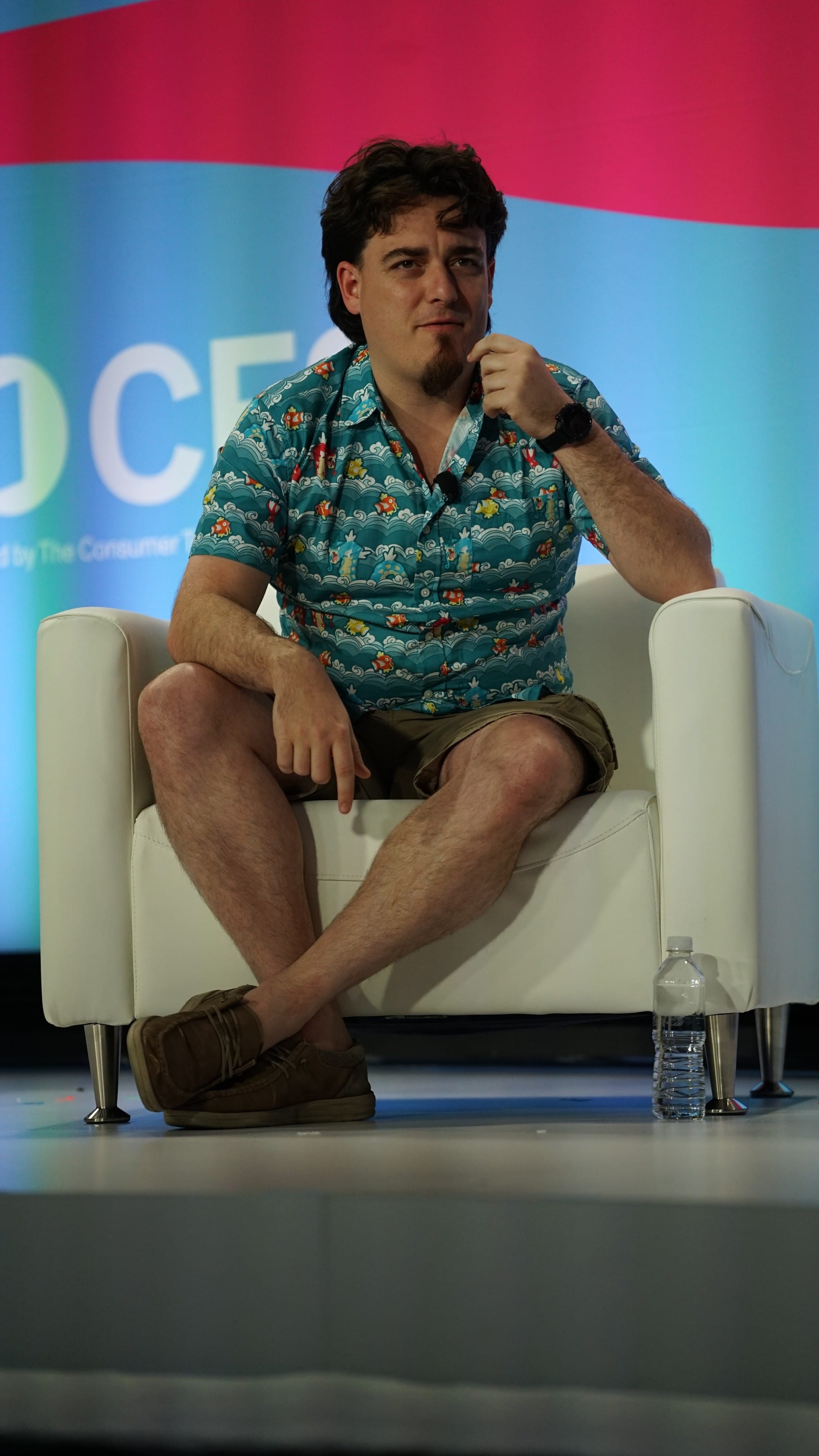
Anduril's leadership page says he began attending Golden West College and Long Beach City College at 14 and studied at California State University, Long Beach, before dropping out to build Oculus. It traces his interest in defense to his time at the USC Institute for Creative Technologies MxR lab, where he built hardware used in research on immersive PTSD treatment for veterans.
Oculus: the first company
Oculus began as Luckey's homemade headset prototype and became the company that restarted consumer VR. When Facebook announced the deal on March 25, 2014, its press release valued it at approximately $2 billion: $400 million in cash, 23.1 million Facebook shares valued at $1.6 billion, and a possible $300 million earn-out. Facebook said Oculus had more than 75,000 development kit orders at the time.
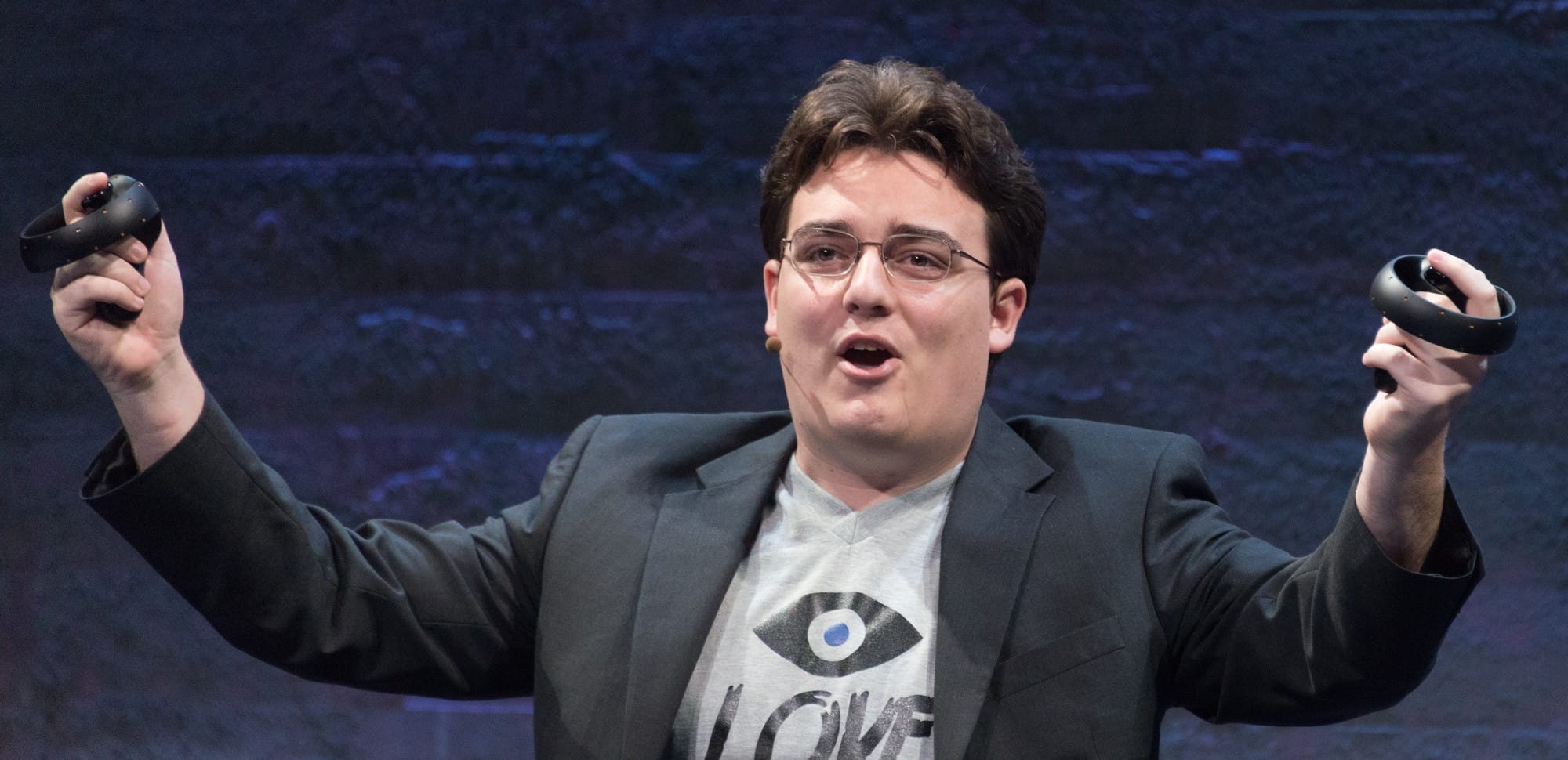
The Oculus story is the root of Luckey's public persona: a young self-taught engineer who built a device in a garage that a trillion-dollar platform company then bought. It also gave him the personal wealth and credibility to fund and recruit for a much harder second company.
Leaving Facebook
Luckey's exit from Facebook is the turning point of his career. TechCrunch reported that he left the VR company in March 2017 following months of controversy, which centered on his political donations during the 2016 US election. The Wall Street Journal reported in 2018 that Facebook had fired him. The episode shaped his later public stance: Luckey is an outspoken critic of Silicon Valley's reluctance to work with the military, and he has made that stance a recruiting and branding asset for Anduril.
The thesis: consumer-tech speed applied to defense
Luckey's thesis is that the US defense industry builds too slowly and too expensively, and that a company funding its own products, using commercial hardware and software methods, can sell finished systems instead of cost-plus development programs. Anduril's leadership page describes him as integrating a consumer technology business model with mission-driven objectives.
Three ideas sit inside that thesis. First, self-funded product development: build the system before the contract, then sell it. Second, software as the connective layer: Lattice, Anduril's command-and-control platform, ties sensors and autonomous systems together. Third, autonomy at scale: cheap, attritable autonomous systems in large numbers, not a small fleet of exquisite platforms.
The thesis was public from the start. In 2017, TechCrunch quoted Anduril's early website saying the company was privately funding products for real-time battlefield awareness and criticizing the slow and expensive development of bespoke technology. Nearly a decade later, the Series H letter makes the same argument in the language of industrial capacity: resilient production, rapid adaptation and sustained operations.
Luckey's actual role at Anduril
Luckey is Anduril's founder and most visible public figure, but he is not its CEO. Anduril's leadership page lists Brian Schimpf as co-founder and CEO, Trae Stephens as co-founder and executive chairman, and Matt Grimm as co-founder and COO. Schimpf and Grimm came from Palantir and Cornell's DARPA autonomous vehicle team; Stephens is a Founders Fund partner and former Palantir employee.
That division of labor matters for reading the company. Funding announcements are signed by Schimpf; the Series H post is a note from him. Luckey's strengths are product vision, hardware intuition, recruiting and public argument. Treating Anduril's execution as Luckey's alone would overstate his operating role and understate the Palantir-trained team that runs the business.
Company-building choices Luckey shaped
The founding choices that carry Luckey's fingerprints are the team mix, the early focus on sensing and AR, and the decision to rebuild a relationship with Meta.
A team of Palantir and Oculus alumni
TechCrunch reported in October 2017 that Anduril's co-founders included former Palantir engineer Matt Grimm, former Oculus producer Joseph Chen and Founders Fund partner Trae Stephens, with Brian Schimpf listed as CEO and former Oculus engineers already on staff. The combination of Palantir's government-sales experience and Oculus's consumer-hardware experience is the clearest early expression of Luckey's model.
Sensing and mixed reality first
Anduril's first public ambition was battlefield awareness, and Luckey's VR background ran through it. The 2017 site promised real-time battlefield awareness for soldiers, per TechCrunch. That thread came full circle when Anduril took over the Army's IVAS program from Microsoft and then partnered with Meta.
The Meta partnership
In May 2025, Anduril and Meta announced they would design and field integrated XR products for the US military, funded with private capital. In the announcement, Luckey said he was glad to be working with Meta once again and that his mission has long been to turn warfighters into technomancers. Anduril said the headsets integrate with Lattice and that software updates for its IVAS work had fallen from 180 days to under 18 hours. For a founder who left Facebook under a cloud, this is the most personal company-building decision on the record.
Scale and capital
Anduril's growth is the strongest evidence for Luckey's original bet that private capital would fund defense hardware. Schimpf's Series H letter says revenue more than doubled to $2.2B in 2025 and the workforce nearly doubled. TechCrunch reported the prior round, in 2025, was $2.5 billion at a $30.5 billion valuation, and that Anduril has raised more than $11 billion in total. CNBC reported that Luckey has said he would definitely take the company public.
What is proven versus what is promotional
Luckey's record has two clear proofs, Oculus and Anduril's revenue growth, and a set of larger claims about changing how America fights that are still being tested.
| Claim | Status (Nov 2026) | Evidence |
|---|---|---|
| Built a consumer VR company worth a large exit | Proven | About $2 billion Facebook deal |
| Venture capital can fund a defense prime | Proven so far | $5 billion Series H at $61 billion |
| Self-funded products win production contracts | Partly proven | First international program of record, per Series H letter |
| Revenue at defense-prime scale | Growing, still small | $2.2B 2025 revenue |
| XR for soldiers with Meta | In development and testing | Anduril and Meta |
| IPO | Stated intent, no filing | CNBC |
Source: Facebook, Anduril Series H, Anduril and Meta, CNBC.
Timeline of Luckey's public record
Luckey's career moves from a garage headset to a defense company valued in the tens of billions in about fourteen years. The dated events below come from primary or trade sources.
| Date | Event | Source |
|---|---|---|
| 2012 | Oculus VR founded to build the Rift | Facebook release |
| March 2014 | Facebook agrees to acquire Oculus | Facebook release |
| March 2017 | Leaves Facebook after political controversy | TechCrunch |
| June 2017 | Anduril incorporated in Irvine, California | TechCrunch |
| May 2025 | Anduril and Meta announce military XR partnership | Anduril |
| 2025 | Anduril revenue more than doubles | Series H letter |
| May 2026 | Series H closes at a $61 billion valuation | Anduril |
Source: the documents linked in each row.
What the Series H letter says about the thesis today
The clearest current statement of the thesis Luckey started with is Schimpf's investor letter, published with the Series H. It opens by noting that when Anduril was founded in 2017, defense was not a category that attracted significant venture investment, and argues that this has changed meaningfully. That is the founding bet, restated as a result.
The letter lists the evidence the company wants judged: revenue more than doubling, a workforce that nearly doubled, a first international program of record with the Royal Australian Navy delivered, autonomous flight demonstrated on an Air Force unmanned combat aircraft program, and more than double the number of developmental systems moved into production. It also says the average employee has been at Anduril less than two years, which is a candid signal of how young the organization still is relative to its ambitions.
For Luckey, the significance is that the company is now being judged on production, not on vision. The founder's argument was that private capital and product discipline could beat cost-plus procurement. The next test is whether Anduril's factories can deliver at the volumes the letter implies, through the full life of programs that legacy primes have run for decades.
Why Luckey matters to the defense-tech market
Luckey's influence extends past Anduril. By making a large, public, venture-funded defense company work, he changed what investors consider fundable. Inside Deep Tech's defense tech companies to watch list is largely a list of companies that raised money in the slipstream Anduril created. Many of their founders cite the same argument: build products first, sell finished capability, and use software to integrate across vendors. Whether that wave produces several durable primes or one, Luckey is the founder whose public bet set it in motion.
How Luckey compares with other defense-tech founders
Luckey is the most hardware-native and most publicly combative of the new defense founders, and unusual in not being CEO of the company he founded. Most peers either run their companies directly or came from military service.
| Founder | Company | Background | Role today | Core product bet |
|---|---|---|---|---|
| Palmer Luckey | Anduril | Self-taught VR hardware inventor | Founder (not CEO) | Lattice software plus autonomous hardware |
| Alex Karp (co-founder) | Palantir | Philosophy PhD, software | CEO | Data and AI software for government |
| Brandon Tseng (co-founder) | Shield AI | Former Navy SEAL | President | Hivemind autonomy pilot |
| Dino Mavrookas (co-founder) | Saronic | Former Navy SEAL | CEO | Autonomous surface vessels |
Source: company leadership pages and Inside Deep Tech's top 10 Anduril competitors and defense tech companies to watch; Anduril roles per its leadership page.
The closest analogue is Karp, whose Palantir trained most of Anduril's co-founders. The difference is the product: Palantir sells software; Luckey insisted on building physical systems, which is slower, more capital-intensive and closer to what the Pentagon actually buys in bulk. For a broader map of the defense and autonomy field, see Inside Deep Tech's top 100 physical AI companies.
Public persona and leadership style
Luckey is Anduril's chief evangelist. He argues publicly for a stronger defense industrial base, for working with the military, and against tech-industry reluctance to do so. That persona recruits engineers who want that mission and attracts customers who share it. It also makes Anduril's brand inseparable from one politically outspoken founder, a trade-off Luckey has accepted openly since leaving Facebook.
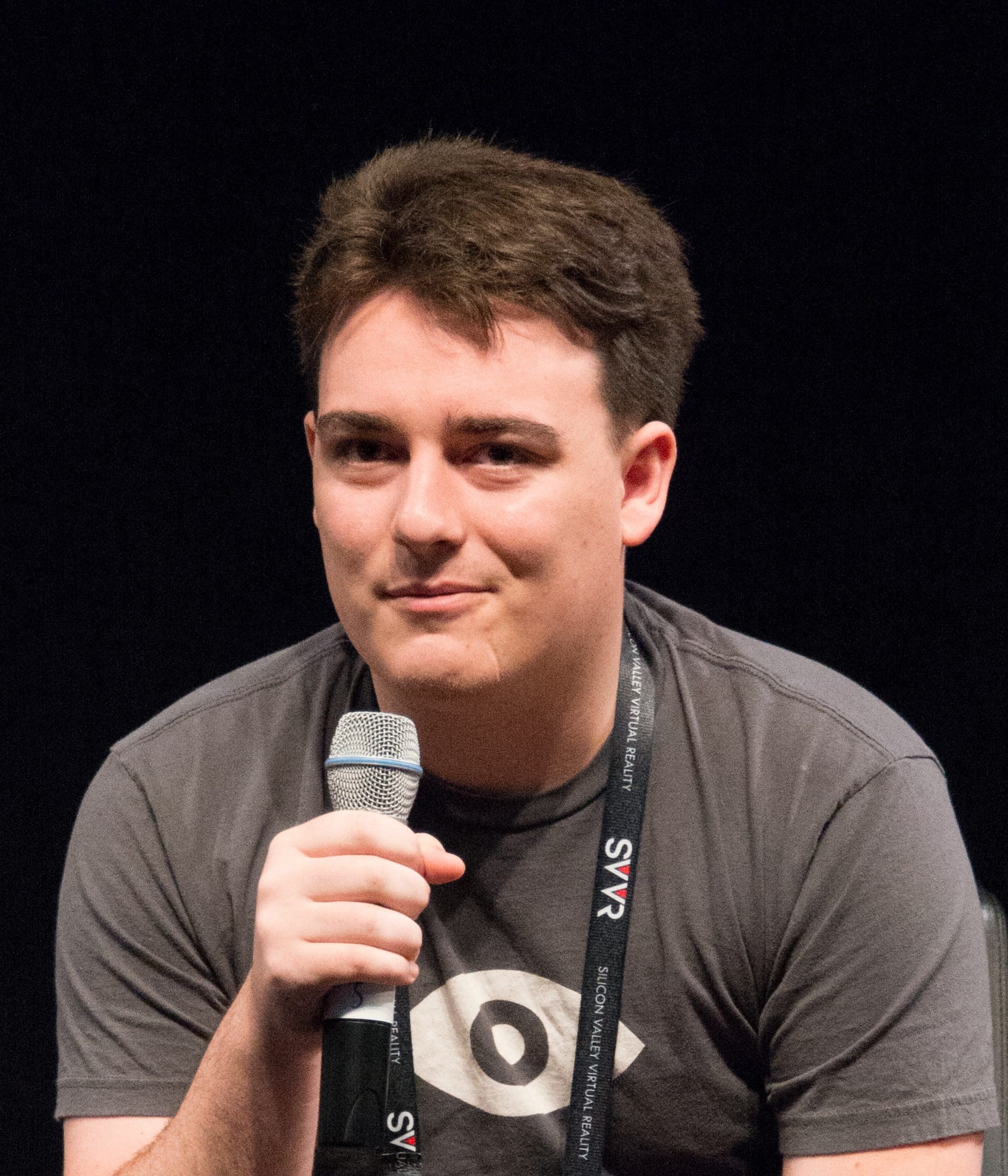
His style is also hands-on with products. Anduril's leadership page presents him as an inventor first, and the company's XR work with Meta is the clearest place where his personal expertise and the company's roadmap overlap.
What other founders can learn from Luckey
Luckey's path offers three practical lessons for deep tech founders, each visible in the public record rather than in his personal brand.
First, pair the visionary with operators early. Anduril's leadership page shows that from the start Luckey surrounded himself with co-founders who had already sold software to governments and built autonomous vehicles at Cornell. The founder who attracts attention does not have to be the one who runs the company, and Anduril has been explicit about that split.
Second, turn a liability into a positioning. Leaving Facebook under controversy could have ended a career in consumer technology. Instead, Luckey moved into a market where his willingness to work openly with the military was an advantage, and later rebuilt the Meta relationship on new terms through the XR partnership.
Third, fund the product before the contract. The idea that a startup could build finished defense systems on private money, then sell them, was the core of Anduril's original website quoted by TechCrunch in 2017. It is capital-intensive and only works with investors willing to wait, but it is now the template a generation of defense startups follow.
Honest limits
The limits of Luckey's record are that Anduril's biggest programs are still ramping, its revenue is a fraction of incumbents', and the founder is not the operator.
- Not the CEO. Credit for execution belongs largely to Schimpf, Grimm and Stephens, per the leadership page.
- Scale gap. $2.2B of 2025 revenue is small next to legacy primes, and contract ceilings are not revenue.
- Valuation risk. The $61 billion price assumes years of program wins and factory ramps still ahead.
- Political exposure. Luckey's public politics, which contributed to his Facebook exit per the WSJ, tie the brand to a single personality.
- Unproven at war scale. Large-volume autonomous systems are being produced, but sustained combat performance at scale is not yet public record.
FAQ
Who is Palmer Luckey?
Palmer Luckey is the designer of the Oculus Rift and the founder of Anduril Industries. Facebook agreed to buy Oculus for about $2 billion in 2014, and he founded Anduril in 2017.
Is Palmer Luckey the CEO of Anduril?
No. Anduril's leadership page lists Luckey as Founder and Brian Schimpf as co-founder and CEO.
Why did Palmer Luckey leave Facebook?
He left in March 2017 after months of controversy over his political donations, per TechCrunch. The Wall Street Journal later reported that Facebook fired him.
How much is Anduril worth?
Anduril's May 2026 Series H raised $5 billion at a $61 billion valuation, led by Thrive Capital and Andreessen Horowitz.
What is Luckey's relationship with Meta now?
The two companies partner on military XR. Anduril and Meta announced the partnership in May 2025, integrating headsets with Lattice.
Will Anduril go public?
Luckey has said he would definitely take the company public, according to CNBC, but no filing has been announced.
What to watch next
- Any Anduril IPO filing, which Luckey has said he wants.
- Fielding of the Meta-partnered XR systems through the Army's mission command program.
- Whether Anduril's next round, if any, is priced above the $61 billion Series H.
- Production ramps on autonomous aircraft and undersea programs covered in the Anduril guide.
For the rest of the field, browse Inside Deep Tech's deep tech startup directory.