Key Takeaways
The space industry is transitioning from experimental R&D to foundational infrastructure that supports global connectivity, manufacturing, and commerce. This transformation is driven by software-defined hardware, reusable launch vehicles, and the commercialization of lunar environments.
- The integration of direct-to-mobile satellite technology is closing communication coverage gaps globally.
- On-orbit manufacturing is shifting from conceptual testing to the production of high-value optical components.
- AI-led constellation orchestration reduces the need for constant ground-based human intervention.
- Sustainable debris mitigation strategies are becoming standard requirements for orbital licensing compliance.
- Reusable heavy-lift systems continue to lower the marginal cost per kilogram of lifting mass into space.
1. Satellite-to-mobile direct connectivity
The industry is moving beyond specialty hardware, as consumer handsets increasingly handshake directly with low Earth orbit assets when terrestrial towers are out of reach. This shift effectively eliminates the notorious dead zones that have historically plagued remote and rural communications. By leveraging existing telecommunications standards, companies are ensuring that emergency messaging and basic connectivity become standard features for users worldwide, regardless of their location.
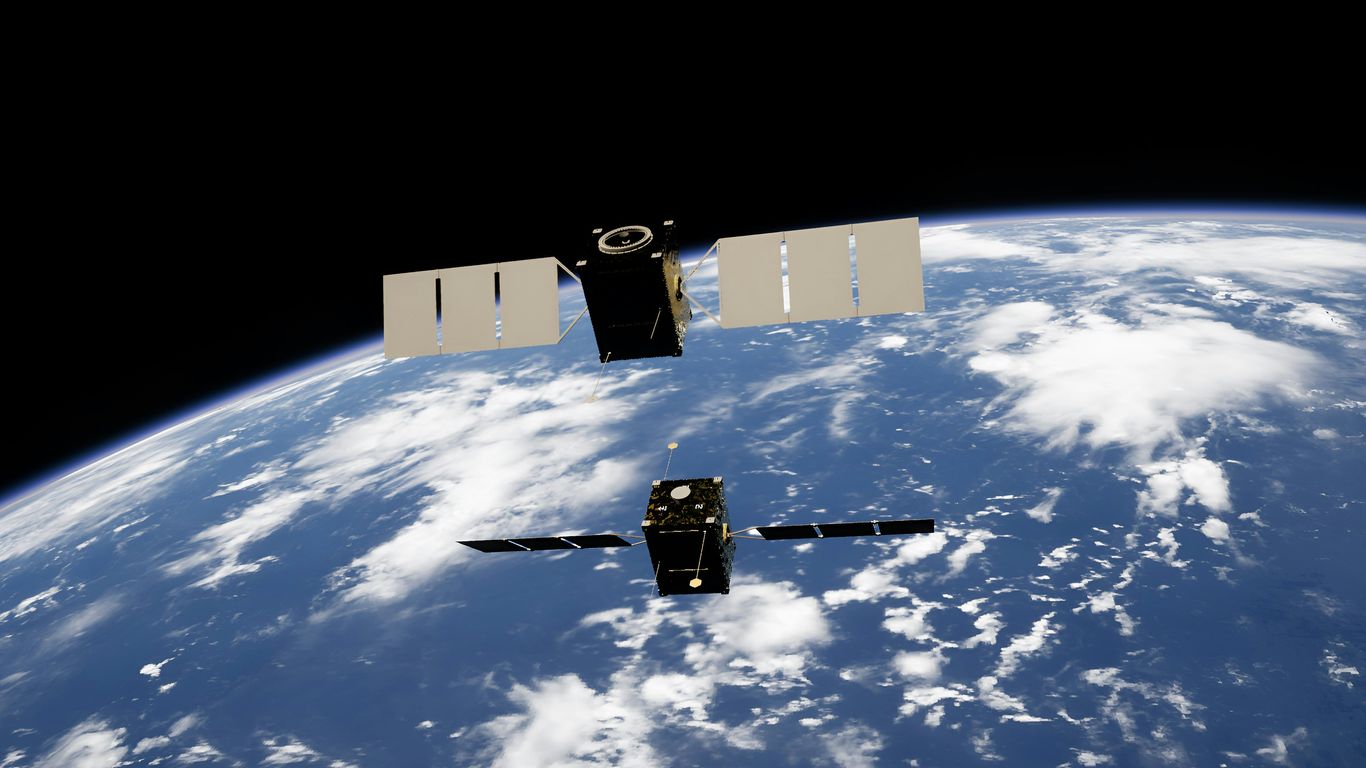
This expansion of universal access is driven heavily by the adoption of software-defined radio capabilities on satellites, which allows for dynamic frequency allocation. As the infrastructure matures, carriers are finding new ways to integrate satellite roaming into shared billing models, improving performance and reliability for commercial partners. Achieving such low-latency links requires precise inter-satellite coordination to maintain consistent handshake protocols with moving devices on the ground.
Beyond simply bridging coverage, this technology serves as a critical layer of infrastructure resilience in an era of unpredictable environmental events. By maintaining connectivity regardless of ground-based tower health, direct-to-device capability provides a necessary fallback for both public safety sectors and private enterprise users. This trend highlights a broader evolution where space assets act less like isolated sensors and more like fundamental nodes in the global telecommunications matrix that Inside Deep Tech explores regularly.
2. Advanced orbital manufacturing and in-space assembly
Manufacturing in microgravity is moving past early-stage feasibility studies into environments where the lack of convection and buoyancy allows for the creation of superior materials. Fiber optics, high-performance semiconductors, and complex pharmaceuticals benefit uniquely from the vacuum and weightless conditions, leading to outputs that cannot be replicated on Earth. Companies are now optimizing production rigs that can operate with minimal supervision beyond initial deployment.
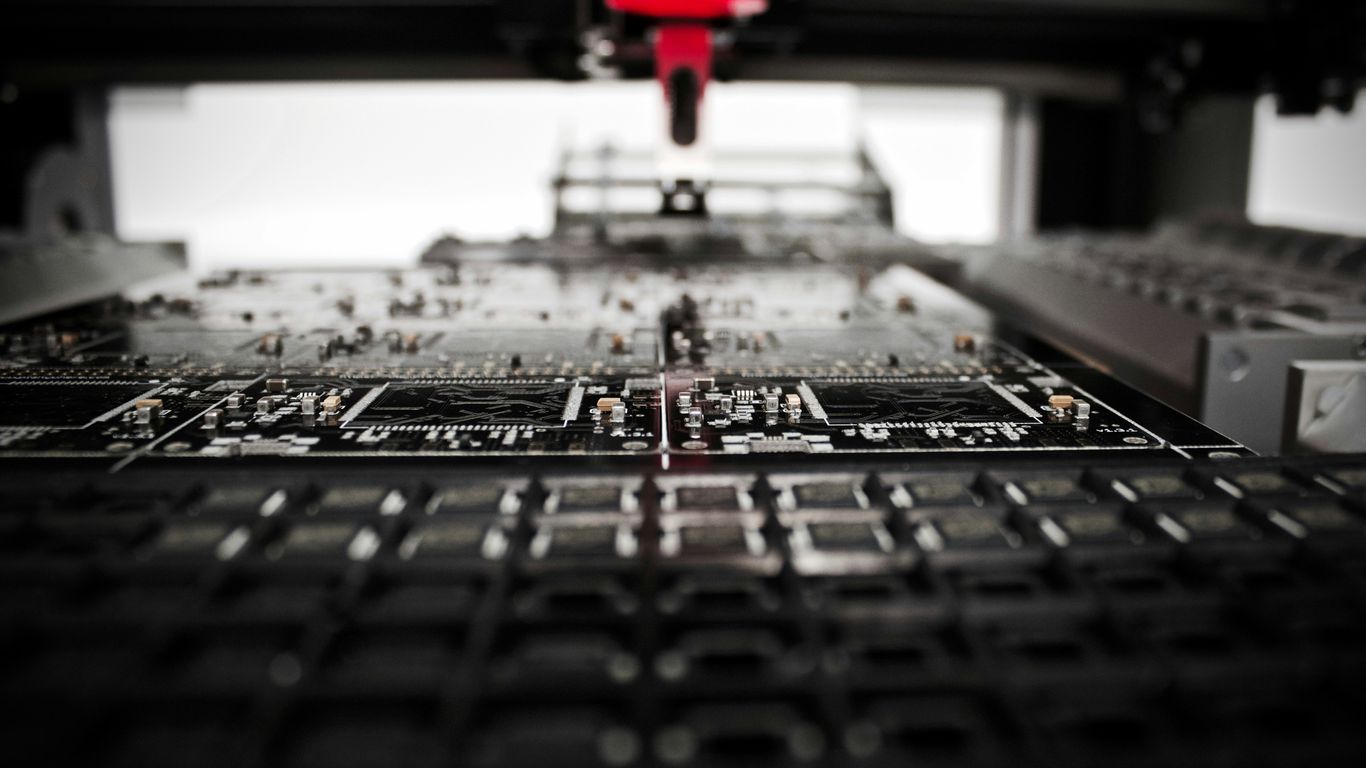
To manage this transition, the sector relies on scalable architectures that support both assembly and sustained refinement during long-duration missions. Integration involves rigorous coordination with existing space tech investment parameters to identify which processes yield the highest commercial return. The following breakdown illustrates the common operational challenges and the corresponding technical approaches currently leading the industry:
| Process Domain | Technical Approach | Primary Benefit |
|---|---|---|
| Optical Glass | Microgravity cooling | Minimal defect density |
| Thin-film Deposition | Vacuum vapor flow | Superior layer purity |
| Structural Components | Automated tethering | Reduced mass volume |
As these processes scale, the economic logic shifts toward focusing on goods with extreme weight-value ratios. By maturing these in-orbit production techniques, firms are successfully building the foundational capability for massive orbital structures that would be too heavy to launch from the surface in their final form. This shift represents a fundamental advance in how the global economy constructs its space-based systems.
3. AI-driven satellite constellation management
Managing fleets of thousands of satellites requires a level of throughput that manual ground operations can no longer sustain effectively. Artificial intelligence is now integrated directly into the constellation's command stack to handle autonomous collision avoidance, beam steering, and power management without constant downlink reliance. This intelligence provides the speed necessary to maintain optimal coverage in complex, dynamic orbital environments.

By pushing decision-making to the edge, operators report shorter response times to potential anomalies and increased mission uptime for users. This autonomy is crucial for scaling massive LEO mega-constellations that would otherwise require excessive, costly headcount to maintain. Modern systems prioritize deterministic logic for safety-critical tasks while using heuristic models to optimize energy budgets according to real-time traffic patterns as described by leading space technology trends.
Effective management requires continuous auditing of AI decisions to ensure safety compliance and regulatory alignment, particularly in crowded orbital planes. As the industry moves toward highly automated constellations, the reliance on ground-based human intervention is shifting toward policy definition and high-level strategy. This change transforms the operational role from micro-managing individual assets to overseeing the performance metrics of the entire fleet.
4. Sustainable space debris mitigation and removal
Orbital clutter has become a primary bottleneck for new launch activity, forcing the industry to adopt standardized mitigation practices. Technologies for active debris removal are shifting from conceptual designs to commercial service offerings that target defunct payloads and upper-stage remnants. By treating space as a shared economic resource, stakeholders are prioritizing the long-term viability of specific orbits through mandatory end-of-life disposal requirements.
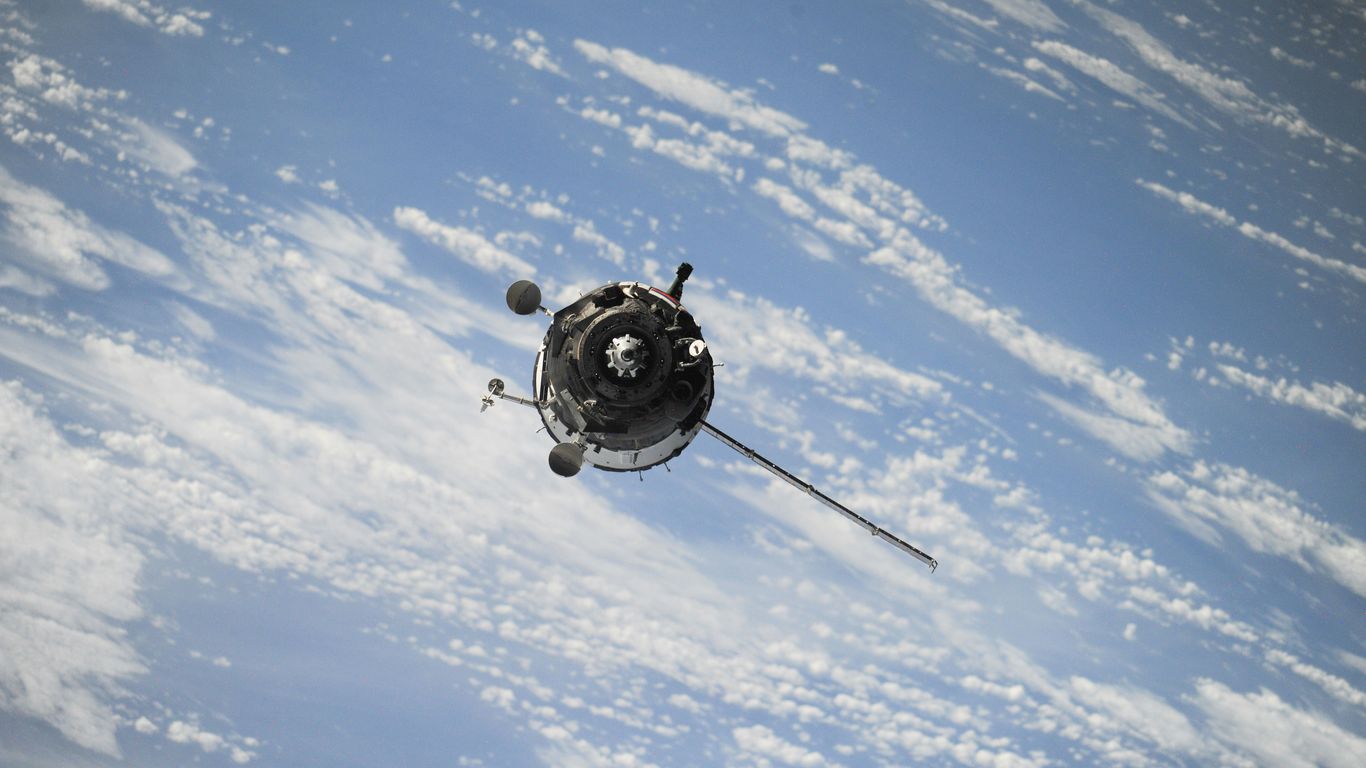
Implementation typically involves integrating capture mechanisms into newer craft or launching dedicated service vehicles equipped with propulsion suites for controlled deorbiting. These initiatives are supported by improved tracking data that allows for precision maneuvering and proactive avoidance before potential collisions occur. Several technical factors are currently driving the feasibility of these cleanup operations:
- Improved radar resolution for tracking sub-centimeter objects.
- Standardized mechanical docking points on new small-sats.
- Automated trajectory analysis for multi-object debris clouds.
- Regulatory frameworks requiring bonding for deorbit costs.
Successfully clearing key orbital highways allows for denser constellation packing and safer conditions for human and scientific missions. As the commercial sector continues to expand, the ability to maintain a clean orbital environment becomes a core competency for any organization with long-term interests in space infrastructure. This approach aligns with broader deep tech innovation goals that prioritize sustainable growth in frontier sectors.
5. Commercialized lunar logistics and resource exploration
Lunar surface operations are pivoting toward sustaining long-duration missions by sourcing local materials rather than launching everything from Earth. This requires robust logistical chains that start in low Earth orbit and terminate on the lunar surface, utilizing automated landing and cargo vehicles. By investing in the infrastructure to extract water ice and minerals, organizations are validating the feasibility of long-term habitation and deeper space exploration.
Logistics and exploration strategies emphasize reusable landing craft that can support repeating sorties between orbital transfer gates and predetermined surface sites. This creates a sustainable economic feedback loop where each delivery increases the capabilities already present on the Moon, such as power generation or shielding. The current path forward relies on clear milestones for autonomous base development, ensuring the equipment remains ready for potential crewed arrivals in the future.
Industry progress is closely monitored by Inside Deep Tech as it shifts from government-led science missions to commercial-led logistics projects. The ultimate goal is to create a multi-destination network that supports both scientific presence and potential industrial resource extraction. Success in these environments provides the technical blueprint for more advanced travel into the inner solar system, effectively expanding the addressable space economy.
6. High-throughput optical laser communication networks
Radio frequency spectrum saturation is pushing the industry to embrace optical laser communication for high-speed data transfer between orbital assets. Unlike traditional methods, laser terminals offer significantly higher data density with reduced profile, making them ideal for high-throughput backhaul connectivity between constellations. This transition is essential for streaming large sensor datasets or imagery back to earth-based processing centers in real-time.
These networks require highly accurate pointing and stabilization systems to establish and maintain connections over thousands of kilometers. By utilizing light rather than radio waves, these satellites avoid the bandwidth limitations and interference common in crowded frequency bands. The technical focus is currently on decreasing the size and power draw of on-board terminals to maximize the performance of smaller spacecraft platforms.
As adoption grows, optical links are becoming a standard feature for secure, reliable communication between inter-connecting constellation nodes. This leap in communication capacity fundamentally changes the velocity at which organizations can process space-derived intelligence for both commercial and defensive needs. Such systems are central to modern autonomous systems that demand real-time telemetry updates to maintain operational intelligence.
7. Reusable heavy-lift launch vehicles for cost efficiency
Reducing the mass-to-orbit cost remains the single greatest driver for all other commercial space ventures. The transition to fully reusable heavy-lift launch systems allows for a high frequency of manifest availability, enabling private companies to launch significant hardware payloads without the prohibitive costs of traditional expendable rockets. This consistent access creates more reliable project timelines for infrastructure developers.
Investment into vertical integration within this launch sector has significantly refined the design and metallurgy required for atmospheric re-entry and engine recovery. These vehicles prioritize durability and high turnaround speeds, often shortening the intervals between flights to mere weeks. By concentrating high-thrust engines into scalable booster designs, the industry is creating an ecosystem where space access no longer defines the peak of a project's budget.
Reliable transportation platforms enable new businesses to treat space as a routine service rather than a once-in-a-decade effort. This normalization of frequency is driving a wave of innovation in fields like satellite imaging and edge computing, where rapid deployment and replacement are key competitive factors. With the barrier to entry significantly lowered, the next phase of development will focus on what can be built in the newly accessible orbital workspace.
Conclusion
As the industry enters the latter half of the decade, the focus of space exploration has firmly shifted from novelty to utility and foundational economic viability. Through the integration of standardized autonomous systems, reusable launch capabilities, and sustainable orbital practices, space is now an extension of our global infrastructure, providing the connectivity and raw data required to fuel the next wave of industrial expansion.
Frequently Asked Questions
How are satellite constellations becoming more autonomous?
Modern constellations integrate AI-driven command stacks that manage station-keeping, beam steering, and power management without constant ground-based control, significantly increasing operational efficiency.
Why is optical laser communication replacing radio for backhaul?
Optical terminals provide much higher data bandwidth with better interference resistance, addressing common radio frequency congestion while supporting the increasing volume of satellite-derived data.
What makes in-space manufacturing superior to terrestrial production?
Producing materials in microgravity allows for unique characteristics like high-purity optics and pharmaceuticals that cannot be achieved under the influence of gravity and atmospheric convection.
How does reusing heavy-lift vehicles impact the industry?
Reuse reduces the marginal cost of putting mass into orbit, making commercial missions more financially viable and increasing the frequency of deployments for infrastructure projects.
Are there standard protocols for space debris removal?
Regulatory agencies and international bodies are currently establishing frameworks that mandate end-of-life deorbiting plans, while commercial service providers are actively developing active removal and docking technologies.
What are the main challenges for lunar logistics?
Sustaining lunar operations requires long-term power generation and resource extraction capability, necessitating highly specialized supply chains and reusable cargo vehicles capable of landing on the lunar surface.
Will direct-to-mobile connectivity replace terrestrial towers?
Satellite-to-mobile is designed as a complementary service to bridge connectivity gaps in remote or rural locations rather than a full replacement for high-capacity terrestrial broadband networks.