Christian Weedbrook is the physicist who bet that light, not supercooled circuits, would be the cheapest road to a useful quantum computer. He founded Xanadu in Toronto in 2016, spent a decade turning squeezed-light theory into rack-mounted hardware and a widely used software library, and in March 2026 took the company public as the first listed pure-play photonic quantum computing company, according to Xanadu's FY2025 results release.
This full guide is about the founder, not a rewrite of Xanadu's product sheet. It covers Weedbrook's research background, the technical thesis he built the company around, the company-building choices that followed (Borealis, Aurora, PennyLane, the SPAC), what is peer-reviewed versus what is still roadmap, how he compares with other photonic quantum founders, and the honest limits. Last updated: November 8, 2026.
Key Takeaways
- Weedbrook founded Xanadu in 2016 and has been CEO since then. EY named him its Entrepreneur Of The Year 2026 Ontario winner in October 2026, describing a company of more than 250 people.
- His academic calling card is Gaussian quantum information, a 2012 review he led as first author with Seth Lloyd and others. Gaussian states of light, including squeezed light, are the raw material of Xanadu's machines.
- Xanadu's two headline experiments are peer-reviewed in Nature: Borealis (2022, a quantum computational advantage claim on Gaussian boson sampling) and Aurora (2025, a modular, networked 12-qubit system built from 35 photonic chips).
- Xanadu listed on Nasdaq and the TSX as XNDU after closing its Crane Harbor SPAC deal. The company reported $302 million in gross proceeds and 2025 revenue of $4.6M against a $70.7 million net loss.
- The roadmap Weedbrook sells is fault-tolerant operations by 2028 and up to 500 logical qubits in 2029-2030, per the FY2025 release. Those are targets, not demonstrated results.
Who Christian Weedbrook is
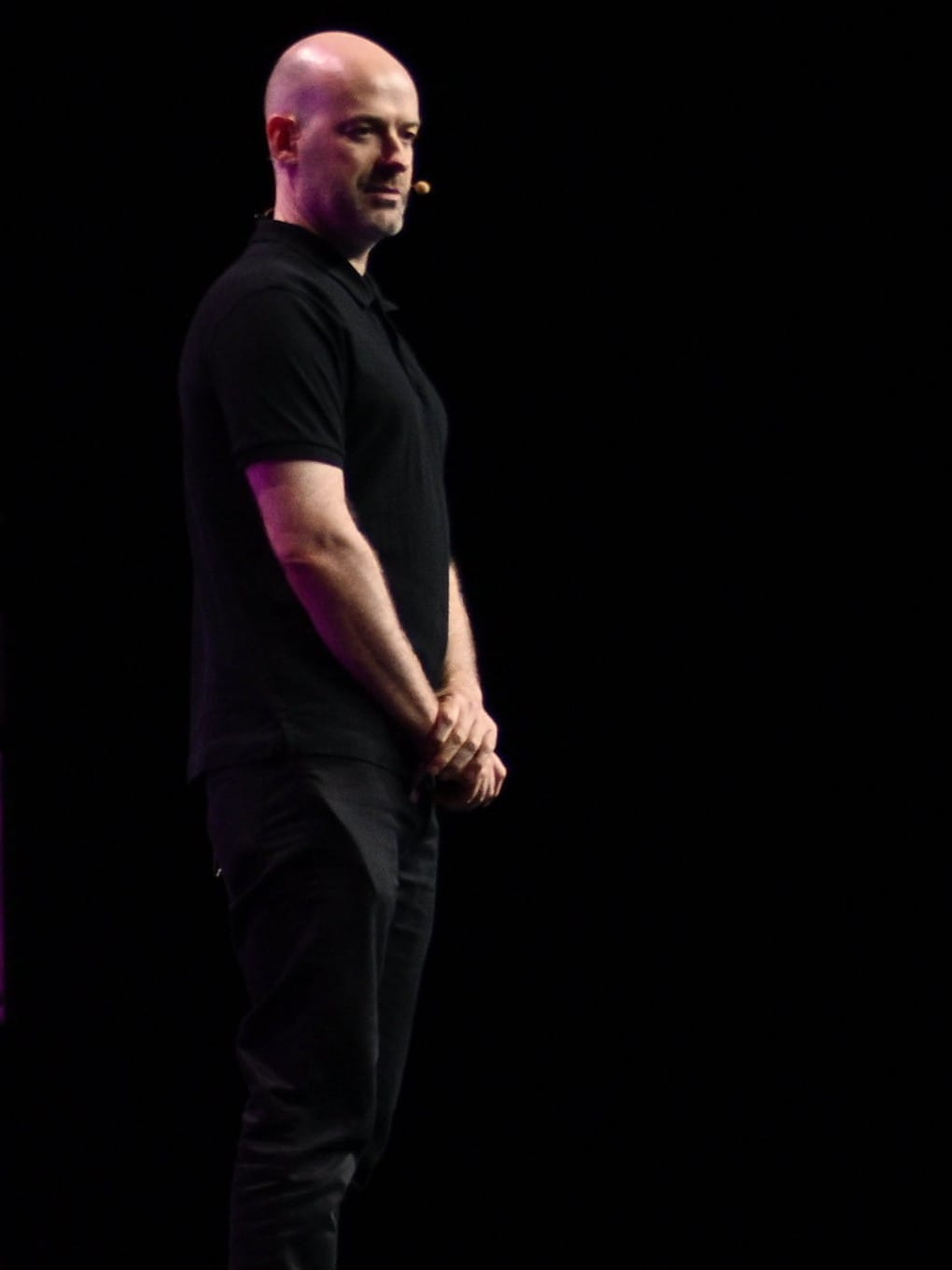
Christian Weedbrook is an Australian-born quantum physicist and the founder, CEO and board chair of Xanadu Quantum Technologies. He is a researcher who became an operator, and the company still reflects that: Xanadu publishes its milestones in peer-reviewed journals before it markets them.
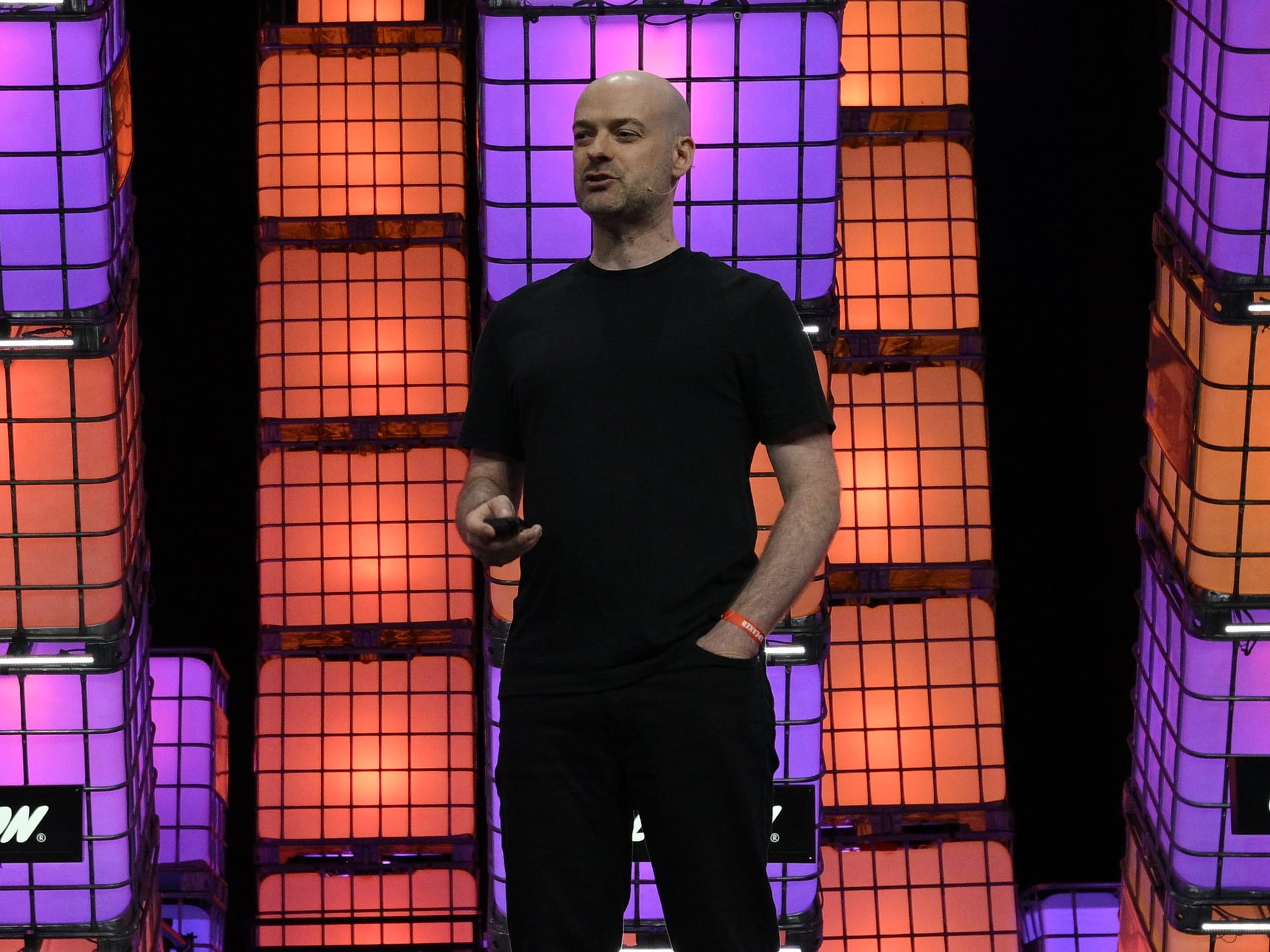
According to Xanadu's investor materials, Weedbrook earned his undergraduate degree and PhD at the University of Queensland, then held postdoctoral research positions at MIT and the University of Toronto before founding Xanadu in September 2016. He has served as CEO and a director since founding, and became CEO of the listed parent at its incorporation in October 2025, as described in the company's annual information form.
The EY citation is the most recent public recognition. EY's October 2026 announcement credits him with turning a complex scientific concept into a business spanning hardware, software and advanced manufacturing, and names Aurora and PennyLane as the two products that define the company. He goes on to the Canadian national round on November 24, 2026.
The research record before Xanadu
Weedbrook's best-known paper is the 2012 review Gaussian quantum information, published in Reviews of Modern Physics with co-authors including Stefano Pirandola, Raul Garcia-Patron, Nicolas Cerf, Timothy Ralph, Jeffrey Shapiro and Seth Lloyd. It is a reference text for the field of continuous-variable quantum information: encoding quantum information in the amplitude and phase of light rather than in individual two-level systems.
That is not trivia. Xanadu's whole architecture uses squeezed states of light, which are Gaussian states, plus photon-number-resolving detectors to inject the non-Gaussian ingredient needed for universal computing. The founder's thesis and the company's physics are the same document, a decade apart.
The technical thesis: photonic, room-temperature, networked
Weedbrook's thesis is that a useful quantum computer will look like a data center of networked photonic racks, not a single giant chip in a dilution refrigerator. He said as much when Aurora was unveiled, telling MIT Technology Review that to make a useful machine, you copy and paste a thousand of these things and network them together.
Three claims sit inside that thesis. First, photons barely interact with their environment, so qubits encoded in light can travel over fiber between modules without being converted into some other medium. Second, most of a photonic system can run at room temperature; Xanadu's Aurora announcement says the whole 12-qubit machine, including 13 km of fiber, operated at room temperature. Third, photonic chips can be fabricated in semiconductor foundries, so scaling is partly a manufacturing problem rather than a physics problem.
Each claim has a cost. Photons are lost in waveguides, couplers and fiber, and loss is the dominant error source in photonic quantum computing. Photon-number-resolving detectors that Xanadu relies on still need cryogenic cooling. And photonic qubits are generated probabilistically, so the architecture needs heavy multiplexing and error correction to become deterministic enough for long computations.
GKP qubits, the bet inside the bet
Xanadu's specific route is the Gottesman-Kitaev-Preskill (GKP) qubit, a way of encoding a qubit inside a single optical mode so that small shifts in amplitude and phase can be detected and corrected. In its FY2025 release, Xanadu said it had demonstrated 12 logical GKP qubits with real-time error-correction decoding, published in Nature. That is the bridge between Weedbrook's continuous-variable background and a fault-tolerance roadmap that investors can price.
Company-building choices, in order
Weedbrook has made four big company-building calls: publish hardware milestones in Nature, give away software to own the developer layer, build modular rather than monolithic, and go public early through a SPAC. Each one is visible in the public record.
Borealis: proving the photonics was real
Borealis was Xanadu's 2022 proof that a programmable photonic processor could do something classical machines struggle with. The Nature paper reported Gaussian boson sampling on a time-multiplexed machine with 216 squeezed modes. Xanadu's later annual information form describes it as a computation done in two minutes that would have taken the Fugaku supercomputer about seven million years. Treat that as the company's framing: boson sampling is a benchmark task, not a commercial workload, and classical simulation methods for such experiments keep improving.
PennyLane: owning the software layer
PennyLane is Xanadu's open-source Python library for quantum programming, differentiable quantum circuits and quantum machine learning. It runs on many vendors' hardware and simulators, not just Xanadu's. Strategically, it gives a hardware startup a developer audience years before its hardware is useful. The FY2025 release put PennyLane at about 160,000 average monthly downloads, up 161% year over year.
Aurora: modular, networked, and small
Aurora is the physical form of the copy-and-paste thesis. The Nature paper describes a system of 35 photonic chips with 84 squeezers and 36 photon-number-resolving detectors across four server racks, linked by fiber. Xanadu's press release says Aurora could in principle scale to thousands of racks and millions of qubits. What it demonstrated in 2025 was 12 qubits and error detection with real-time decoding, which is a modest machine with an important architecture.
The SPAC: capital before fault tolerance
In March 2026 Weedbrook chose public markets over another private round. Xanadu closed its business combination with Crane Harbor Acquisition Corp. on March 26, 2026, and its shares began trading as XNDU on Nasdaq and the Toronto Stock Exchange on March 27, according to the company's annual information form. The FY2025 release reported $302 million in gross proceeds and negotiations for up to CAD $390 million from the governments of Canada and Ontario for Project OPTIMISM, a domestic photonic manufacturing build-out. That government support was still subject to final agreements.
The trade-off is familiar from other quantum listings: public capital is large and liquid, but quarterly reporting exposes a business whose revenue is tiny next to its research spend. Xanadu's 2025 results showed revenue of $4.6M, up 188% from $1.6M, a net loss of $70.7 million, and year-end cash of $16.2 million before the SPAC proceeds arrived.
What is proven versus what is promotional
Weedbrook's record is stronger than most quantum founders' on peer review and weaker on commercial traction. The split is easiest to see side by side.
| Claim | Status (Nov 2026) | Evidence |
|---|---|---|
| Programmable photonic advantage on boson sampling | Peer-reviewed | Nature, 2022 |
| Modular, fiber-networked photonic racks | Peer-reviewed, 12 qubits | Nature, 2025 |
| 12 logical GKP qubits with real-time decoding | Company says peer-reviewed | FY2025 release |
| Room-temperature operation of the full system | Company claim; detectors still need cooling | Aurora release |
| Scaling to millions of qubits | Roadmap, in principle | Aurora release |
| Fault tolerance by 2028, up to 500 logical qubits 2029-2030 | Roadmap target | FY2025 release |
| Commercial revenue at scale | Not yet | $4.6M 2025 revenue |
Source: Xanadu FY2025 results, Aurora announcement and the Nature papers on Borealis and Aurora.
Timeline of Weedbrook's public record
The public record runs from a single review paper to a listed company in about fourteen years. The timeline below uses only dated, sourced events.
| Year | Event | Source |
|---|---|---|
| 2012 | Lead author of the Gaussian quantum information review in Reviews of Modern Physics | arXiv 1110.3234 |
| 2016 | Founds Xanadu in Toronto and becomes CEO | Annual information form |
| 2022 | Borealis Gaussian boson sampling result published in Nature | Nature |
| January 2025 | Aurora modular photonic computer published in Nature | Nature |
| October 2025 | Listed parent incorporated, Weedbrook named its CEO | Annual information form |
| March 2026 | SPAC closes; XNDU begins trading on Nasdaq and TSX | FY2025 release |
| October 2026 | Named EY Entrepreneur Of The Year 2026 Ontario | EY |
Source: the documents linked in each row.
Why the founder matters for Xanadu's valuation
For a pre-revenue deep tech company, the founder's credibility is part of the asset base. Investors in XNDU are buying a roadmap, and the person who wrote the physics behind that roadmap is also the person reporting progress against it every quarter.
That cuts both ways. Weedbrook's research pedigree makes Xanadu's technical claims easier to trust, because the company has repeatedly put them through peer review rather than press releases alone. It also concentrates risk: if a milestone slips, the market has no separate technical leader to anchor confidence. Xanadu added a CFO and chief legal officer in January 2026, per the FY2025 release, which is the normal step for a founder-led company preparing for public reporting, but the technical voice is still Weedbrook's.
For enterprise and government buyers, the more practical question is software. PennyLane gives Xanadu a relationship with researchers and developers that does not depend on Xanadu hardware winning. If photonic hardware takes longer than planned, that developer base is the part of Weedbrook's strategy most likely to keep compounding. If the hardware does work, the same community becomes the first set of users.
How Weedbrook compares with other photonic quantum founders
Weedbrook is one of a small group of physicist-founders betting on photonics, and his choices differ mainly in qubit encoding and in how early he went to public markets. The closest comparison is PsiQuantum's Jeremy O'Brien, who also left academia to bet on light but chose discrete single-photon qubits, a fusion-based architecture and a private, foundry-first path with GlobalFoundries.
| Founder | Company | Background | Qubit approach | Capital path | Flagship public result |
|---|---|---|---|---|---|
| Christian Weedbrook | Xanadu (Toronto) | Continuous-variable quantum information researcher | Squeezed light, GKP qubits | Public via SPAC (XNDU), 2026 | Borealis, Aurora |
| Jeremy O'Brien | PsiQuantum (Palo Alto) | Integrated quantum photonics professor | Single photons, fusion-based | Private, large rounds plus government sites | Omega chipset (see IDT guide) |
| Niccolo Somaschi | Quandela (Paris) | Quantum-dot photon source researcher | Quantum-dot single photons | Private | Cloud-accessible photonic processors |
| Richard Murray | ORCA Computing (London) | Quantum memory researcher | Fiber-based photonics with memories | Private | Rack systems for UK programs |
Source: company materials summarized in Inside Deep Tech's PsiQuantum full guide and the top quantum computing companies to watch. For a wider list, see Inside Deep Tech's top 100 quantum companies and top 100 photonics companies directories.
The distinctive thing about Weedbrook is the combination. O'Brien and PsiQuantum have argued for going straight to a million-qubit fault-tolerant machine without small commercial steps. Weedbrook has done the opposite: put small machines in the cloud, publish each step, build a software community with PennyLane, and accept public-market scrutiny early. Neither approach has yet produced a fault-tolerant computer.
Leadership style and public positioning
Weedbrook positions himself as a technical founder-CEO who intends to stay in the job. Public statements consistently tie the business to engineering milestones rather than near-term revenue promises, and the company's communications lean on Nature publications as third-party validation.
His external partnerships fit the same pattern. The FY2025 release lists collaborations with AMD, Lockheed Martin, Tower Semiconductor and TELUS, plus advancement to Stage B of DARPA's Quantum Benchmarking Initiative. Tower is a foundry, which matches the manufacturing thesis; DARPA's program is a technical evaluation, which matches the peer-review instinct. None of these is yet a large recurring revenue contract.
What Weedbrook has said about the long game
Weedbrook frames Xanadu as a decade-plus project. The Aurora release describes the end state as a quantum data center, and the FY2025 release commits to a dated path: fault-tolerant operations by 2028 and up to 500 logical qubits in 2029-2030. Setting public, dated targets is a deliberate choice. It gives shareholders a scorecard, and it means the founder will be judged against his own numbers rather than against vague promises of quantum advantage someday.
The practical reading for anyone tracking him is simple: the next credible proof point is not another qubit count headline but a demonstration that logical error rates fall as Xanadu adds more photonic modules. That is the test every modality faces, and it is the one Weedbrook's architecture was designed to pass.
Honest limits
The limits of Weedbrook's record are the limits of photonic quantum computing in 2026: small qubit counts, loss that must keep falling, and revenue that is still a rounding error next to research spend.
- Scale. Aurora's 12 qubits are a fraction of what useful fault-tolerant algorithms need. The scale claims are in-principle claims.
- Loss. The 60% loss reduction in 2025 is real progress, but photonic fault tolerance needs loss budgets far tighter than any published full system.
- Benchmarks versus workloads. Borealis showed advantage on Gaussian boson sampling, a sampling task with no proven commercial use.
- Finances. A $70.7 million 2025 net loss on $4.6M of revenue means the roadmap depends on public-market and government capital.
- Government money is not yet signed. The CAD $390 million package was under negotiation, subject to due diligence and final agreements.
- Key-person exposure. Xanadu's technical identity, investor story and public profile all run through one founder-CEO and chair.
FAQ
Who is Christian Weedbrook?
Christian Weedbrook is the founder, CEO and board chair of Xanadu Quantum Technologies, a Toronto photonic quantum computing company he founded in 2016. He is a quantum physicist known for the 2012 review Gaussian quantum information, and he was named EY Entrepreneur Of The Year 2026 Ontario.
What did Christian Weedbrook study?
According to Xanadu's investor materials, he earned his undergraduate degree and PhD at the University of Queensland, then did postdoctoral research at MIT and the University of Toronto. His research focused on continuous-variable quantum information, the field summarized in his Reviews of Modern Physics review.
What is Xanadu Aurora?
Aurora is Xanadu's modular photonic quantum computer, described in Nature in January 2025. It uses 35 photonic chips across four networked server racks to make 12 qubits and demonstrated error detection with real-time decoding.
What is PennyLane?
PennyLane is Xanadu's open-source Python library for programming and differentiating quantum circuits. It runs on many hardware backends. Xanadu reported about 160,000 average monthly downloads in its FY2025 release.
Is Xanadu a public company?
Yes. Xanadu closed its merger with Crane Harbor Acquisition Corp. on March 26, 2026, and began trading as XNDU on Nasdaq and the TSX on March 27, 2026, per its annual information form.
How is Xanadu different from PsiQuantum?
Both use photons. Xanadu, under Weedbrook, uses squeezed light and GKP qubits and has released small cloud machines and the PennyLane software. PsiQuantum, led by Jeremy O'Brien, uses single photons in a fusion-based architecture and is aiming directly at a large fault-tolerant system. See the PsiQuantum full guide.
What to watch next
The next two years decide whether Weedbrook's founder story becomes a fault-tolerance story or stays a well-published research story.
- Whether Xanadu shows a multi-logical-qubit photonic system with error rates falling as code distance grows.
- Further optical loss reductions after the 20-fold three-year improvement.
- Final terms of the Canada and Ontario Project OPTIMISM package.
- Commercial contracts from partners such as AMD, Lockheed Martin and TELUS turning into recurring revenue.
- Progress in DARPA's Quantum Benchmarking Initiative beyond Stage B.
For the rest of the field Weedbrook is competing in, browse Inside Deep Tech's top 100 quantum companies directory.