Key Takeaways
Fusion energy holds the potential to serve as a long-term solution for scaling AI compute infrastructure by providing consistent, carbon-free baseload power. As data centers migrate toward higher energy density, they require reliable energy sources that surpass the limitations of current variable renewable energy storage.
- Fusion energy offers a stable, high-density power supply capable of meeting the continuous cooling and compute needs of hyperscale facilities.
- Private sector investment is accelerating the timeline for fusion prototypes, with companies like Helion Energy spearheading commercial designs.
- Integrating fusion into the broader power grid requires navigating complex nuclear regulatory frameworks and adapting existing energy distribution infrastructure.
- The path to mass-market availability likely spans the 2030s and 2040s, depending on the success of modular, pilot-scale testing phases.
- Strategic partnerships between hyperscalers and fusion companies are forming to co-locate energy production near high-demand regions, optimizing grid reliance.
The rising energy demand of AI infrastructure

The shift toward high-density computing workloads
The landscape of modern compute is shifting from general-purpose workloads to intensive, inference-heavy tasks. As organizations scale, they rely more on hardware frameworks identified in The State of AI Infrastructure 2026 to manage the massive power throughput required per rack. These high-density configurations demand cooling and energy inputs that legacy architectures simply cannot support.
Limitations of current renewable energy storage
Intermittent power sources such as wind and solar are fundamental to green transitions, but they struggle to provide the constant, 24/7 reliability required by the AI data center goldrush described in The AI boom a bubble?. Battery storage solutions currently face significant challenges regarding scale and longevity, leaving a gap in the supply chain for continuous load balancing. Without supplemental baseload support, renewable-only grids remain vulnerable to the fluctuations inherent in variable output.
The necessity for consistent, carbon-free baseload power
To bridge the gap between energy availability and demand, industry leaders are exploring technologies capable of delivering consistent, emissions-free electricity. Fusion energy emerges as a key candidate in The evolving landscape of AI because it generates massive amounts of heat without the long-term waste profiles associated with traditional fission reactors. Achieving this reliability is essential for supporting the infrastructure requirements analyzed in The AI data center stocks powering the compute boom.
Why fusion energy data centers are becoming a strategic focus
Understanding the safety benefits of fusion compared to fission
Unlike traditional nuclear fission, which involves splitting heavy atoms, fusion energy relies on combining lighter isotopes. This process, explored in How fusion energy research could power home, offers an inherently controlled power source that eliminates the risk of runaway reactions. Given these characteristics, it is often viewed as a safer, more sustainable alternative for utility-scale energy projects.
Achieving high energy density for hyperscale facilities
As data centers grow, maximizing power density becomes a critical engineering metric for long-term operational success. Fusion reactors can theoretically provide the necessary power capacity in a smaller footprint compared to sprawling solar or wind farms. This compactness is vital for regions where land availability is constrained or construction costs remain high.
Opportunities for localized, off-grid power solutions
Companies like Helion Energy are developing solutions that minimize the need for external transmission lines by co-locating power generation with major demand clusters. This creates a resilient, off-grid model that mitigates dependency on older, slower-to-upgrade municipal grids. Such decentralized approaches reduce transmission losses and increase energy autonomy for specific high-performance computing zones.
Meeting corporate sustainability and net-zero goals
Corporations are increasingly scrutinized for their carbon footprint, necessitating a move toward high-efficiency, zero-emission technologies. By securing long-term fusion contracts, tech firms demonstrate a commitment to sustainability while ensuring energy security. The transition is supported by research into high-temperature superconductors, which allow reactors to operate with greater efficiency at smaller scales.
Current status of fusion energy research
Breakthroughs in magnetic confinement and laser fusion
Recent scientific strides have brought fusion closer to commercial reality, with experimental designs like the stellarator leading the way. Researchers are optimizing these designs to better withstand prolonged runtimes. When evaluated against historical norms, the performance gains reported in The fusion energy startups represent a significant departure from previous laboratory limitations.
The role of private sector investment in the ecosystem
Unlike decades past, modern fusion development benefits from massive infusions of private capital intent on accelerating speed-to-market. Investors look past the hype, focusing instead on achievable milestones, as detailed in Inside Deep Tech. This shift toward market-ready objectives facilitates the creation of a manufacturing-led approach to physics, moving beyond mere research-scale demonstrators.
Recent milestones and reactor efficiency gains
Efficiency in fusion is measured by the ratio of energy input to energy output — a goalpost that is quickly shifting as new hardware comes online. The complexity of these systems is reflected in the following table:
| Metric | Old Laboratory Models | New Pilot Prototypes |
|---|---|---|
| Confinement Time | Seconds | Minutes |
| Energy Input | High (GigaJoules) | Lower (MegaJoules) |
| Materials Durability | Low | High |
These advancements demonstrate that fusion is transitioning from a fundamental physics problem to a scalable engineering project. Continued innovation in computational modeling—often powered by AI—further improves these efficiency targets before the final implementation phase.
Research labs versus pilot-scale prototypes
While research labs focus on proof-of-concept experiments, pilot plants are the essential bridge to deployment. Labs perform the foundational work, whereas pilot-scale developments test the supply chain, regulatory adherence, and construction logistics. This transition is essential for validating the economic model described in The AI data center boom: energy.
Technical and regulatory hurdles for fusion integration
Adapting grid infrastructure for distributed fusion power
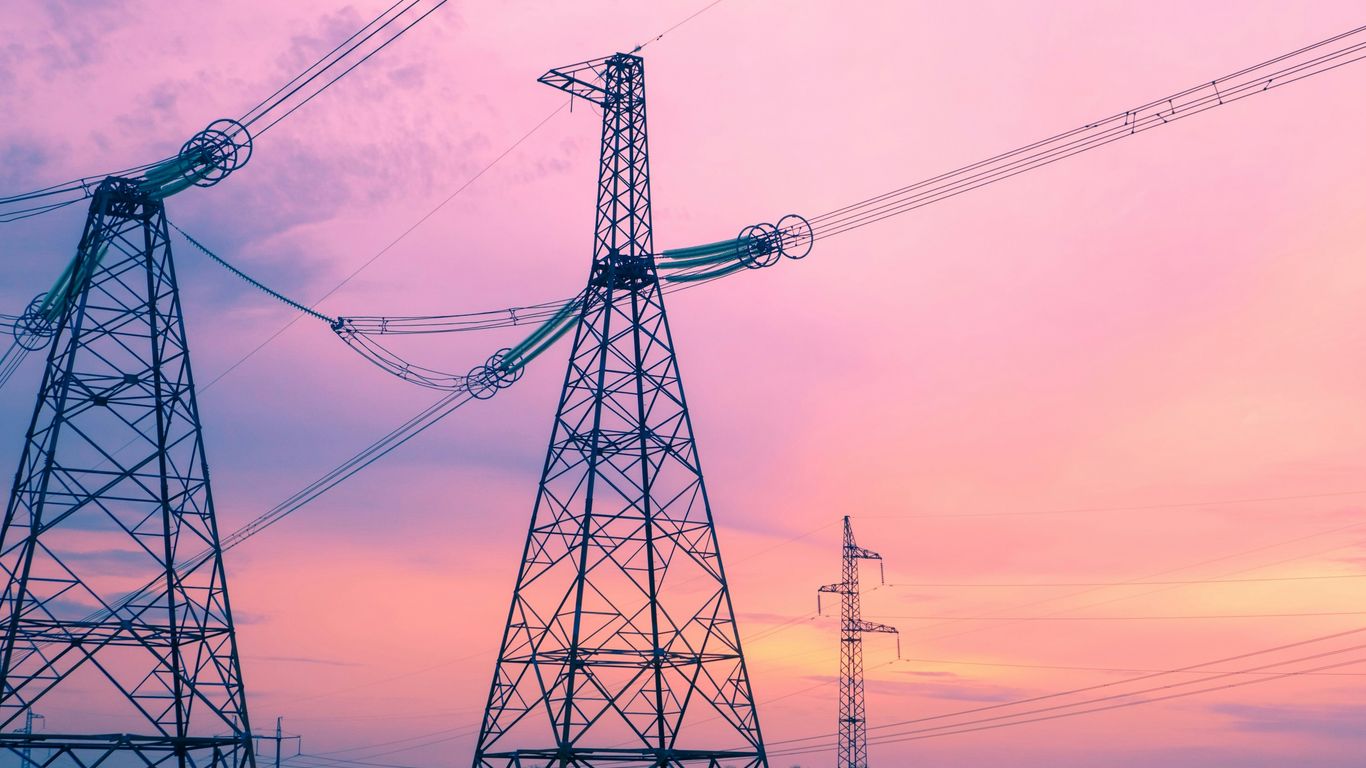
Integrating advanced energy sources like fusion requires profound changes to existing grid architecture. The current electrical environment is tailored for centralized generation; moving to distributed, fusion-based nodal networks involves significant hardware updates. This transition is outlined in The advantages and challenges of nuclear-powered data centers, where the limitations of existing transmission paths become apparent.
Navigating permitting and nuclear regulation frameworks
Regulatory complexity remains a primary obstacle for any nascent energy technology. Because fusion is distinct from fission, regulators must develop criteria that acknowledge its inherently safer profile without bypassing safety requirements. Clear communication between developers and federal agencies is required to streamline the approval of these non-traditional nuclear assets.
Managing the cost-to-output ratios for operational centers
Managing the total cost of ownership involves weighing construction capital against long-term operating efficiency. Industry stakeholders often look at these risks, as cataloged in Cost of running AI in 2026, to determine the viability of long-term planning. The economic performance depends heavily on the speed by which developers achieve modular fabrication, reducing the need for bespoke, multi-year construction projects.
Scaling experimental designs for commercial reliability
Reliability must scale from successful experiments to continuous 24/7 industrial uptime. Achieving this includes:
- Implementing automated diagnostic monitoring systems.
- Standardizing spare parts for modular reactor assemblies.
- Integrating high-bandwidth predictive maintenance software.
- Ensuring continuous fuel supply chain logistics.
Following these steps ensures that while the energy source is advanced, its downtime metrics remain consistent with current modern utilities.
Real-world examples of the fusion-tech partnership
Hyperscaler investments in startup fusion firms
Big tech companies are providing the necessary capital to move fusion experiments into pilot programs. Through partnerships, these hyperscalers secure future energy rights while startups receive the long-term funding required for iterative design and build phases.
Joint research initiatives for grid-ready design
Collaborative efforts often center on grid integration, software-defined energy orchestration, and safety testing. Engineers from both fields work to ensure that fusion energy production behaves predictably alongside existing battery storage and renewable inputs.
Co-locating fusion facilities near high-demand regions
By placing fusion power plants in proximity to clusters of server farms, builders can create localized high-energy ecosystems. This minimizes transmission latency, reduces electrical losses, and provides a direct, uninterrupted path to reliable power for data-heavy operations.
Public-private collaboration on supply chain logistics
Success in deployment depends on the secure procurement of raw materials, such as deuterium, and the development of specialized components. Governments and corporations collaborate to strengthen these supply chains, acknowledging that energy independence is a necessary precondition for domestic AI leadership.
Predicting the timeline for scalable fusion power
Bridging the gap between physics experiments and commercial application
Bridging this gap involves moving from controlled laboratory success into repeatable, cost-effective energy production. While the science of fusion is established, scaling the physical containment systems remains a feat of modern engineering.
Short-term pilot plant testing phases
Data and performance metrics from ongoing pilot plants will serve as the primary indicator for broader adoption. If output matches simulations, the threshold for wider investment will be reached by the early 2030s.
Estimates for mass-market availability in the 2030s and 2040s
While early deployments appear in restricted pilot configurations, a mass-market arrival rests on the success of modular, cost-efficient scaling. Experts anticipate that by the 2040s, fusion may represent a tangible slice of the energy mix for large-scale data centers.
Impact of modular reactor development on speed-to-market
Modular reactor designs allow for factory-built components that can be assembled on-site. This construction methodology drastically cuts build time compared to massive, non-modular civil engineering projects, essentially bringing data center deployment speeds closer to reactor deployment speeds.
Conclusion
The integration of fusion energy into data center operations represents a profound step toward ensuring the long-term viability of the AI industrial base. While significant technical and regulatory challenges persist, the convergence of private capital, modular design, and critical energy demand provides a strong foundation for future development as experimental projects evolve into infrastructure.
Frequently Asked Questions
How does fusion energy differ from nuclear fission in its safety profile?
Fusion involves combining light atomic nuclei rather than splitting heavy ones, which eliminates the risk of high-level, long-lived radioactive waste and prevents the potential for runaway chain reactions.
What are the main obstacles slowing down the adoption of fusion for data centers?
Primary hurdles include the long lead times for reactor construction, the necessity for a specialized energy-grade supply chain, and the requirement to align state and federal nuclear regulation with new reactor technologies.
Can fusion energy work with current power grid infrastructure?
While legacy grids are designed for centralized power generation, current efforts focus on grid-ready designs that allow fusion to be integrated as a stabilizer for existing energy distribution networks.
Why are AI data centers becoming such large consumers of electricity?
Data centers supporting AI require immense computational power for model training and inference, tasks that necessitate high densities of chips and continuous, high-output cooling systems.
When will fusion energy be ready for broad commercial use?
Predictions generally point to the 2030s for initial commercial-scale operation after successful pilot plant testing, followed by broader availability through the 2040s.
How do modular reactors change the deployment timeline for fusion power?
Modular design shifts construction from bespoke field assembly to pre-fabricated components, significantly reducing onsite project timelines and lowering capital cost risks.
Is fusion energy intended to replace renewable energy sources?
No, it is intended to complement them; while wind and solar provide variable, low-cost power, fusion offers the reliable, carbon-free baseload energy that intermittant sources cannot currently supply on their own.