Best Space Tech Startups to Watch in 2026

Key Takeaways
The landscape for orbital operations is shifting from simple access to complex industrial utility, as innovative firms move to standardize on-orbit operations. These developments are fundamentally altering the cost, safety, and operational capacity of space missions in 2026.
- Additive manufacturing is slashing lead times for complex launch components.
- Autonomous traffic management is essential given the surge in orbital density.
- In-space manufacturing holds potential for high-value pharmaceutical production.
- New kinetic energy methods are offering alternatives to fuel-heavy launch cycles.
- Refueling and life extension missions aim to transition satellites from disposable assets to long-term infrastructure.
1. Relativity Space for additive manufacturing
Relativity Space is redefining the industrial base for orbital launch by focusing on proprietary additive manufacturing. By combining autonomous 3D printing with advanced materials, the company creates complex rocket geometries without the need for traditional tooling. This approach accelerates production timelines while reducing the overall part count in primary flight systems.
Engineering efficiency often dictates the scalability of aerospace firms, particularly when high-cadence launch demand is present. For manufacturers, decoupled design and manufacturing allows for iterative design changes that were previously hampered by the physical constraints of traditional casting and machining. This methodology is central to current space tech investment trends that prioritize physical production breakthroughs over software-only simulation.
| Process Component | Traditional Method | Additive Advantage |
|---|---|---|
| Tooling Setup | Months | Hours |
| Part Integration | High Complexity | Low Complexity |
| Iterative Cycles | Slow | Rapid |
The industry has observed that leveraging these printed metal structures offers substantial performance gains. By optimizing the printing process, the company can refine nozzle designs and pressure vessels to meet specific mission requirements at a fraction of standard cost.
2. Astroscale for space debris mitigation
Managing the orbital environment has moved from a research novelty to a strategic necessity. Astroscale develops missions designed to capture and safely deorbit non-functional satellites and spent rocket bodies. By providing clear pathways for post-mission disposal, the firm is addressing the escalating risk of orbital collisions.

These debris removal missions utilize specialized robotic interfaces to synchronize with target satellites, even when those objects have lost communication or structural integrity. Such technical competence is vital for ensuring the long-term viability of high-value sun-synchronous orbits. As commercial entities continue to scale constellation deployments, the demand for reliable mitigation services will only increase.
Sustainability in space requires more than regulatory compliance; it demands active intervention. The ability to remove hazardous derelicts represents a critical evolution in flight safety. By mitigating the potential for fragmentation events, developers can protect their growing fleet from cascading debris risks.
3. Impulse Space for orbital delivery services
Getting a payload to the correct inclination is no longer the final step in a successful orbital mission; providing persistent transit and maneuvering is the new standard. Impulse Space develops high-delta-V orbital transfer vehicles that fill the gap between the launch vehicle and the final mission destination. Their propulsion systems enable precise delivery for small satellites, regardless of the initial orbital drop-off.

This delivery flexibility relies on modern fuel management and high-efficiency thrusters that operate reliably in the vacuum of space. As companies expand their fleet coverage across various orbital shells, they often reach out to specialists in orbital logistics. These transfer stages have become a staple for complex constellation deployments where timing and location are mission-critical metrics for ROI.
- Precise orbital injection for small satellites.
- In-orbit maneuvering to reach unique mission orbits.
- Increased mission duration due to efficient propulsion cycles.
The adoption of these transfer modules has streamlined the path for operators who require rapid deployment. By decoupling the delivery vehicle from the initial launch system, they maximize the utility of every kilogram launched into orbit.
4. Varda Space Industries for in-orbit pharmaceutical manufacturing
Manufacturing in microgravity environments presents biological opportunities that are impossible to replicate under terrestrial gravity. Varda Space Industries creates dedicated in-orbit platforms for the crystallization of complex medical compounds. By utilizing the conditions of space, they are able to achieve higher structural purity in pharmaceutical batches.
These automated plants are designed to operate autonomously, with the ability to encapsulate the final product for return. The return process constitutes a significant engineering challenge, requiring advanced heat shields and stabilization during the return to Earth. By mastering these end-to-end biological manufacturing pipelines, the company establishes a new vertical in the space economy.
This shift toward orbit-based fabrication changes our understanding of drug discovery. When researchers gain access to this consistent, vibration-free environment, they can study molecular formations that would otherwise collapse or crystallize poorly on the ground. The potential impact on biotech and pharmaceutical development makes this one of the most compelling frontiers of current space technology.
5. Orbit Fab for in-space refueling infrastructure
Infrastructure in space is fundamentally limited by the amount of fuel a craft carries at launch. Orbit Fab is moving toward a service-oriented model of orbit, providing tanks and standard interfaces to enable rapid refueling. By creating a fuel depot, the company enables satellites to perform longer missions and more complex maneuvers without relying on a fixed fuel budget.
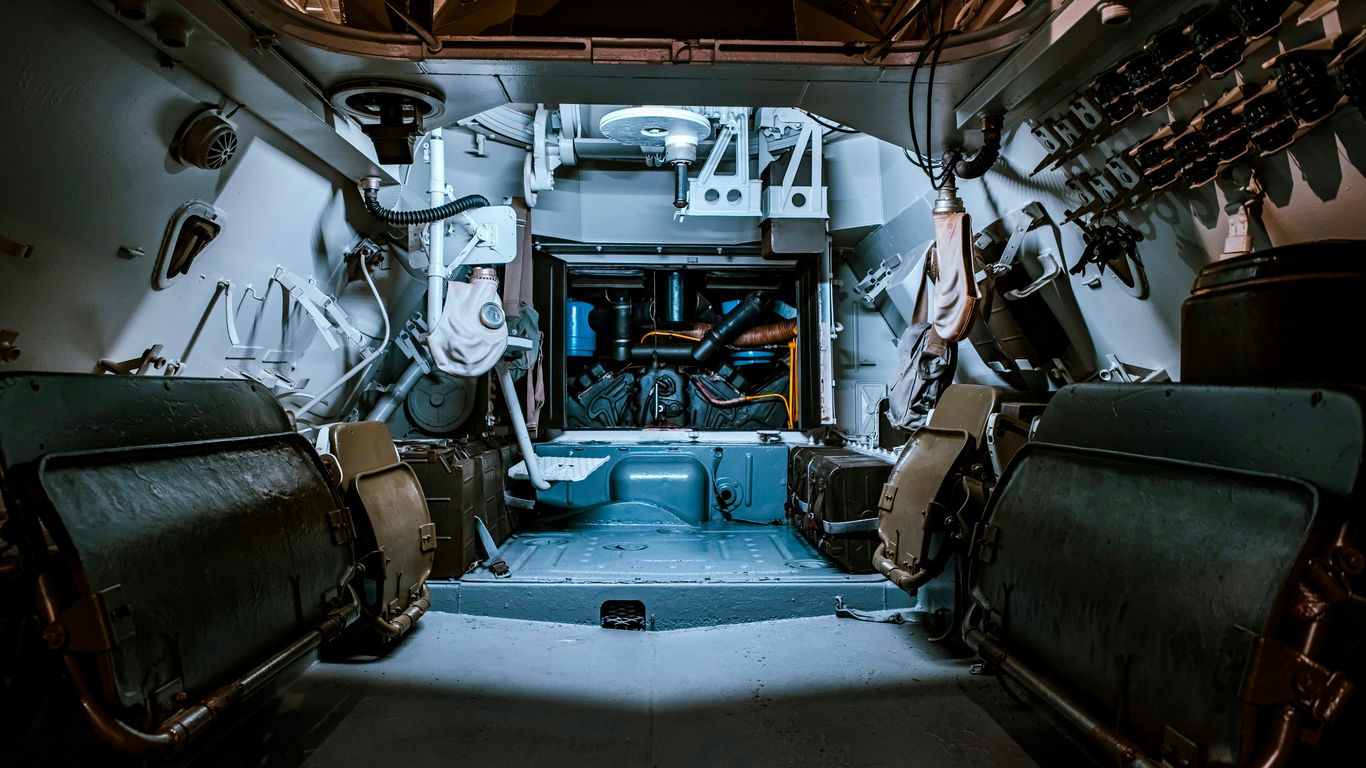
Standardizing the connection interface is the core innovation here, allowing different operators to leverage the same fuel supply. This move toward interoperability is expected to catalyze a new phase where satellites are designed for serviceability rather than depletion. The ability to replenish propellant can extend the operational life of imaging, communications, and inspection platforms significantly.
This utility-based approach draws from the broader logic of Inside Deep Tech analysis: infrastructure must precede widespread commercialization. When fuel becomes a commodity that can be purchased in orbit, the entire cost-benefit analysis for deep-space mission planning will undergo a meaningful shift.
6. Kayhan Space for autonomous space traffic management
Space traffic is becoming increasingly dense, requiring real-time situational awareness and automated coordination to prevent collisions. Kayhan Space provides autonomous management solutions that detect potential conjunctions and suggest collision avoidance maneuvers. This is critical for operators navigating the crowded lanes of Low Earth Orbit.
Efficient coordination relies on precise data processing and algorithmic speed. As satellites move at hypervelocity, manual responses are often too slow to be effective. Relying on autonomous systems allows organizations to scale their operations without needing a massive ground crew dedicated to constant conjunction monitoring.
This capability mirrors the advancements currently being sought through automated KI-Tools across other industries. By offloading the burden of safety monitoring to smart digital assistants, mission teams can remain focused on their primary objectives without sacrificing the safety of their orbital assets.
7. SpinLaunch for cost-effective kinetic launch systems
SpinLaunch is exploring the possibilities of kinetic energy to drastically reduce the cost of reaching space. Using a massive rotating arm inside a vacuum chamber, the system accelerates payloads to extreme velocities before releasing them through a launch tube. This approach eliminates the need for first-stage combustion, saving substantial fuel and infrastructure costs.

This kinetic methodology represents a departure from traditional chemical rocket cycles. By converting electrical grid power into mechanical motion, it creates a much cleaner and more predictable launch profile for small, hardened payloads. Such progress is notable for researchers aiming to launch routine scientific experiments without wait times or high-cost liquid fuel mandates.
The transition toward kinetic energy highlights a shift in how we manage mass in high-velocity environments, proving that unconventional engineering can bypass legacy constraints.
This system serves as an alternative for specific class missions that can withstand higher acceleration loads. The focus remains on cost-per-kilogram improvements while maintaining high-frequency launch availability for the global research network.
8. True Anomaly for advanced space domain awareness
Space domain awareness allows military and commercial operators to understand precisely what is happening in their specific orbital neighborhood. True Anomaly develops technologies designed to observe, inspect, and verify the status of space objects with high precision. This is essential for protecting expensive national assets from unknown interference or simple malfunctions.
Effective domain awareness involves sophisticated sensor suites integrated with high-performance edge processing. The need for this transparency is high, as the complexity of orbital trajectories continues to climb. Recent discussions regarding the AI impact on workforce transitions demonstrate that autonomous analysis will play a key role in tracking and interpreting diverse data streams from modern sensors.
These detection systems facilitate better decision-making for those managing sensitive infrastructure. By providing actionable, real-time insights into the health and location of satellites, the company enables operators to maintain continuous awareness of their surroundings in the vast, sparse environment of deep space.
9. Infinite Orbits for satellite life extension missions
Satellites that run low on propellant often remain functionally viable but orbitally dead. Infinite Orbits addresses this by developing proximity-operations tech that docks with aging assets to provide station-keeping. By adding a life-extension module to an existing older craft, operators can keep high-value instruments operational for years longer than planned.
Modern docking interfaces must be capable of secure attachments to legacy hardware that never originally intended to be serviced. This capability depends on computer vision and autonomous guidance systems that can safely navigate to an uncooperative satellite. The successful capture of aging satellites without harming them represents a massive leap in commercial satellite management.
This mission model turns potential orbital scrap into renewed value. For companies managing expensive geosynchronous satellites, this is a practical insurance policy against early failure or fuel depletion. By choosing to upgrade instead of replace, operators are successfully preserving their capital investments in orbit.
10. Sierra Space for commercial space station development
Sierra Space is building modular, expandable space stations designed to host scientific research and private commercial activity in Low Earth Orbit. Their platforms incorporate advanced flexible habitats that can launch on standard vehicles while providing a large pressurized volume once inflated. Such structures allow for a permanent, cost-effective human presence beyond the atmosphere.
Working in these modular stations will be comparable to managing home exchange properties across distributed global locations. As these habitats come online, they will provide the necessary environment for long-duration experiments in agriculture, materials science, and human physiology. These stations serve as the base camp for future activity in the lunar and deep space sectors.
By prioritizing space-efficient designs and high-throughput communication links, these modules allow for sustained professional deployment. This development of physical orbital infrastructure is vital for establishing a permanent foothold in the space economy, ensuring that research isn't limited by the duration of a crewed mission.
Conclusion
The aerospace industry is currently witnessing a rapid transition from basic experimental launches to a mature, industrial-grade orbital economy. By focusing on manufacturing utility, debris management, and long-term station viability, these companies have moved beyond early-stage exploration to provide the essential infrastructure that supports future space operations.
Frequently Asked Questions
How are orbital manufacturing processes different from those on Earth?
Orbital manufacturing leverages microgravity and vacuums to create structural forms and molecular compounds that cannot be produced or stabilized on Earth's surface.
Why is debris mitigation becoming a major industry priority?
As the number of satellites in orbit grows, the risk of collisions increases, leading to the potential for debris clouds that could threaten all future space-based activity.
What are the main advantages of kinetic launch systems?
Kinetic systems use stored mechanical energy to accelerate payloads, which potentially reduces the massive liquid fuel consumption required by traditional chemical rockets.
How does autonomous traffic management function in orbit?
Autonomous systems use sensor data to track orbital objects and automatically calculate collision avoidance paths for satellites, reducing the need for constant manual oversight.
What does an orbital refueling infrastructure achieve for satellites?
Refueling infrastructure allows satellites to extend their operational timelines by replenishing propellant in space, rather than forcing the satellite to deorbit once its initial fuel supply runs out.
Can satellites be repaired or extended once they are in space?
Yes, emerging life extension and service missions are successfully connecting to legacy satellites to provide supplementary station-keeping and fuel, adding years to their utility.
What is the purpose of permanent space stations in low Earth orbit?
These stations provide a stabilized environment for humans to live and conduct long-term research, serving as a platform for commercial, medical, and industrial activity.